by Maximillian Alvarez | Dec 3, 2025 | Gaza, Israel, labor, Palestine, Politics and Movements: International, Politics and Movements: US, video, Working People
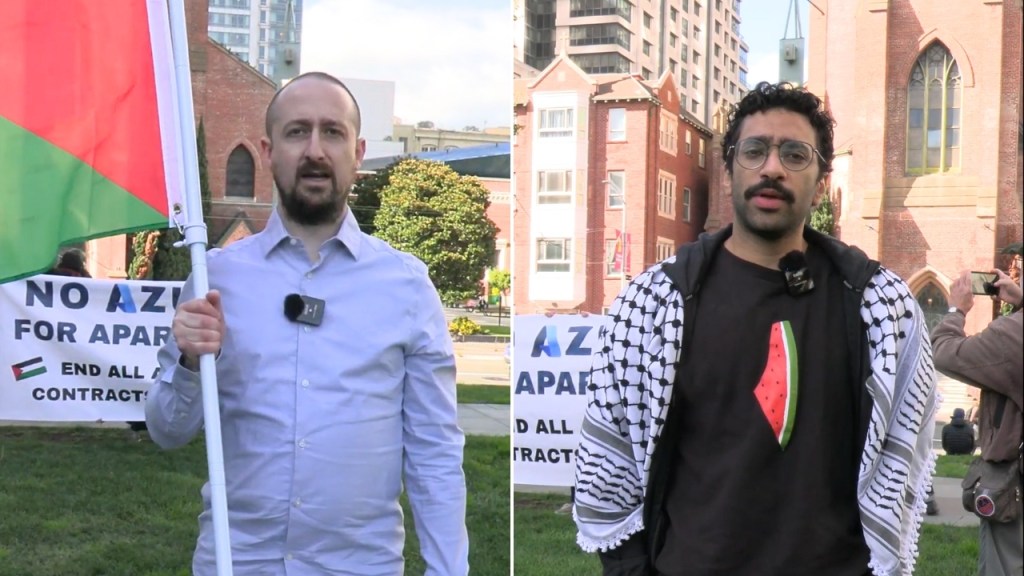
Around 20,000 people attended tech giant Microsoft’s Ignite conference in San Francisco last month. Current and former tech workers and Microsoft employees with the No Azure for Apartheid movement were also there to disrupt business as usual, and to continue their ongoing protests of Microsoft’s contracts with Israel’s government and its complicity in the war crimes Israel has committed against Palestinians. TRNN Editor-in-Chief Maximillian Alvarez speaks with Patrick Fort, a Microsoft senior engineer who resigned in protest at the Ignite conference, and Hossam Nasr, a No Azure for Apartheid organizer who was fired by Microsoft.
Additional links/info:
No Azure for Apartheid Instagram and Linktree
Maximillian Alvarez, The Real News Network, “Microsoft cancels Israeli spy unit access after tech worker revolt”
Credits:
Post-Production: David Hebden
Transcript
The following is a rushed transcript and may contain errors. A proofread version will be made available as soon as possible.
Maximillian Alvarez:
Around 20,000 people attended Tech Giant Microsoft’s Ignite Conference in San Francisco last month. But current and former tech workers and Microsoft employees with the no Azure for Apartheid movement were also there to disrupt business as usual and to continue their ongoing protests of Microsoft’s contracts with Israel’s government and its complicity in the war crimes that Israel has committed against Palestinians. Here’s a video that was posted from the No Azure for Apartheid Instagram account, which shows the moment that one brave tech worker called out Microsoft’s CEO of commercial business, Judson Altoff, in front of the entire conference. Take a look.
Patrick Fort:
Hey, Judson, the point of the children of God is on our hands. Judson, I worked at Microsoft for seven years and I resigned today Microsoft Disappointing Israel genocide, free
by Mansa Musa | Dec 1, 2025 | baltimore, Fascism, ICE, Politics and Movements: US, Prisons and Policing, Rattling the Bars, video
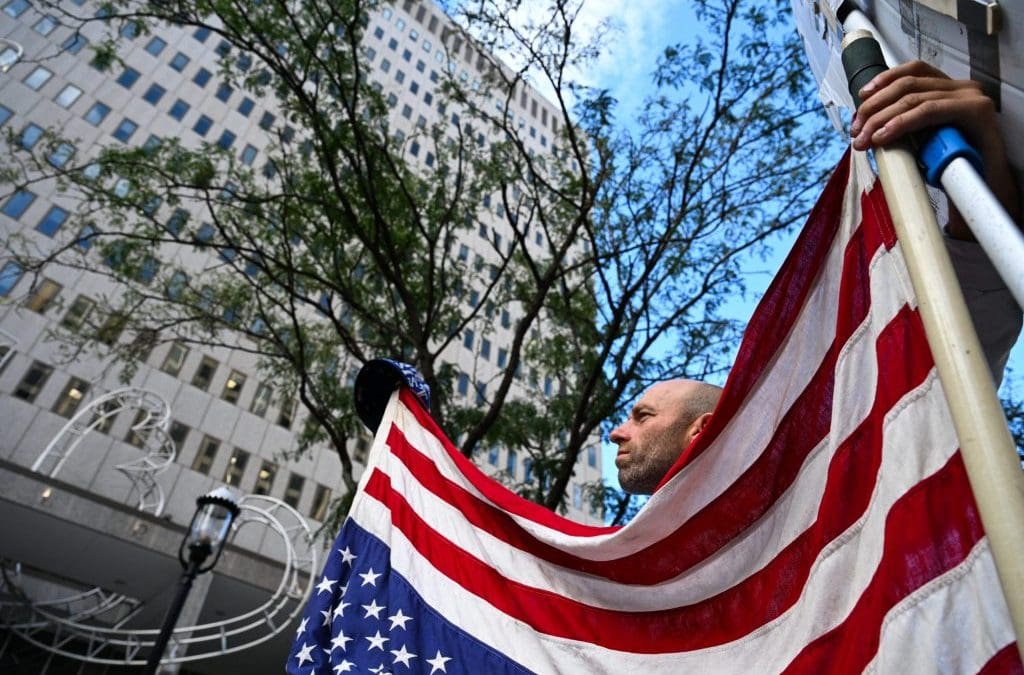
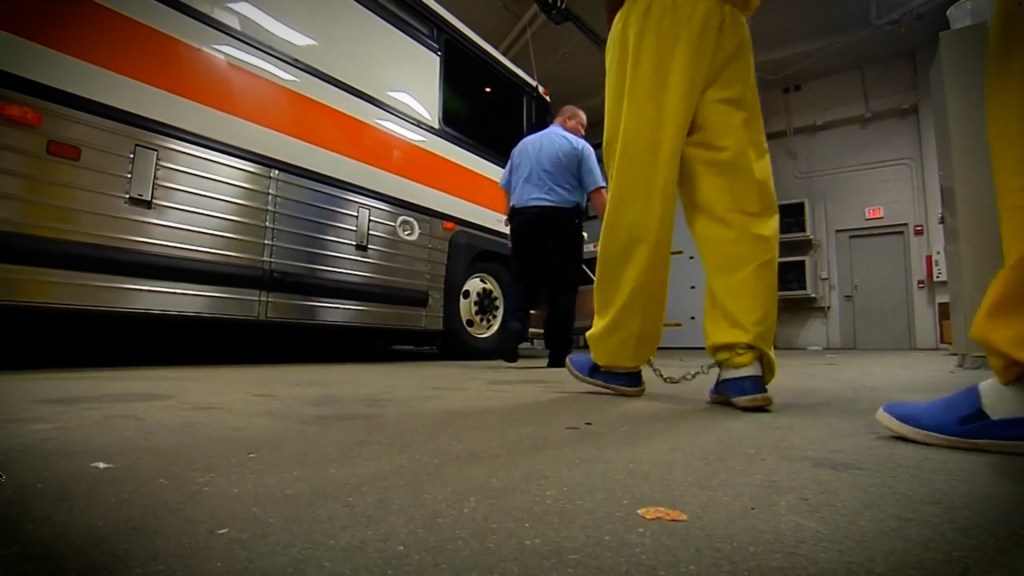
ICE raids and the expanded use of expedited removal are tearing apart immigrant families and neighborhoods in Baltimore. In this episode of Rattling the Bars, host Mansa Musa speaks with Baltimore reporter Kori Skillman about how lack of democratic oversight and collusion between local government and federal law enforcement have enabled ICE’s lawless tactics and left Baltimore’s immigrant communities living in constant fear, economic precariousness, and social isolation.
Guest:
Kori Skillman is a Report for America Corps Member covering justice and accountability for Baltimore Beat. Skillman investigates policing, incarceration, and civil rights in Baltimore. Most recently, she worked on ABC News’ assignment desk, covering breaking news and editing for live broadcasts. A Bay Area native, Skillman holds a dual B.A. in journalism and international business from San Diego State University, with a focus on the Middle East and North Africa, and an M.S. from Columbia Journalism School.
Additional links/info:
Kori Skillman, Baltimore Beat, “Indiscriminate ICE arrests have left Baltimore’s immigrant communities in a constant state of fear and anxiety”
Kori Skillman, Baltimore Beat, “Lack of ICE oversight shows how Baltimore has long been at the mercy of outside powers”
Credits:
Producer / Videographer / Post-Production: Cameron Granadino
Transcript
The following is a rushed transcript and may contain errors. A proofread version will be made available as soon as possible.
Mansa Musa:
Welcome to this edition of Rattling the Bars, I’m your host Mansa Musa. In this country, United States of America, we have laws that protect the citizens of the United States. What constitute a citizen of the United States? If you were born here or you receive your citizenship through the immigration naturalization process, lately we’ve seen our country shift into a period much like
by Taya Graham and Stephen Janis | Nov 26, 2025 | Economy and Inequality, Epstein, Inequality Watch, Politics and Movements: US, video
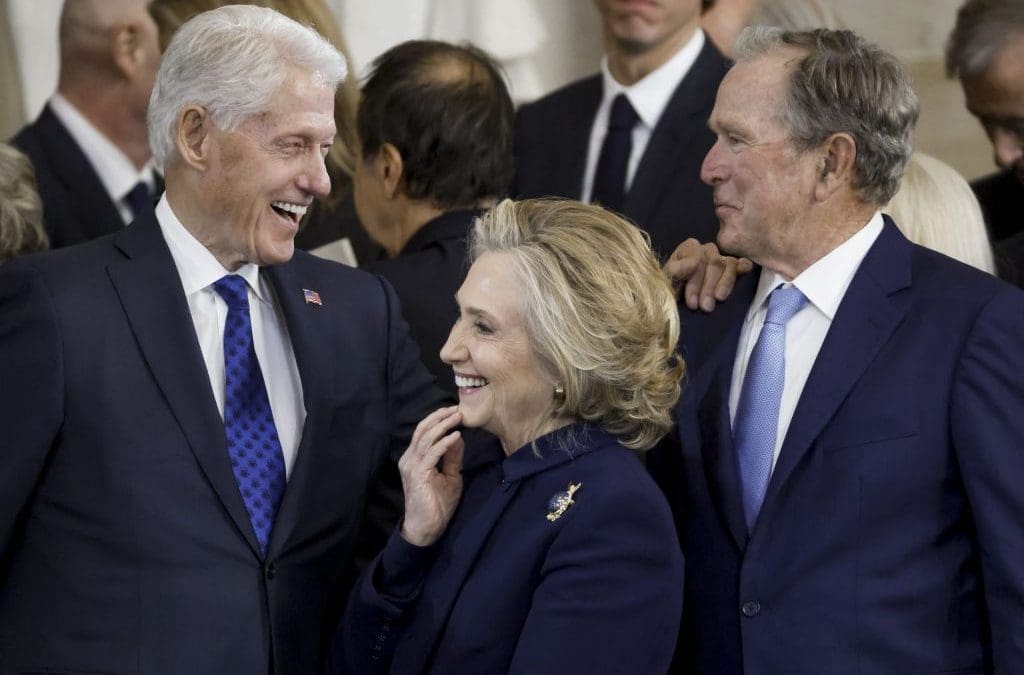
Investigative reporters Taya Graham and Stephen Janis go to Capitol Hill to speak with Representatives Ro Khanna and Thomas Massie, who co-sponsored the Epstein Transparency Act. Many of the women who survived Epstein’s abuse and human trafficking ring share their experiences and their determination to receive justice. Now that the bill has passed both Houses, the Department of Justice is obligated to share with the public thousands of previously secret documents, emails, and photos. Although many critics are concerned that redactions will make these documents ineffectual in exposing the predators and predator protectors, there is still hope that these women will finally be able to reveal the corruption that has survived multiple presidential administrations. We discuss four reasons why the Epstein files may be the beginning of the end for the unchecked power of these elites, or “Epstein class.” With Congress compelling the DOJ to reveal Epstein’s secret files, the protective wall around America’s most powerful men is finally beginning to crumble. This moment could be the first genuine challenge to the impunity enjoyed by the country’s wealthiest predators.
Produced by Stephen Janis and Taya GrahamWritten by Stephen JanisPost-Production by Stephen Janis
Transcript
The following is a rushed transcript and may contain errors. A proofread version will be made available as soon as possible.
Taya Graham:
Have the wealthy elites who have turned this country into an inequality playground finally met their match with the Epstein scandal. Well, we’re going to break down why the fallout from Epstein is turning the tables on the oligarchy and how the stain of being a predator or a predator protector might not be easy to get rid of
by Taya Graham, Stephen Janis and Maximillian Alvarez | Nov 24, 2025 | Economy and Inequality, Epstein, Inequality Watch, Politics and Movements: US, video
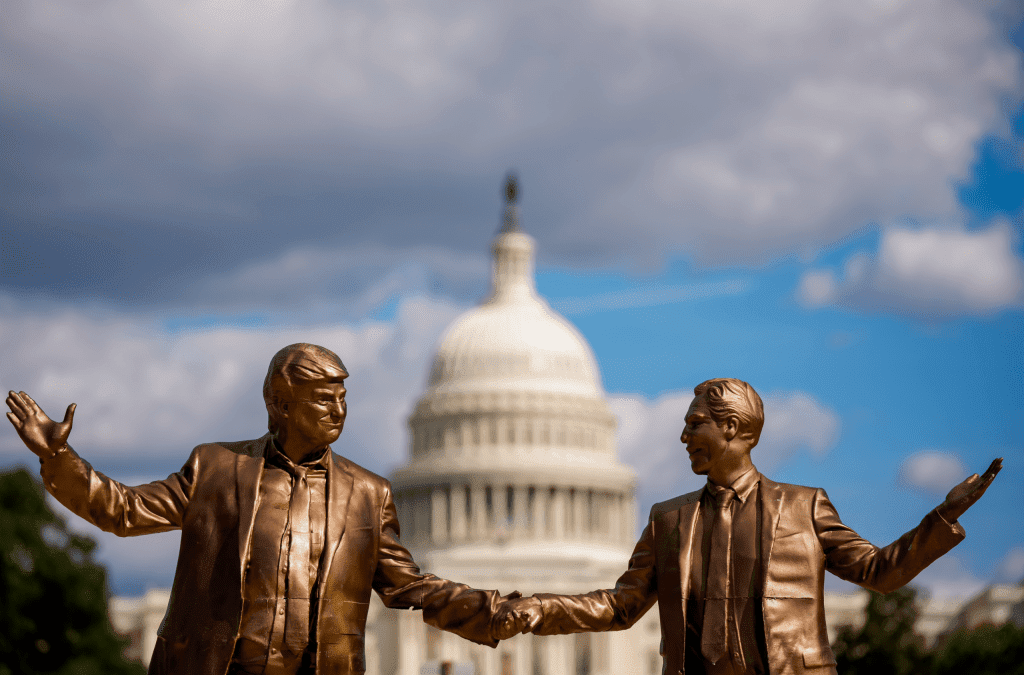
President Donald Trump signed a bill last Wednesday directing the Department of Justice to release more files from the investigations into the infamous sex offender, sex trafficker, and international political power broker Jeffrey Epstein. Will the public finally see the full release of the Epstein Files? Or will the Trump administration withhold and redact the information it does not want people to see? TRNN Editor-in-Chief Maximillian Alvarez and Inequality Watch reporters Taya Graham and Stephen Janis report back from a truly wild week in Washington, DC, and answer your questions about one of the biggest political scandals in US history.
Credits:Studio Production / Post-Production: David Hebden
Transcript
The following is a rushed transcript and may contain errors. It will be updated as soon as possible.
Maximillian Alvarez:After refusing to release the Epstein files and claiming the entire massive scandal was a hoax crafted by Democrats, President Donald Trump has apparently changed course in the face of a full-on revolt from his MAGA base, as well as intensifying pressure from Democrats, and even members of his own party. On Wednesday, Trump signed a bill directing the Justice Department to release more files from the investigation into the infamous sex offender, sex trafficker, and international political power broker Jeffrey Epstein.So, will we finally see the full release of the Epstein files? Will the public get the full transparency that we’ve been promised or the selective transparency? And what will the political fallout be? The Department of Justice has 30 days to release the documents, but it’s frankly unclear what the department will release and how much. The bill calls for the Attorney General to make unclassified
by Mansa Musa | Nov 24, 2025 | Politics and Movements: US, prison reform, Prisons and Policing, Rattling the Bars, video, Wisconsin
Wisconsin’s much-touted prison overhaul plan promises to close crumbling facilities like Green Bay Correctional Institution, but people locked up inside these facilities may have to wait years for relief they desperately need now. In this episode of Rattling the Bars, formerly incarcerated organizer Sean Wilson joins host Mansa Musa to discuss whether Wisconsin’s bipartisan prison plan will deliver real transformation to a broken justice system, or if it simply amounts to a construction project that leaves that system intact.
Guest:
Sean Wilson is the senior director of organizing and partnerships at Dream.Org. In his role, he is responsible for overseeing capacity building, leadership development programs, and grassroots partnerships. Over the past two and a half years, Sean has led the team in building one of the most transformational training programs in the nation — the Dream Justice Cohort — as part of the justice program. Sean was born and raised in Milwaukee, Wisconsin, and has organized at the state and local level around policy change related to youth justice, voting rights, police reform, and criminal justice.
Additional links/info:
Sean Wilson, Wisconsin Examiner, “I lived inside Green Bay Correctional. Wisconsin can’t wait another four years”
Credits:Producer / Videographer / Post-Production: Cameron Granadino
Transcript
The following is a rushed transcript and may contain errors. An updated version will be made available as soon as possible.
Mansa Musa:Welcome to this edition of Rattling the Bars. I’m your host, Mansa Musa. October the 28th. Wisconsin State legislators on both sides of the aisle voted in favor of a sweeping proposal by governor of Wisconsin, Tony Evers, to overhaul the state correctional facilities in this overhaul package. In theory, the governor want to
by Maximillian Alvarez | Nov 19, 2025 | brazil, climate action, Climate Change, Climate Crisis, Economy and Inequality, Politics and Movements: International, Politics and Movements: US, video
The 2025 United Nations Climate Change Conference, more commonly known as COP30, began on Nov. 10 in Belém, Brazil, on the edge of the Amazon rainforest. This year’s COP conference has more fossil fuel lobbyists in attendance than any previous conference, but it has also drawn the biggest delegation of Indigenous peoples from around the world—each group representing competing visions for addressing the climate crisis. TRNN Editor-in-Chief Maximillian Alvarez speaks with Dharna Noor, fossil fuels and climate reporter at Guardian US, about what actions are and are not being taken at COP30, and what the results of this year’s climate summit will mean for humanity’s future on a rapidly heating Earth.
Additional links/info:
Dharna Noor, Guardian US, “‘Without our expertise, mistakes get made’: The Cop30 campaign to give workers a voice”
Dharna Noor & Jonathan Watts, Guardian US, “Thousands hit streets of Belém to call for action during crucial Cop30 summit”
Credits:
Studio Production / Post-Production: David Hebden
Transcript
The following is a rushed transcript and may contain errors. A proofread version will be made available as soon as possible.
Maximillian Alvarez:
As the Philippines reel from historic typhoons. As Caribbean countries like Jamaica, Haiti, and Cuba rush to recover from a historic hurricane as Iran scrambles amid a historic drought that as people’s water taps running dry, the weary eyes of a battered world turned to Belém, Brazil, where the 30th UN Climate Summit is currently taking place. The 2025 United Nations Climate Change Conference, more commonly known as COP30, began on November 10th and will conclude on November 21st. Our guest today just returned to Baltimore from COP30 in Brazil and is here to give us a breakdown of