by Joseph Zeballos-Roig | Nov 7, 2026 | Economy, Opinion, White House
President Donald Trump has long had a bone to pick with the Federal Reserve. Earlier this year, the Justice Department launched a criminal probe against then-Fed Chair Jerome Powell that was intended to force him out. Even after Powell was succeeded as chair by Kevin Warsh, the president has never let up in his quest to bludgeon the central bank into lowering interest rates.
“I’m a smart voice and should be listened to,” Trump told The Wall Street Journal late last year.
Warsh is about to enter the sixth month of his tenure helming the Fed. Both during and since his confirmation, he has faced scrutiny over his independence from the executive branch, but so far he has demonstrated he’s serious about fighting inflation. Now the Fed can count on new armor against Trump’s temper: A Democratic-controlled Senate.
GOP control of the Senate meant senators had to accede to Trump’s demands on nominees.
Though the inflation rate is well above the Fed’s 2% target, Trump has long argued the Fed should lower interest rates. As recently as September, after the Fed raised rates to a range of 3.75%-4.00%, the president said rates should be at 1% “or less.” With at least 54 seats after this week’s midterm elections, Senate Democrats are poised to deal a blow to the president’s goal.
Interest rates influence the cost of personal loans, auto loans and mortgages for American families. It also affects how much interest the U.S. government pays on its towering national debt. They are set by the Federal Open Market Committee — and of the FOMC’s 12 members, seven are also members of the Fed’s Board of
by Steve Benen | Nov 6, 2026 | Economy, Maddowblog, White House
Expectations heading into this week showed projections of about 59,000 new jobs being created in the United States in October. As it turns out, according to the new report from the Bureau of Labor Statistics, the totals far exceeded those expectations.
All told, the economy added 165,000 jobs in October, and the overall unemployment rate inched lower, falling from 4.2% to 4.1%. Adding to the good news, job totals from August and September were also revised up by a combined 84,000 jobs.
The news wasn’t entirely encouraging — the BLS report showed more subdued wage growth, which is a problem for consumers trying to keep pace with rising inflation — but overall, this is one of the more promising monthly job reports of the year.
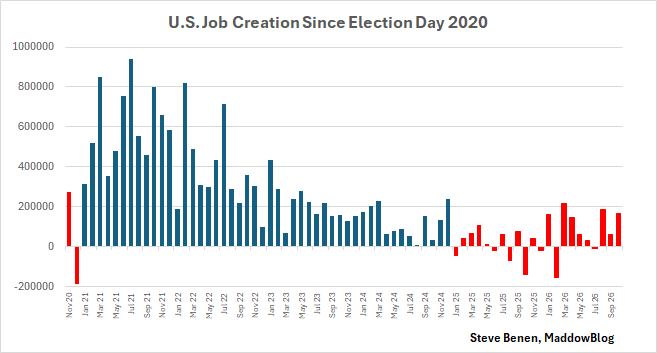
As for the larger context, 10 months into 2026, the U.S. economy has created 861,000 jobs so far this year — a monthly average of roughly 86,000 — which is a deeply underwhelming total that plainly contradicts the White House’s routinely happy talk about current conditions.
All told, the U.S. economy has added 977,000 jobs over Trump’s 22-month second term. Over the previous 22 months, the economy added nearly 3.25 million jobs. To date, the White House hasn’t even tried to explain why the domestic job market worsened after the Republican president took office.
To contextualize the data, I put together this chart to show month-to-month totals since the 2020 election. The blue columns point to Joe Biden’s presidency, while the red columns point to Trump’s.
This post updates our related earlier coverage.
The post Job market showed signs of life in October, in an otherwise disappointing year appeared first on MS
by Robert Reich | Nov 4, 2026 | Article, Democrats, Economy, Economy and Inequality, elections, midterms, Opinion, Politics and Movements: US, Reprint, Trump
This story originally appeared in Common Dreams on Nov. 04, 2026. It is shared here under a Creative Commons (CC BY-NC-ND 3.0) license.
The great sleeping giant of America has awakened, taken a hard look at what’s become of the nation, and roared a thunderous “NO!”
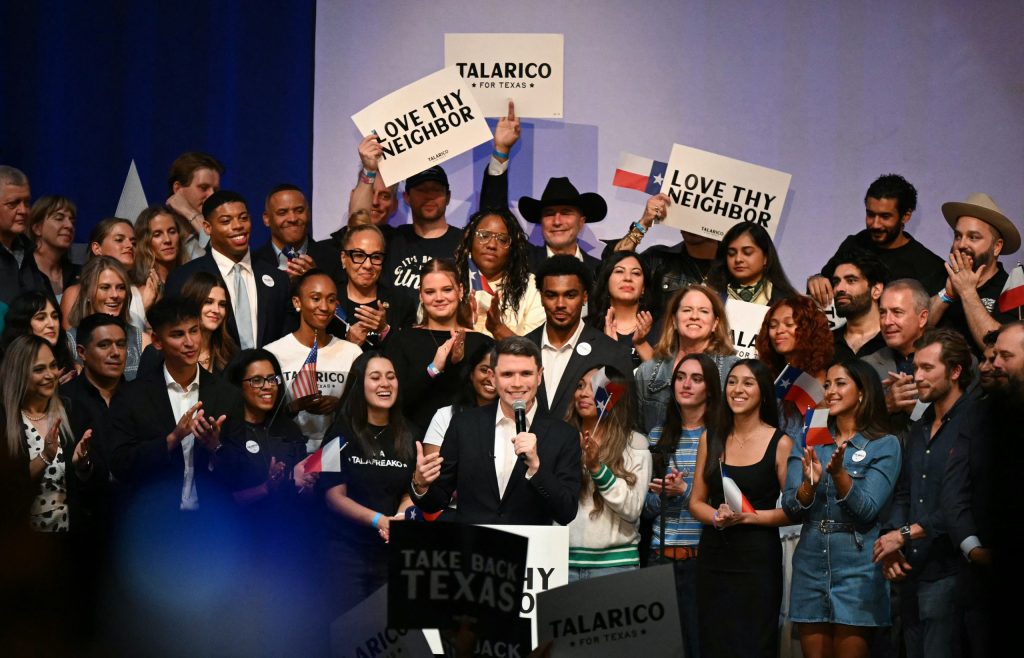
What occurred yesterday was not—as some are saying—the inevitable mid-term swing of the pendulum against the party in power. Texas hasn’t elected a Democratic senator since 1988. The last time Kansas elected a Democratic senator was 1932.
Nor was it just the economy. Americans are unhappy with inflation, but the country is not in a depression or recession. Unemployment remains quite low.
Nor, finally, was it all due to Trump. Despite Trump’s repeated efforts to get voters to “pretend” he was on the ballot, he was not. Most Republican candidates barely mentioned him and many Democratic candidates stressed local or statewide issues rather than fixate on him.
Something much larger is responsible for what occurred: anti-establishment populism. It’s burst forth against the mammoth corporations that have scored record profits while most Americans have had to pay more. Against the mega donors and super PACs that have flooded American politics with more campaign money—legalized bribes—than ever before. And against the Big Tech billionaires who have become the most powerful force in the American economy and society—as well as Trump’s and the Republican Party’s most visible backers.
The irony is that anti-establishment anger propelled Trump into the presidency in 2016 and again in 2024. Many Americans had found his politically-incorrect rants and “America first” nativism to reflect their own anger at being disrespected or left behind. “I am your warrior,” he told supporters when
by Jake Johnson | Nov 4, 2026 | Article, Economy, Economy and Inequality, elections, midterms, Politics and Movements: US, Reprint, Texas
by Taya Graham and Stephen Janis | Nov 2, 2026 | Democrats, Economy, elections, Inequality Watch, midterms, Politics and Movements: US, Socialism, video
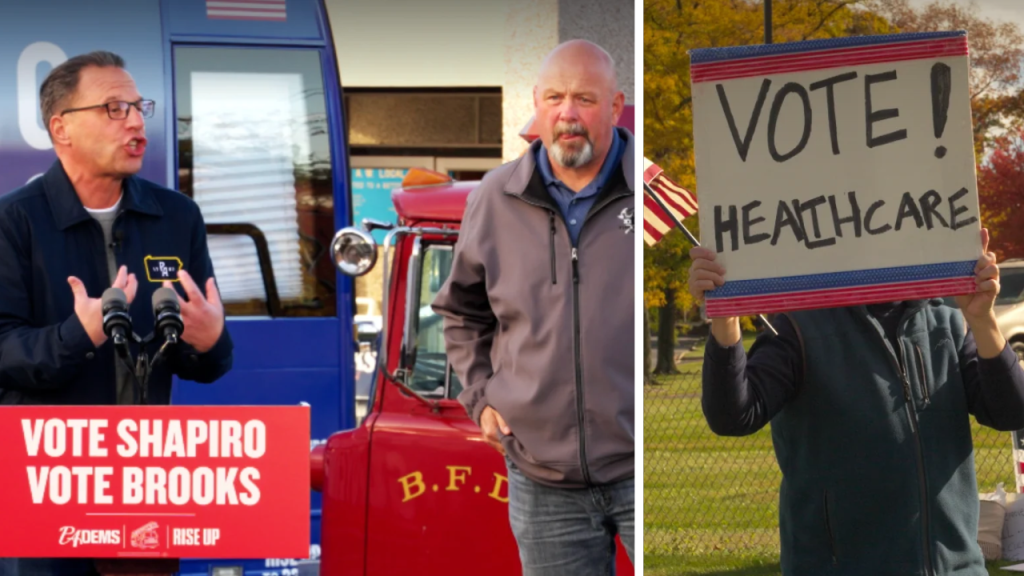
Democrats are fired up. Some MAGA voters are questioning whether to show up. And in one of America’s most closely watched congressional battlegrounds, that divide could have enormous implications for the fight over control of the House.The Real News Network traveled to Pennsylvania’s Lehigh Valley, home to the fiercely contested 7th Congressional District, to speak directly with voters about the issues, frustrations, and political ideas shaping their decisions for the 2026 midterm elections.From Allentown to Bethlehem, we talked with voters across the political spectrum about what motivates them to head to the polls and what might convince others to stay home.In a district where Republican incumbent Ryan Mackenzie faces Democratic challenger Bob Brooks, questions about economic inequality, the cost of living, war and the role of government are taking center stage.We also explore the debate over socialism and progressive economic ideas. While mainstream media’s political commentary often portrays socialism as politically toxic, conversations with voters raise interesting questions about how those ideas are actually being received on the ground.Could voter enthusiasm, political disillusionment, and changing attitudes toward economic policy help shape the outcome of one of the country’s most closely watched House races?Join Taya Graham and Stephen Janis for an on-the-ground look at Pennsylvania’s 7th District, where the battle for Congress is playing out one voter at a time.
Credits:
Production/Post-production: Taya Graham, Stephen Janis
Transcript
A transcript will provided when ready
by Taya Graham and Stephen Janis | Nov 2, 2026 | AI, Economy, Economy and Inequality, Inequality Watch, Politics and Movements: US, video
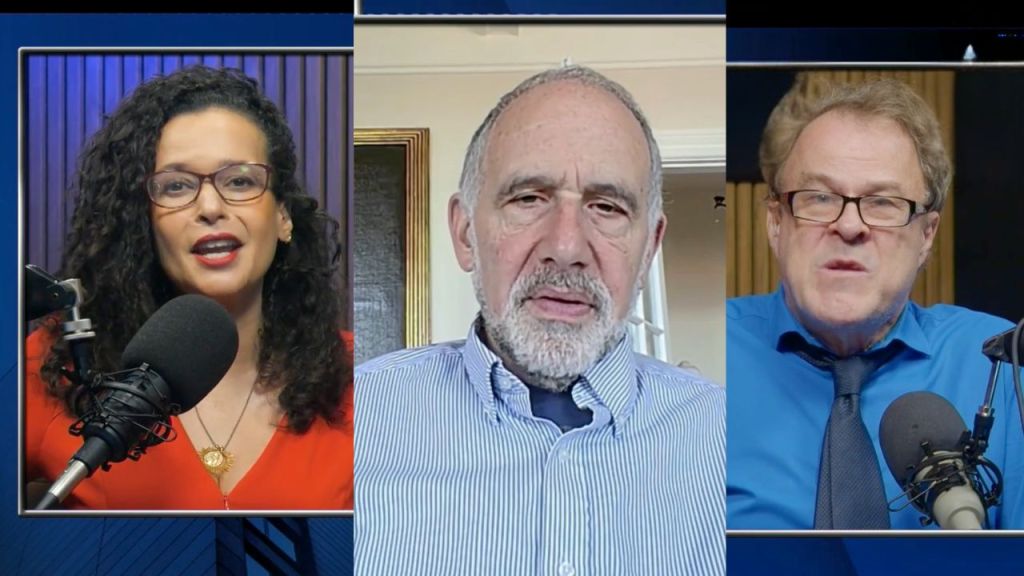
Is the AI bubble finally showing signs of popping? As technology companies pour ENORMOUS sums into artificial intelligence, troubling financial indicators are raising questions about whether the industry can generate enough revenue to justify its investments.Economist Dean Baker, co-founder of the Center for Economic and Policy Research (CEPR), joins Taya Graham and Stephen Janis on Inequality Watch to examine the growing financial risks behind the AI boom and what could happen if the money stops flowing.From rising borrowing costs at AI infrastructure company CoreWeave to concerns about massive data-center investments, Baker examines the growing divide between the extraordinary promises of artificial intelligence and the economic realities of financing it.But the biggest question may not be whether the AI bubble bursts. It’s who will pay if it does.Could a financial collapse threaten workers, retirement savings, and the broader economy? Could struggling AI companies seek taxpayer-funded bailouts after years of extraordinary private investment? And why should ordinary Americans bear the consequences of financial decisions they had no role in making? And what about the power grid and our limited potable water?!In this episode, Taya Graham, Stephen Janis, and Dean Baker explore the economics of the AI industry, the risks of speculative investment, and the consequences for working people if the boom fails to deliver its promised returns.As the debate over AI increasingly focuses on the technology’s potential dangers, Inequality Watch asks another question: What happens when an industry promising to transform humanity can’t make the numbers add up? And what if humanity doesn’t want the promised transformation?
Credits:
Producers: Taya Graham and Stephen Janis
Writer: Stephen Janis
Editing/Post-Production: Stephen Janis/Cameron Granadino
Transcript
The following is a rushed transcript