The Shift: 25 years after 9/11, our country is still dominated by the “War on Terror”
This story originally appeared in Mondoweiss on Sep. 11, 2026. It is shared here with permission.
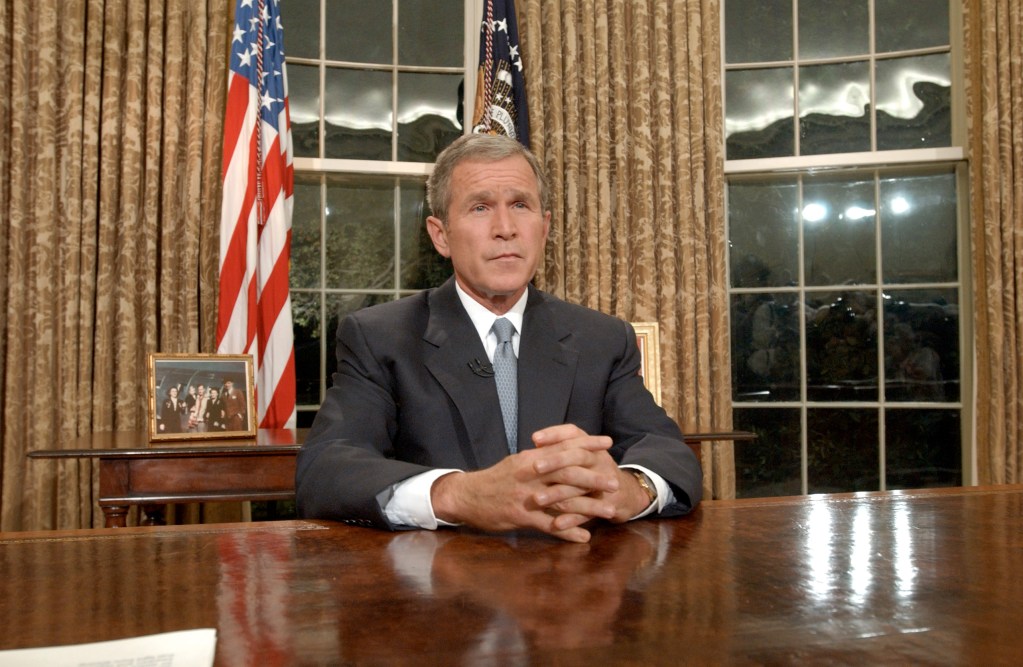
This week marks the 25th anniversary of the 9/11 attacks.
The United States has experienced much political and social upheaval since then, but the subsequent “War on Terror” paved the way for our current moment, and there are booming echoes of the era all around us.
Once again, the United States is waging a disastrous war in the Middle East with no discernible end in sight. Islamophobic rallies targeting NYC Mayor Zohran Mamdani conjure up memories of the “Ground Zero Mosque” controversy. The government designates activist and advocacy organizations as terrorists. The Guantánamo Bay detention camp remains open. In fact, a legal immigrant was just sent there.
CBS reveals that the Taliban seized roughly $7 billion worth of American-purchased military hardware after the United States officially lost that war 5 years ago.
“Taliban fighters patrol in armored vehicles once supplied to Afghan forces, wearing American tactical gear and carrying American weapons,” reads the report. “CBS News saw one Humvee in the Afghan capital still adorned with a faded Green Bay Packers decal — a remnant from its past operators.”
The small number of Americans who opposed that war were either dismissed or attacked. So too were those who warned that the Bush administration’s overreach would result in disaster.
“The civil libertarians were mostly ignored, and as one new threat followed another — Iraq, ISIS, ‘lone wolves’ — the president’s reach continued to grow. Across the Bush and Obama administrations, the commander in chief was given, or simply took, new powers to prosecute, shut down and seize the assets of alleged terrorist groups and their supporters,” writes Radley

Some in Gaza’s youngest generation may not even know what toys are

Authoritarians will target effective legal organizing, Minnesota defendant warns
This article was originally published by Truthout on Aug. 12, 2026. It is shared here under a Creative Commons (CC BY-NC-ND 4.0) license.
The U.S. government is attempting to use conspiracy charges to imprison organizers, just as it did in its war against the Black Panther Party, New Left, and other 1960s and ‘70s radicals through its counterintelligence program, COINTELPRO. Through this method, the Trump regime shares the goal of the Nixon administration of disrupting and attempting to destroy domestic opposition to its authoritarian agenda.
Two weeks after the September 2025 murder of right-wing activist Charlie Kirk, Donald Trump issued the National Security Presidential Memorandum 7 (NSPM-7), entitled “Countering Domestic Terrorism and Organized Political Violence.” The memorandum created a category of “domestic terrorist” that, while lacking legal authority, broadly includes anyone who believes in things deemed as constituting “anti-Americanism, anti-capitalism, and anti-Christianity; support for the overthrow of the United States Government; extremism on migration, race, and gender; and hostility towards those who hold traditional American views on family, religion, and morality.” NSPM-7 openly calls for “investigative” tactics designed to “disrupt” and “dismantle” political movements and organizations.
Following the recent use of conspiracy charges to successfully convict people in both the Prairieland case in Texas and the Spokane 3 case in Washington, 15 community members in the Twin Cities were indicted on June 16 for resisting the Trump administration’s December 2025 immigration crackdown dubbed “Operation Metro Surge.” According to the indictment, all defendants are identified as “members and associates of … Direct Action Minnesota (‘DAMN’),” which helped organize Minnesota’s resistance. That organization is now defunct in light of the arrests and revelations about government infiltration.
The primary charge against
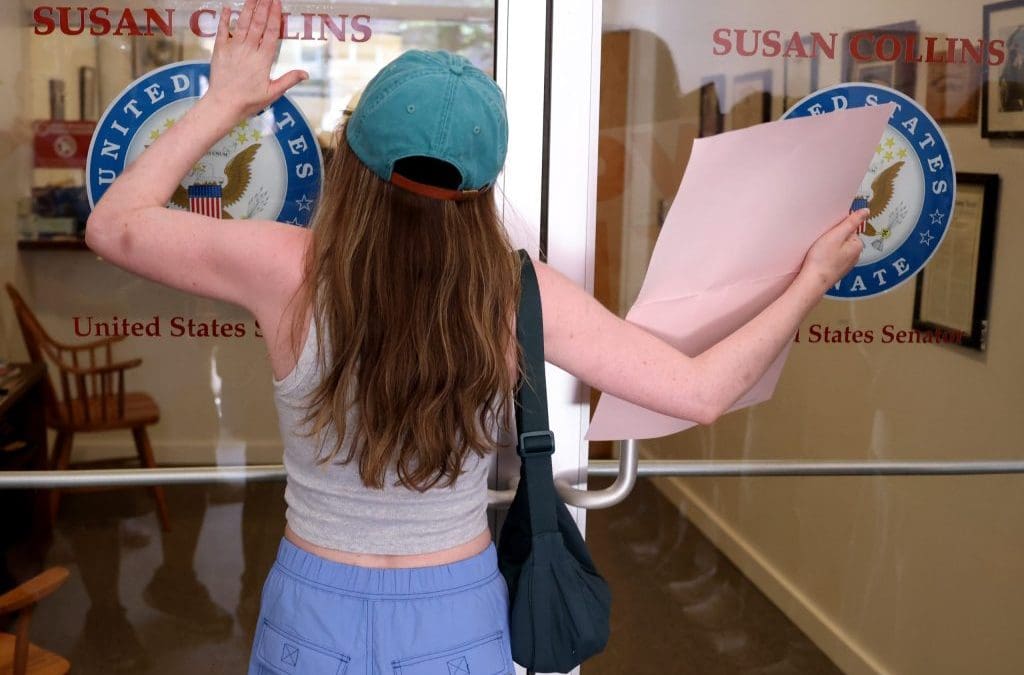
ICE funding approved by Susan Collins and Trump GOP to deliver electric shock gloves to agents nationwide
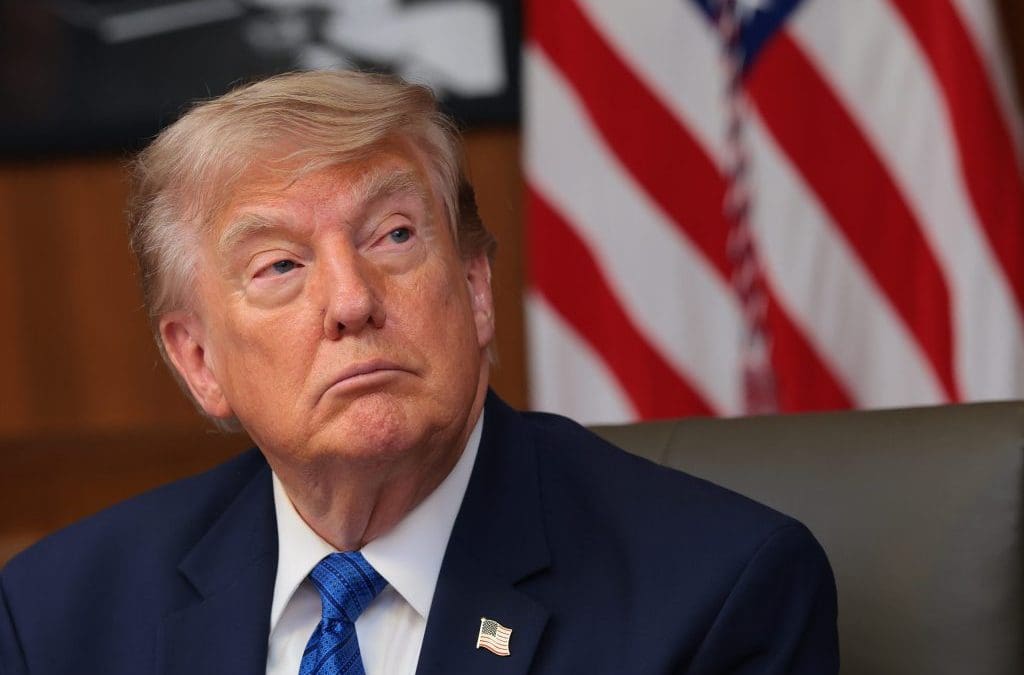
Trump doesn’t rule out ‘national security emergency for elections’ floated by far-right host
This story originally appeared in Common Dreams on Aug. 11, 2026. It is shared here under a Creative Commons (CC BY-NC-ND 3.0) license.
A right-wing talk show host on Tuesday pushed President Donald Trump to declare a “national security emergency” that would let him meddle in the 2026 midterm elections—and the president did not rule it out.
In an appearance on Real America’s Voice, Trump listened as host Wayne Allyn Root rattled off actions he would like to see the president take ahead of the midterms.
“Let me put an idea in your head,” Root told Trump. “Because it’s so hard to get the Senate to do anything, now they’re on recess, they never get anything done. If they never get the SAVE America Act done, you have the right to declare a national security emergency for elections.”
🚨🚨🚨WAYNE ALLYN ROOT: You have the right to declare a national security emergency for elections. If you do this in the next month, we will get photo ID, proof of citizenship, and a limit to mail ballotsTRUMP: Let me just say stranger things have happened. I’ll leave it at… pic.twitter.com/SvXYoYI0lQ— Aaron Rupar (@atrupar) August 11, 2026
Root then told the president that “if you do this in the next month” it would allow for the implementation of photo identification and proof of citizenship requirements, as well as restrictions on mail-in ballots.
“Let me just say that stranger things have happened,” Trump said in response. “I’ll leave it at that.”
The US Constitution does not give the president power to declare a “national emergency” that would allow him to unilaterally rewrite states’ election laws.
Regardless, ABC News reported in February that a group of pro-Trump attorneys were circulating a 17-page draft order that