by Michael Arria | Sep 14, 2026 | Article, Iran, Iraq, Politics and Movements: International, Politics and Movements: US, Reprint, terrorism
This story originally appeared in Mondoweiss on Sep. 11, 2026. It is shared here with permission.
This week marks the 25th anniversary of the 9/11 attacks.
The United States has experienced much political and social upheaval since then, but the subsequent “War on Terror” paved the way for our current moment, and there are booming echoes of the era all around us.
Once again, the United States is waging a disastrous war in the Middle East with no discernible end in sight. Islamophobic rallies targeting NYC Mayor Zohran Mamdani conjure up memories of the “Ground Zero Mosque” controversy. The government designates activist and advocacy organizations as terrorists. The Guantánamo Bay detention camp remains open. In fact, a legal immigrant was just sent there.
CBS reveals that the Taliban seized roughly $7 billion worth of American-purchased military hardware after the United States officially lost that war 5 years ago.
“Taliban fighters patrol in armored vehicles once supplied to Afghan forces, wearing American tactical gear and carrying American weapons,” reads the report. “CBS News saw one Humvee in the Afghan capital still adorned with a faded Green Bay Packers decal — a remnant from its past operators.”
The small number of Americans who opposed that war were either dismissed or attacked. So too were those who warned that the Bush administration’s overreach would result in disaster.
“The civil libertarians were mostly ignored, and as one new threat followed another — Iraq, ISIS, ‘lone wolves’ — the president’s reach continued to grow. Across the Bush and Obama administrations, the commander in chief was given, or simply took, new powers to prosecute, shut down and seize the assets of alleged terrorist groups and their supporters,” writes Radley
by Sara Awad | Aug 14, 2026 | Article, Gaza, Israel, Palestine, Politics and Movements: International, Reprint
by Maximillian Alvarez | Aug 14, 2026 | education, Gaza, Israel, Palestine, Podcast, Politics and Movements: International, Politics and Movements: US
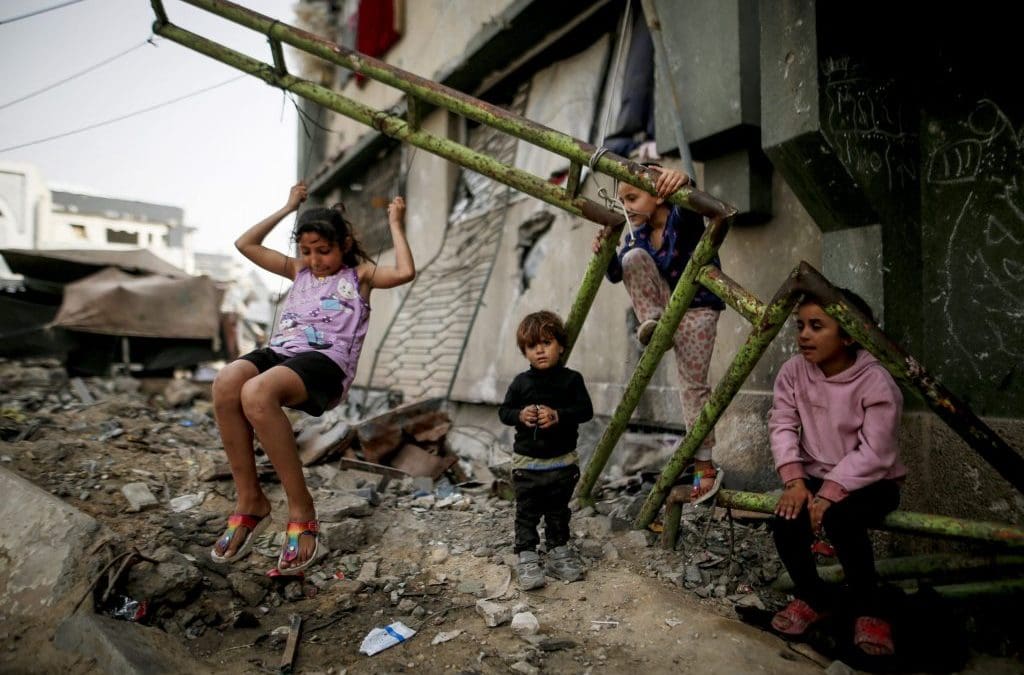
In 2024, at the height of Israel’s US-backed genocide of Palestinians in Gaza, one of the most widespread waves of college campus protests since the Vietnam War exploded across the United States. Then came the repressive backlash. Over the past two years, we’ve seen a harrowing assault on free speech and the right to protest from the federal government and Zionist organizations, and universities themselves have ramped up their own internal surveillance and repression machines, weaponizing them against their own students, grad students, and faculty.
Life, learning, and activism on American college campuses looks very different today than it did in 2024, but the student-led Palestine solidarity movement is not going away. As a new school year begins, we speak with four students at different college campuses across the University System of Maryland (USM), who are all organizers and members of the USM Divestment Coalition for Palestine, about how the movement is maintaining its demands and adapting its tactics in 2026.
Additional links/info:
USM DIvestment Coalition for Palestine website, Instagram, and Linktree
Diamondback Staff, The Diamondback, “USM students call for divestment from defense companies at Board of Regents meeting”
Credits:
Audio Post-Production: Alina Nehlich
Transcript
The following is a rushed transcript and may contain errors. It will be updated.Maximillian Alvarez:
Welcome back to the Real News Network. I’m Maximillian Alvarez. Two years ago at the height of Israel’s US-backed genocide of Palestinians in Gaza, we witnessed one of the most widespread waves of college campus protests in this country since the Vietnam War. Student-led Palestine solidarity encampments exploded from Columbia University in New York to UCLA to right here in Baltimore. And as we’ve been covering continuously here at
by Richard D. Wolff | Aug 6, 2026 | Article, Economy and Inequality, Europe, Politics and Movements: International, Reprint, Russia, War
This story originally appeared in Professor Richard Wolff’s Substack on July 21, 2026. It is shared here with permission.
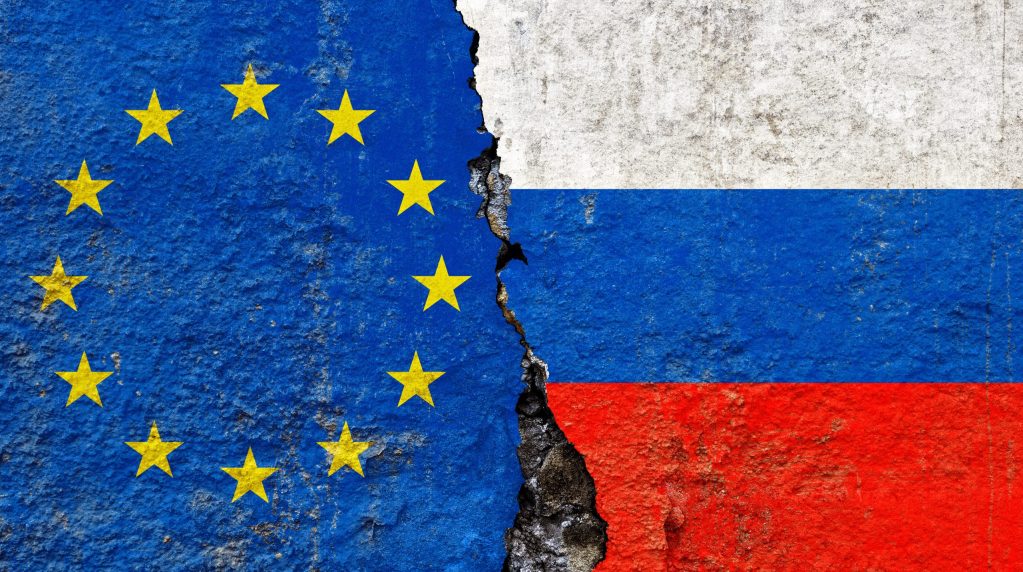
Deeply divided by nationalism and deprived of its vast colonies by the last century’s catastrophic two world wars, Western Europe has been in decline ever since. Recently, that decline has become drastic and desperate as Western Europe falls ever further behind — economically, militarily, and politically — today’s two superpowers: the US and China. Mediocre and unpopular leaders reflect Western European decline. They bet and built their careers on accepting junior partner positions vis-à-vis the United States. But Europe’s decline now threatens to split Europe apart. Inside each nation, rich and powerful minorities use their social positions to sustain their wealth and power while the masses bear most of the burdens of decline offloaded onto them by the rich and powerful. The problems flowing from these cumulative developments are approaching points of social explosion. Despite the lessons taught by the two world wars, many Western European leaders once again provoke and prepare for a war, this time against Russia, notwithstanding the awful risks of nuclear weapons. One key question to ask: why is this happening?
From 1945 to 1990, Cold War set Western European nations against the USSR and its Eastern European allies in many ways and on many levels. Yet that war remained cold. In 2026, after more than three decades of post-Cold War peace, a military war between a largely unified Europe (East and West) and post-Soviet Russia seems imminent. Such a war has been prepared by NATO’s growth, its moving eastward toward Russian borders since 1990; by Russia’s 2022 invasion
by Renée Feltz, Truthout | Jul 30, 2026 | Article, Political Prisoners, Politics and Movements: International, Politics and Movements: US, Prisons and Policing, Reprint
This article was originally published by Truthout on July 28, 2026. It is shared here under a Creative Commons (CC BY-NC-ND 4.0) license.
World-renowned political prisoner Mumia Abu-Jamal is 72 years old, suffering multiple health problems, and may die in prison, say legal advocates in a new request they filed today that asks the United Nations to support his release. Abu-Jamal’s legal team decided to appeal to the UN after having exhausted nearly every legal avenue for relief available in the United States.
Abu-Jamal was a Black Panther and journalist when he was convicted of the 1981 murder of Philadelphia police officer Daniel Faulkner, and he has always maintained his innocence. His death sentence was overturned in 2001, and in 2011, Pennsylvania resentenced him to life without parole. Since then, “each attempt to secure Mr. Abu-Jamal a new and fair trial has been rejected,” argues a submission his lawyer Bret Grote and others made on his behalf to the UN’s Working Group on Arbitrary Detention.
Grote told Truthout the filing, which UN rules limit to 20 pages, attempts to summarize nearly a half-century of the “failures of the criminal legal system” in Abu-Jamal’s case, including an “unfair trial, a biased appellate process, decades of surveillance and censorship, and a death by incarceration sentence that has been recognized by the United Nations as violating international human rights standards.”
The UN determination of whether someone faces “arbitrary detention” is interpreted “more broadly” than simply being “against the law.” It also considers “elements of inappropriateness, injustice, lack of predictability and due process of law.”
Abu-Jamal’s lawyers say he was in “continuous solitary confinement” from 1983 to 2011 on Pennsylvania’s death row, before being transferred to the
by Sharon Zhang | Jul 23, 2026 | Article, Israel, Military Industrial Complex, Politics and Movements: International, Politics and Movements: US, Reprint
This article was originally published by Truthout on July 22, 2026. It is shared here under a Creative Commons (CC BY-NC-ND 4.0) license.
Rep. Alexandria Ocasio-Cortez (D-New York) issued a stark warning this week about a congressional measure that would merge the U.S. and Israel’s military technology industrial complexes, saying that it represents an “existential threat” to U.S. democracy.
The provision — called the “U.S.-Israel Defense Technology Cooperation Initiative,” or Section 219 — is included in the 2027 National Defense Authorization Act (NDAA), which passed the House in a 216 to 212 vote on Wednesday. Six Democrats broke from the party to vote “yes,” and seven Republicans voted “no.” The bill is still stalled in the Senate, however, after Democrats voted against its advancement last week.
The NDAA “includes a provision to merge parts of our military with the [Israeli military],” Ocasio-Cortez said in a post on social media on Tuesday. “This [provision] is an existential threat to American sovereignty and democracy. Every member of Congress must vote NO.”
The provision, if included in the final bill, would entrench Israel’s enmeshment with the U.S. military, mandating cooperation with regard to technology and intelligence with Israeli forces even when the U.S. gets little in return. Israeli Prime Minister Benjamin Netanyahu has advocated for the measure as public scrutiny over the U.S.’s monetary military aid to Israel has increased amid Israel’s genocide in Gaza.
Some lawmakers in Congress have waged a bipartisan effort for Section 219 to be stripped from the NDAA. Representatives Ro Khanna (D-California) and Thomas Massie (R-Kentucky) have introduced an amendment to the bill to remove Section 219.
However, these efforts have been quashed by pro-Israel lawmakers, who