by Michael Fox | Sep 14, 2026 | First Amendment, free speech, Podcast, The Battle for Free Speech
https://www.spreaker.com/show/7063186/episodes/feed
Today, host Michael Fox speaks with Mary Anne Franks. She is a professor of intellectual property, technology, and civil rights law at George Washington University and the president of the Cyber Civil Rights Initiative. She is also the author of the book Fearless Speech: Breaking Free from the First Amendment,which was published in 2024 by Bold Type Books.
She has an incredible analysis about free speech historically and today — the challenges we face protecting it and how we need to try to understand free speech beyond the First Amendment. Michael and Mary Anne spoke last year, in 2025.
This is the second bonus episode of The Battle for Free Speech. The Battle for Free Speech Podcast is a production of The Real News Network hosted by Michael Fox and Marc Steiner.
Guests:
Mary Anne Franks
Resources:
You can check out the full Battle for Free Speech podcast series here.
Many thanks to everyone who has supported this show.
Follow The Battle For Free Speech on Spotify or Apple Podcasts. Support Michael Fox’s reporting at patreon.com/mfox. Never miss an episode — sign up for The Real News newsletter at therealnews.com.
Transcript
The following is a rushed transcript and may contain errors. It will be updated.Michael Fox:
Hi folks. I’m your co-host, Michael Fox, and this is the Battle for Free Speech. This is the second bonus episode in this series, and I’m really excited about this one. Today, I’m bringing you my full conversation with Marianne Franks. You will likely remember her from this series as I reached out to her in numerous episodes. She’s a professor in intellectual property technology and civil rights law at George Washington University and the president of the Cyber
by Maximillian Alvarez | Aug 14, 2026 | education, Gaza, Israel, Palestine, Podcast, Politics and Movements: International, Politics and Movements: US
In 2024, at the height of Israel’s US-backed genocide of Palestinians in Gaza, one of the most widespread waves of college campus protests since the Vietnam War exploded across the United States. Then came the repressive backlash. Over the past two years, we’ve seen a harrowing assault on free speech and the right to protest from the federal government and Zionist organizations, and universities themselves have ramped up their own internal surveillance and repression machines, weaponizing them against their own students, grad students, and faculty.
Life, learning, and activism on American college campuses looks very different today than it did in 2024, but the student-led Palestine solidarity movement is not going away. As a new school year begins, we speak with four students at different college campuses across the University System of Maryland (USM), who are all organizers and members of the USM Divestment Coalition for Palestine, about how the movement is maintaining its demands and adapting its tactics in 2026.
Additional links/info:
USM DIvestment Coalition for Palestine website, Instagram, and Linktree
Diamondback Staff, The Diamondback, “USM students call for divestment from defense companies at Board of Regents meeting”
Credits:
Audio Post-Production: Alina Nehlich
Transcript
The following is a rushed transcript and may contain errors. It will be updated.Maximillian Alvarez:
Welcome back to the Real News Network. I’m Maximillian Alvarez. Two years ago at the height of Israel’s US-backed genocide of Palestinians in Gaza, we witnessed one of the most widespread waves of college campus protests in this country since the Vietnam War. Student-led Palestine solidarity encampments exploded from Columbia University in New York to UCLA to right here in Baltimore. And as we’ve been covering continuously here at
by Maximillian Alvarez | Aug 13, 2026 | Economy, Economy and Inequality, health care, labor, Podcast, Working People
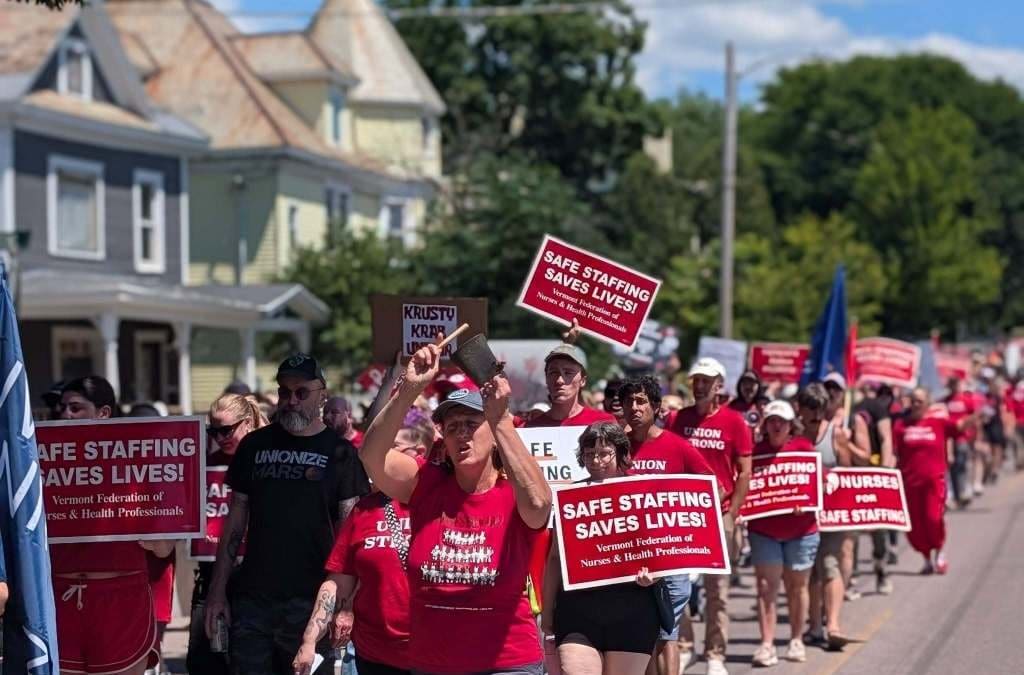
Frontline healthcare workers and the patients they serve are facing a major crisis at the University of Vermont Health network—the state’s leading healthcare provider. “In June, UVM Health eliminated over 140 positions across its network, a third of which were union positions,” Matt More reports at The Rake Vermont. “The cuts, which the hospital estimated will save $9.5 million, comes as the network faces a $300 million budget shortfall… Later that month, UVM Health handed down a speed-up order to its Medical Group, which includes outpatient clinics and more than 1,000 physicians, which practitioners say will result in briefer appointments with patients.”
How did Vermont’s flagship health network end up in this crisis? How is it affecting healthcare workers and their patients? And what can be done to fix it? In this episode of Working People, we speak with Melissa Lavallee, secretary of UVMMC Support Staff United and VP of healthcare for AFT-Vermont; and Teagan Cook, lead outpatient chemotherapy scheduler at her hospital and a chief steward in UVMMC Support Staff United.
Additional links/info:
UVMMC Support Staff Unitedwebsite, Facebook page, and Instagram
AFT-Vermont website, Facebook page, and Instagram
Matt Moore, The Rake Vermont, “UVM Health’s unions fight hospital cuts to protect their patients’ healthcare and their working conditions”
Town Meeting TV, “Put workers and patients first! – Solidarity town hall meeting with UVM Medical Center unions”
Olivia Gieger, VT Digger, “UVM Health cuts 142 jobs — an estimated $9.5 million in staff positions”
Featured Music:
Jules Taylor, Working People Theme Song
Credits:
Audio Post-Production: Jules Taylor
Transcript
Maximillian Alvarez:
Alright. Welcome everyone to Working People, a podcast about the lives, jobs, dreams, and struggles of the working class today. Working People is a proud
by Maximillian Alvarez | Aug 10, 2026 | Climate, Climate Crisis, Economy and Inequality, labor, Oil, Podcast, Politics and Movements: US, Working People
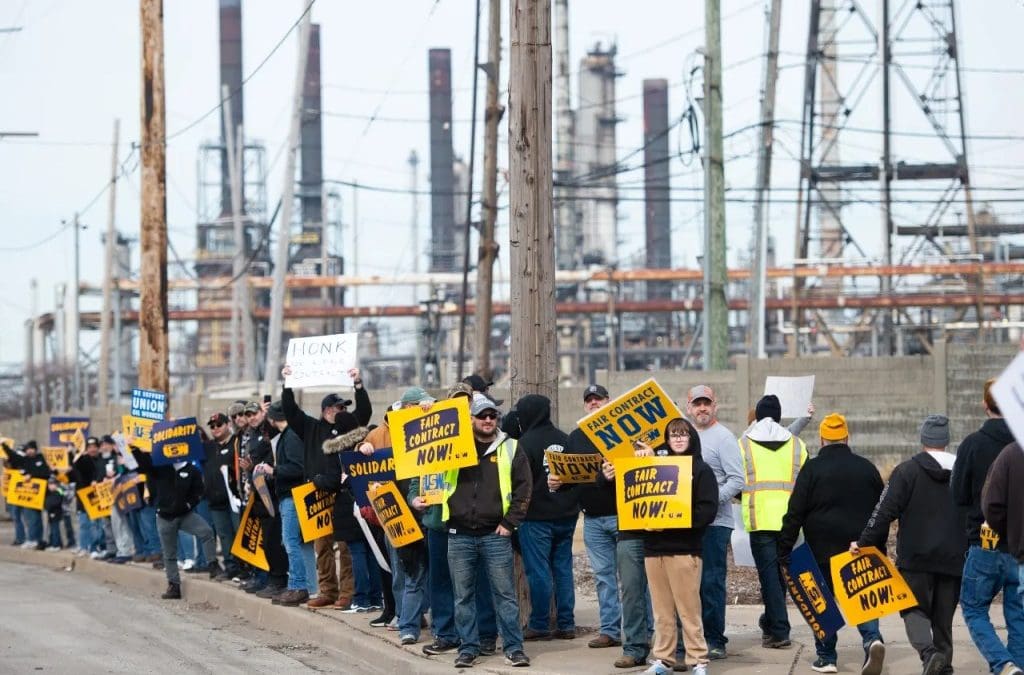
For the last five months, oil giant British Petroleum (BP) has locked 800 workers out of their jobs at a crude oil refinery in Whiting, Indiana. The facility, located on the southwestern shore of Lake Michigan, is BP’s last unionized oil refinery in the United States. BP says it is pursuing “modernized job structures, training, and upskilling,” but workers and their union—United Steelworkers Local 7-1—say that the company has not bargained in good faith, that its contract proposals pose blatant existential threats to workers’ jobs, pay, and collective bargaining rights, and that the company is illegally trying to crush the union out of existence with the lockout. In this episode of Working People, we speak with three locked out workers at the BP oil refinery in Whiting: Eric Schultz, president of USW Local 7-1; Leno Miller, assistant griever for USW Local 7-1; Tim Powell, a 19-year member of USW Local 7-1, and a volunteer for the lockout assistance committee.
Additional links/info:
USW Local 7-1 Official Lockout Update/Support Page
USW Local 7-1 Facebook page and Instagram
Sarah Lazare, Workday Magazine / The American Prospect, “Locked out refinery workers say BP is trying to ‘starve us,’ crush union”
Maximillian Alvarez, Working People / TRNN, “I survived the rig explosion that caused the Deepwater Horizon oil spill. This is what I saw”
Featured Music:
Jules Taylor, Working People Theme Song
Credits:
Audio Post-Production: Jules Taylor
Transcript
The following is a rushed transcript and may contain errors. It will be updated.
Maximillian Alvarez:
Alright. Welcome everyone to Working People, a podcast about the lives, jobs, dreams, and struggles of the working class today. Working People is a proud member of the Labor Radio Podcast Network and is brought to you in partnership with In These
by Kelly Hayes | Aug 6, 2026 | AI, big tech, data centers, Indigenous, Interview, Militarism, Native Americans, Podcast, Tribal Rights, Water
“It comes down to the stealing of everything that is and the taking of everything that is,” says Joseph White Eyes. In this episode of “Movement Memos,” host Kelly Hayes talks with Native organizers Joseph White Eyes and Krystal Two Bulls about the struggle against data centers in Native communities. The conversation explores how the AI boom is advancing a new era of colonial extraction…
Source
by Maximillian Alvarez | Aug 5, 2026 | Economy and Inequality, labor, Podcast, railroad, Working People
https://workingpeople.libsyn.com/rss
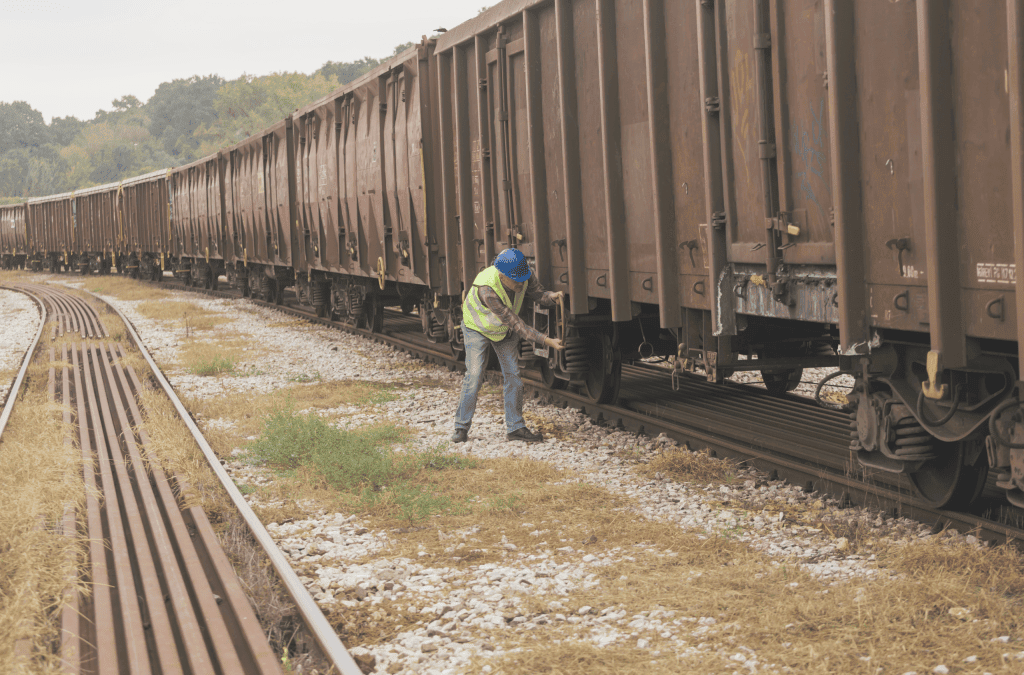
In 2022, the United States nearly experienced its first national railroad strike in decades, until then-President Joe Biden, along with Democrats and Republicans in Congress, stepped in to block a strike before it could begin. Rail labor unions were forced to accept contracts that did not substantively address long-brewing crises in the freight rail industry that have had disastrous consequences for frontline workers, trackside communities like East Palestine, Ohio, the passenger rail system, and the US supply chain writ large. In this episode of Working People, we speak with returning guest “Jay,” a veteran train dispatcher who’s been in the industry for 22 years, about what has changed—and what hasn’t—for rank-and-file railroad workers on the job over the last four years.
Additional links/info:
Maximillian Alvarez, Working People / TRNN, “Ask a railroad worker: How did railroad jobs get so bad?””
Maximillian Alvarez, Working People / TRNN, “Freight workers explain why a national railroad strike is looming”
Maximillian Alvarez, Working People / TRNN, “Railroad workers speak out after Congress and Biden block rail strike”
Mike L, TRNN, “A carman’s perspective on the East Palestine derailment and the railroad industry as a whole”
Maximillian Alvarez, TRNN, “US freight workers say it’s time to nationalize the railroads”
Featured Music:
Jules Taylor, Working People Theme Song
Credits:
Audio Post-Production: Jules Taylor
Transcript
The following is a rushed transcript and may contain errors. It will be updated.
Maximillian Alvarez: Alright. Welcome everyone to Working People, a podcast about the lives, jobs, dreams, and struggles of the working class today. Working People is a proud member of the Labor Radio Podcast Network and is brought to you in partnership with In These Times Magazine and The Real News Network.