by Maximillian Alvarez and Jules Taylor | Sep 15, 2026 | Economy, Economy and Inequality, Podcast, The Cultural Front, Working People
https://rss.libsyn.com/shows/126614/destinations/757400.xml
The 20th-century days of vinyl records, tape decks, CDs, Tower Records, and MTV have given way to our 21st-century age of MP3s and music streaming, Spotify, Amazon, YouTube, TikTok, and Ticketmaster. While certain people and certain companies in the music industry are making more money than ever, working musicians are finding it increasingly impossible to pay the bills and make a living from their art. In this episode of Working People, we speak with all four members of veteran Chicago rock band The Empty Pockets about the work that goes into being a professional musician, and the realities of working and trying to make a living in the music industry today.
Additional links/info:
The Empty Pockets website, Facebook page, Instagram, YouTube channel, and Spotify channel
Josh Solomon, Hypebot, “We stopped waiting to be chosen and mailed 100,000 CDs instead”
Jules Taylor Music website, Facebook page, Instagram, and Spotify channel
Featured Music:
Jules Taylor, Working People Theme Song
Credits:
Audio Post-Production: Jules Taylor
Transcript
The following is a rushed transcript and may contain errors. It will be updated.
Maximillian Alvarez:
Alright. Welcome everyone to Working People, a podcast about the lives, jobs, dreams, and struggles of the working class today. My name is Maximillian Alvarez.
Jules Taylor:
And I’m Jules Taylor.
Maximillian Alvarez:
So you guys all know Jules as the producer of this podcast, but let me tell you something about brother Jules here. Jules is a renaissance man. He is a podcaster himself, as many of you know. He’s a writer, a music producer, a poet, and a brilliant musician in his own right. And he does all the music for working people as well. And that’s why I really, really wanted us to host
by Maximillian Alvarez | Sep 14, 2026 | Economy, Economy and Inequality, labor, Podcast, Working People
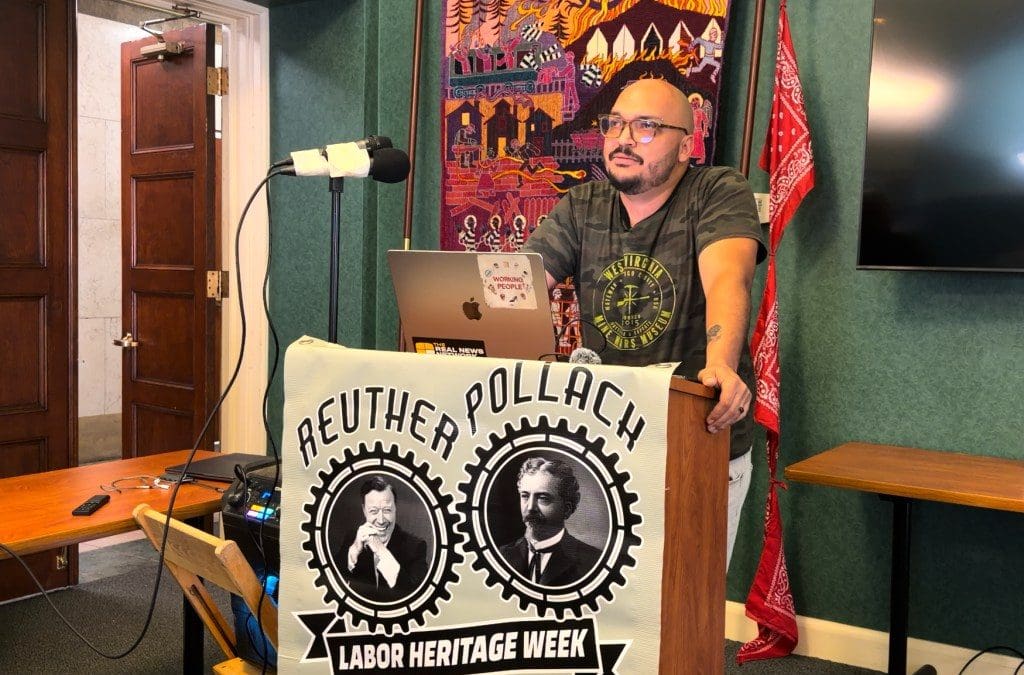
Over the 2026 Labor Day weekend, I had the honor of speaking at the Reuther-Pollack Labor History Symposium in Wheeling, West Virginia, organized by the Wheeling Academy of Law & Science (WALS) Foundation. The symposium takes place in Wheeling every year and adopts a different theme each year; this year, the theme was “The Art of Labor.” I got to represent TRNN and speak alongside a truly incredible lineup of artists and working-class warriors, including: Tabitha Arnold, the great textile artist and tapestry maker; Erik Ruin, printmaker and shadow puppeteer; and Shaun Slifer, a multidisciplinary artist and the Creative Director for the West Virginia Mine Wars Museum.
The text below is a transcript of the talk I gave at this year’s Symposium, which has been lightly edited for clarity and readability. You can also listen to the audio recording of my speech on The Real News Network podcast feed.
https://www.spreaker.com/show/2952221/episodes/feed
Thank you. It is genuinely an honor to be here on these hallowed grounds with all of you in Wheeling, West Virginia. It really, really means a lot to me to be here with all of you.
I also have to say: I really appreciate it when Vince or anyone else tells me that that first-ever Working People interview I recorded with my dad, Jesus Alvarez, meant something to them—because it meant everything to me. It started everything.
I didn’t start out to become a labor journalist or to do the kinds of interviews I do with working people. I didn’t set out to make a life reporting on working-class struggles from working-class areas around the country, on the front lines of a class war
by Maximillian Alvarez | Aug 13, 2026 | Economy, Economy and Inequality, health care, labor, Podcast, Working People
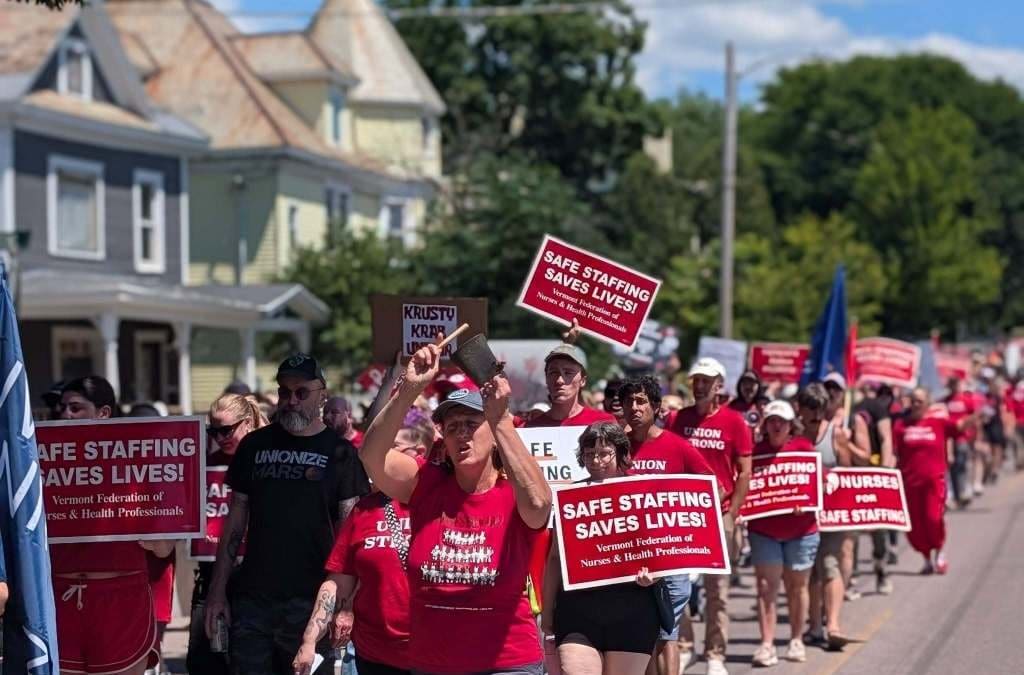
Frontline healthcare workers and the patients they serve are facing a major crisis at the University of Vermont Health network—the state’s leading healthcare provider. “In June, UVM Health eliminated over 140 positions across its network, a third of which were union positions,” Matt More reports at The Rake Vermont. “The cuts, which the hospital estimated will save $9.5 million, comes as the network faces a $300 million budget shortfall… Later that month, UVM Health handed down a speed-up order to its Medical Group, which includes outpatient clinics and more than 1,000 physicians, which practitioners say will result in briefer appointments with patients.”
How did Vermont’s flagship health network end up in this crisis? How is it affecting healthcare workers and their patients? And what can be done to fix it? In this episode of Working People, we speak with Melissa Lavallee, secretary of UVMMC Support Staff United and VP of healthcare for AFT-Vermont; and Teagan Cook, lead outpatient chemotherapy scheduler at her hospital and a chief steward in UVMMC Support Staff United.
Additional links/info:
UVMMC Support Staff Unitedwebsite, Facebook page, and Instagram
AFT-Vermont website, Facebook page, and Instagram
Matt Moore, The Rake Vermont, “UVM Health’s unions fight hospital cuts to protect their patients’ healthcare and their working conditions”
Town Meeting TV, “Put workers and patients first! – Solidarity town hall meeting with UVM Medical Center unions”
Olivia Gieger, VT Digger, “UVM Health cuts 142 jobs — an estimated $9.5 million in staff positions”
Featured Music:
Jules Taylor, Working People Theme Song
Credits:
Audio Post-Production: Jules Taylor
Transcript
Maximillian Alvarez:
Alright. Welcome everyone to Working People, a podcast about the lives, jobs, dreams, and struggles of the working class today. Working People is a proud
by Maximillian Alvarez | Aug 10, 2026 | Climate, Climate Crisis, Economy and Inequality, labor, Oil, Podcast, Politics and Movements: US, Working People
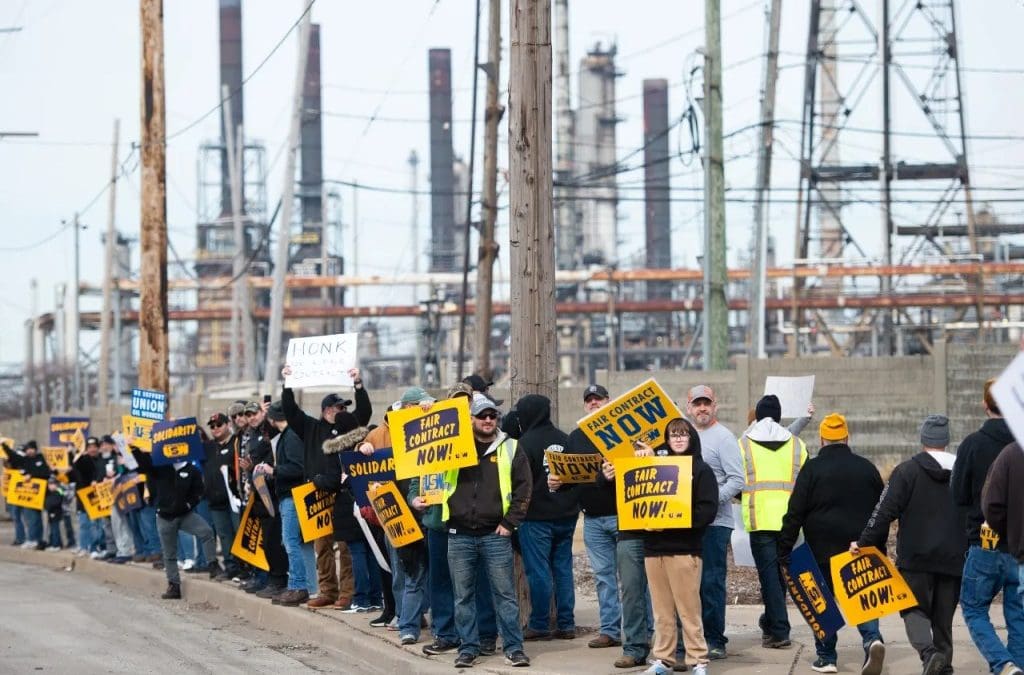
For the last five months, oil giant British Petroleum (BP) has locked 800 workers out of their jobs at a crude oil refinery in Whiting, Indiana. The facility, located on the southwestern shore of Lake Michigan, is BP’s last unionized oil refinery in the United States. BP says it is pursuing “modernized job structures, training, and upskilling,” but workers and their union—United Steelworkers Local 7-1—say that the company has not bargained in good faith, that its contract proposals pose blatant existential threats to workers’ jobs, pay, and collective bargaining rights, and that the company is illegally trying to crush the union out of existence with the lockout. In this episode of Working People, we speak with three locked out workers at the BP oil refinery in Whiting: Eric Schultz, president of USW Local 7-1; Leno Miller, assistant griever for USW Local 7-1; Tim Powell, a 19-year member of USW Local 7-1, and a volunteer for the lockout assistance committee.
Additional links/info:
USW Local 7-1 Official Lockout Update/Support Page
USW Local 7-1 Facebook page and Instagram
Sarah Lazare, Workday Magazine / The American Prospect, “Locked out refinery workers say BP is trying to ‘starve us,’ crush union”
Maximillian Alvarez, Working People / TRNN, “I survived the rig explosion that caused the Deepwater Horizon oil spill. This is what I saw”
Featured Music:
Jules Taylor, Working People Theme Song
Credits:
Audio Post-Production: Jules Taylor
Transcript
The following is a rushed transcript and may contain errors. It will be updated.
Maximillian Alvarez:
Alright. Welcome everyone to Working People, a podcast about the lives, jobs, dreams, and struggles of the working class today. Working People is a proud member of the Labor Radio Podcast Network and is brought to you in partnership with In These
by Maximillian Alvarez | Aug 5, 2026 | Economy and Inequality, labor, Podcast, railroad, Working People
https://workingpeople.libsyn.com/rss
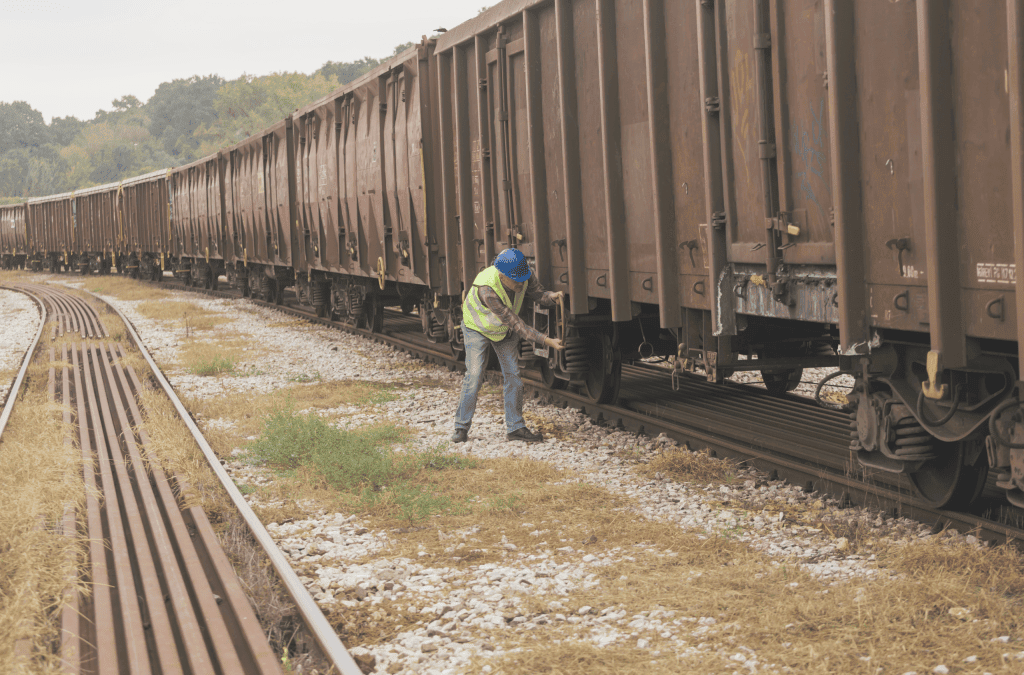
In 2022, the United States nearly experienced its first national railroad strike in decades, until then-President Joe Biden, along with Democrats and Republicans in Congress, stepped in to block a strike before it could begin. Rail labor unions were forced to accept contracts that did not substantively address long-brewing crises in the freight rail industry that have had disastrous consequences for frontline workers, trackside communities like East Palestine, Ohio, the passenger rail system, and the US supply chain writ large. In this episode of Working People, we speak with returning guest “Jay,” a veteran train dispatcher who’s been in the industry for 22 years, about what has changed—and what hasn’t—for rank-and-file railroad workers on the job over the last four years.
Additional links/info:
Maximillian Alvarez, Working People / TRNN, “Ask a railroad worker: How did railroad jobs get so bad?””
Maximillian Alvarez, Working People / TRNN, “Freight workers explain why a national railroad strike is looming”
Maximillian Alvarez, Working People / TRNN, “Railroad workers speak out after Congress and Biden block rail strike”
Mike L, TRNN, “A carman’s perspective on the East Palestine derailment and the railroad industry as a whole”
Maximillian Alvarez, TRNN, “US freight workers say it’s time to nationalize the railroads”
Featured Music:
Jules Taylor, Working People Theme Song
Credits:
Audio Post-Production: Jules Taylor
Transcript
The following is a rushed transcript and may contain errors. It will be updated.
Maximillian Alvarez: Alright. Welcome everyone to Working People, a podcast about the lives, jobs, dreams, and struggles of the working class today. Working People is a proud member of the Labor Radio Podcast Network and is brought to you in partnership with In These Times Magazine and The Real News Network.
by Maximillian Alvarez | Jul 30, 2026 | Economy and Inequality, labor, Media, Podcast, Politics and Movements: US, Working People
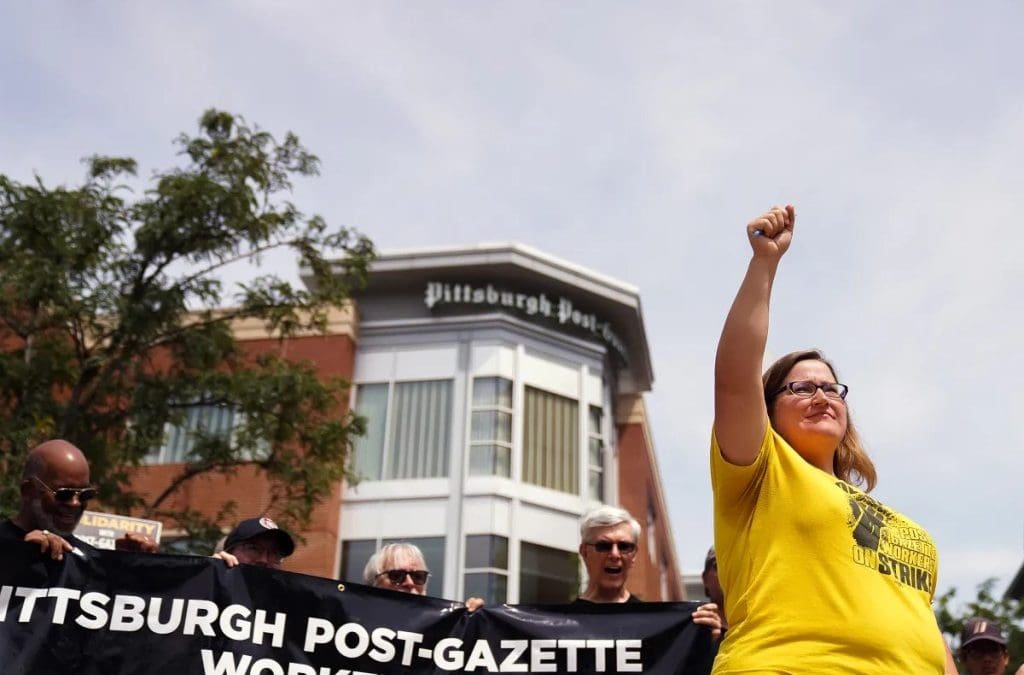
When workers at the historic Pittsburgh Post-Gazette newspaper hit the picket line in October of 2022, they had no idea that they would be on strike for over three years—or that the strike would end with new owners taking over the paper and most strikers losing their jobs. But now, a new chapter is being written in their epic story. This week, workers and community supporters launched the Pittsburgh Progress, “a cooperative news organization, owned and democratically run by its workers and members… dedicated to looking out for, and telling the stories of, the working-class people who form the heart and soul of our diverse communities.” In this episode of Working People, we discuss the birth of the Pittsburgh Progress, and what it means for working people in and beyond Pittsburgh, with Steve Mellon and Natalie Duleba, both former strikers at the Pittsburgh Post-Gazette and both founding worker-members of the newly launched Pittsburgh Progress.
Additional links/info:
Pittsburgh Progress website, Facebook page, Bluesky page, and Instagram
Steve Mellon, Pittsburgh Progress, “This new media cooperative invites the community to join us on our journey of creation”
Maximillian Alvarez, Working People / TRNN, “The longest-running strike in the US is over—and the workers won”
Maximillian Alvarez, Working People / TRNN, “They won their strike fair and square. Now their rich bosses are closing up shop”
Maximillian Alvarez, Working People / TRNN, “Venetoulis Institute ‘saves’ the Pittsburgh Post-Gazette by purging union members who went on strike”
Featured Music:
Jules Taylor, Working People Theme Song
Credits:
Audio Post-Production: Jules Taylor
Transcript
The following is a rushed transcript and may contain errors. It will be updated.
Maximillian Alvarez:
Alright. Welcome everyone to Working People, a podcast about the lives, jobs,