by Taya Graham and Stephen Janis | Jul 22, 2026 | Article, Economy and Inequality, health care, Inequality, Inequality Watch, Politics and Movements: US, Prisons and Policing, Trump
A few weeks ago, we argued the Trump administration was seeking to invent new ways to punish Americans. The idea was that the authoritarian impulses of the MAGA-run government will need to dial up the cruelty in order to sow chaos and pave the way for a broader assault on democracy.
Well, this week a rule was issued by Medicare and Medicaid services that shows just how proficient the Trump administration is at inflicting pain. And the consequences for poor, seriously ill Americans could be devastating.
Before we explain the rule, it’s worth contemplating the often destructive role healthcare — both the lack of it and exorbitant costs associated with it — play in the lives of working-class Americans.
Poll after poll shows that working people rank anxiety over healthcare costs at the top of the list of high-priority concerns. Unpaid medical bills are the most likely cause of personal bankruptcy in the US. Unlike any other wealthy nation on earth, when Americans lose their jobs, they often lose access to a doctor as well.
The US healthcare system is already inherently extractive — making it even more prohibitively expensive means more people will suffer with diseases that can be cured and die from afflictions that would otherwise be treatable. All of this makes the working class vulnerable and likewise incapable of asserting their right to be healthy.
And that’s where the new rule comes in.
The government agency that administers Medicaid has created a new criterion, ‘medically frail,’ which must be met to qualify for the program without working — even if you only have weeks to live. It didn’t exist prior to the passage
by Maximillian Alvarez | Jul 15, 2026 | AI, Economy, Economy and Inequality, Podcast, Politics and Movements: US, Working People
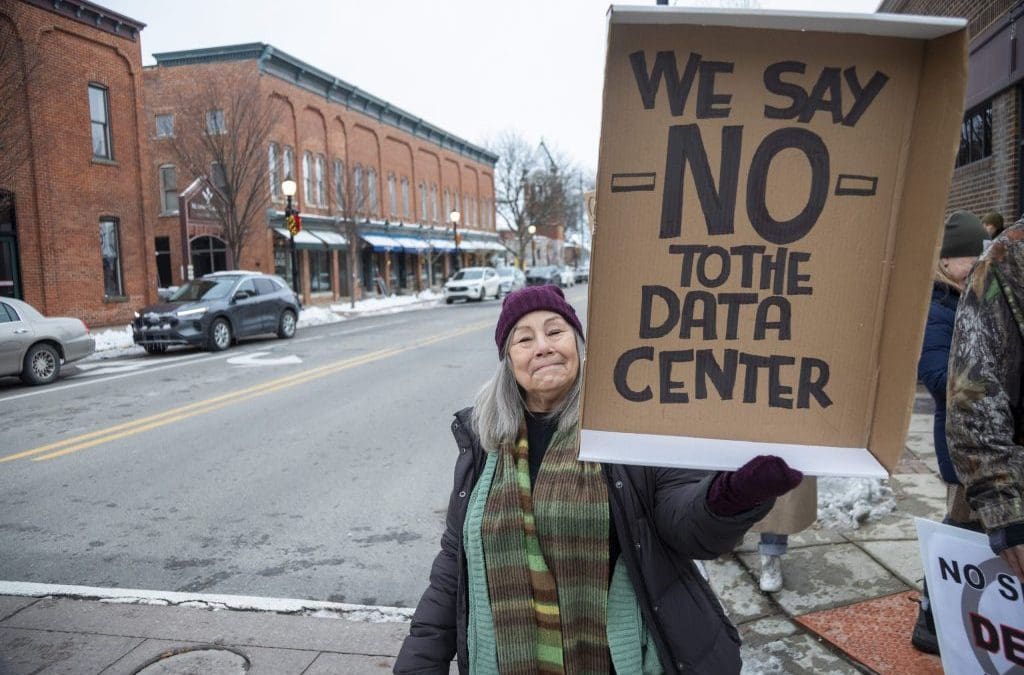
In so-called “red states” and “blue states” around the US, from rural areas to urban centers, the explosion of new data center projects is impacting residents in poor, working-class, and middle-class communities alike. In this episode of Working People, we speak with a diverse panel of residents fighting new and proposed data center projects in Texas and Maryland about what it means for you and your community when one of these loud, polluting, energy- and water-guzzling behemoths comes to your town—and how to fight back.
Panelists include: Cheryl Shadden, a registered nurse anesthetist who lives right next to the site of a Marathon bitcoin mine in Granbury, Texas; Karen Pearson, a licensed professional counselor and a resident of Granbury who also lives right next to the Marathon bitcoin mine; Dr. Shannon Wolf, Precinct Chair in Hood County, who lives three miles from the Marathon bitcoin mine; Craig Jackson, a resident of Granbury who lives 300 feet from the site of a new proposed data center, and who is also a plaintiff in a current lawsuit residents have filed against the city of Granbury; Micaiah Lloyd, a grassroots organizer and resident of Charles County, Maryland, who lives near the site of a proposed data center; Hillary Gonzalez, an eco-poet, author, founder of Sacred Parks & Waterways, and a resident of Baltimore, Maryland, who lives right next to the site of Johns Hopkins University’s future Data Science and Artificial Intelligence complex.
Additional links/info:
Protect Hood County website and Facebook page
Sacred Parks & Waterways website and Instagram
Viral MS Now clip featuring Cheryl Shadden of Granbury, Texas
Maximillian Alvarez, Working People / TRNN, “A bitcoin mine in Texas
by Meagan Day | Jul 14, 2026 | Article, Economy and Inequality, Inequality, Politics and Movements: US, Prison Industrial Complex, prison reform, Prisons and Policing, Reprint
by Ray levy uyeda | Jul 8, 2026 | AI, Article, Climate Change, Climate Crisis, Economy and Inequality, Politics and Movements: US, Reprint
This story originally appeared in Prism on June 29, 2026.
Across the country, politicians are starting to heed the public’s concerns about data centers.
Almost 75% of Americans across the political spectrum oppose constructing data centers near their homes, according to a recent Gallup poll. A majority—63%—are concerned by federal regulatory agencies’ practice of approving projects without first evaluating environmental and public health concerns.
These numbers not only paint a stark picture of the massive backlash to the rapid and rapacious buildout of data processing facilities (some of which consume enough energy to power a midsize city), but they’re also an indicator that the public feels very differently than the corporations pushing for their construction. The country has never been more divided, but on data centers, residents agree: It’s time to pump the brakes.
Communities that are already forced to contend with the consequences of data centers warn of their near-constant noise pollution, voracious consumption of water, and discharge of pollutants into local ecosystems. However, it’s not just environmental concerns that undergird the community-led protests against data center development. Many are also concerned about how data centers come to fruition—often through violations of democratic processes in the form of shadowy backroom deals and nondisclosure agreements. There’s also the continued rise in utility rates at a time when nearly half (49%) of American households don’t make enough money to cover expenses. Americans contend with issues of drought, fossil fuel dependence, and habitat loss. Generational farmland is being gobbled up to prop up acres of data warehouses. The list goes on.
Three years after OpenAI’s artificial intelligence (AI) tool Chat GPT forever changed the world’s orientation to computing, governments are responding
by Stephen Prager | Jul 7, 2026 | Article, Economy and Inequality, Oil, Politics and Movements: International, Politics and Movements: US, Reprint, Trump, Venezuela
This story originally appeared in Common Dreams on July 06, 2026. It is shared here under a Creative Commons (CC BY-NC-ND 3.0) license.
The Trump administration has seized at least $8 billion worth of Venezuela’s oil wealth since it overthrew President Nicolás Maduro in January, according to the New York Times.
Now, as Venezuela struggles to cope with a catastrophic pair of earthquakes late last month that killed at least 3,300 people and left tens of thousands more injured and homeless, and 41,000-50,000 people are reported missing, the US is providing just $300 million in humanitarian aid, a small fraction of the money it purloined.
The Associated Press reported on Monday that international rescue teams have begun to pull out as hopes of finding missing loved ones alive dwindle each day after the disaster.
🇻🇪 Update: The death toll has risen to 3,342, with 16,740 people injured, the country’s Communication and Information Ministry said Sunday. https://t.co/HQfKAMomRZ— Drop Site (@DropSiteNews) July 6, 2026
Shortly after deposing Maduro, US President Donald Trump declared that the US “took over Venezuela… and the oil is flowing.”
Economist Francisco Rodriguez has found that during the first quarter of 2026, after Trump overthrew Maduro and the US began expropriating Venezuelan oil, the country experienced the lowest rate of economic growth since 2021, even as oil exports rose.
As Roxanna Vigil, a former senior sanctions policy adviser at the US Treasury Department’s Office of Foreign Assets Control, explained in an article for the Council on Foreign Relations last month, “almost 100 million barrels of oil worth an estimated $8 billion have flowed through a process marked by no transparency and minimal oversight.”
“While the Trump administration has repeatedly framed this control as benefiting both countries, it has not publicly disclosed how much Venezuelan oil it
by Maximillian Alvarez | Jul 6, 2026 | east palestine, Economy, Economy and Inequality, Podcast, Politics and Movements: International, Politics and Movements: US, railroad, sacrifice zones, Working People
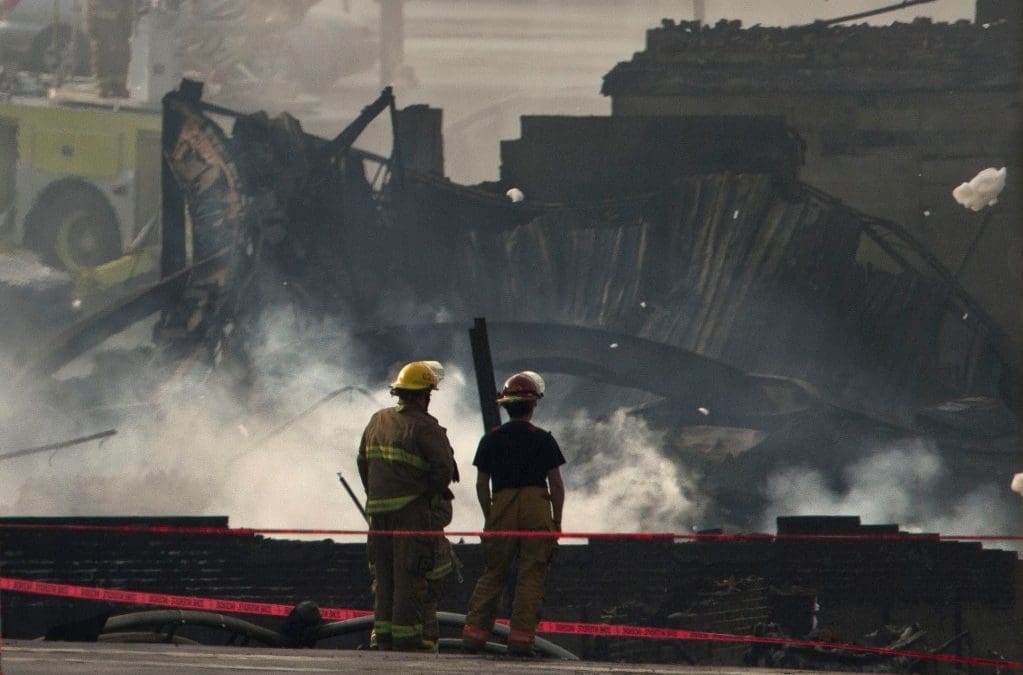
10 years before the catastrophic train derailment and chemical disaster in East Palestine, Ohio, one of the deadliest rail disasters in North American history took place in the Canadian town of Lac-Mégantic, Quebec.
On July 6, 2013, an unattended freight train that had been parked on the tracks overnight began to roll downhill and gather alarming speed as it careened towards the city center of Lac-Mégantic. The train, which was operated by Montreal, Maine, and Atlantic Railway and carrying over 2 million gallons of crude oil, derailed around 1:15 AM. The resulting explosions and fire killed 47 people and destroyed over 40 buildings, obliterating a large portion of the downtown area and prompting mass evacuations.
In this special episode of Working People, we speak with a panel of survivors of the Lac-Mégantic rail disaster in Canada and the East Palestine rail disaster in the USA.
Panelists include: Robert Bellefleur, a resident of Lac-Mégantic and spokesperson for the Lac-Mégantic Citizens’ Coalition for Railroad Safety; Gilbert Carette, a resident of Lac-Mégantic and a member of the Lac-Mégantic Citizens’ Coalition for Railroad Safety; Gilles Fluet, a resident of Lac-Mégantic who narrowly escaped the 2013 train crash and witnessed the derailment firsthand; Anne-Marie Saint-Cerny, award-winning writer, videographer, social and environmental justice activist, and author of Mégantic: A Deadly Mix of Oil, Rail, and Avarice; Jami Wallace, a displaced resident of East Palestine, Ohio, and founder of the Chemically Impacted Communities Coalition; Christina Siceloff, a Creek Ranger and resident of Beaver County, Pennsylvania, affected by the 2023 Norfolk Southern train derailment and chemical disaster.
If you or members of your community are interested in attending or participating in TRNN’s