by Maximillian Alvarez | Jul 6, 2026 | east palestine, Economy, Economy and Inequality, Podcast, Politics and Movements: International, Politics and Movements: US, railroad, sacrifice zones, Working People
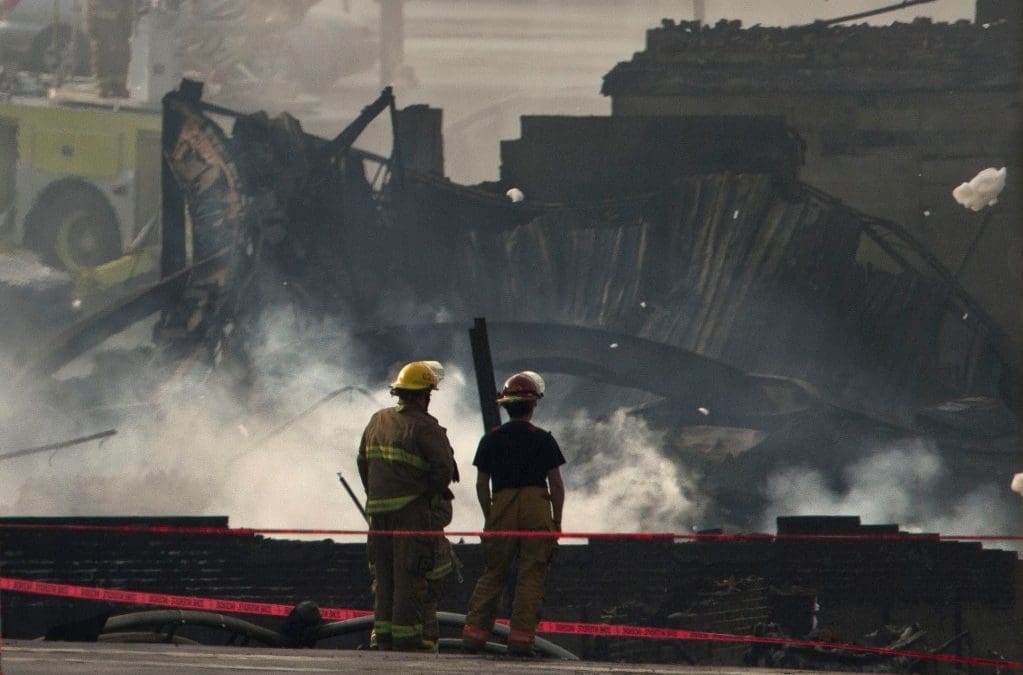
10 years before the catastrophic train derailment and chemical disaster in East Palestine, Ohio, one of the deadliest rail disasters in North American history took place in the Canadian town of Lac-Mégantic, Quebec.
On July 6, 2013, an unattended freight train that had been parked on the tracks overnight began to roll downhill and gather alarming speed as it careened towards the city center of Lac-Mégantic. The train, which was operated by Montreal, Maine, and Atlantic Railway and carrying over 2 million gallons of crude oil, derailed around 1:15 AM. The resulting explosions and fire killed 47 people and destroyed over 40 buildings, obliterating a large portion of the downtown area and prompting mass evacuations.
In this special episode of Working People, we speak with a panel of survivors of the Lac-Mégantic rail disaster in Canada and the East Palestine rail disaster in the USA.
Panelists include: Robert Bellefleur, a resident of Lac-Mégantic and spokesperson for the Lac-Mégantic Citizens’ Coalition for Railroad Safety; Gilbert Carette, a resident of Lac-Mégantic and a member of the Lac-Mégantic Citizens’ Coalition for Railroad Safety; Gilles Fluet, a resident of Lac-Mégantic who narrowly escaped the 2013 train crash and witnessed the derailment firsthand; Anne-Marie Saint-Cerny, award-winning writer, videographer, social and environmental justice activist, and author of Mégantic: A Deadly Mix of Oil, Rail, and Avarice; Jami Wallace, a displaced resident of East Palestine, Ohio, and founder of the Chemically Impacted Communities Coalition; Christina Siceloff, a Creek Ranger and resident of Beaver County, Pennsylvania, affected by the 2023 Norfolk Southern train derailment and chemical disaster.
If you or members of your community are interested in attending or participating in TRNN’s
by Maximillian Alvarez | Jul 2, 2026 | east palestine, Economy, Economy and Inequality, labor, Politics and Movements: US, sacrifice zones, video, Working People
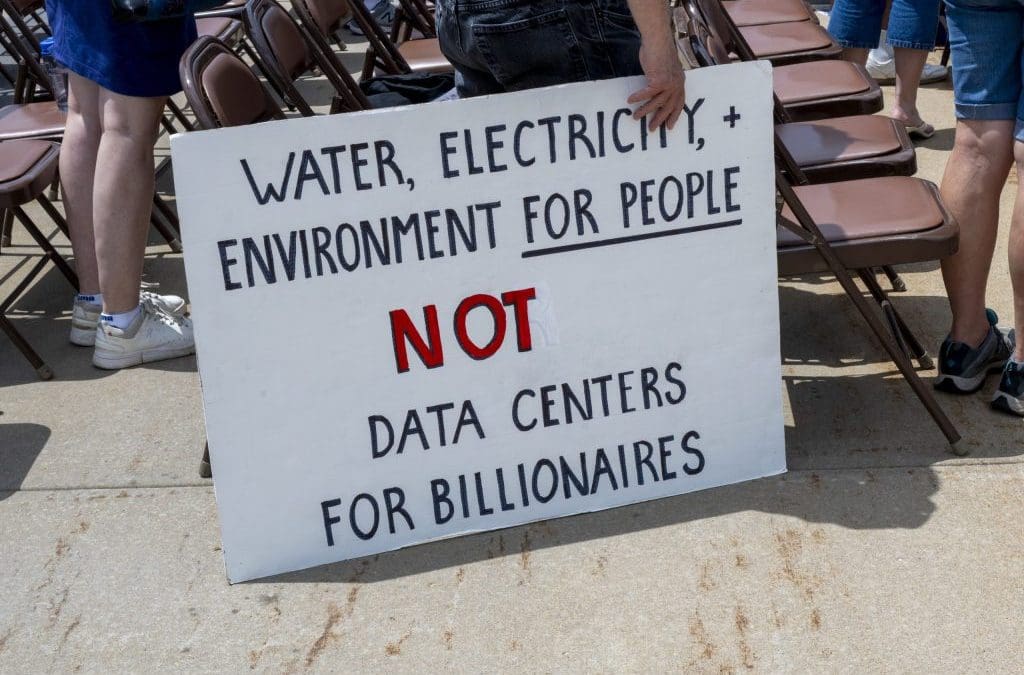
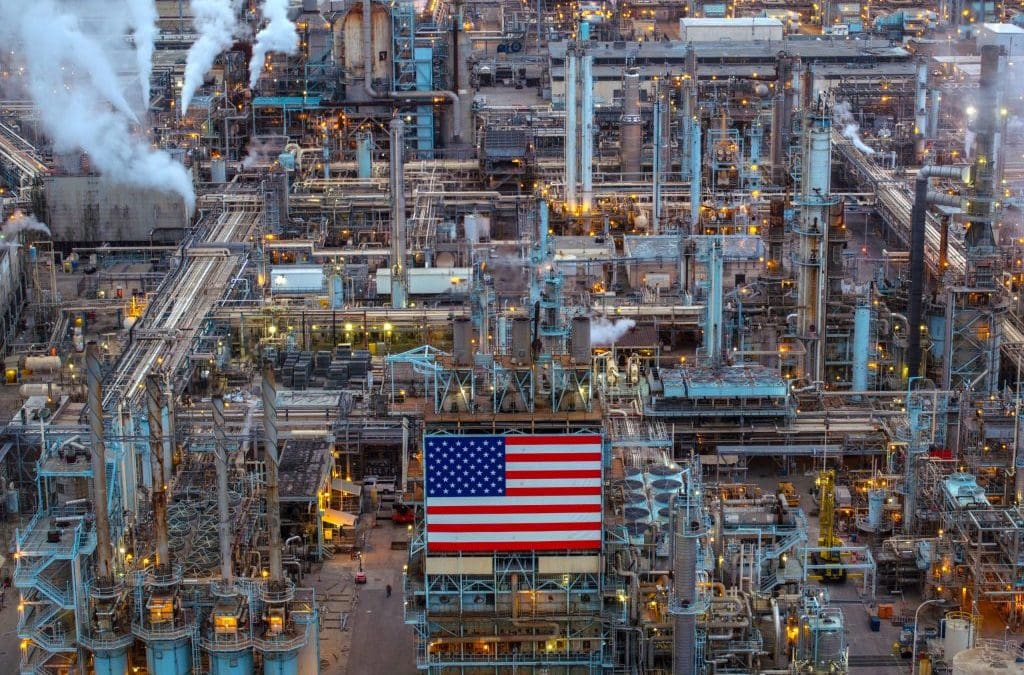
From the explosion of AI data centers to the increasing number of toxic spills, explosions, and industrial disasters happening across the country, corporations and the government are turning the USA into one giant “sacrifice zone.”
Things are going to get worse before they get any better, and nothing is going to change unless residents of different sacrifice zones and poisoned communities, workers and unions on the frontlines of the industries poisoning us, environmental justice groups, community and faith organizations, scientists, journalists, and all others who have a stake in this fight start coming together, working together, and fighting back together. In this special panel discussion, recorded at the 2026 Railroad Workers United convention in Chicago, Illinois, we speak with a panel of guests who are part of a new coalition that is doing just that.
Panelists include: Jeff Kurtz, a retired locomotive engineer, union officer, and Railroad Workers United member who also served as a state representative in the Iowa House of Representatives; Jami Wallace, a resident of East Palestine, Ohio, and founder of the Chemically Impacted Communities Coalition (CICC); Dr. Nicole Fabricant, a professor of anthropology at Towson University and scholar-activist who has been working with chemically impacted communities in South Baltimore, Maryland, for 15 years; Scott Smith, independent testing expert and founder of the Blue Shirt Justice League; and Lesley Pacey, Senior Environmental Officer at the Government Accountability Project.
Additional links/info:
Railroad Workers United website, Facebook page, and X page
Chemically Impacted Communities Coalition (CICC) Facebook page
Blue Shirt Justice League website and Facebook page
Government Accountability Project website, Facebook page, X page, Bluesky page, and Instagram
Coal-Free Curtis Bay Facebook page and Instagram
South Baltimore Community
by Shireen Akram-Boshar | Jul 2, 2026 | AI, Article, Climate, Climate Crisis, Economy and Inequality, Politics and Movements: US, Reprint
This article was originally published by Truthout on July 01, 2026. It is shared here under a Creative Commons (CC BY-NC-ND 4.0) license.
A heat wave is spreading across the U.S. this week that will affect over 250 million people from the Midwest to the East Coast.
Last week, a heat dome covered much of Europe, causing over 1,300 excess deaths. This week, a new heat dome is bringing record-shattering heat to two thirds of the U.S. population, affecting areas that normally do not see such high temperatures.
The heat wave is expected to worsen as the week continues. Heat indexes – or how hot the temperature feels to the body, worsened by high humidity – are expected to reach between 100 and 110 degrees over large parts of the country. On Tuesday, the highest heat index value was 113.6 degrees Fahrenheit in southern Illinois.
Temperatures are expected to peak on Thursday and Friday, with cities like Newark, New Jersey, and Philadelphia, Pennsylvania, expecting actual temperatures of 105 degrees Fahrenheit starting Thursday. Parts of Virginia and North Carolina are expecting four to five consecutive days of 100-degree heat, from Wednesday, July 1 through the July 4 weekend.
Last week, a study from World Weather Attribution found that Europe’s heat wave would have been “virtually impossible” without climate change. Similar findings are expected for this U.S. heat wave.
In France alone, around 1,000 excess deaths were reported during the heat wave last week – hundreds more deaths per day compared with the daily death rate before the heat wave.
Fewer Americans are expected to die from heat in the U.S. than in Europe, largely because the U.S. has far more air conditioning, particularly in homes.
But
by Maximillian Alvarez | Jul 1, 2026 | AI, east palestine, Economy, Economy and Inequality, Podcast, Politics and Movements: US, sacrifice zones, Working People
From the explosion of AI data centers to the increasing number of toxic spills, explosions, and industrial disasters happening across the country, corporations and the government are turning the USA into one giant “sacrifice zone.” In “red” states and “blue” states, in rural areas and urban areas, poor and working people are suffering the toxic effects of a crisis that has resulted from decades of deregulation, corporate capture of government, and the protection of private profits over the lives and health of the public.
No one is coming to save us, and nothing is going to change unless residents of different sacrifice zones and poisoned communities, workers and unions on the front lines of the industries poisoning us, environmental justice groups, community and faith organizations, scientists, journalists, and all others who have a stake in this fight start coming together, working together, and fighting back together. In this special panel discussion, recorded at the 2026 Railroad Workers United convention in Chicago, Illinois, we speak with a panel of guests who are part of a new coalition that is doing just that.
Panelists include: Jeff Kurtz, a retired locomotive engineer, union officer, and Railroad Workers United member who also served as a state representative in the Iowa House of Representatives; Jami Wallace, a displaced resident of East Palestine, Ohio, and founder of the Chemically Impacted Communities Coalition (CICC); Dr. Nicole Fabricant, a professor of anthropology at Towson University and scholar-activist who has been working with chemically impacted communities in South Baltimore, Maryland, for 15 years; Scott Smith, independent testing expert and founder of the Blue Shirt Justice League; and Lesley Pacey, Senior Environmental
by Michael Fox | Jun 26, 2026 | Article, Economy and Inequality, Opinion, Politics and Movements: International, Politics and Movements: US, Trump, Venezuela
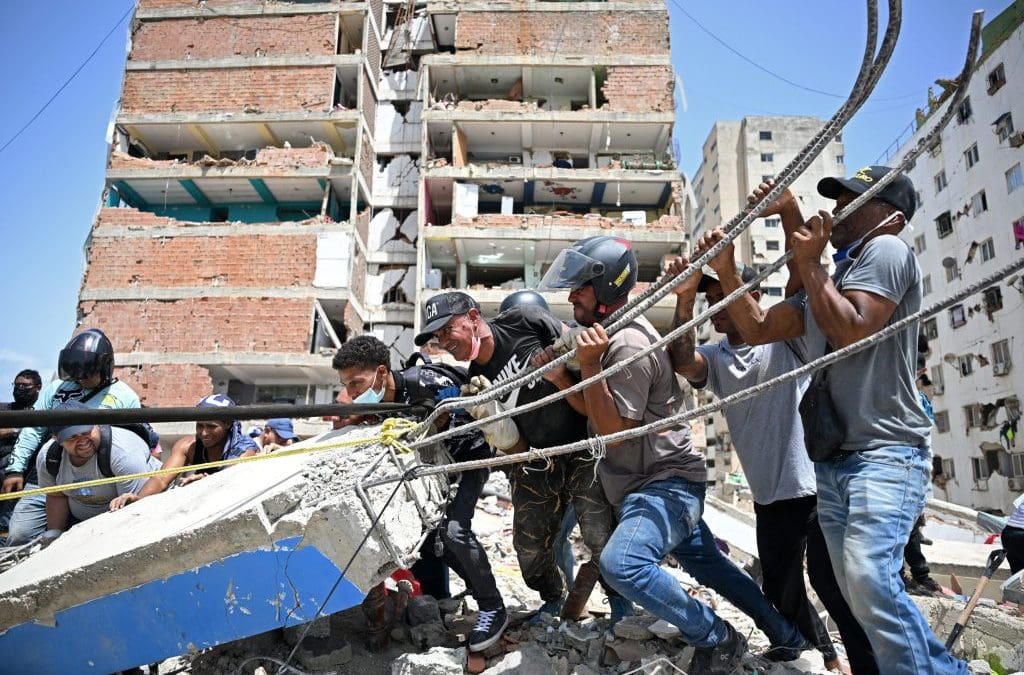
The images are harrowing: whole neighborhood blocks in rubble. Buildings collapsed. Rescue workers climbing over mountains of concrete debris fighting to find the survivors, working through the night.
A country already in crisis and shock after the Jan. 3 US invasion has been hit with another catastrophe.
A pair of back-to-back earthquakes hit Venezuela at 6:04PM local time on Wednesday, June 24. The first registered 7.2. The second struck just 38 seconds later. It was a magnitude of 7.5.
The epicenter of the quake was roughly 100 miles west of Caracas, Venezuela’s capital, but was felt as far away as Colombia and Manaus, Brazil. Reports say it was the largest earthquake to hit the country in more than a century.
Videos taken during the earthquakes show buildings rocking, the concourse of the country’s main airport shaking and crumbling as people run. The airport is now closed.
As of Friday afternoon, the death toll had risen to 920 people, with more than 3,300 people injured. Reports say the death count could rise to anywhere between 10,000 and 100,000 people.
More than 200 aftershocks have rumbled through Caracas. Many people slept outside in the streets Wednesday night for fear of the aftershocks and the structural integrity of their buildings.
The country is in a state of emergency.
La Guaira, the coastal city just north of Caracas where Venezuela’s main airport is located, has been devastated. It has been declared a “disaster zone” because of the number of buildings knocked to the ground.
#Venezuela | La Guaira suffered huge damage after a series of strong earthquakes on June 24.Aerial images taken on June 25 reveal a high level of destruction in many
by Brett Wilkins | Jun 23, 2026 | Article, Economy, Economy and Inequality, Politics and Movements: US, Reprint
This story originally appeared in Common Dreams on June 22, 2026. It is shared here under a Creative Commons (CC BY-NC-ND 3.0) license.
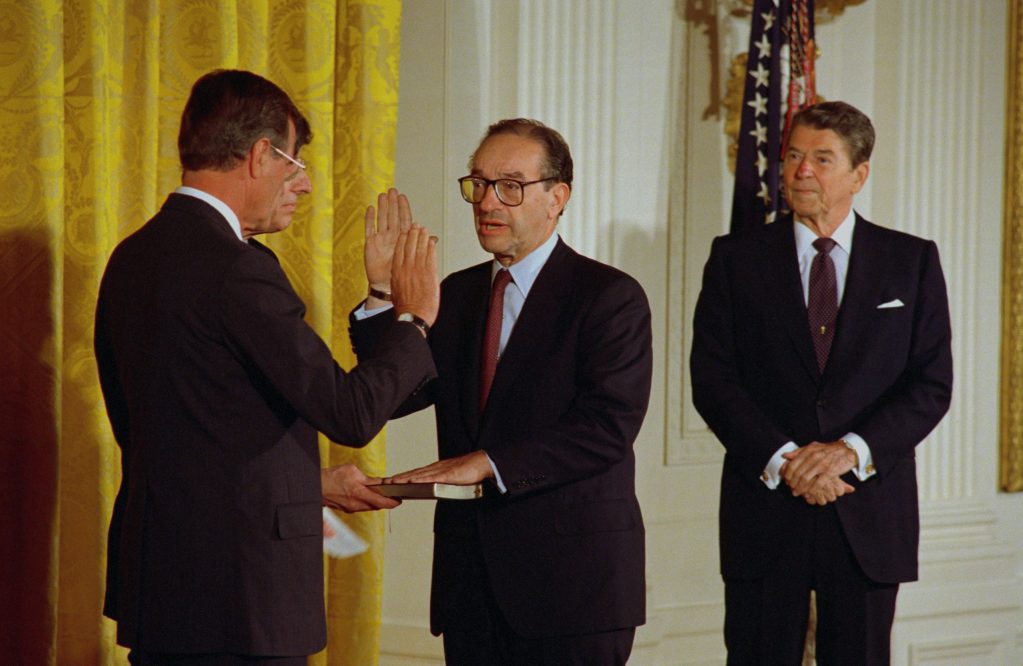
Alan Greenspan, whose policies during nearly 20 years as US Federal Reserve chair fueled soaring economic inequality and helped create the conditions for multiple economic crashes, died Monday at age 100 after a long battle with Parkinson’s disease.
While many corporate media outlets published hagiographic obituaries lionizing the “Maestro” who presided over nearly two decades of low inflation, rising stock prices, and American economic confidence, critics focused on Greenspan’s role in promoting dangerous deregulation and “easy money” policies that inflated financial bubbles, with sometimes disastrous results.
Robert Reich—who served as US labor secretary under President Bill Clinton during all of Greenspan’s tenure—called him “in many ways the most powerful person in America” during that era.
“If any single person was responsible for the financial crisis of 2008, it was Greenspan.”
“He maintained an iron grip over the Fed, and almost single-handedly decided on interest rates,” Reich wrote. “He essentially fired George H. W. Bush by raising interest rates so high (ostensibly to ward off the inflation then threatening the economy) that the economy took a dive, and voters blamed Bush. This was enough to convince my boss, Bill Clinton, to do exactly what Greenspan wanted—which was to reduce the federal budget deficit and thereby destroy much of the agenda Clinton ran on (and I helped create).”
“I don’t want to speak ill of anyone who has passed. Greenspan was an extremely charming, intelligent, and thoughtful man,” Reich added. “But the truth must be told: If any single person was responsible for the financial crisis of 2008, it was Greenspan. That crisis—the worst collapse since 1929,