by Taya Graham and Stephen Janis | Jun 12, 2026 | Epstein, ICE, Inequality Watch, Politics and Movements: US, Trump, video
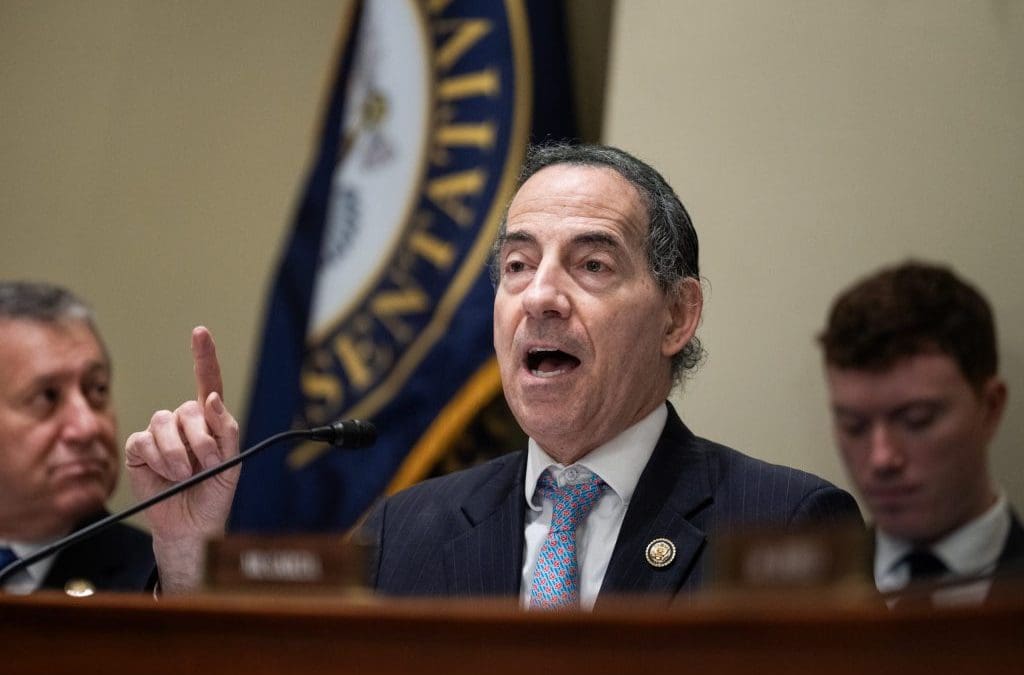
As part of our continuing coverage of Trump’s multi-pronged push to interfere with the upcoming midterm elections, we have been talking to a variety of voices on what they fear most from the administration. In this discussion with Democratic Congressman Jamie Raskin, he accuses the Trump administration of constructing a private police force within the federal government and seeking to fund an extrajudicial efforts to also interfere with free and fair elections.
Credits:
Production: Taya Graham/Stephen Janis
Post-Production: David Hebden
Transcript
The following is a rushed transcript and may contain errors. It will be updated as soon as possible.
Stephen Janis:
At the Real News Network, we have been covering the threat to midterm elections. Now, we came to the Networks Conference here in Philadelphia, Pennsylvania to speak to Congressman Jamie Raskin. When he told us about what he thinks might happen in November should scare all of us. You know, you introduced a Blanche Act, is that what it’s called? Yes. Yeah. So the Senate just passed the reconciliation bill and did nothing to it. So what are your thoughts at this moment that can be done to prevent it and what are your concerns about this slush fund that has been proposed by the Trump administration?
Rep. Jamie Raskin:
Well, the vast majority of Americans reject the idea that the Trump regime should be able to take 1.776 billion of taxpayer money and give it to convicted criminals, Proud Boys and Oath Keepers and other extremists who tried to storm or who stormed the Capitol and tried to overthrow a presidential election. It’s outrageous and it violates about a dozen different federal laws and constitutional provisions. So
by Taya Graham and Stephen Janis | Feb 27, 2026 | Economy, Epstein, immigration, Inequality Watch, Politics and Movements: US, Trump, video
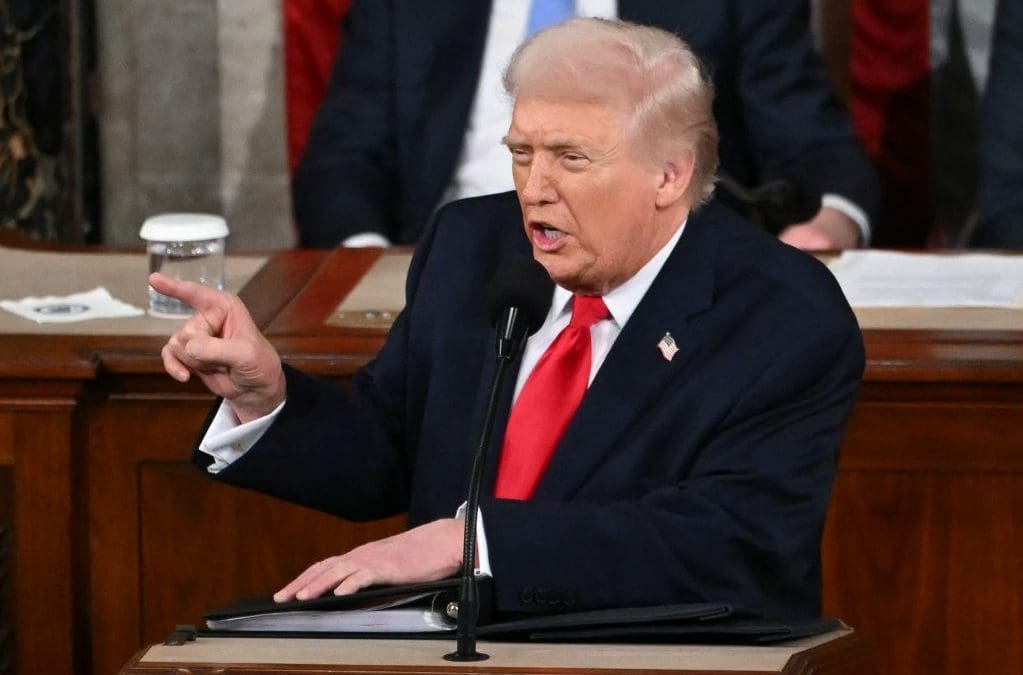
Trump’s State of the Union address delivered grandstanding and grievance politics, but few concrete solutions for Americans facing healthcare crises, economic instability, and ever-widening inequality. While mainstream media commentators fixated on the spectacle, Epstein survivors in attendance were essentially ignored, and key claims on immigration and economic policy went largely unexamined.
Credits:
Written by: Stephen Janis
Produced by: Taya Graham, Stephen Janis
Studio / Post-Production: Cameron Granadino
Transcript
The following is a rushed transcript and may contain errors. A proofread version will be made available as soon as possible.
Taya Graham:
Okay. You might have watched President Donald Trump’s state of the Union and found it difficult to reconcile with what’s actually happening in your life. He said we were in a new golden age, but it doesn’t feel like it for most of us. He said the economy is the strongest ever, but perhaps your actual experience doesn’t jive with that assessment. Well, you’re not wrong and we’re going to prove it. Myself, along with my reporting partner, Stephen Janis, are going to break down what Trump’s speech was missing, mainly the perspective of the people actually living with the consequences of his policies. So we’re going to give you the people’s state of the union breakdown and you won’t want to miss it.
Hello, my name is Taya Graham and welcome to The Inequality Watch, the show where we break down the historic wealth imbalance that defines this country and hold the people who are making it worse accountable. Today we’re going to talk about the state of the union or perhaps more accurately, the state of the oligarchy address, which President Trump gave on Tuesday. Like
by Brett Wilkins | Feb 25, 2026 | Article, Epstein, Politics and Movements: US, Reprint, Trump
This story originally appeared in Common Dreams on Feb. 24, 2026. It is shared here under a Creative Commons (CC BY-NC-ND 3.0) license.
The top Democrat on the House Oversight Committee announced Tuesday that an investigation will be opened into the US Department of Justice’s withholding of Epstein files related to an alleged sexual assault on a 13-year-old girl committed by President Donald Trump decades ago.
“For the last few weeks, Oversight Democrats have been investigating the FBI’s handling of allegations from 2019 of sexual assault on a minor made against President Donald Trump by a survivor,” Oversight Committee Ranking Member Robert Garcia (D-Calif.) said in a statement.
“Yesterday, I reviewed unredacted evidence logs at the Department of Justice. Oversight Democrats can confirm that the DOJ appears to have illegally withheld FBI interviews with this survivor who accused President Trump of heinous crimes,” he continued. “Oversight Democrats will open a parallel investigation into this.”
“Under the Oversight Committee’s subpoena and the Epstein Files Transparency Act, these records must immediately be shared with Congress and the American public,” Garcia added. “Covering up direct evidence of a potential assault by the president of the United States is the most serious possible crime in this White House cover-up.”
Oversight Dems have access to a list of documents, including interviews detailing serious allegations against President Trump, that are missing from the DOJ’s so-called “unredacted” files.Where are the missing files? What do they say? This all points to yet another cover up.— Rep. Robert Garcia (@robertgarcia.house.gov) 2026-02-24T22:21:35.629Z
The Trump administration is accused of continuously flouting the Epstein Files Transparency Act—which mandated that all materials related to convicted child sex criminal and longtime former Trump friend Jeffrey Epstein be released by December 19. But critically, the law gives Attorney General Pam Bondi wide discretion to redact
by Taya Graham and Stephen Janis | Nov 26, 2025 | Economy and Inequality, Epstein, Inequality Watch, Politics and Movements: US, video
Investigative reporters Taya Graham and Stephen Janis go to Capitol Hill to speak with Representatives Ro Khanna and Thomas Massie, who co-sponsored the Epstein Transparency Act. Many of the women who survived Epstein’s abuse and human trafficking ring share their experiences and their determination to receive justice. Now that the bill has passed both Houses, the Department of Justice is obligated to share with the public thousands of previously secret documents, emails, and photos. Although many critics are concerned that redactions will make these documents ineffectual in exposing the predators and predator protectors, there is still hope that these women will finally be able to reveal the corruption that has survived multiple presidential administrations. We discuss four reasons why the Epstein files may be the beginning of the end for the unchecked power of these elites, or “Epstein class.” With Congress compelling the DOJ to reveal Epstein’s secret files, the protective wall around America’s most powerful men is finally beginning to crumble. This moment could be the first genuine challenge to the impunity enjoyed by the country’s wealthiest predators.
Produced by Stephen Janis and Taya GrahamWritten by Stephen JanisPost-Production by Stephen Janis
Transcript
The following is a rushed transcript and may contain errors. A proofread version will be made available as soon as possible.
Taya Graham:
Have the wealthy elites who have turned this country into an inequality playground finally met their match with the Epstein scandal. Well, we’re going to break down why the fallout from Epstein is turning the tables on the oligarchy and how the stain of being a predator or a predator protector might not be easy to get rid of
by Taya Graham, Stephen Janis and Maximillian Alvarez | Nov 24, 2025 | Economy and Inequality, Epstein, Inequality Watch, Politics and Movements: US, video
President Donald Trump signed a bill last Wednesday directing the Department of Justice to release more files from the investigations into the infamous sex offender, sex trafficker, and international political power broker Jeffrey Epstein. Will the public finally see the full release of the Epstein Files? Or will the Trump administration withhold and redact the information it does not want people to see? TRNN Editor-in-Chief Maximillian Alvarez and Inequality Watch reporters Taya Graham and Stephen Janis report back from a truly wild week in Washington, DC, and answer your questions about one of the biggest political scandals in US history.
Credits:Studio Production / Post-Production: David Hebden
Transcript
The following is a rushed transcript and may contain errors. It will be updated as soon as possible.
Maximillian Alvarez:After refusing to release the Epstein files and claiming the entire massive scandal was a hoax crafted by Democrats, President Donald Trump has apparently changed course in the face of a full-on revolt from his MAGA base, as well as intensifying pressure from Democrats, and even members of his own party. On Wednesday, Trump signed a bill directing the Justice Department to release more files from the investigation into the infamous sex offender, sex trafficker, and international political power broker Jeffrey Epstein.So, will we finally see the full release of the Epstein files? Will the public get the full transparency that we’ve been promised or the selective transparency? And what will the political fallout be? The Department of Justice has 30 days to release the documents, but it’s frankly unclear what the department will release and how much. The bill calls for the Attorney General to make unclassified
by Taya Graham and Stephen Janis | Nov 13, 2025 | Economy and Inequality, Epstein, Inequality, Inequality Watch, Politics and Movements: US, Prisons and Policing, video
Jeffrey Epstein was able to traffic and assault young women and girls for almost two decades, without consequence. How did he get away with this? The simple answer is wealth. But how did a college dropout who was quietly dismissed from his first job as a teacher at a private school acquire a private jet and party with some of the most famous and powerful people in the world? We delve into the money and the people who may have aided and abetted Epstein’s scandalous and criminal life.
Credits:
Producers: Taya Graham, Stephen Janis
Post-Production: David Hebden
Transcript
The following is a rushed transcript and may contain errors. A proofread version will be made available as soon as possible.Taya Graham:
For most of 2025. One story and one story alone dominated the cultural and political discourse in America, the Epstein files. This phenomena was remarkable, all but more so for President Trump’s response. This was the first time in Trump’s decade long political career that we saw a significant rift in his fiercely loyal MAGA movement. By late July, 47% of Trump supporters disapproved of how he was handling the issue. Now, given Trump’s controversial association with the dead man, his obfuscation seemed like it could be the only thing to finally chip away at his political capital. Since then, a lot has happened in the American news from a major ice crackdown in blue states to the illegal bombing of ships in the Caribbean to an attempted ceasefire in Gaza, and yet Epstein’s case still looms large, large enough, some believe to have played a significant role in the October government shutdown.
Now ostensibly, the shutdown