by Michael Fox | Nov 9, 2026 | brazil, Podcast, Politics and Movements: International, Politics and Movements: US, Trump, Under the Shadow, Under the Shadow Season 2
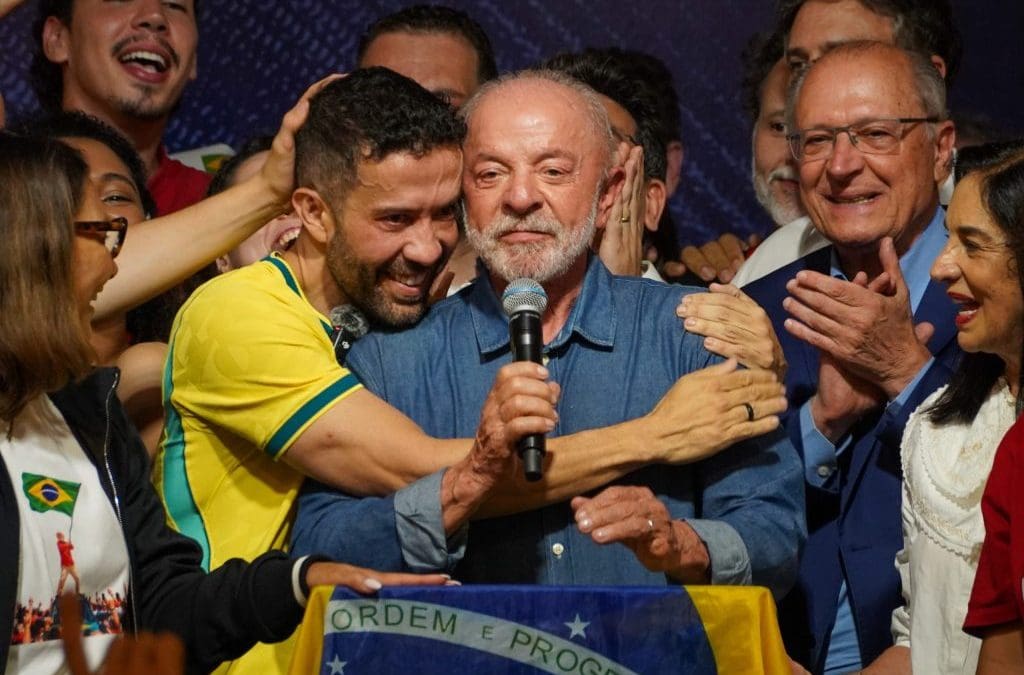
On Sunday, October 25, Brazilian President Luiz Inacio Lula da Silva defeated far-right Senator Flavio Bolsonaro by a margin of three and a half points, and almost 4.5 million votes. It was roughly twice the margin of the 2022 election, when Lula defeated Flavio’s father, Jair Bolsonaro.
It was the first time in Brazilian history that a candidate lost the first round of voting and won the second. And it was also one of the first defeats of a far-right Trump ally in several years.
As we’ve examined throughout this season of the podcast, Trump’s Donroe Doctrine has overshadowed the region since he came back into power early last year. He’s invaded Venezuela, tightened the screws on Cuba, and twisted arms to get his friends elected in countries up and down the Americas. But in Brazil, he couldn’t. And it’s not because Trump and his Silicon Valley buddies didn’t try.
It’s because Lula supporters organized en masse. Students, workers, teachers, retirees, and everyone in between. And they hit the streets to flip the vote, despite the odds.
They rallied with weeks of around-the-clock campaigning, marches, and protests. They pamphleted and fliered. They talked to their neighbors and their relatives. Online, Lula supporters responded with creative campaigns to confuse the algorithms that aggressively pushed content promoting Bolsonaro.
As many in the crowds told me again and again in recent weeks, this election was a decision that would define the fate of Brazil’s democracy. This wasn’t a vote between two candidates in a democratic system, where one wins and the other accepts their loss. It was a decision between democracy and dictatorship. Or democracy and something else.
And democracy won.
We began this
by Plínio Teodoro | Nov 7, 2026 | Article, paraguay, Politics and Movements: International, Politics and Movements: US, Prisons and Policing, Reprint, Trump
This story originally appeared in Panamerican Dispatch on Nov. 07, 2026, and is shared here with permission.
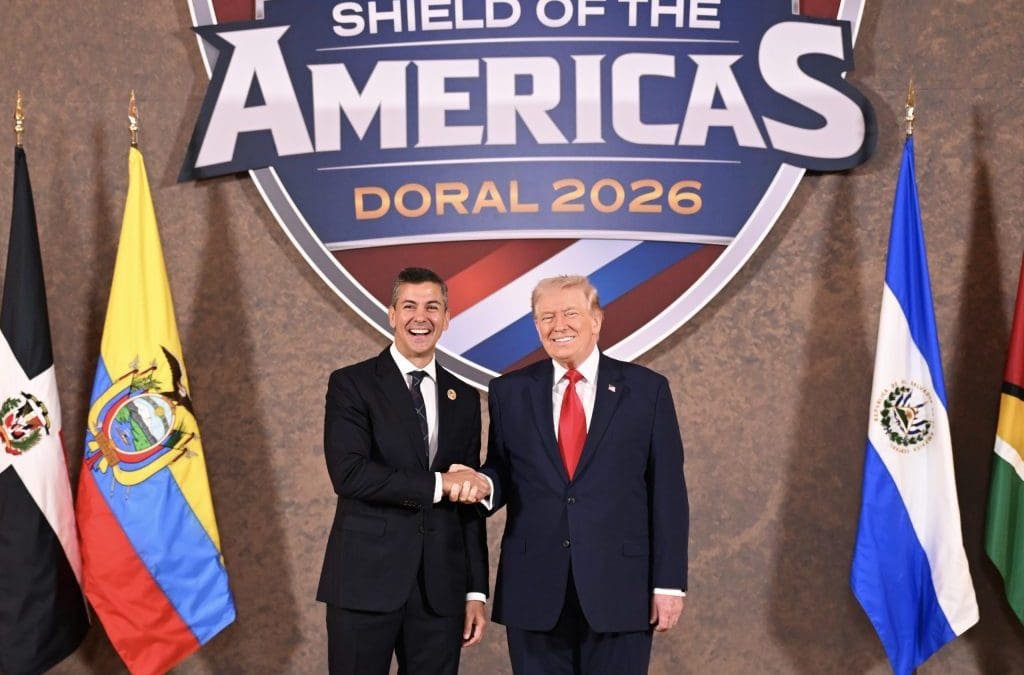
Former Paraguayan President Santiago Peña was moved from house arrest to a military unit within the Armed Forces overnight on Friday, October 6. The relocation followed an incident in which protesters surrounded his residence in Asunción, demanding his incarceration in a formal prison facility, which led to clashes with the police.
Peña was removed from office hours earlier, after the Senate voted unanimously to impeach him. The impeachment stemmed from his alleged involvement in the collapse of Ueno Bank, an institution that blocked access to funds for approximately 40% of the Paraguayan population.
The case bears similarities to the financial scandal in Brazil involving Daniel Vorcaro’s Banco Master, which implicated former presidential candidate Flávio Bolsonaro, a significant portion of the Bolsonaro movement and the political right in Brazil.
According to the Argentine digital news outlet Infobae, the military organized Peña’s extraction from his home in the La Piedad neighborhood of Asunción, using three pickup trucks for the transfer. The operation took place shortly before midnight, after escalating tensions near his residence made it untenable for the former president to remain there.
Footage captured by the Paraguayan newspaper ABC Color shows individuals throwing eggs and shouting insults at the vehicle transporting Peña as the convoy departed. The same outlet reported that Paraguayan intelligence identified the infiltration of agitators within the crowd, individuals who had previously been participating in a protest in the city center and allegedly moved to the residence with the intent of inciting violence.
🔴 AHORA | Trasladan a Santiago Peña al Regimiento Escolta.En medio de momentos de
by Ryan Johnson | Nov 5, 2026 | Fascism, Politics and Movements: US, Prisons and Policing, terrorism, Trump, video
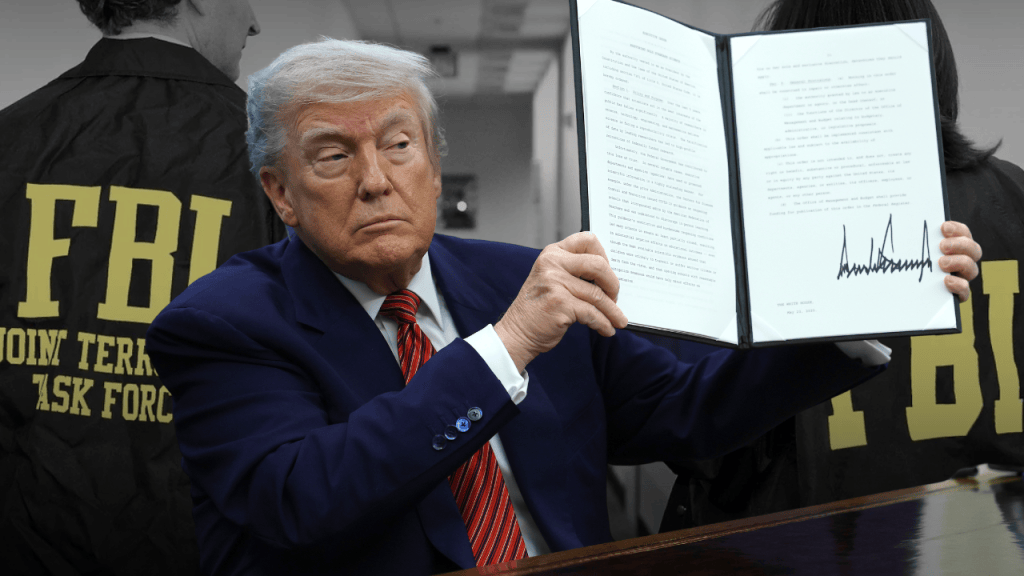
In September 2025, President Donald Trump signed the National Security Presidential Memorandum 7, a classified document that directs powerful federal agencies to counter “Domestic Terrorism,”, a loosely defined term with no specific federal criminal charge. Still, the Trump Administration has taken steps to use it as a pretext for targeting and punishing people and organizations who are standing for marginalized communities.
This summer, nine protesters were convicted on terrorism charges with sentences ranging from 30 to 70 years for a noise demonstration occurring on July 4th, 2025, outside the Prairieland ICE facility in Texas that resulted in the shooting of a federal officer.
The charges include a 50-year sentence for protester Autumn Hill, who said she left before the officer was injured, and a 30-year sentence for Daniel Rolando Sanchez-Estrada, who was not even present at the site of the shooting and was convicted of conspiracy to conceal documents for moving a box of magazines and pamphlets of “Anti-fascist literature.” Benjamin Song, the shooter, also received 100 years in prison.
Credits:
Reported and Produced by Ryan Johnson
Filmed by Vanessa Donovan
Edited by Evan Stice
Transcript
A transcript will provided when ready
by Robert Reich | Nov 4, 2026 | Article, Democrats, Economy, Economy and Inequality, elections, midterms, Opinion, Politics and Movements: US, Reprint, Trump
This story originally appeared in Common Dreams on Nov. 04, 2026. It is shared here under a Creative Commons (CC BY-NC-ND 3.0) license.
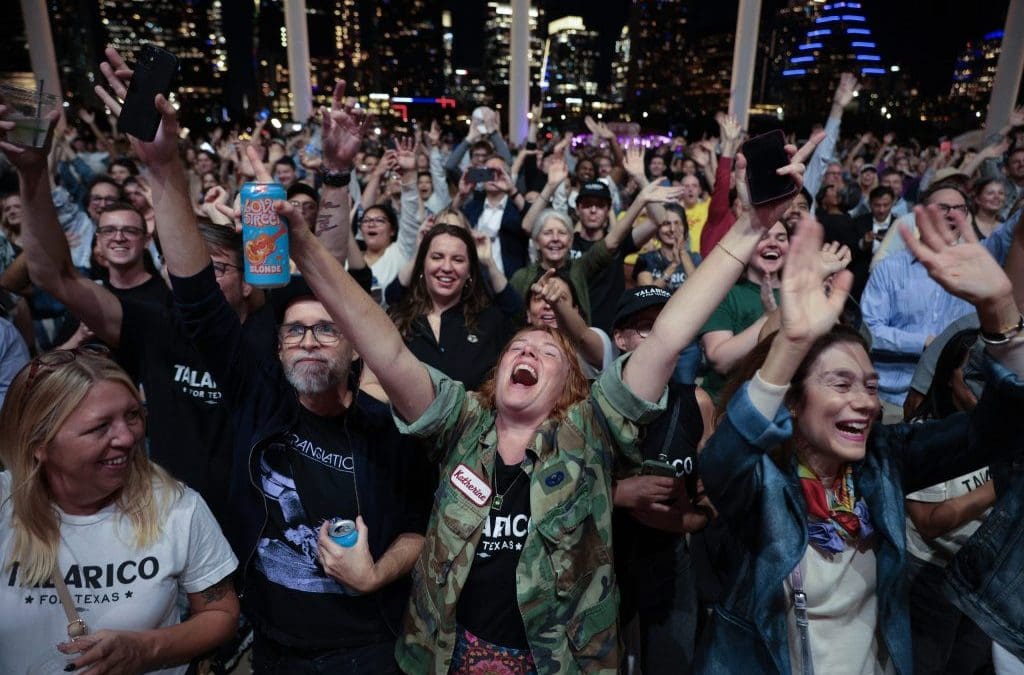
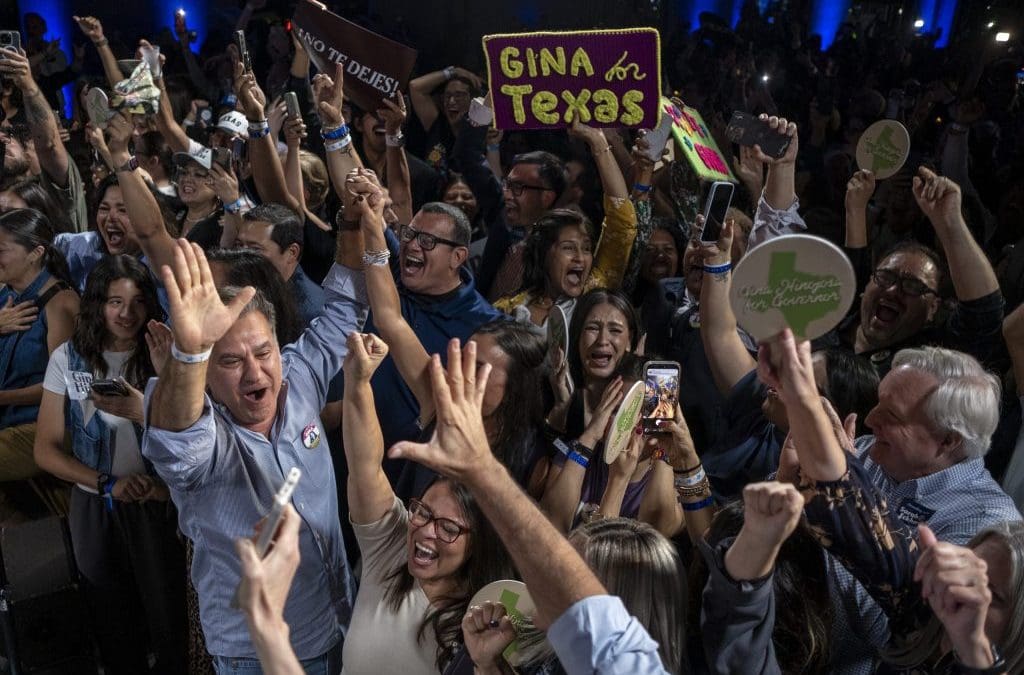
The great sleeping giant of America has awakened, taken a hard look at what’s become of the nation, and roared a thunderous “NO!”
What occurred yesterday was not—as some are saying—the inevitable mid-term swing of the pendulum against the party in power. Texas hasn’t elected a Democratic senator since 1988. The last time Kansas elected a Democratic senator was 1932.
Nor was it just the economy. Americans are unhappy with inflation, but the country is not in a depression or recession. Unemployment remains quite low.
Nor, finally, was it all due to Trump. Despite Trump’s repeated efforts to get voters to “pretend” he was on the ballot, he was not. Most Republican candidates barely mentioned him and many Democratic candidates stressed local or statewide issues rather than fixate on him.
Something much larger is responsible for what occurred: anti-establishment populism. It’s burst forth against the mammoth corporations that have scored record profits while most Americans have had to pay more. Against the mega donors and super PACs that have flooded American politics with more campaign money—legalized bribes—than ever before. And against the Big Tech billionaires who have become the most powerful force in the American economy and society—as well as Trump’s and the Republican Party’s most visible backers.
The irony is that anti-establishment anger propelled Trump into the presidency in 2016 and again in 2024. Many Americans had found his politically-incorrect rants and “America first” nativism to reflect their own anger at being disrespected or left behind. “I am your warrior,” he told supporters when
by Florestan Fernandes Jr. | Nov 4, 2026 | Article, bolsonaro, brazil, elections, midterms, Opinion, Politics and Movements: International, Politics and Movements: US, Reprint, Trump
This story originally appeared in Panamerican Dispatch on Nov. 04, 2026, and is shared here with permission.
President Donald Trump’s crushing defeat in the U.S. midterm elections and President Luiz Inácio Lula da Silva’s historic victory in Brazil mean much more than two election results. They send an enormous political message to the world. In the two largest and most important countries in the Americas, voters are saying they do not accept a unipolar world order. They reject the ideology of white supremacy. They say no to political projects that turn immigrants into enemies by persecuting them, criminalizing them and denying them fundamental rights.
But the message is broader. People want peace. They want an end to wars, military threats and unilateral sanctions that undermine free trade and relations among nations. They want a world where dialogue and diplomacy prevail over force, intimidation and one power imposing its interests on all others.
The results are also excellent news for the United Nations, which Trump’s foreign policy has treated with contempt. The UN now has a chance to regain a leading role. It can advance the reforms needed to play a truly central part in building a new international order. That order would be more democratic, multipolar and committed to peace, the sovereignty of peoples and cooperation among nations.
Another phenomenon is even more significant. A wave of popular mobilization is growing in Brazil, the United States and several European countries. It brings together young people, workers and broad sectors of society. Street demonstrations have outpaced traditional parties and political leaders, and often their ability to respond. The rise of autocratic governments and projects, threats
by Brett Wilkins | Nov 3, 2026 | Article, Israel, midterms, Politics and Movements: International, Politics and Movements: US, Reprint, Trump