by Ivan Longo | Nov 12, 2026 | Article, bolsonaro, brazil, Politics and Movements: International, Politics and Movements: US, Reprint
This story originally appeared in Panamerican Dispatch on Nov. 07, 2026, and is shared here with permission.
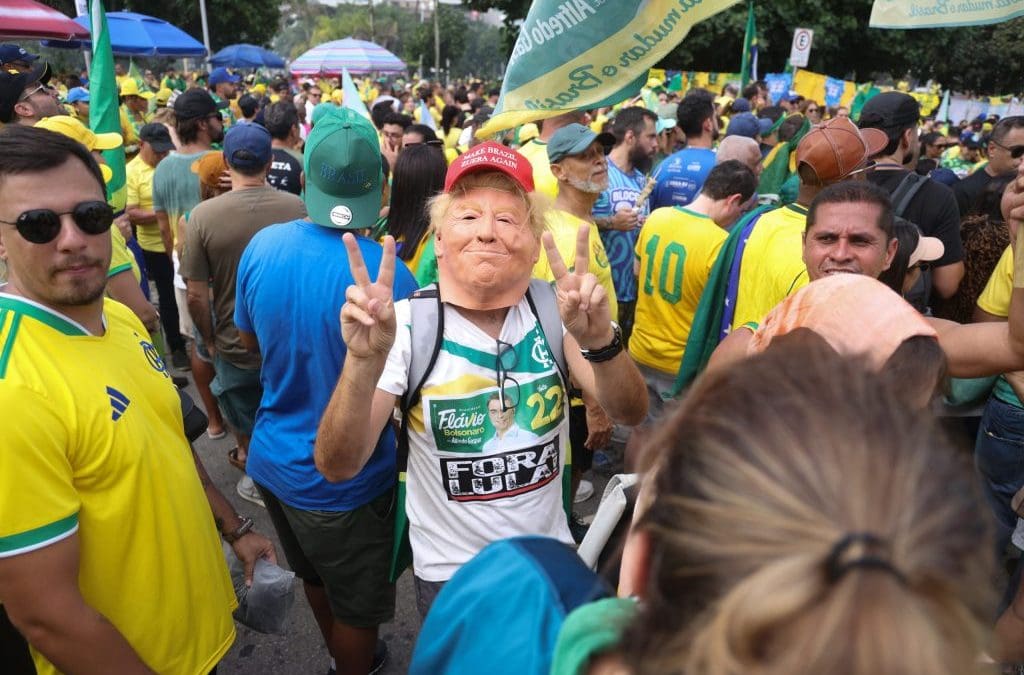
Brazil’s Federal Police have formally opened an inquiry to investigate allegations of foreign funding for the presidential campaign of Senator Flávio Bolsonaro. Bolsonaro lost to President Luiz Inácio Lula da Silva in the second round of the election on October 25.
The opening of the investigation comes at the order of Supreme Court Justice Flávio Dino, issued on October 27. The inquiry was prompted by requests from the campaigns of Lula and Missão presidential candidate Renan Santos, which pointed to signs of foreign interference in Brazil’s electoral process.
Santos received nearly 2.7 million votes in the first round of the election, or 2.25% of the total votes.
Justice Dino identified evidence justifying an investigation into potential financial contributions from the United States to benefit Bolsonaro’s candidacy, as well as suspicions that digital platforms may have treated different candidates unequally.
In Dino’s view, these facts “point to an intensification of the signs of foreign interference in the electoral process.”
Key Aspects of the Investigation
The primary focus of the inquiry is the relationship between Brazilian entrepreneurs Tallis Gomes and Pedro Sang and the Rockbridge Network, a conservative U.S. organization co-founded by U.S. Vice President J.D. Vance.
The Federal Police will determine whether these interactions resulted in any transfer of funds, provision of services, or other benefits with economic value to Flávio Bolsonaro’s campaign.
Tallis Gomes has denied participating in any electoral fundraising, donations, or the brokering of resources for the campaign.
The investigation also covers the dissemination of paid electoral advertising by accounts based abroad, featuring content favorable to the senator. Investigators will seek
by Jesse Hagopian | Nov 11, 2026 | Book Bans, brazil, Coup, critical thinking, Critical thinking skills, Democracy, Dictatorship, documentary, education, illiteracy, Inequality, Interview, João Goulart, Land Rights, literacy, Organizing, Paulo Freire, pedagogy of the oppressed, reconstruction, Slavery, Voting Rights
In 1963, Brazilian educator Paulo Freire helped launch a revolutionary literacy campaign in the impoverished northeastern Brazilian town of Angicos, where hundreds of rural workers learned to read and write in just 40 hours of instruction. Freire’s approach was about much more than literacy. Rather than emphasizing memorization and repetition, he developed “Culture Circles” where participants…
Source
by Michael Fox | Nov 9, 2026 | brazil, Podcast, Politics and Movements: International, Politics and Movements: US, Trump, Under the Shadow, Under the Shadow Season 2
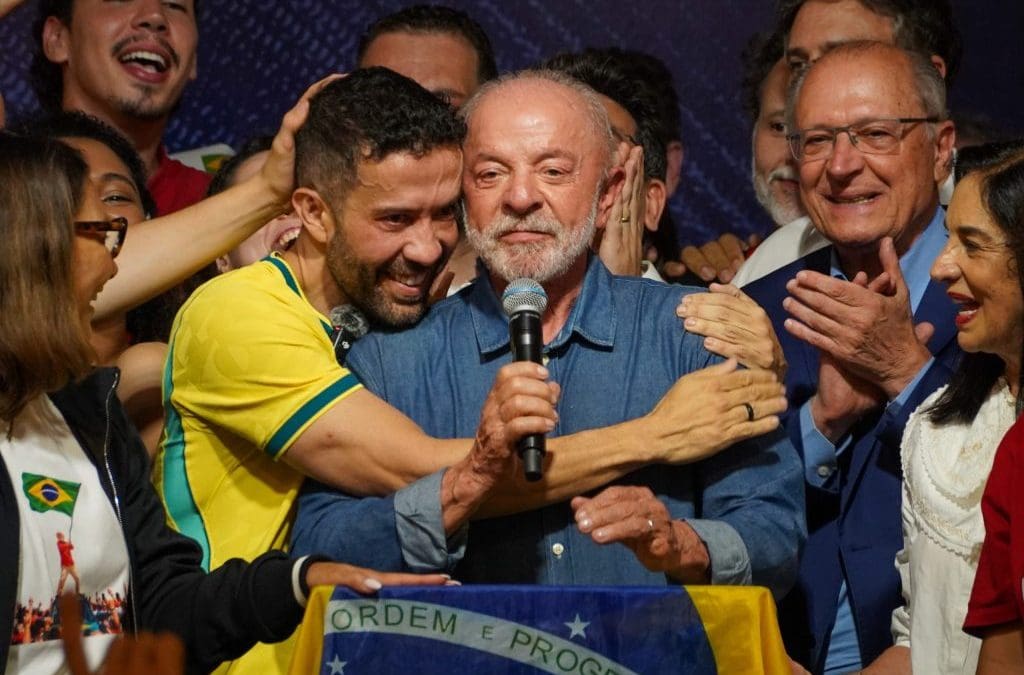
On Sunday, October 25, Brazilian President Luiz Inacio Lula da Silva defeated far-right Senator Flavio Bolsonaro by a margin of three and a half points, and almost 4.5 million votes. It was roughly twice the margin of the 2022 election, when Lula defeated Flavio’s father, Jair Bolsonaro.
It was the first time in Brazilian history that a candidate lost the first round of voting and won the second. And it was also one of the first defeats of a far-right Trump ally in several years.
As we’ve examined throughout this season of the podcast, Trump’s Donroe Doctrine has overshadowed the region since he came back into power early last year. He’s invaded Venezuela, tightened the screws on Cuba, and twisted arms to get his friends elected in countries up and down the Americas. But in Brazil, he couldn’t. And it’s not because Trump and his Silicon Valley buddies didn’t try.
It’s because Lula supporters organized en masse. Students, workers, teachers, retirees, and everyone in between. And they hit the streets to flip the vote, despite the odds.
They rallied with weeks of around-the-clock campaigning, marches, and protests. They pamphleted and fliered. They talked to their neighbors and their relatives. Online, Lula supporters responded with creative campaigns to confuse the algorithms that aggressively pushed content promoting Bolsonaro.
As many in the crowds told me again and again in recent weeks, this election was a decision that would define the fate of Brazil’s democracy. This wasn’t a vote between two candidates in a democratic system, where one wins and the other accepts their loss. It was a decision between democracy and dictatorship. Or democracy and something else.
And democracy won.
We began this
by Cleber Lourenço | Nov 5, 2026 | brazil, elections, Flavio Bolsonaro, JD Vance, Luiz Inácio Lula da Silva, Meta, minerals, News, Polymarket, rare earth minerals, Social Media
On Tuesday, Brazilian Supreme Court Justice Flávio Dino ordered the Federal Police to investigate suspected foreign financing of Flávio Bolsonaro’s presidential campaign. Bolsonaro lost to Luiz Inácio Lula da Silva in the runoff. The investigation will also need to determine whether any connection exists between political support for the senator and foreign interests in Brazil’s rare earth and…
Source
by Chris Walker | Nov 5, 2026 | brazil, Donald Trump, Flavio Bolsonaro, Luiz Inácio Lula da Silva, News
Flávio Bolsonaro, a far right politician from Brazil who recently lost a narrow election against President Luiz Inácio Lula da Silva, has fled the country, and is reportedly set to receive visas from the State Department to remain in the U.S. for an indeterminate amount of time. Bolsonaro and his family left Brazil following his defeat and amid an investigation into his involvement in a money…
Source
by Florestan Fernandes Jr. | Nov 4, 2026 | Article, bolsonaro, brazil, elections, midterms, Opinion, Politics and Movements: International, Politics and Movements: US, Reprint, Trump
This story originally appeared in Panamerican Dispatch on Nov. 04, 2026, and is shared here with permission.
President Donald Trump’s crushing defeat in the U.S. midterm elections and President Luiz Inácio Lula da Silva’s historic victory in Brazil mean much more than two election results. They send an enormous political message to the world. In the two largest and most important countries in the Americas, voters are saying they do not accept a unipolar world order. They reject the ideology of white supremacy. They say no to political projects that turn immigrants into enemies by persecuting them, criminalizing them and denying them fundamental rights.
But the message is broader. People want peace. They want an end to wars, military threats and unilateral sanctions that undermine free trade and relations among nations. They want a world where dialogue and diplomacy prevail over force, intimidation and one power imposing its interests on all others.
The results are also excellent news for the United Nations, which Trump’s foreign policy has treated with contempt. The UN now has a chance to regain a leading role. It can advance the reforms needed to play a truly central part in building a new international order. That order would be more democratic, multipolar and committed to peace, the sovereignty of peoples and cooperation among nations.
Another phenomenon is even more significant. A wave of popular mobilization is growing in Brazil, the United States and several European countries. It brings together young people, workers and broad sectors of society. Street demonstrations have outpaced traditional parties and political leaders, and often their ability to respond. The rise of autocratic governments and projects, threats