by Taya Graham and Stephen Janis | Sep 14, 2026 | police accountability, Police Accountability Report, Policing, Prisons and Policing, video
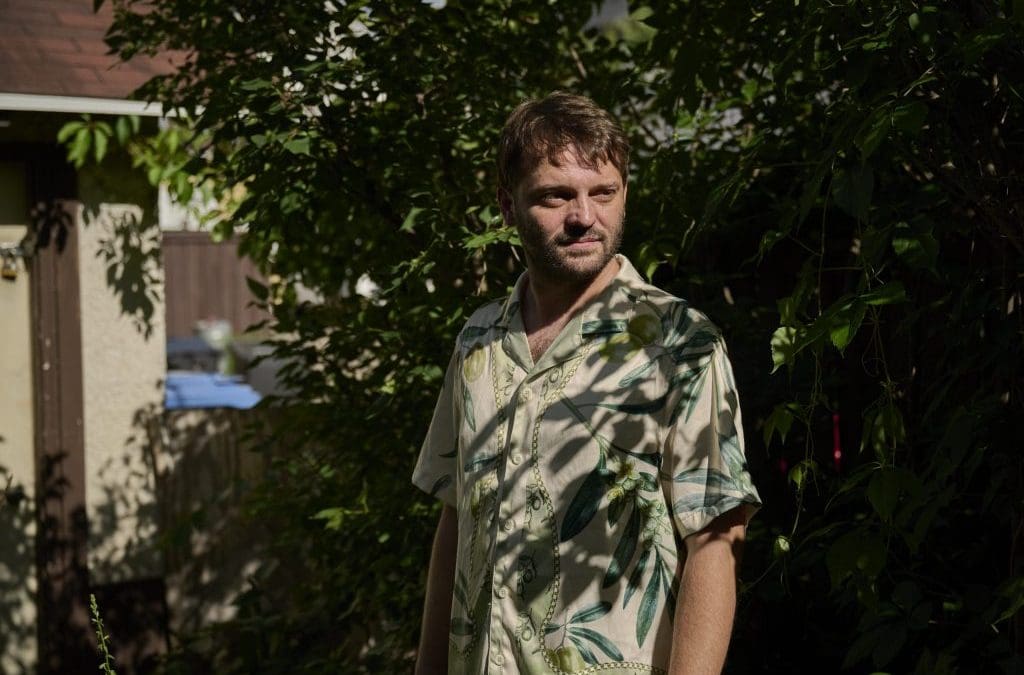
After five years behind bars and in Colorado’s correctional system, controversial cop watcher Eric Brandt is free.
In his first interview following his release, Brandt joins the Police Accountability Report to talk candidly about prison, the sentence that changed his life, his regrets, the supporters who stood by him and whether he still believes in the movement that made him one of America’s most notorious police accountability activists.
Brandt also reflects on his role in helping establish the right to film police in the 10th Circuit and answers a question his critics have been asking for years: did Eric Brandt go too far?
Love him or hate him, this is a side of Eric Brandt few people have seen…Please watch this exclusive interview with Police Accountability Report hosts Taya Graham and Stephen Janis.
Credits:
Pre-production: Taya Graham/Stephen Janis
Written by: Stephen Janis
Production: Cameron Granadino
Post-production: Stephen Janis
Transcript
The following is a rushed transcript and may contain errors. It will be updated.
Taya Graham:
Hello, this is Taya Graham and welcome to this breaking news edition of the Police Accountability Report. Now, as I always make clear, this show has a single purpose, holding the politically powerful institution of policing accountable. And to do so, we don’t just focus on the bad behavior of individual cops. Instead, we examine the system that makes bad policing possible. But today, we will achieve that goal with a little bit of a twist and a surprise, an exclusive interview with a controversial cop watcher who was just released from a halfway house in Colorado after spending five years behind bars. His name is Eric Brandt. He’s a Denver activist and advocate for the homeless,
by Mansa Musa | Aug 17, 2026 | Black Panthers, Prisons and Policing, Rattling the Bars, The Cultural Front, video
How are hip hop and Black Liberation connected? In this special Black August edition of Rattling the Bars, former political prisoner and Black Panther Mansa Musa sits down with artist, producer, and “Panther Cub” Mopreme Shakur on the rooftop of a hotel in the nation’s capital. Together, they explore Shakur’s memoir, This Thug’s Life, tracing the trajectory from the rise and fall of Black Power to the birth of hip hop through the eyes of the son of a Panther and the stepbrother of a legend.
Additional links/info:
Mopreme Shakur, Penguin Random House, This Thug’s Life: An Unapologetically Black Story
Credits:
Producer / Videographer / Editor: Cameron Granadino
Transcript
The following is a rushed transcript and may contain errors. It will be updated.
Mansa Musa:
Welcome to this district rather than your host Mansa Musa. Today we are joined by Mopreme Shakur, the son of the late great political prison with Tulu Shakur and the older stepbrother of the legendary rapper Tupac Shakur. Mopreme has recently published a memoir titled This Thug Life: A Poet Narrative Spanning the Rise of the Black Liberation Movement, The Birth of Hip-Hop in New York, and its expansion to the West Coast. Mopreme, thank you for joining
Mopreme Shakur:
Us. What’s happened, Kevin?
Mansa Musa:
Appreciate you though. I know they got you on Hustle and Bustle, and this is a good thing. What compelled you to write this particular memoir?
Mopreme Shakur:
Well, I am Mopreme Shakur, Thug Life Outlaw, Immortal. I am the son of Dr. Matou Shakur, stepson of Afeni Shakur, brother of Tupac Shakur, nephew of Asada Shakur. That’s my fam, as well as my sister Setua. A lot of people are familiar with
by Paul Messersmith-Glavin | Aug 13, 2026 | Article, Economy and Inequality, Fascism, labor, Minneapolis, Politics and Movements: US, Prisons and Policing, Reprint
This article was originally published by Truthout on Aug. 12, 2026. It is shared here under a Creative Commons (CC BY-NC-ND 4.0) license.
The U.S. government is attempting to use conspiracy charges to imprison organizers, just as it did in its war against the Black Panther Party, New Left, and other 1960s and ‘70s radicals through its counterintelligence program, COINTELPRO. Through this method, the Trump regime shares the goal of the Nixon administration of disrupting and attempting to destroy domestic opposition to its authoritarian agenda.
Two weeks after the September 2025 murder of right-wing activist Charlie Kirk, Donald Trump issued the National Security Presidential Memorandum 7 (NSPM-7), entitled “Countering Domestic Terrorism and Organized Political Violence.” The memorandum created a category of “domestic terrorist” that, while lacking legal authority, broadly includes anyone who believes in things deemed as constituting “anti-Americanism, anti-capitalism, and anti-Christianity; support for the overthrow of the United States Government; extremism on migration, race, and gender; and hostility towards those who hold traditional American views on family, religion, and morality.” NSPM-7 openly calls for “investigative” tactics designed to “disrupt” and “dismantle” political movements and organizations.
Following the recent use of conspiracy charges to successfully convict people in both the Prairieland case in Texas and the Spokane 3 case in Washington, 15 community members in the Twin Cities were indicted on June 16 for resisting the Trump administration’s December 2025 immigration crackdown dubbed “Operation Metro Surge.” According to the indictment, all defendants are identified as “members and associates of … Direct Action Minnesota (‘DAMN’),” which helped organize Minnesota’s resistance. That organization is now defunct in light of the arrests and revelations about government infiltration.
The primary charge against
by Stephen Prager | Aug 12, 2026 | Article, ICE, immigration, Policing, Politics and Movements: US, Prisons and Policing, Reprint, Trump
by Mike Ludwig | Aug 11, 2026 | AI, Article, police accountability, Policing, Politics and Movements: US, Prisons and Policing, Reprint
by Mansa Musa | Aug 10, 2026 | Prison Industrial Complex, prison reform, Prisons and Policing, Rattling the Bars, video
Effective public safety policy is founded on preventing crime and repairing harm, but these are not the foundations of America’s reactionary criminal justice establishment. This week on Rattling the Bars, we host a roundtable discussion about the DC Justice Lab’s 2026 Public Safety Policy Agenda, which has been endorsed by 30 progressive organizations working directly with system-impacted individuals, and about criminal justice reforms that would ensure safer communities through restorative justice, not draconian punishment.
Additional links/info:
DC Justice Lab website, Facebook page, X page, and Instagram
DC Justice Lab, 2026 DC Public Safety Policy Agenda
Credits:
Producer / Videographer / Editor: Cameron Granadino
Transcript
The following is a rushed transcript and may contain errors. It will be updated.
Mansa Musa:
Welcome to this edition of Rattling the Bars, I’m your host, Mansa Musa.
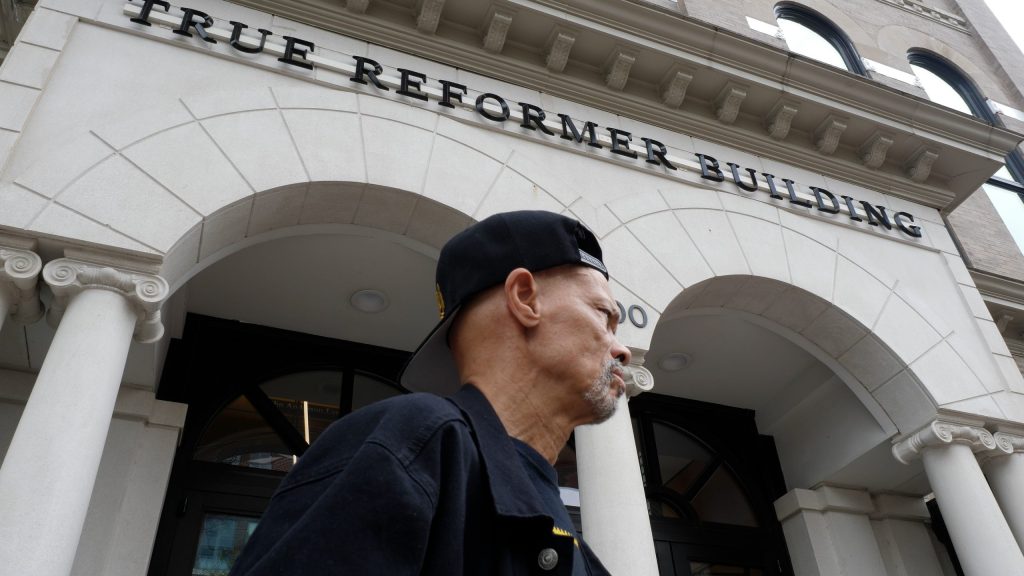
Today we are at the True Reformer Building talking to representatives from DC Justice Lab. I’m talking to Clinique Chapman, CEO, Bethany Young, the policy director. We’re here to discuss a roadmap for a safer and more equitable District of Columbia through the lens of the public safety policy agenda that DC Justice Lab has developed. Welcome to Rattling the Bars.
Clinique Chapman:
Thank you. We’re happy to be here.
Mansa Musa:
OK. Let’s start with transparency and technology. Clinique and Bethany, your agenda highlights surveillance oversight and the need for virtual testimony from the jail. Why are these two so critical for ensuring the justice system remains accountable to public safety and accessible to those inside? And when we talk about the virtual, for the benefit of our audience, DC Code Defenders can vote. And because DC Code Defenders can vote, they also should have the right. I think this