by Chris Walker | Nov 3, 2026 | Article, health care, Politics and Movements: US, prison reform, Prisons, Prisons and Policing, Reprint, Supreme Court, Trump
This article was originally published by Truthout on Oct. 21, 2026. It is shared here under a Creative Commons (CC BY-NC-ND 4.0) license.
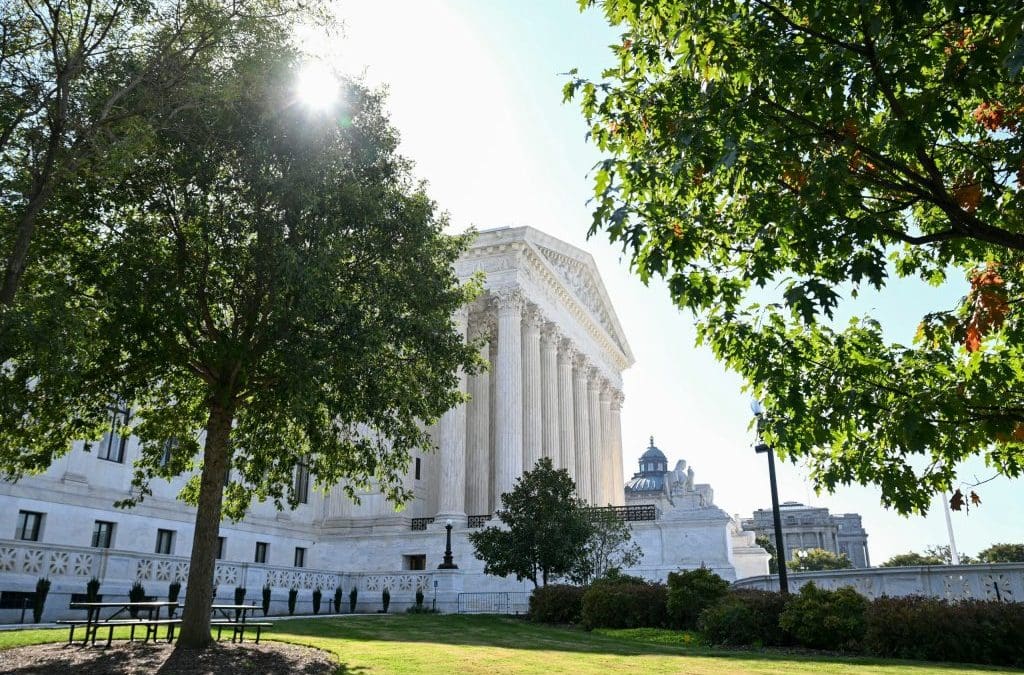
The U.S. Supreme Court has denied an emergency petition from the Trump administration, which sought a stay on a lower court’s injunction on a policy that would have denied gender-affirming care to federally incarcerated transgender people.
That policy was implemented by the Bureau of Prisons (BOP) after President Donald Trump signed an executive order in January 2025 that denied the existence of transgender people. The order also directed federal agencies to take steps that would be consistent with that view, and included specific instructions for the BOP.
“The Attorney General shall ensure that the Bureau of Prisons revises its policies concerning medical care to be consistent with this order, and shall ensure that no Federal funds are expended for any medical procedure, treatment, or drug for the purpose of conforming an inmate’s appearance to that of the opposite sex,” the order reads.
After the BOP conformed to the order, a group of incarcerated trans people who had been receiving gender-affirming care sued the administration. The group is being represented by the American Civil Liberties Union (ACLU), which argued that their Eighth Amendment protections against cruel and unusual punishment were being infringed upon.
A federal judge agreed, and, in August, ordered the policy to be blocked. The Trump administration challenged that finding, but the U.S. Court of Appeals for the District of Columbia Circuit upheld it, prompting Solicitor General John Sauer to submit an emergency appeal to the Supreme Court.
The court has regularly ruled against transgender people, allowing state bans on trans athletes’
by Victoria Valenzuela | Nov 3, 2026 | Abolition, abuse, California, Incarceration, Juvenile Detention, juvenile incarceration, Juvenile Prisons, Los Angeles, News, Organizing, Prisons, Youth, youth incarceration, youth prison, Youth Prisons
Mercedes Maradiaga sat across from her 19-year-old son in the Los Padrinos Juvenile Hall in Los Angeles in complete devastation. Her son had at that point been incarcerated at the prison for two years and she had visited him every weekend. But that day in September 2024 was especially hard because it was their first visit since he had been beaten by officers earlier that week in a space in the…
Source
by Candice Norwood | Sep 29, 2026 | Air Conditioning, Cruel and Unusual Punishment, Eighth Amendment, Extreme Heat, Health, News, Organizing, Prisons, Texas
These Texas advocates call themselves “lionesses” for a reason: They say backing down is not in their nature. In 2022, a small group of formerly incarcerated women formed the nonprofit Lioness Justice Impacted Women’s Alliance to empower communities to challenge harmful practices within the criminal legal system. Since that time, they have put a spotlight on what they argue are dangerous…
Source
by Brian Dolinar | Sep 27, 2026 | Abolition, decarceration, Illinois, Incarceration, Mass Incarceration, Massachusetts, News, Organizing, Prisons, Vermont
As abolitionists across the United States push for decarceration, a backlash has emerged in the form of new prison construction, demonstrating the resiliency of mass incarceration. Several new women’s prisons are being built despite a growing chorus of voices arguing that prisons only inflict more harm on women who have already endured abuse and trauma. Last year, a new prison to hold nearly…
Source
by Renée Feltz | Sep 23, 2026 | Bill Lee, Capital Punishment, clemency, Death Penalty, Death Row, Execution, Executions, Gov. Bill Lee, News, Prisons, Rape, sex trafficking, Sexual Assault, Sexual Violence, Solitary Confinement, Tennessee, Torture, Trauma
Christa Pike was sexually abused and raped from the time when she was a toddler until almost a year to the day before she was arrested in 1995 at age 18 for murdering fellow teenager Colleen Slemmer when the two attended a job training program for troubled youth in Knoxville. Tennessee officials do not dispute these facts. “I think everybody in this courtroom wishes that those things had…
Source
by Erin Rode | Sep 18, 2026 | California, Extreme Heat, News, Prisons, Workplace Safety
As Californians have weathered relentless heat waves, state workplace safety regulators have repeatedly reminded employers to protect employees from heat illness by providing water, shade, cooldown areas, and additional rest breaks when temperatures climb. But there’s a notable exception to the state’s heat safety rules: the nurses, guards, staff, and tens of thousands of incarcerated people…
Source