


The devastating reality of having loved ones in prison
In this episode of Rattling the Bars, Mansa Musa speaks with independent journalist Victoria Valenzuela, who reports for a wide range of news outlets on incarceration in California and Louisiana. Victoria’s recent articles shed light on the inhumane conditions at California City Detention Center—specifically its no-contact visitation policy, making it the only detention center in California to enact such a rule. CCDC is operated by the for-profit corporation CoreCivic (formerly Corrections Corporation of America), an organization with a history marred by systemic violence that is currently capitalizing on Trump’s mass deportation policies to expand its detention contracts.
In the second half of the conversation, Mansa and Victoria discuss the circumstances of incarcerated women domestic violence survivors in California and the potential for prison abolition. They note that the state’s incarcerated women population has decreased from roughly 11,000 to 3,700 over two decades.
Related link:
Families Are Fighting Draconian No-Contact-Visit Policy at California ICE Jail via Truthout
Victoria Valenzuela’s Substack
Credits:
Production/Post-production: Cameron Granadino
Transcript
The following is a rushed transcript and may contain errors. It will be updated.
Mansa Musa:
Welcome to this edition of Rattling the Bars. I’m your host, Mansa Musa. Today I’m speaking with reporter Victoria Valenzuela about a recent reporting on incarceration in California. Thank you for joining me, Victoria. Please introduce yourself to our audience.
Victoria Valenzuela:
Hi, I’m Victoria. Thank you so much for having me. I’m an independent journalist. I’ve been reporting on families and individuals impacted by incarceration for five years. I’ve been published in a variety of news outlets, about 30 now, and that includes The Guardian, Truth Out, Prism, The Real News Network, Buzzfeed News, USA Today, documented a bunch of different
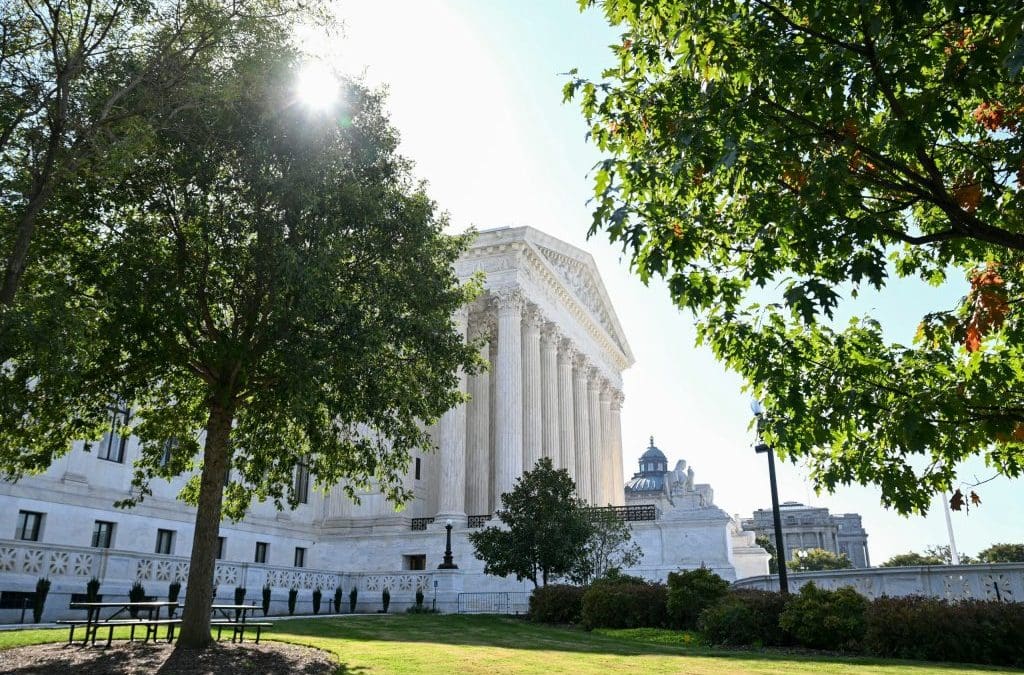
Supreme Court rejects Trump bid to halt care for incarcerated trans people
This article was originally published by Truthout on Oct. 21, 2026. It is shared here under a Creative Commons (CC BY-NC-ND 4.0) license.
The U.S. Supreme Court has denied an emergency petition from the Trump administration, which sought a stay on a lower court’s injunction on a policy that would have denied gender-affirming care to federally incarcerated transgender people.
That policy was implemented by the Bureau of Prisons (BOP) after President Donald Trump signed an executive order in January 2025 that denied the existence of transgender people. The order also directed federal agencies to take steps that would be consistent with that view, and included specific instructions for the BOP.
“The Attorney General shall ensure that the Bureau of Prisons revises its policies concerning medical care to be consistent with this order, and shall ensure that no Federal funds are expended for any medical procedure, treatment, or drug for the purpose of conforming an inmate’s appearance to that of the opposite sex,” the order reads.
After the BOP conformed to the order, a group of incarcerated trans people who had been receiving gender-affirming care sued the administration. The group is being represented by the American Civil Liberties Union (ACLU), which argued that their Eighth Amendment protections against cruel and unusual punishment were being infringed upon.
A federal judge agreed, and, in August, ordered the policy to be blocked. The Trump administration challenged that finding, but the U.S. Court of Appeals for the District of Columbia Circuit upheld it, prompting Solicitor General John Sauer to submit an emergency appeal to the Supreme Court.
The court has regularly ruled against transgender people, allowing state bans on trans athletes’

Can This Independent Mass. Governor Candidate Rally a 67% Unenrolled Electorate?
In this episode of Rattling the Bars, the midterms edition, we take you to the Commonwealth, where Andrea James—abolitionist, author, and organizer—is currently running for governor of Massachusetts. The countdown to November 3 is officially underway. Debates are scheduled for October, but independent and third-party candidates are being excluded from participating.
Andrea James has led national campaigns to reunite families by demanding clemency from high-level officials for incarcerated women and men. Now, she is running for governor with a platform focused on rent stabilization, lower energy costs, free childcare and stopping the construction of a new $360M women’s prison.
As a 501(c)(3) organization, The Real News Network does not endorse candidates. However, as an independent news network, TRNN understands how corporate media gives disproportionate airtime to the DNC and GOP compared to independent and third-party candidates.
Related Links:
Andrea James’ Facebook, X, Instagram, TikTok, Bluesky
Credits:
Production/Post-production: Cameron Granadino
Transcript
The following is a rushed transcript and may contain errors. It will be updated.
Mansa Musa:
Welcome to this edition of Rattling the Bars. I’m your host, Mansa Musa. Joining me today is Andrea James, activist in every sense of the word. I want to say abolitionist, but she’s an activist in every sense of the word, organizing and is currently running for the governor of Massachusetts. Thank you for joining me, Andrea.
Andrea James:
Thank you for having me. It’s really great to be back in your studio and just to have the privilege of being a part of how you disseminate information. It’s really an honor to be here and I thank you for this opportunity.
Mansa Musa:
And we want to go on record right now saying that here at Rattling

Courtney Teasley: Breaking the cycle of incarceration
After running a historic campaign to unseat a criminal court judge for the first time in Nashville, Courtney Teasley created the legal education company emeffen to inform working-class communities about their civil rights. From combating police abuse to supporting vulnerable populations targeted by the criminal justice system, Teasley is a business and legal powerhouse redirecting people toward civic engagement and political-economic acumen. In this heartfelt interview, Mansa Musa and Courtney Teasley discuss grounded community organizing and political education that subverts the carceral system’s goal of turning citizens into captives.
Related links:
Follow Courtney Teasley on Youtube, TikTok, Instagram, website.
Credits:
Production/Post-production: Cameron Granadino
Transcript
The following is a rushed transcript and may contain errors. It will be updated.
Mansa Musa:
Welcome to this edition of Rattling the Bars. I’m your host, Mansa Musa. Today we are joined by Courtney Teasley, who consider herself and identify herself as a legal disruptor and justice strategist. We’ll be discussing her perspective on how she is intervening in the criminal injustice system and her work challenging the prison industrial complex as it exists today. Thank you, Courtney. Welcome to Rattling the Bars.
Courtney Teasley :
Thank you so much for having me. I’m really excited. I’ve heard a lot about this podcast, and so thank you so much for this opportunity to talk to your audience.
Mansa Musa:
Okay. Let’s start by introduce yourself to our audience and tell our audience how you came into this space, but more importantly, what is a legal disruptor and a justice strategist? What’s your identity as how you identify those things? So tell us a little bit about yourself.
Courtney Teasley :
Yes. So my name is Courtney Teasley. I am
Real public safety means more community, not cages
Effective public safety policy is founded on preventing crime and repairing harm, but these are not the foundations of America’s reactionary criminal justice establishment. This week on Rattling the Bars, we host a roundtable discussion about the DC Justice Lab’s 2026 Public Safety Policy Agenda, which has been endorsed by 30 progressive organizations working directly with system-impacted individuals, and about criminal justice reforms that would ensure safer communities through restorative justice, not draconian punishment.
Additional links/info:
DC Justice Lab website, Facebook page, X page, and Instagram
DC Justice Lab, 2026 DC Public Safety Policy Agenda
Credits:
Producer / Videographer / Editor: Cameron Granadino
Transcript
The following is a rushed transcript and may contain errors. It will be updated.
Mansa Musa:
Welcome to this edition of Rattling the Bars, I’m your host, Mansa Musa.
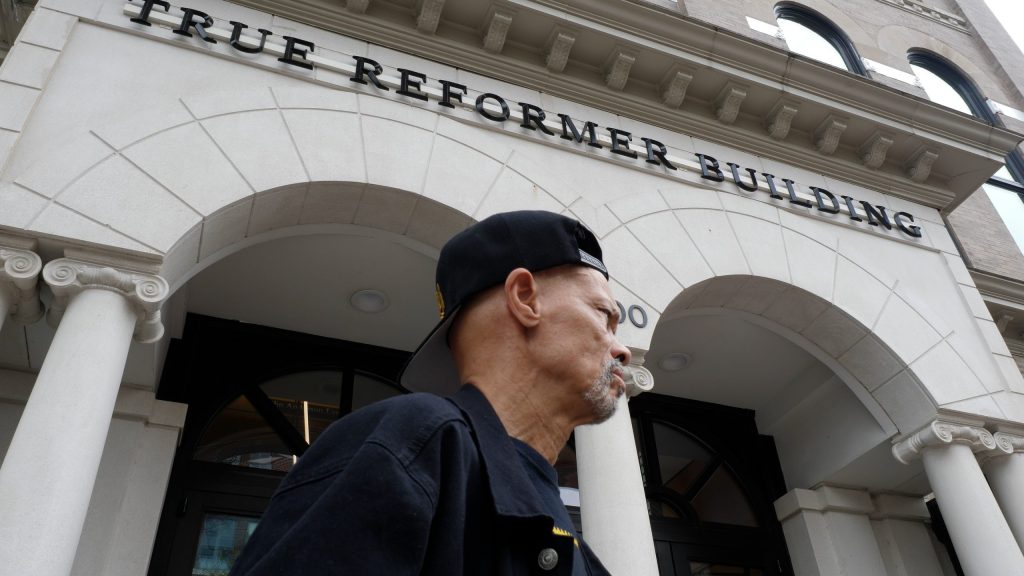
Today we are at the True Reformer Building talking to representatives from DC Justice Lab. I’m talking to Clinique Chapman, CEO, Bethany Young, the policy director. We’re here to discuss a roadmap for a safer and more equitable District of Columbia through the lens of the public safety policy agenda that DC Justice Lab has developed. Welcome to Rattling the Bars.
Clinique Chapman:
Thank you. We’re happy to be here.
Mansa Musa:
OK. Let’s start with transparency and technology. Clinique and Bethany, your agenda highlights surveillance oversight and the need for virtual testimony from the jail. Why are these two so critical for ensuring the justice system remains accountable to public safety and accessible to those inside? And when we talk about the virtual, for the benefit of our audience, DC Code Defenders can vote. And because DC Code Defenders can vote, they also should have the right. I think this