by Julia Conley | Jun 11, 2026 | Article, DOGE, Economy, Economy and Inequality, Politics and Movements: US, Reprint, Trump
This story originally appeared in Common Dreams on June 09, 2026. It is shared here under a Creative Commons (CC BY-NC-ND 3.0) license.
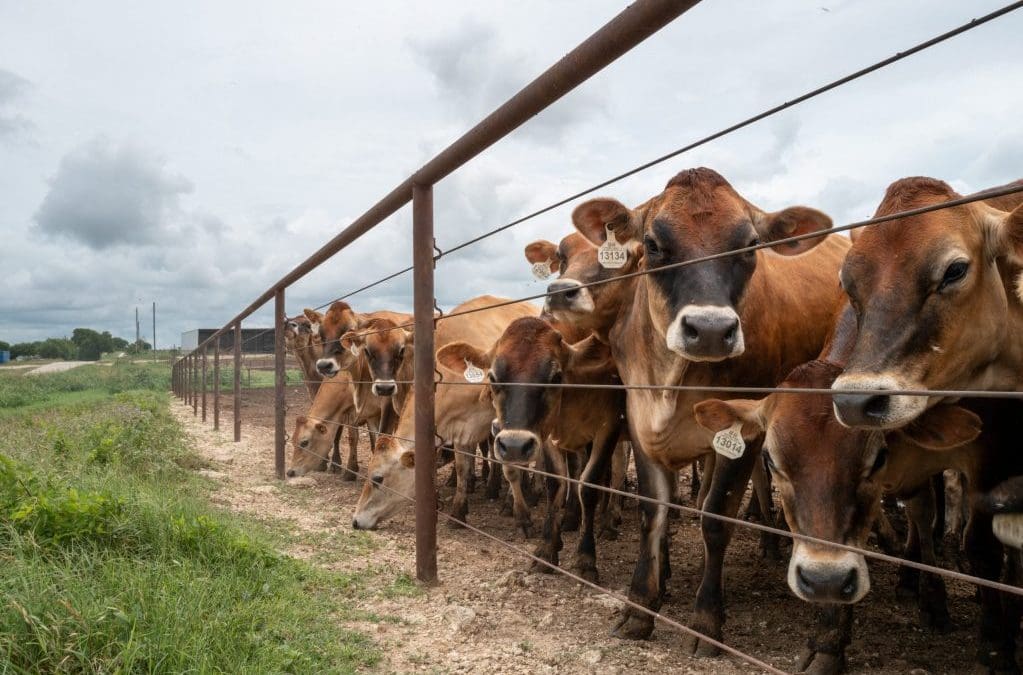
The Trump administration has emphasized in recent days that the New World screwworm infection found in a calf in Texas did not pose a threat to the United States’ larger cattle herd, which is at its lowest point in 75 years due largely to drought conditions—but the US Department of Agriculture is now acknowledging that cases of the parasite have been found outside the Texas containment zone and as far away as in New Mexico, as Republican officials attempt to blame the Biden administration for the outbreak.
While Democratic lawmakers are among those connecting the arrival of screwworm—a flesh-eating bug that feeds off the living tissue of warm-blooded animals and had been eradicated in the US in 1966—to cuts by President Donald Trump’s Department of Government Efficiency (DOGE) that specifically targeted screwworm monitoring programs, Agriculture Secretary Brooke Rollins doubled down on claims that an “open border policy” under the Biden administration was to blame.
“This does trace back to the last administration and the open border policy, and the movement of millions of people and their animals up from South America through Central America,” said Rollins with certainty on Monday.
As David Dayen explained at The American Prospect Tuesday, former President Joe Biden placed a ban on bison, horse, and cattle imports from Mexico in 2024, which Trump lifted in February 2025. At the same time, DOGE, under the leadership of Trump megadonor and tech billionaire Elon Musk, cut screwworm monitoring efforts and animal disease control and prevention efforts, slashing 1,300 employees from USDA’s Animal and Plant Health Inspection Service.
Rollins did reinstate the live import ban last May as screwworm cases were rising in Mexico and began funding prevention programs in
by Maximillian Alvarez | Jun 8, 2026 | Economy and Inequality, ICE, Israel, labor, Palestine, Podcast, Politics and Movements: US, Unions, Working People
At a live event hosted at Red Emma’s Cooperative Bookstore and Coffeehouse in Baltimore, Maryland, TRNN Editor-in-Chief Maximillian Alvarez got to sit down for a deep and wide-ranging conversation with Chris Smalls, co-founder and former president of the Amazon Labor Union. Alvarez and Smalls discuss Smalls’ new book, When the Revolution Comes: A Fight for the Future of the Working Class; they recount the incredible story of the formation of the Amazon Labor Union and the unionization of the first Amazon warehouse in the US; and they talk about Smalls’ journey from warehouse worker and labor organizer to becoming an internationally recognized public figure and a human rights activist who has sailed with humanitarian flotilla missions to Gaza and Cuba.
Additional links/info:
Chris Smalls X page and Instagram
Chris Smalls, Penguin Random House, When the Revolution Comes: A Fight for the Future of the Working Class
Maximillian Alvarez, TRNN, “Chris Smalls: Sabotage attempts and death threats won’t stop Gaza Freedom Flotilla”
Featured Music:
Jules Taylor, Working People Theme Song
Credits:
Audio Post-Production: Jules Taylor
Transcript
The following rushed transcript may contain errors. It will be updated as soon as possible.
Maximillian Alvarez:
All right Welcome everyone to Working People, a podcast about the lives, jobs, dreams, and struggles of the working class today. Working People is a proud member of the Labor Radio Podcast Network and is brought to you in partnership with In These Times Magazine and the Real News Network. This show is produced by Jules Taylor and made possible by the support of listeners like you. My name is Maximillian Alvarez and we’ve got a really special episode for y’all today, which is a recording of a live event
by Brad Reed | Jun 4, 2026 | AI, Article, Climate Change, Climate Crisis, Economy, Economy and Inequality, Politics and Movements: US, Reprint
This story originally appeared in Common Dreams on June 04, 2026. It is shared here under a Creative Commons (CC BY-NC-ND 3.0) license.
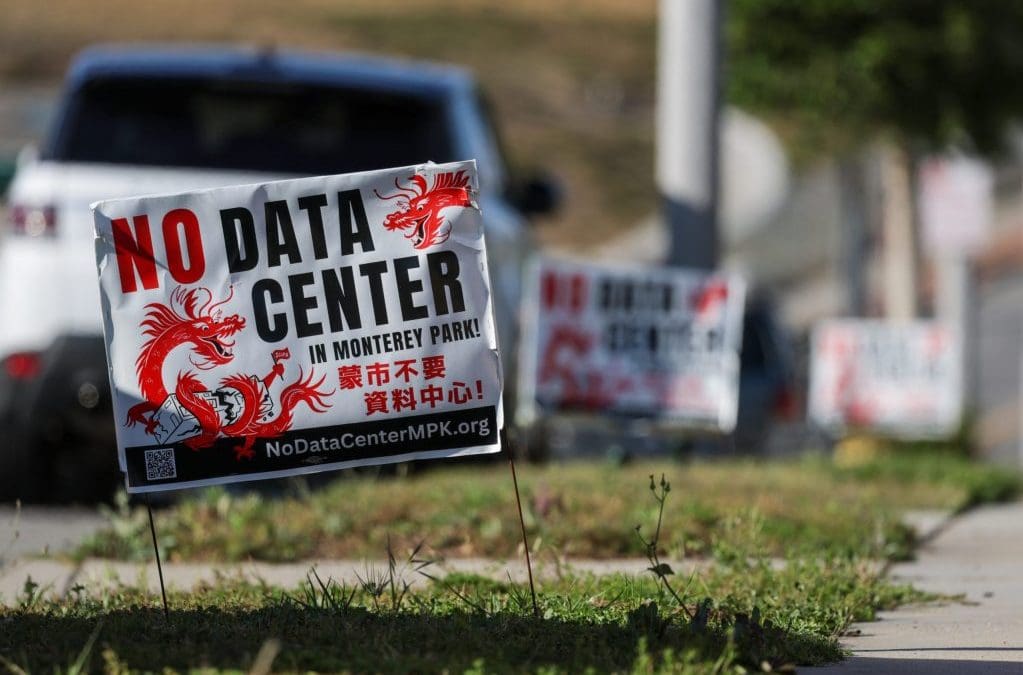
Voters in Monterey Park, California on Tuesday overwhelmingly approved a permanent ban on data centers within city limits, becoming the first city in the US to prohibit the power-hungry facilities via a ballot initiative.
In total, the anti-data center resolution passed with 86% voter support, with only 14% of voters opposed. The resolution’s text said that a ban was necessary to “protect air quality, drinking water resources, and public health” and “prevent impacts to electricity and water rates.”
Steven Kung, a leader of the local initiative, told ABC 7 Eyewitness News that the result was “a landslide victory.”
Kung listed multiple reasons why residents in the city resoundingly rejected building data centers in their community.
“The noise pollution, the air pollution, the rise in the electricity rates,” he said, “the deal just didn’t make sense and it doesn’t make sense for most, if not all, cities data centers go to.”
In an interview with Politico, Monterey Park Mayor Elizabeth Yang predicted that her city would be far from the last to pass data center bans, noting data center projects have spurred protests across the country.
“A lot of the other cities that are facing data center proposals are going to follow suit,” said Yang. “There’s [a] bad reputation across the board, across the country, from other data centers that have been built in neighborhoods.”
Monterey Park city councilmember Jose Sanchez expressed a similar sentiment, telling The Guardian that he hoped his city would become a inspiration to others.
“We hope that other communities will use the model set by residents here in Monterey Park,” said Sanchez, “as inspiration to stop
by Maximillian Alvarez | Jun 1, 2026 | Article, Climate Crisis, Economy and Inequality, sacrifice zones, video
What the hell is going on with all these toxic disasters in the news?
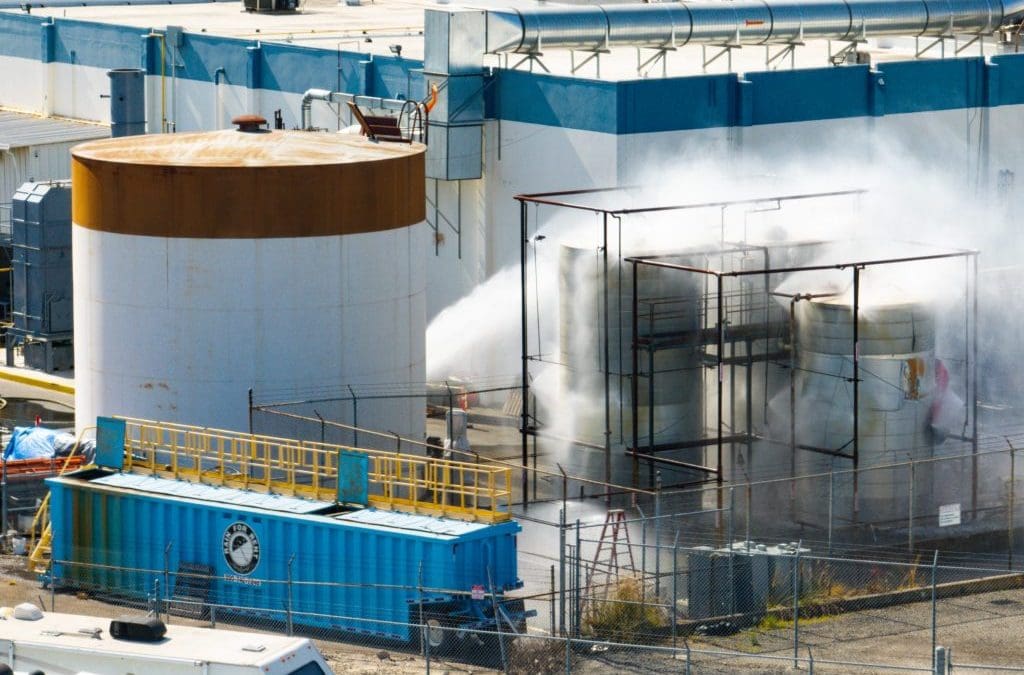
Over the past week, we’ve had a terrifying crisis at the GKN Aerospace facility in Garden Grove, CA, involving a pressurized tank of toxic chemicals on the verge of spilling or exploding for days and the evacuation of 50 thousand people in Orange County.
At the same time, right up the road in LA, we had a spill of thousands of gallons of crude oil that got into the LA River
Then, news broke of the horrifying tank rupture and explosion at the Nippon Dynawave paper mill in Longview, Washington, involving hundreds of thousands of gallons of toxic liquid and 11 workers who were killed.
People have been asking me all week, “What the hell is going on?” And that’s because I’m a professional editor and an award-winning journalist who’s been covering toxic disasters like this for years. Also, I’m from Orange County, and my family lives in Garden Grove, about 10 minutes from the GKN Aerospace facility, so I’ve been watching all of this very closely.
If you haven’t been obsessively investigating these kinds of stories like I have, the recent rapid-fire bombardment of headlines can make it seem like all these toxic disasters are coming out of nowhere. An explosion here, a toxic spill there, a fire there. “Why is this happening? And what the hell do we do?”
So, right off the bat, the most important thing to understand is that this is not all just happening now. It’s been happening, and most of the time you just haven’t been hearing about it.
Did you hear about the toxic explosion
by Sam Carliner | May 29, 2026 | Article, Bolivia, Economy and Inequality, Indigenous communities, Politics and Movements: International, Politics and Movements: US, Reprint
by Brett Wilkins | May 28, 2026 | Article, Economy and Inequality, elections, Politics and Movements: US, Reprint, Voting Rights