by Maximillian Alvarez | May 27, 2026 | Economy, Economy and Inequality, labor, Podcast, Politics and Movements: US, Prisons and Policing, Unions, Working People
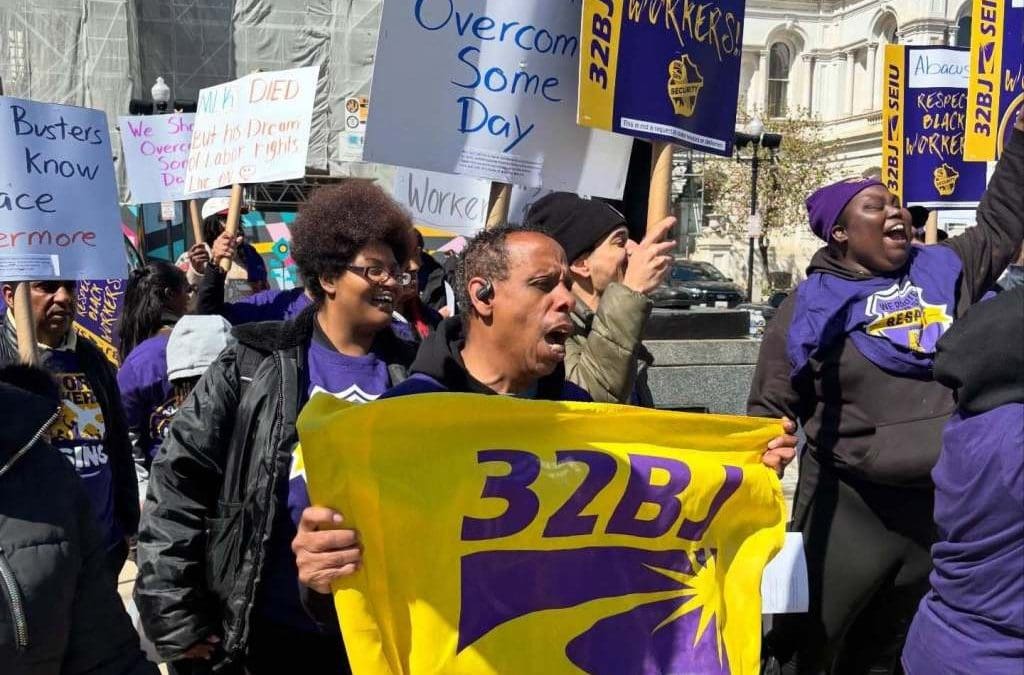
Nearly a year after workers voted to authorize a strike, non-union city and commercially contracted security officers in Baltimore, Maryland, walked off the job on April 9 on an unfair labor practice strike against their employers, Abacus Corporation, Metropolitan Protective Services, and Urban Development Solutions. Now, Local 32BJ of the Service Employees International Union (SEIU) say that workers have been retaliated against by Metropolitan Protective Services (MPS), alleging that the city contractor “fired and harassed workers following [the] lawful strike.” MPS denies these allegations and claims “that no employees have been terminated due to union involvement.” In this episode, we speak with Victoria Cox, a former MPS employee who worked to reach the rank of sergeant, and Daril Riley, a former MPS employee who reached the rank of corporal. Both Cox and Riley have had their shifts taken off the schedule—and, essentially, their jobs taken away—and both have been put under investigation by MPS since the strike in April.
Additional links/info:
Maximillian Alvarez, Working People / TRNN, “Underpaid, uninsured, held at gunpoint: Baltimore security guards strike for a union”
SEIU Local 32BJ website, Facebook page, and Instagram
Katherine Wilson, Baltimore Sun, “Baltimore contract security officers at city properties prepare to strike”
Featured Music:
Jules Taylor, Working People Theme Song
Credits:
Audio Post-Production: Jules Taylor
Statement from Derrick Parks, CEO and President of Metropolitan Protective Services (5/26/26):
Metropolitan Protective Services, Inc. (MPSI) maintains that no employees have been terminated due to union involvement. We fully support our employees’ right to choose whether or not to join a union.
The individuals recently removed from the schedule were terminated for failing to maintain the current Maryland guard license required by the Maryland State Police.
by Maximillian Alvarez | May 22, 2026 | Article, Economy and Inequality, greece, Israel, Palestine, Politics and Movements: International
by Stephen Janis and Taya Graham | May 21, 2026 | Article, Economy and Inequality, elections, Inequality, Inequality Watch, Politics and Movements: US, Voting Rights
by Maximillian Alvarez | May 20, 2026 | coal miner, Economy, Economy and Inequality, labor, Podcast, Politics and Movements: US, Trump, Working People
Since the 2016 presidential election, Donald Trump and his acolytes, right-wing media, and coal industry barons and lobbyists have obsessively painted the picture of Trump as a friend to coal miners and the so-called “undisputed champion of beautiful clean coal.” But as labor journalist Kim Kelly reports at In These Times, “the simpering ’Trump digs coal’ image the administration seeks to project is vastly at odds with the actions it’s taken to limit miner protections, endanger their health, and exacerbate the black lung crisis consuming Central Appalachia.” In this episode of Working People, we speak with Kelly about the Trump administration’s latest betrayal of coal miners and their families and its underreported attack on the Federal Mine Safety and Health Review Commission and abrupt, unprecedented firing of FMSHRC Commissioner Moshe Z. Marvit.
Additional links/info:
Kim Kelly website, X/Twitter page, TikTok, Bluesky page, and Instagram
Kim Kelly, In These Times, “Trump’s latest target: Coal miners’ safety”
Jordan Barab, Confined Space, “Friday night massacre at Mine Safety Review Commission”
Kim Kelly, In These Times, “The Trump administration ramps up its war on coal miners”
Kim Kelly, In These Times, “Trump to coal miners: Drop dead”
Featured Music:
Jules Taylor, Working People Theme Song
Credits:
Audio Post-Production: Jules Taylor
Transcript
The following is a rushed transcript and may contain errors. A proofread version will be made available as soon as possible.
Maximillian Alvarez:
Alright. Welcome everyone to Working People, a podcast about the lives, jobs, dreams, and struggles of the working class today. Working People is a proud member of the Labor Radio Podcast Network and is brought to you in partnership with In These Times Magazine and the Real News Network. The show is produced by
by Dean Baker | May 19, 2026 | Article, Economy and Inequality, Iran, Oil, Politics and Movements: International, Politics and Movements: US, Reprint, War
This article originally appeared on Dean Baker’s Patreon. It is reprinted here with permission.
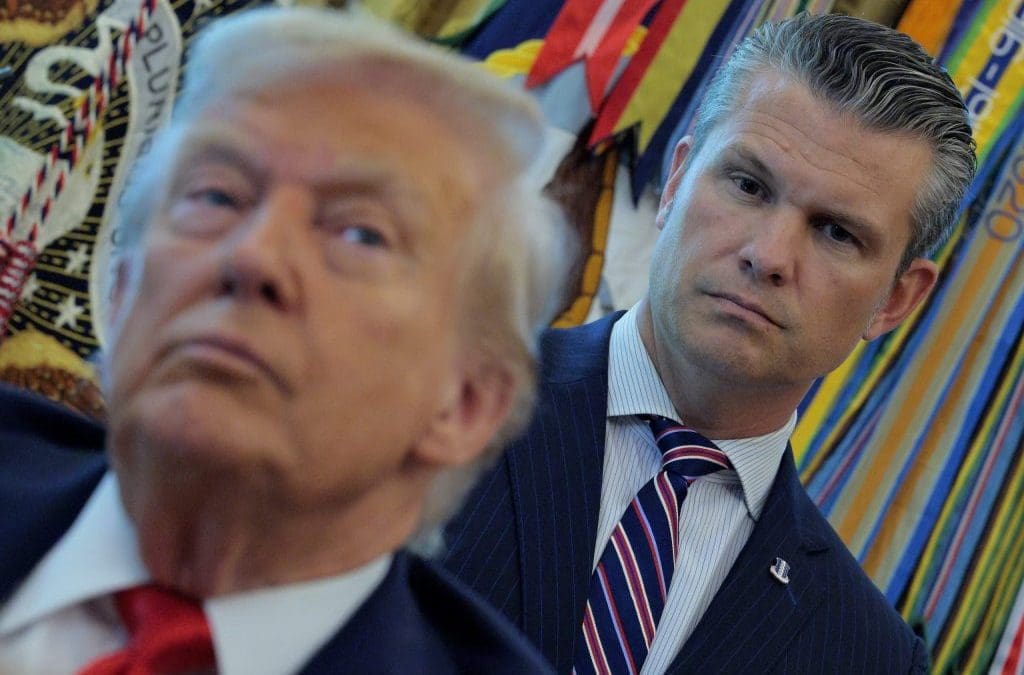
Our Secretary of Defense (or War) Pete Hegseth seems to be having a really great time killing people in Iran, but his live action video games come at a big cost, not just in lives, but in budget dollars. To be clear, the main reason to be opposed to this pointless war is its impact on the people of Iran and elsewhere in the region. But it also has a huge economic cost that is seriously underappreciated.
The short-term cost is the shortage of oil, natural gas, fertilizers, and other items that would ordinarily travel through the Straits of Hormuz. This shortage has already sent prices of many items soaring. The impact is not just on the goods themselves, but there is a large secondary impact due to higher shipping costs, and if fertilizer supplies are not resumed soon, higher food prices, due to lower crop yields. This is a big hit to people in wealthy countries, but it is life-threatening to people living on the edge in Sub-Saharan Africa and South Asia.
But in addition to the short-term cost, there is also a longer-term cost insofar as we are making new enemies and therefore will have higher bills for military spending long into the future. We already got the first taste of this as the Trump administration floated the idea of a $200 billion special appropriation to cover the cost of the war.
The Military is Really Big Bucks
There is remarkably little appreciation of how much money is at stake with wars and the military. This is because the media
by Ben Carroll | May 19, 2026 | AI, Article, Economy and Inequality, labor, Politics and Movements: US, Reprint
This story originally appeared in Jacobin on May 11, 2026. It is shared here with permission.
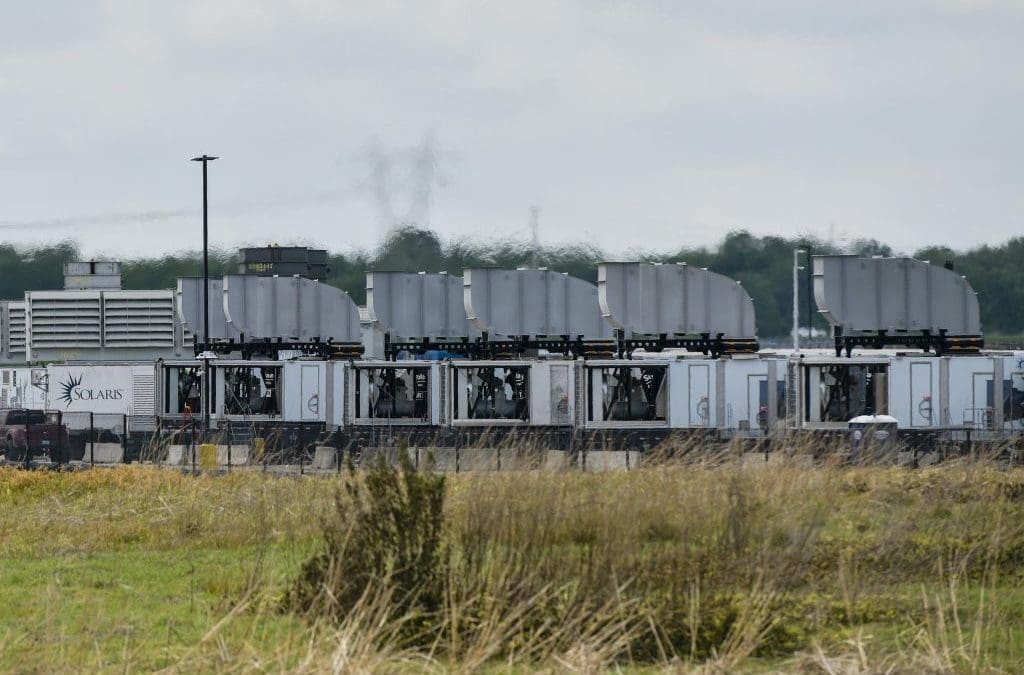
We’re really going into what we believe is the early chapters of an investment supercycle in the US for electricity growth,” Scott Strazik, CEO of GE Vernova, told Barron’s during an interview at the World Economic Forum in Davos earlier this year. “If you take a step back, we probably haven’t seen an analogous period of time like this since 1945.”
The AI build-out being undertaken at lightning speed is big business for companies like GE Vernova, which, along with Siemens Energy and Mitsubishi Heavy Industries, supply over 75 percent of the world’s gas turbines. GE Vernova’s equipment alone supplies 25 percent of the world’s electricity, and a staggering 55 percent in the United States. In the first quarter of this year, the company racked up $2.4 billion in sales related to orders for data centers, more than total sales for the previous year. Orders for gas turbines are booked out into 2030.
In February, Siemens Energy announced it was investing $1 billion to expand its production of grid equipment in response to soaring demand for electrification, including restarting production of gas turbines at a plant in Charlotte, North Carolina, which had stopped producing them in 2020.
Hitachi Energy invested $37 million to expand an existing facility in South Boston, Virginia, that produces large power transformers — another key piece of equipment in meeting the energy demands of the AI build-out. The company has invested over $1.5 billion into its transformer business alone. Like the gas turbine business, more than 50 percent of the large power transformer market is controlled by the same three companies, alongside Hitachi Energy and Toshiba Energy