by Jake Johnson | May 18, 2026 | Article, Economy, Economy and Inequality, IRS, Politics and Movements: US, Reprint, Trump
This story originally appeared in Common Dreams on May 15, 2026. It is shared here under a Creative Commons (CC BY-NC-ND 3.0) license.
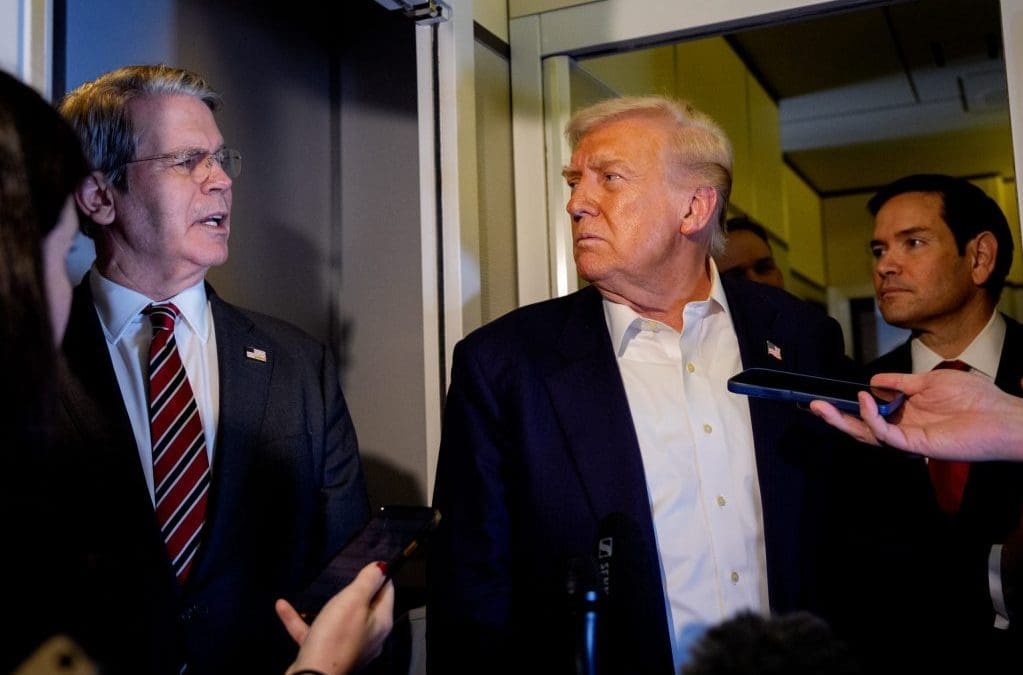
The top Democrat on the House Judiciary Committee on Thursday accused US President Donald Trump of “orchestrating a $1,700,000,000 fraud on the American taxpayer to line the pockets of his MAGA political allies” amid new reporting on the terms Trump is seeking in talks to settle his $10 billion lawsuit against the Internal Revenue Service.
ABC News reported late Thursday that Trump is expected to drop his lawsuit in the coming days “in exchange for the creation of a $1.7 billion fund to compensate allies who claim they were wrongfully targeted by the Biden administration.” The money would come from the Treasury Department’s Judgment Fund, which pays out court judgments and settlements against the federal government.
The president is also expected to receive a public apology from the IRS for the leak of his tax returns during his first White House term.
Rep. Jamie Raskin (D-Md.) said in a statement that the reported settlement terms represent “another installment” in Trump’s “ongoing effort to turn the federal government into a personal cash machine for his unpopular extremist movement.”
“This is a massive and unprecedented presidential plunder of the American people,” said Raskin. “Worse still, this is only the beginning—a declaration that the prior payouts were just a down payment, and that he now intends to earmark billions more in taxpayer dollars for his political allies, sycophants, and private militia of unemployed insurrectionists.”
“The president has no authority to conjure up billion-dollar compensation schemes or raid the Judgment Fund, which exists to settle valid lawsuits. Trump is systematically converting neutral government mechanisms into a presidential slush fund to build
by Shireen Al-Adeimi | May 18, 2026 | Article, cuba, Economy and Inequality, Oil, Politics and Movements: International, Politics and Movements: US, Reprint
This article was originally published by Truthout on May 15, 2026. It is shared here under a Creative Commons (CC BY-NC-ND 4.0) license.
Cuba’s government has announced that it has run out of oil.
On Wednesday night, Cuba’s energy minister Vicente de La O Levy said that the country has completely run out of diesel and fuel oil, and that the national grid is in a “critical” state. He further described how in the capital city of Havana, “the blackouts today exceed 20 or 22 hours.”
“The situation is very tense, it’s becoming hotter,” he added, referring to the start of summer that brings a need for more energy.
At the start of January, Trump halted Venezuelan oil exports to Cuba, following the U.S.’s kidnapping of Venezuelan President Nicolás Maduro and de facto takeover of Venezuela’s oil industry. Later that month, Trump imposed a total oil blockade on Cuba, imposing tariffs on countries that supply oil to the country, pressuring Mexico to stop its oil shipments to Cuba, and seizing oil shipments traveling to the island country.
At the end of March, a Russian tanker arrived in Cuba carrying an estimated 730,000 barrels of crude oil, breaking the U.S. blockade and temporarily easing the crisis. The crude was refined in April and provided relief for a few weeks. But this fuel has run out, Cuban officials explained. This was the sole shipment of fuel allowed to enter Cuba in more than four months.
.Cuba began suffering from power cuts in 2019, after the first Trump administration imposed “maximum-pressure sanctions.” But since January, these have become more frequent and severe, at times lasting several days.
Trump’s blockade has decimated Cuba’s universal health care system, causing deaths and
by Maximillian Alvarez | May 13, 2026 | Article, Economy, Economy and Inequality, Media, Opinion, Politics and Movements: US
An earlier version of this speech was delivered at the 2026 Izzy Awards ceremony at the Park Center for Independent Media in Ithaca, NY, on April 21, 2026.
Friends, colleagues, fellow human beings,
You don’t need to read Project Censored’s latest State of the Free Press report to know that the state of the free press in America is not good (but, obviously, you should still read the report).
And it’s not just President Trump, his administration, and the MAGA faithful repeatedly, publicly expressing their hatred and verbalizing threats towards journalists and media organizations that don’t tow the Supreme Leader’s line. It’s not just Trump and his cabinet bullying and berating journalists at press briefings, restricting their access, and trying to make them sign loyalty pledges.
It’s also Trump’s absurd and gangsterish lawsuits targeted at ABC News, which is owned by Disney, and CBS News, which is owned by Paramount, and the morally spineless, financially self-serving capitulation of these corporate cowards to Trump by settling, rather than fighting, those lawsuits—setting the precedent for more shakedowns.
It’s the multi-pronged attempt by the Trump administration and the ruling-class-serving authors and executors of Project 2025 to destroy the Corporation for Public Broadcasting, which they succeeded in doing, and to defund and destroy PBS and NPR, which they are still trying to do now.
It’s the federal harassment, capture, imprisonment, and even deportation of journalists like Estefany Rodríguez, Mario Guevara, Sami Hamdi, and Georgia Fort. Even Don Lemon. Even Tufts grad student Rümeysa Öztürk, who was snatched off the street last year by plainclothes federal thugs for co-authoring an op-ed in her campus newspaper.
It’s the professional journalists, student journalists,
by Glenn Diesen and Richard D. Wolff | May 13, 2026 | Article, Economy and Inequality, Iran, Oil, Politics and Movements: International, Politics and Movements: US, Trump, Venezuela
This story originally appeared in In These Times on May 4, 2026.
It’s been more than two months since President Donald Trump dropped the first bombs in his illegal war with Iran, and U.S. consumers are increasingly footing the bill.
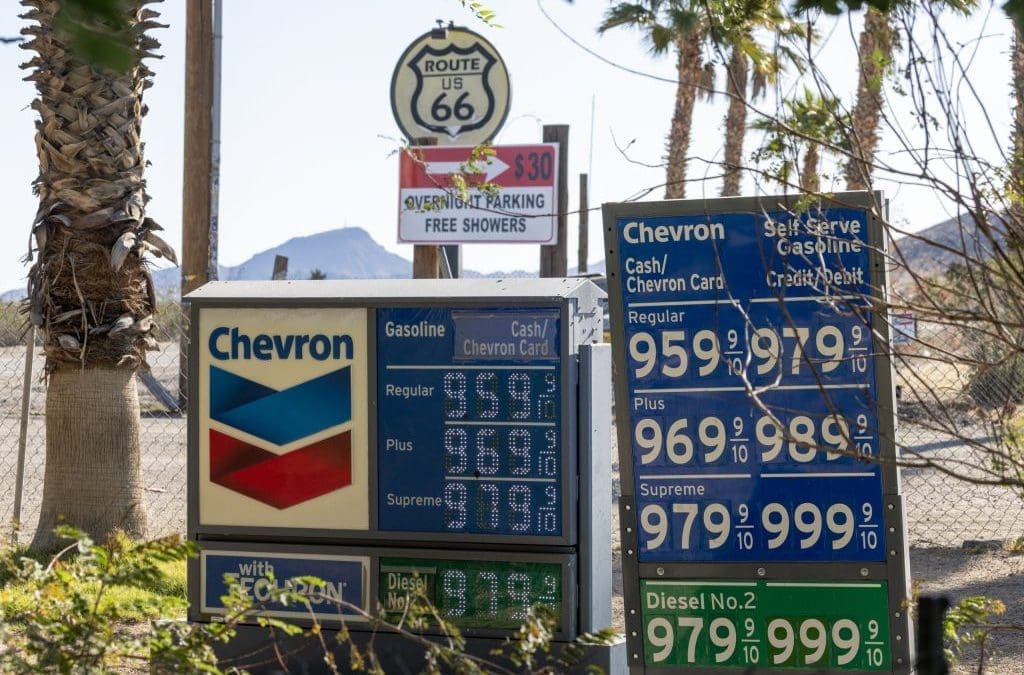
With traffic through the Strait of Hormuz remaining a tiny fraction of what it was before Trump began this latest regime-change campaign, oil prices reached a four-year high of more than $125 per barrel last week. Over the course of the same week, average gas prices surged more than 30 cents to reach $4.45 per gallon, roughly $1.50 higher than the pre-war average. With no sign of reversing course, economists continue to warn of recession.
In late April, Norwegian professor Glenn Dieson sat down with Richard Wolff, one of the world’s most prominent Marxist economists, to discuss how these impacts to the global economy will shape Trump’s war plans (or lack thereof), and why the last two months have signaled the “decline of the American empire.”
Glenn DiesenWelcome back. We are joined today by Professor Richard Wolff to discuss “Economic Fury,” the new arm of the U.S. war against Iran.
Richard WolffGlad to be here, Glenn.
Diesen[Treasury Secretary] Scott Bessent has now complemented [“Operation Epic Fury”] with “Economic Fury,” the sanctions policies against Iran. It’s been a bit confusing, because first there’s a sanction on all Iranian oil, then they open up the Iranian oil to help stabilize the markets. Then there’s a blockade on Iranian ports. How do you assess this new effort to strangle Iran?WolffWell, we have stopped following the kind of herky-jerky, on-again off-again statements, because they are so often inconsistent one with the other. Either you are going to take the steps that make oil supply more plentiful and drive down the price, or
by Brad Reed | May 11, 2026 | AI, Article, Economy, Economy and Inequality, Inequality, Politics and Movements: US, Reprint
This story originally appeared in Common Dreams on May 08, 2026. It is shared here under a Creative Commons (CC BY-NC-ND 3.0) license.
A top state utilities regulator is calling foul on an effort to shift the power cost of out-of-state artificial intelligence data centers onto Maryland residents.
Maryland’s Office of People’s Counsel on Thursday filed a complaint with the Federal Energy Regulatory Commission (FERC) against electric grid operator PJM Interconnection objecting to plans that it said would force residents in the state to pay $1.6 billion in data center-driven transmission costs over the next decade.
The complaint states that the transmission cost allocation methodology PJM is using “broadly socializes” the cost of increased power demands that is being driven by AI data centers.
“That result is unjust and unreasonable and violates the cost causation principles that have long governed transmission cost allocation and that this commission has repeatedly affirmed,” the complaint says. “PJM’s tariff imposes these costs on Maryland electric customers even though Maryland customers do not meaningfully cause nor benefit from those investments.”
The Office of People’s Counsel pointed to the massive number of data centers built in neighboring Virginia as a primary culprit for added strain on the electric grid.
“Amidst national data center growth, Virginia stands as the epicenter,” the complaint says. “Virginia is the largest data center market in the world… As of December 2024, data centers represented 3.6 GW of demand… reflecting, since 2013, a 660% increase in megawatt-hour consumption.”
This explosive growth in energy demand is only expected to intensify over the next several years, the complaint continues, noting that “PJM projects 32 GW of peak load growth across its territory by 2030, of which approximately 30 GW
by Taya Graham and Stephen Janis | May 8, 2026 | Article, Economy and Inequality, Inequality, Inequality Watch, Opinion, Politics and Movements: US, Prisons and Policing
The press conference for Epstein survivors we covered earlier this year felt claustrophobic.
It was the afternoon before President Donald Trump’s State of the Union address in February. The women who had suffered at the hands of the world’s most infamous predator were crammed into a small meeting room in the Cannon House Office Building in Washington, DC.
They had gathered to demand acknowledgement that evening from both Congress and the President. The venue was so tiny, there was barely room for the survivors to gather around the podium.
The assemblage stood in stark contrast to what we found in the emails we had been poring over after the Justice Department released an often-opaque database of documents gathered during several investigations of the historic sex predator.
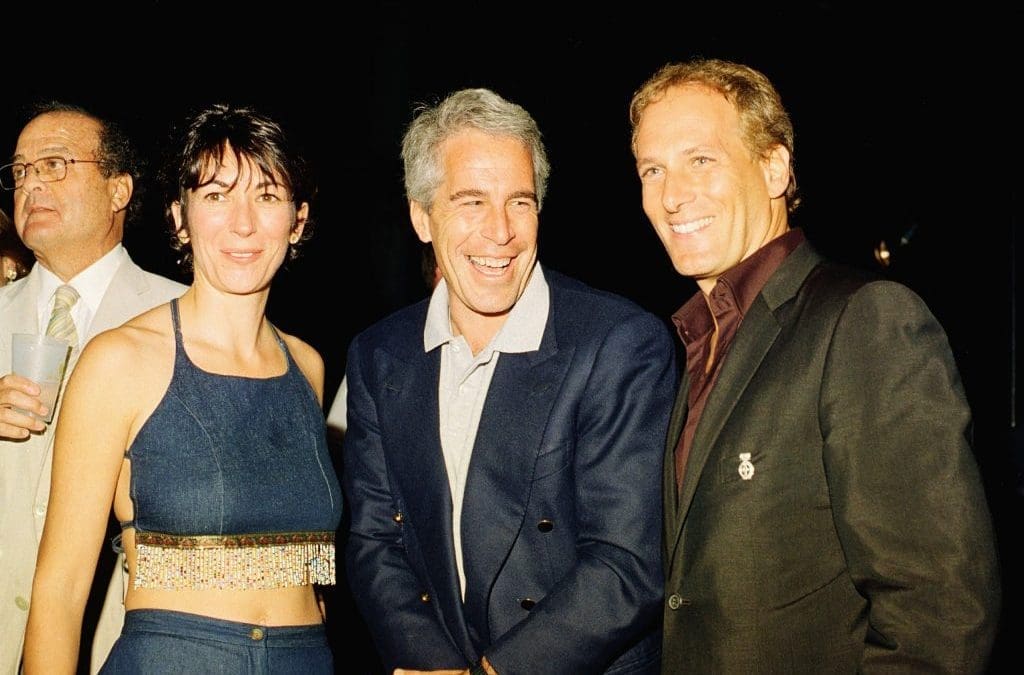
Based on what we’ve read, Epstein and his associates inhabited a world of material and social abundance. They weren’t constrained or forced to plead for anything. Their lives were full of easily obtained wealth, which afforded plenty of space to commit crimes.
This contrast reveals what this scandal is ultimately about: not just one man’s crimes, but the unimaginable inequality that made asking for tens of millions of dollars as easy as writing a poorly worded email. In fact, all Epstein had to do to enrich himself was to ask.
Consider what Epstein sent to media mogul Mortimer Zuckerman in July of 2014:
I’m happy to hear from you, happy to see your stock at the 120 level. an increase in over 100
million in new net worth in only a few months. (how long did it take for the first 100?) I
assume, by your email, that as I predicted, you have