by Maximillian Alvarez | May 7, 2026 | Economy and Inequality, labor, Podcast, Politics and Movements: US, Unions, Working People
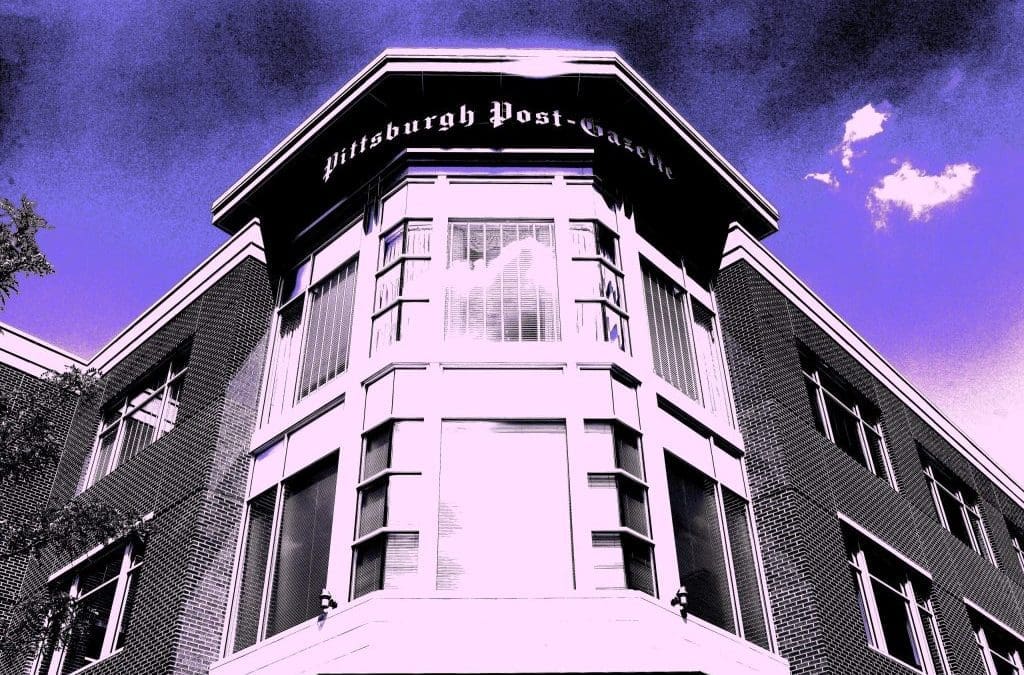
After members of the Newspaper Guild of Pittsburgh won their strike at the Pittsburgh Post-Gazette in late 2025, which had lasted for over 3 years, they were notified in January that the paper’s wealthy owners, the Block family and Block Communications Inc., were shutting down operations. Then, in a stunning turn of events, the Post-Gazette was purchased in April by the Venetoulis Institute for Local Journalism, which also owns the Baltimore Banner in Maryland. While Post-Gazette workers were cautiously optimistic about the news, the union learned last week that the Venetoulis Institute is cutting at least 40% of its staff, including 80% of the union workers who participated in the recently ended strike.
In this episode of Working People, we speak with a panel of union members and former Post-Gazette employees about what will happen to them and their coworkers, to the Post-Gazette itself, and to journalism in the Steel City. Panelists include: Andrew Goldstein, a now-former Post-Gazette education reporter and still-acting president of the Newspaper Guild of Pittsburgh; Helen Fallon, a longtime copyeditor for the Post-Gazette and professor emerita at Point Park University in Pittsburgh; and Erin Hebert, a now-former copyeditor and designer for the Post-Gazette and First Vice President of the Newspaper Guild of Pittsburgh.
Additional links/info:
Pittsburgh Alliance for People-Empowered Reporting (PAPER) website
Newspaper Guild of Pittsburgh website, Facebook page, and Instagram
Newspaper Guild of Pittsburgh: “Incoming Post-Gazette ownership slashes staff, purges former strikers”
Riddhi Setty, Columbia Journalism Review, “The Venetoulis Institute goes to Pittsburgh”
Maximillian Alvarez, Working People / TRNN, “They won their strike fair and square. Now their rich bosses are closing up shop”
Maximillian Alvarez, Working People / TRNN, “The longest-running strike
by Stephen Prager | May 6, 2026 | Article, Economy and Inequality, Inequality, Iran, Oil, Politics and Movements: International, Politics and Movements: US, Reprint, War
by Maximillian Alvarez | May 4, 2026 | baltimore, Economy and Inequality, May Day, Politics and Movements: US, protest, video
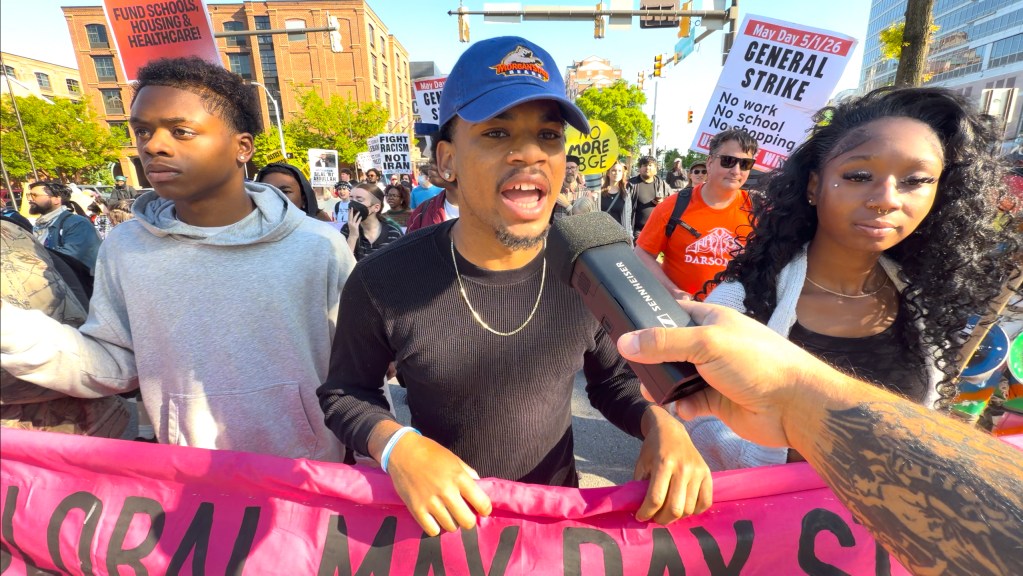
Inspired by January’s mass strike against ICE terror in Minnesota, a vast coalition of labor unions, democratic organizations, and community groups organized protests around the US on Friday, May 1, to coincide with International Workers Day (aka May Day). Organizers called for a one-day “economic blackout” (“no school, no work, no shopping”) in protest of authoritarianism and government policies that put billionaires’ needs above those of workers. TRNN takes you inside the Baltimore, Maryland, May Day march so you can see it and hear directly from protesters yourself.
Additional links/info:
Maximillian Alvarez, Working People / TRNN, “May 1: Unions, community orgs plan nationwide ‘economic blackout’ against billionaires and authoritarianism”
Hamilton Nolan, In These Times, “May Day was a reminder that we make the world run”
Credits:
Videography / Post-Production: Maximillian Alvarez
Transcript
The following is a rushed transcript and may contain errors. It will be updated as soon as possible.
Maximillian Alvarez: This is Maximillian Alvarez for the Real News Network. I’m here in downtown Baltimore and behind me. Around a hundred or more local residents are marching through the streets of downtown on Mayday in solidarity with others around the country who are participating in the Mayday Strong Day of Protests inspired by the anti-ice mass strike that shut down Minneapolis earlier this year. Organizers are calling for a day of no work, no school, no shopping. Here in Baltimore, the demonstration may be on the smaller side, but the spirit is still very lively. I’m about to take you into the heart of the march so you can see it for yourself.
So here in Baltimore, you’re seeing a lot of the signs you’re probably seeing at
by Maximillian Alvarez | May 1, 2026 | Economy and Inequality, labor, Podcast, Politics and Movements: US, Unions, video, Working People
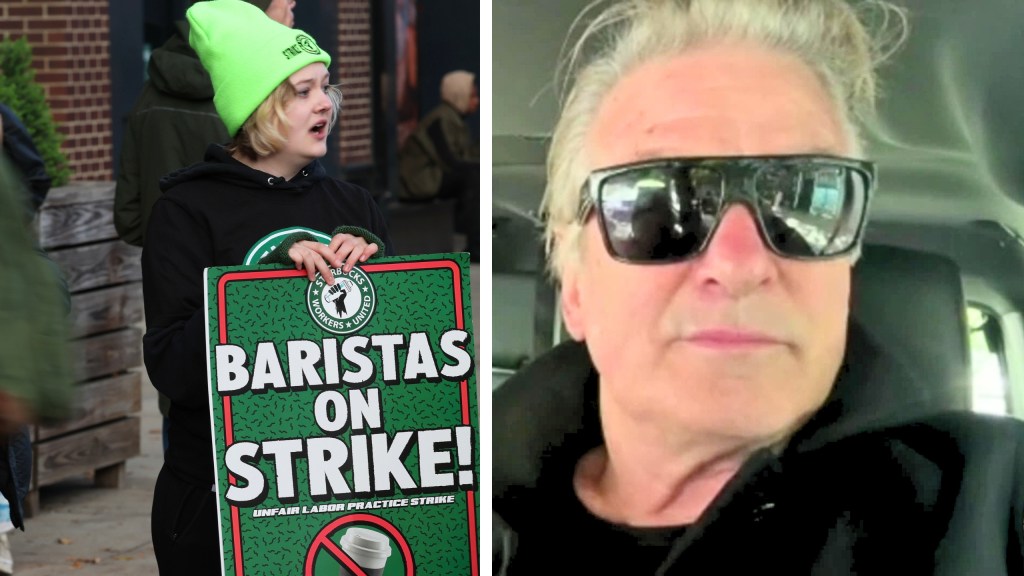
After decades of decline, the organized labor movement in the US has seen a resurgence in rank-and-file militancy over the last decade, with increased strike actions and union drives in industries across the economy. And in the story of this recent revival of labor in America, the movement led by predominantly young baristas to unionize coffee giant Starbucks has played a pivotal role. The new documentary Baristas vs. Billionaires takes viewers on a journey through the last five years of the epic, ongoing struggle to unionize Starbucks, told by some of the workers and organizers at the center of that struggle. TRNN Editor-in-Chief Maximillian Alvarez speaks with director of Baristas vs. Billionaires and Academy Award nominee Mark Mori, and with legendary actor and Academy Award nominee Alec Baldwin, who is a producer on the film.
Additional links/info:
Baristas vs. Billionaires website
Maximillian Alvarez, Working People / TRNN, “‘Starbucks is the largest labor violator in modern history’: Starbucks workers prepare for indefinite national strike”
Maximillian Alvarez, Working People / TRNN, “How union organizing can change your life and the world: A conversation with Jaz Brisack”
Maximillian Alvarez, Working People / TRNN, “Want to unionize your workplace? These worker-organizers have some advice”
Featured Music:
Jules Taylor, Working People Theme Song
Credits:
Studio Production / Post-Production: David Hebden
Audio Post-Production: Jules Taylor
Transcript
MAXIMILLIAN ALVAREZ: Welcome back to The Real News Network. I’m Maximillian Alvarez. In the post-World War heyday of American manufacturing and industrial unionism, when the middle class was exploding, about one in every three workers in this country was part of a union. But today, as working people face a punishing cost of living crisis, an evaporating middle class, and Gilded Age levels of
by Maximillian Alvarez | Apr 29, 2026 | Economy, Economy and Inequality, labor, Podcast, Politics and Movements: US, Unions, Working People
Inspired by January’s mass strike against ICE terror in Minnesota, a vast coalition of labor unions, democratic organizations, and community groups are organizing a nationwide economic blackout on Friday, May 1, International Workers Day. “May Day Strong events are being planned across the US,” Michael Sainato reports at The Guardian, “with organizers calling for ‘no school, no work, no shopping,’ in protest of government policies they say put billionaires’ needs above those of workers.”
In this episode of Working People, we speak with a panel of guests who are all involved in organizing May Day events this week from Philadelphia to Chicago to Iowa. Panelists include: Jana Korn, who currently serves as the chief of staff for the Philadelphia Council AFL-CIO, and also serves on the board of Philadelphia Jobs with Justice; Jeff Kurtz, a retired locomotive engineer and union officer who also served as a state representative in the Iowa House of Representatives; and John Emiliano, a healthcare worker and organizer in Chicago with the Tahanan Center and Tanggol Migrante, a grassroots Filipino migrant defense network.
Additional links/info:
May Day Strong coalition website
Workers Over Billionaires 2026 – Philadelphia Linktree
Workers Over Billionaires 2026 – Chicago details
Lee County (Iowa) Labor Chapter Facebook page and May Day 2026 details
Tahanan Filipino Center Instagram
Tanggol Migrante website
Latino Union of Chicago website
Michael Sainato, The Guardian, “US activists plan May Day economic blackout: ‘No school, no work, no shopping’”
Featured Music:
Jules Taylor, Working People Theme Song
Credits:
Audio Post-Production: Jules Taylor
Transcript
The following is a rushed transcript and may contain errors. A proofread version will be made available as soon as possible.
Maximillian Alvarez:
Alright. Welcome everyone to Working People, a podcast about the lives, jobs,
by Mansa Musa | Apr 27, 2026 | Economy and Inequality, history, Inequality, Politics and Movements: US, Racism, Rattling the Bars, video
2026 marks the 250th anniversary of the American Revolutionary War. While the national mythology behind the “America at 250” celebrations focuses on the 18th-century battle between Patriot and Loyalist elites, what does the story of the American Revolution and the founding of the United States look like through the eyes of enslaved people? In this episode of Rattling the Bars, host Mansa Musa speaks with Professor Justene Hill Edwards, author of Unfree Markets: The Slaves’ Economy and the Rise of Capitalism in South Carolina.
Guests:
Justene Hill Edwards is an associate professor of History in the Corcoran Department of History at the University of Virginia. Her research explores the intersection of African American history, the history of slavery, and the history of American capitalism. She is the author of Unfree Markets: The Slaves’ Economy and the Rise of Capitalism in South Carolina and Savings and Trust: The Rise and Betrayal of the Freedman’s Bank.
Credits:
Producer / Videographer / Editor: Cameron Granadino
Transcript
The following is a rushed transcript and may contain errors. A proofread version will be made available as soon as possible.
Mansa Musa:
This year marks the 250th anniversary of the Revolutionary War, a conflict that we typically frame as a struggle between the colonialists and the British. However, we rarely examine the age of revolution from the perspective of the enslaved and the enslaved has a voice in this matter, as we will see. Join us today as the University of Virginia Professor of History, Justine Hill Edwards, an author of Unfree Market: The Slave Economy and the Rise of Capitalism in South Carolina. And Saviors and Trust. Professor, welcome to Rattling the Bars