by Julia Conley | May 5, 2026 | Article, elections, midterms, Politics and Movements: US, Racial Justice, Reprint, Voting Rights
This story originally appeared in Common Dreams on May 05, 2026. It is shared here under a Creative Commons (CC BY-NC-ND 3.0) license.
Warning that the US Supreme Court’s right-wing majority was appearing to give its approval of Louisiana’s decision to suspend federal primary elections in the state following the court’s ruling on the state’s congressional map last week, Justice Ketanji Brown Jackson on Monday evening was the lone dissenter as the court agreed to immediately finalize the ruling instead of waiting the customary 32 days.
By expediting the ruling, suggested Jackson, the court was taking an obviously political stance in support of efforts to ensure Louisiana Republicans can quickly redraw the state’s congressional map to yield more electoral wins for the GOP.
“The court’s decision to buck our usual practice,” wrote Jackson, “is tantamount to an approval of Louisiana’s rush to pause the ongoing election in order to pass a new map.”
Ordinarily, the court would wait 32 days to transmit an opinion to the lower courts, giving the losing party time to request that the justices reconsider the case.
In a brief, unsigned opinion Monday evening, the court said that the Black voters who had defended the state’s 2024 congressional map at the center of Louisiana v. Callais had “not expressed any intent to ask this court to reconsider its judgment.”
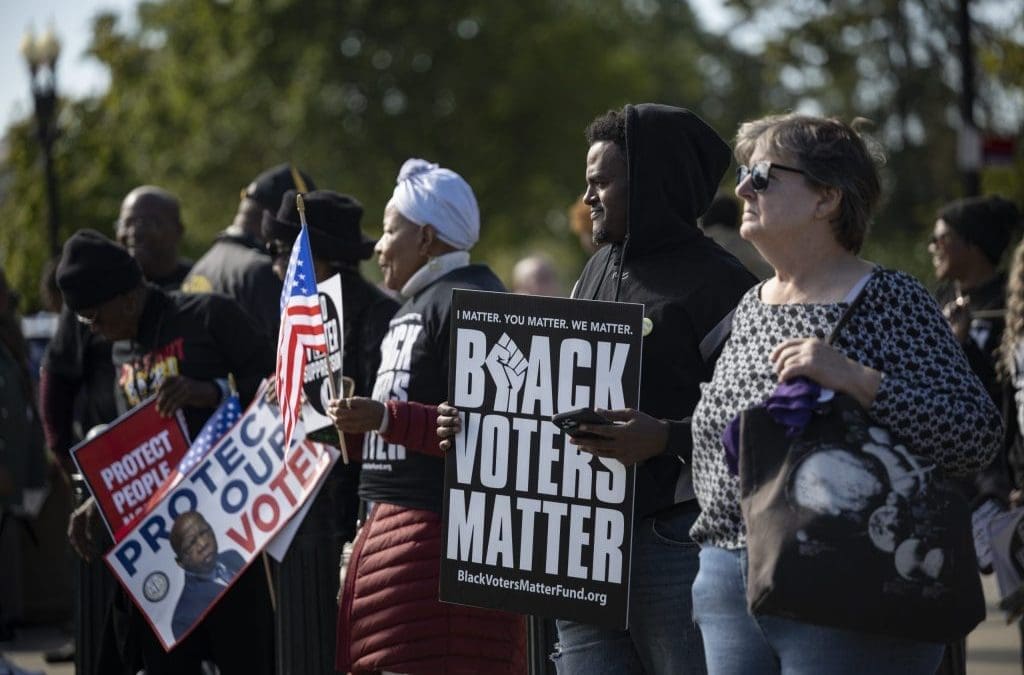
In Louisiana v. Callais last week, the court ruled along ideological lines that the 2024 map—which was drawn to better represent the population of Louisiana, where one-third of residents are Black—was an unconstitutional racial gerrymander. The ruling effectively struck down the last remaining provision of Section 2 of the Voting Rights Act, which held that voters of color can challenge racially discriminatory electoral maps.
The map that was struck down ensured there were two majority-minority districts in
by Chris Walker | Apr 30, 2026 | Gerrymandering, News, Redistricting, Supreme Court, Voting Rights, Voting Rights Act
The United States Supreme Court issued an opinion on Wednesday that critics say may have finally dismantled protections for nonwhite voters codified in the Voting Rights Act of 1965. By a 6-3 ruling along partisan lines, the conservative-led court found that Section 2 of the Voting Rights Act was being improperly used by lower courts to require states that have racially gerrymandered their…
Source
by Brett Wilkins | Apr 29, 2026 | Article, elections, midterms, Politics and Movements: US, Racial Justice, Reprint, Voting Rights
This story originally appeared in Common Dreams on April 29, 2026. It is shared here under a Creative Commons (CC BY-NC-ND 3.0) license.
The US Supreme Court ruled Wednesday that Louisiana must redraw its 2024 congressional map—which created a second majority-Black district to mitigate persistent barriers to equal representation—in a decision that further guts the already tattered Voting Rights Act.
The justices ruled 6-3 along ideological lines in Louisiana v. Callais that the state’s map is “an unconstitutional racial gerrymander,” effectively voiding the last remaining provision of Section 2 of the 1965 Voting Rights Act (VRA), which allows voters of color to challenge racially discriminatory electoral maps in court.
The case centers on the redrawing of Louisiana’s six congressional districts to better reflect the population of a state in which one-third of the people are Black, as Section 2 states that minority voters should have the same chance as others to elect candidates of their choice.
Civil and voting rights advocates challenged Louisiana’s Republican-drawn and racially rigged congressional map. In 2022, a federal judge agreed that the map likely violated Section 2, and the 5th US Circuit Court of Appeals upheld that ruling, ordering Louisiana to draw a new map by January 2024.
Louisiana complied. But a group of non-Black voters challenged the new map, claiming it was a racially rigged creation that violated the 14th Amendment. The Trump administration supported the challengers, arguing that Black voters had no right to a second majority-minority district.
The Supreme Court’s right-wing justices—three of whom were nominated by Trump—agreed in Wednesday’s decision.
“Allowing race to play any part in government decision-making represents a departure from the constitutional rule that applies in almost every other context,” Justice Samuel Alito wrote for the right-wing majority. “Compliance with Section 2 thus could not justify
by Marjorie Cohn | Apr 8, 2026 | 2026 Elections, 2026 midterms, Absentee ballots, Discrimination, elections, equal protection clause, midterms, News Analysis, Supreme Court, Voter Suppression, Voting Rights, Voting Rights Act
The Supreme Court appears poised to deal a severe blow to the fundamental right to vote in two cases this term. Louisiana v. Callais threatens the right to vote free from racial discrimination and Watson v. Republican National Committee will test the right to have your absentee ballots counted. On August 1, 2025, when the Supreme Court asked the parties in Callais to brief the issue of…
Source
by Jessica Corbett | Apr 1, 2026 | Article, elections, Politics and Movements: US, Reprint, Trump, Voting Rights
This story originally appeared in Common Dreams on Mar. 31, 2026. It is shared here under a Creative Commons (CC BY-NC-ND 3.0) license.
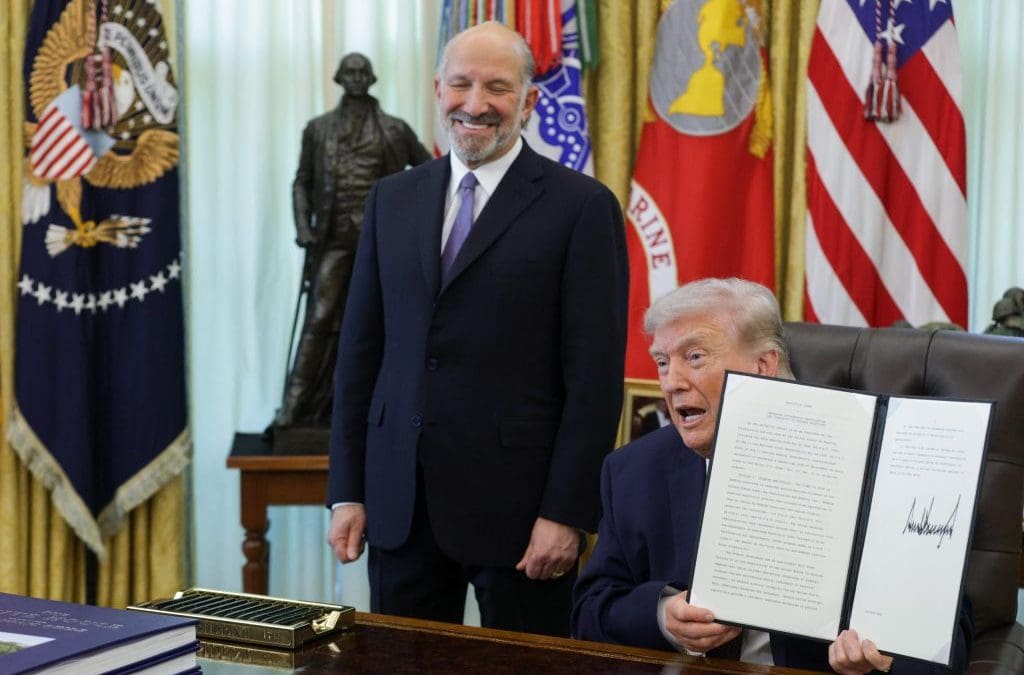
Just days after the GOP-controlled Senate skipped town once they failed to send a voter suppression bill to President Donald Trump’s desk, the Republican on Tuesday signed an executive order to create a nationwide list of US voters and crack down on voting by mail—which is how he voted in Florida’s most recent election.
The order, Ensuring Citizenship Verification and Integrity in Federal Elections, was first reported by the Daily Caller, a right-wing outlet. It requires the secretary of homeland security to establish a “citizenship list” of verified eligible voters in each state, using Social Security Administration records and other federal databases.
Trump—who has repeatedly spread lies about election fraud, including his unfounded claim that Democrats stole the 2020 election from him, which led to his supporters storming the Capitol on January 6, 2021—also directed the postmaster general to craft rules for absentee ballots sent through the US Postal Service.
Legal experts expect the order will be swiftly challenged in court as unconstitutional. David Becker, a former US Department of Justice lawyer who now leads the Center for Election Innovation and Research, told Democracy Docket that “it’s obvious the president didn’t learn anything from his first failed executive order.”
“This is unconstitutional on its face. The Constitution clearly gives the president no power over elections,” he said. “I expect that this will be blocked by multiple federal courts in a very short period of time and have no legal effect whatsoever.”
Becker also noted that “after the Department of Justice has been telling courts they’re not creating a national voter list, this appears to confirm exactly what courts were concerned about.”
Marc Elias, founder of Democracy
by Brandon Tensley | Mar 25, 2026 | Birth Certificates, Black Americans, black voters, elections, News, Racism, Save America Act, Segregation, Voter ID, Voter Suppression, Voting, Voting Rights
When Courtney Patterson was born on his family’s farm in Lenoir County, North Carolina, 80 years ago, he was fortunate that a country doctor recorded his birth, ensuring that he would have a document later. “But many other people who grew up with me didn’t even have that,” Patterson recalled. Babies were usually delivered at home by midwives who were illiterate. On the rare occasions a doctor…
Source