by Maximillian Alvarez | Jul 15, 2026 | AI, Economy, Economy and Inequality, Podcast, Politics and Movements: US, Working People
In so-called “red states” and “blue states” around the US, from rural areas to urban centers, the explosion of new data center projects is impacting residents in poor, working-class, and middle-class communities alike. In this episode of Working People, we speak with a diverse panel of residents fighting new and proposed data center projects in Texas and Maryland about what it means for you and your community when one of these loud, polluting, energy- and water-guzzling behemoths comes to your town—and how to fight back.
Panelists include: Cheryl Shadden, a registered nurse anesthetist who lives right next to the site of a Marathon bitcoin mine in Granbury, Texas; Karen Pearson, a licensed professional counselor and a resident of Granbury who also lives right next to the Marathon bitcoin mine; Dr. Shannon Wolf, Precinct Chair in Hood County, who lives three miles from the Marathon bitcoin mine; Craig Jackson, a resident of Granbury who lives 300 feet from the site of a new proposed data center, and who is also a plaintiff in a current lawsuit residents have filed against the city of Granbury; Micaiah Lloyd, a grassroots organizer and resident of Charles County, Maryland, who lives near the site of a proposed data center; Hillary Gonzalez, an eco-poet, author, founder of Sacred Parks & Waterways, and a resident of Baltimore, Maryland, who lives right next to the site of Johns Hopkins University’s future Data Science and Artificial Intelligence complex.
Additional links/info:
Protect Hood County website and Facebook page
Sacred Parks & Waterways website and Instagram
Viral MS Now clip featuring Cheryl Shadden of Granbury, Texas
Maximillian Alvarez, Working People / TRNN, “A bitcoin mine in Texas
by Maximillian Alvarez | Jul 6, 2026 | east palestine, Economy, Economy and Inequality, Podcast, Politics and Movements: International, Politics and Movements: US, railroad, sacrifice zones, Working People
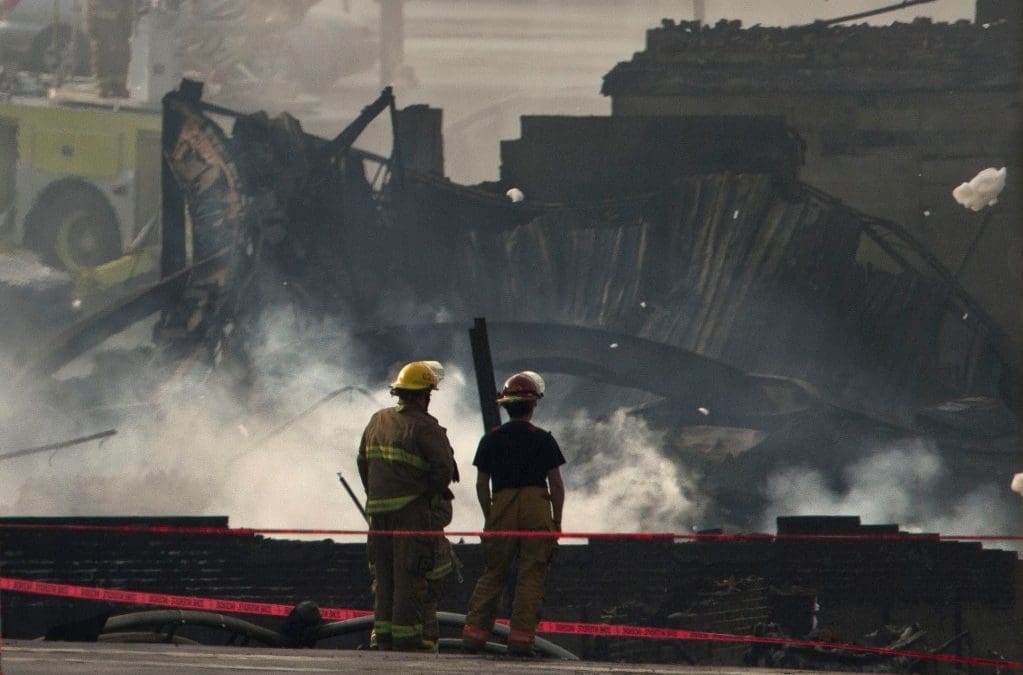
10 years before the catastrophic train derailment and chemical disaster in East Palestine, Ohio, one of the deadliest rail disasters in North American history took place in the Canadian town of Lac-Mégantic, Quebec.
On July 6, 2013, an unattended freight train that had been parked on the tracks overnight began to roll downhill and gather alarming speed as it careened towards the city center of Lac-Mégantic. The train, which was operated by Montreal, Maine, and Atlantic Railway and carrying over 2 million gallons of crude oil, derailed around 1:15 AM. The resulting explosions and fire killed 47 people and destroyed over 40 buildings, obliterating a large portion of the downtown area and prompting mass evacuations.
In this special episode of Working People, we speak with a panel of survivors of the Lac-Mégantic rail disaster in Canada and the East Palestine rail disaster in the USA.
Panelists include: Robert Bellefleur, a resident of Lac-Mégantic and spokesperson for the Lac-Mégantic Citizens’ Coalition for Railroad Safety; Gilbert Carette, a resident of Lac-Mégantic and a member of the Lac-Mégantic Citizens’ Coalition for Railroad Safety; Gilles Fluet, a resident of Lac-Mégantic who narrowly escaped the 2013 train crash and witnessed the derailment firsthand; Anne-Marie Saint-Cerny, award-winning writer, videographer, social and environmental justice activist, and author of Mégantic: A Deadly Mix of Oil, Rail, and Avarice; Jami Wallace, a displaced resident of East Palestine, Ohio, and founder of the Chemically Impacted Communities Coalition; Christina Siceloff, a Creek Ranger and resident of Beaver County, Pennsylvania, affected by the 2023 Norfolk Southern train derailment and chemical disaster.
If you or members of your community are interested in attending or participating in TRNN’s
by Maximillian Alvarez | Jul 2, 2026 | east palestine, Economy, Economy and Inequality, labor, Politics and Movements: US, sacrifice zones, video, Working People
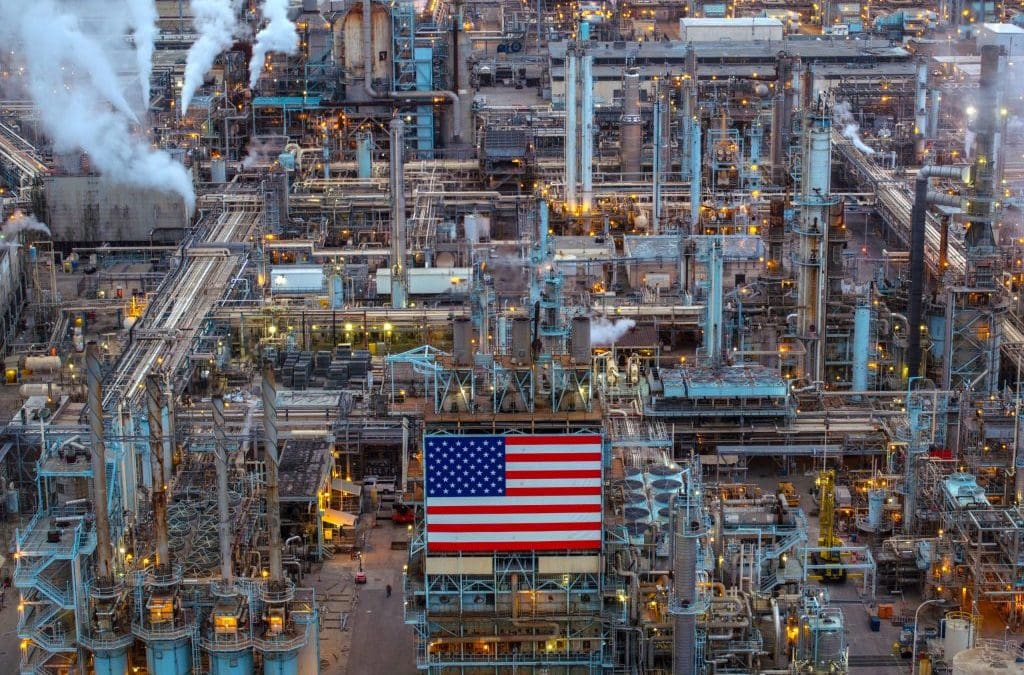
From the explosion of AI data centers to the increasing number of toxic spills, explosions, and industrial disasters happening across the country, corporations and the government are turning the USA into one giant “sacrifice zone.”
Things are going to get worse before they get any better, and nothing is going to change unless residents of different sacrifice zones and poisoned communities, workers and unions on the frontlines of the industries poisoning us, environmental justice groups, community and faith organizations, scientists, journalists, and all others who have a stake in this fight start coming together, working together, and fighting back together. In this special panel discussion, recorded at the 2026 Railroad Workers United convention in Chicago, Illinois, we speak with a panel of guests who are part of a new coalition that is doing just that.
Panelists include: Jeff Kurtz, a retired locomotive engineer, union officer, and Railroad Workers United member who also served as a state representative in the Iowa House of Representatives; Jami Wallace, a resident of East Palestine, Ohio, and founder of the Chemically Impacted Communities Coalition (CICC); Dr. Nicole Fabricant, a professor of anthropology at Towson University and scholar-activist who has been working with chemically impacted communities in South Baltimore, Maryland, for 15 years; Scott Smith, independent testing expert and founder of the Blue Shirt Justice League; and Lesley Pacey, Senior Environmental Officer at the Government Accountability Project.
Additional links/info:
Railroad Workers United website, Facebook page, and X page
Chemically Impacted Communities Coalition (CICC) Facebook page
Blue Shirt Justice League website and Facebook page
Government Accountability Project website, Facebook page, X page, Bluesky page, and Instagram
Coal-Free Curtis Bay Facebook page and Instagram
South Baltimore Community
by Maximillian Alvarez | Jul 1, 2026 | AI, east palestine, Economy, Economy and Inequality, Podcast, Politics and Movements: US, sacrifice zones, Working People
From the explosion of AI data centers to the increasing number of toxic spills, explosions, and industrial disasters happening across the country, corporations and the government are turning the USA into one giant “sacrifice zone.” In “red” states and “blue” states, in rural areas and urban areas, poor and working people are suffering the toxic effects of a crisis that has resulted from decades of deregulation, corporate capture of government, and the protection of private profits over the lives and health of the public.
No one is coming to save us, and nothing is going to change unless residents of different sacrifice zones and poisoned communities, workers and unions on the front lines of the industries poisoning us, environmental justice groups, community and faith organizations, scientists, journalists, and all others who have a stake in this fight start coming together, working together, and fighting back together. In this special panel discussion, recorded at the 2026 Railroad Workers United convention in Chicago, Illinois, we speak with a panel of guests who are part of a new coalition that is doing just that.
Panelists include: Jeff Kurtz, a retired locomotive engineer, union officer, and Railroad Workers United member who also served as a state representative in the Iowa House of Representatives; Jami Wallace, a displaced resident of East Palestine, Ohio, and founder of the Chemically Impacted Communities Coalition (CICC); Dr. Nicole Fabricant, a professor of anthropology at Towson University and scholar-activist who has been working with chemically impacted communities in South Baltimore, Maryland, for 15 years; Scott Smith, independent testing expert and founder of the Blue Shirt Justice League; and Lesley Pacey, Senior Environmental
by Maximillian Alvarez | Jun 26, 2026 | Gaza, Israel, labor, Palestine, Podcast, Politics and Movements: International, Politics and Movements: US, Working People
At the 39th Constitutional Convention of the United Auto Workers (UAW) in Detroit, Michigan, union delegates debated and affirmed the aggressive direction the UAW has taken under current President Shawn Fain, supporting pushes to increase shop-floor militancy, support new organizing efforts, and take stronger stances on the political crises working people face today. Among the major developments to come out of the UAW Constitutional Convention was a historic vote to divest the union from Israel bonds, which provide financial support to Israel’s government as it continues to wage a US-backed campaign of genocidal violence and ethnic cleansing against Palestinians. In this episode, we break down this historic vote and what it means for union members with a panel of rank-and-file workers and members of Unite All Workers for Democracy (UAWD), a left-wing caucus within the UAW.
Panelists include: Andrew Bergman, a worker at General Motors in Detroit, Michigan, a member of UAW Local 22, and co-chair of UAWD; Navruz Baum, a paralegal in New York, a member of UAW Local 2325, and a member of the UAWD Steering Committee; Margie Thornton, an attorney in Colorado, a member of UAW Local 2320, and a member of the UAWD Steering Committee; and Mike Davis, an auto parts worker in Ohio, a member of UAW Local 2021, and a member of UAWD.
Additional links/info:
Unite All Workers for Democracy (UAWD) website, member platform, and donation page
Navruz Baum, Daily Struggle, “UAW divests from Israel bonds”
Dan DiMaggio & Jane Slaughter, Labor Notes, “Auto worker delegates back union’s fighting direction at UAW Convention”
Shireen Akram-Boshar, Truthout, “United Auto Workers vote to divest from Israel in historic victory”
Featured Music:
Jules Taylor, Working
by Maximillian Alvarez | Jun 24, 2026 | FBI, Gaza, Israel, Palestine, Podcast, Politics and Movements: International, Politics and Movements: US, Prisons and Policing, Working People
On June 10, early in the morning, FBI agents raided the homes of individuals involved in Palestine solidarity activism at the University of Michigan. As Yarden Katz and Stephen M. Ward report in Mondoweiss, “with help from local and state police departments, including the University of Michigan Police, the raids unfolded simultaneously in Michigan, Illinois, and Wisconsin…The case is now known as the Michigan Eight. The Justice Department indicted the eight defendants—five of whom are current or former students at the University of Michigan, and one of whom was a University employee—on multiple counts of severe charges, including “Conspiracy to Transmit Threats in Interstate and Foreign Commerce.” The defendants, all in their twenties, now potentially face decades in prison.”
In this installment of our ongoing series “Police State University,” we speak with Kevin Zheng, a member-organizer and secretary of the Graduate Employees’ Organization at the University of Michigan, and Grace Viscito, a restaurant worker and former graduate student at the University of Michigan.
Additional links/info:
Graduate Employees Organization (GEO) website, Instagram, Facebook page, and X page
Legal Fund of Michigan Students for Palestine
Yarden Katz & Stephen M. Ward, Mondoweiss, “Inside the case against the ‘Michigan 8’: Palestine activism recast as antisemitic terror”
Alexa Cheaney, The Michigan Daily, “The Daily breaks down the indictment against eight pro-Palestine activists”
Maximillian Alvarez, Working People / TRNN, “Campus life is unrecognizable in the Trump era: ‘There’s so many cops everywhere’”
Maximillian Alvarez, Working People / The Real News Network, “‘The raids happened Wednesday, finals started Thursday’: FBI agents raid homes of pro-Palestine students at University of Michigan”
Featured Music:
Jules Taylor, Working People Theme Song
Credits:
Audio Post-Production: Jules Taylor
Transcript
The following is a rushed transcript