by Plínio Teodoro | Nov 7, 2026 | Article, paraguay, Politics and Movements: International, Politics and Movements: US, Prisons and Policing, Reprint, Trump
This story originally appeared in Panamerican Dispatch on Nov. 07, 2026, and is shared here with permission.
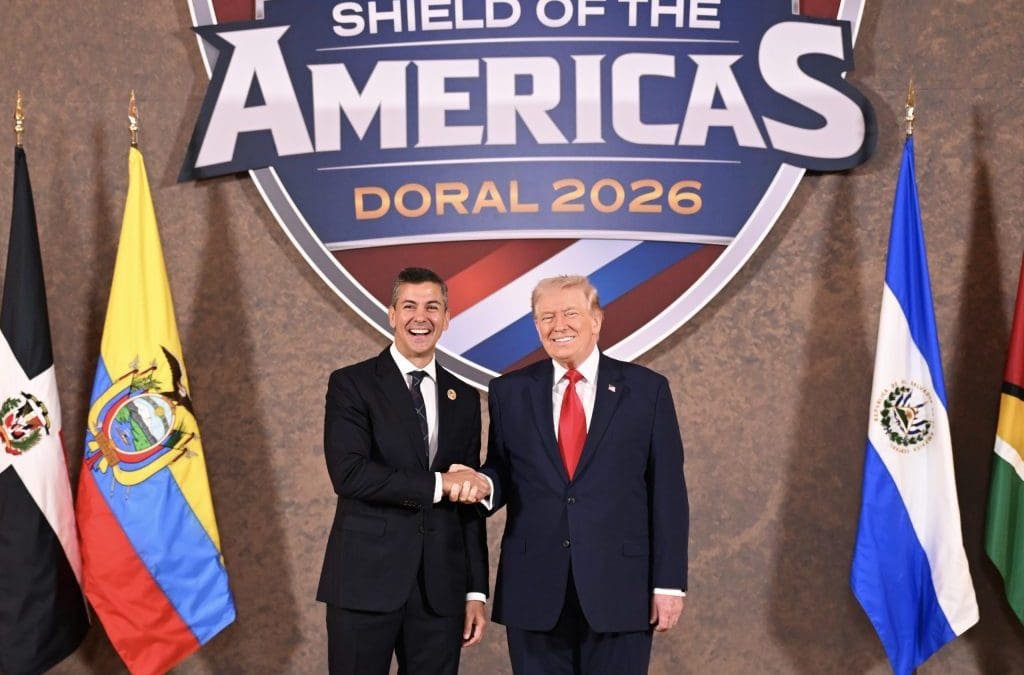
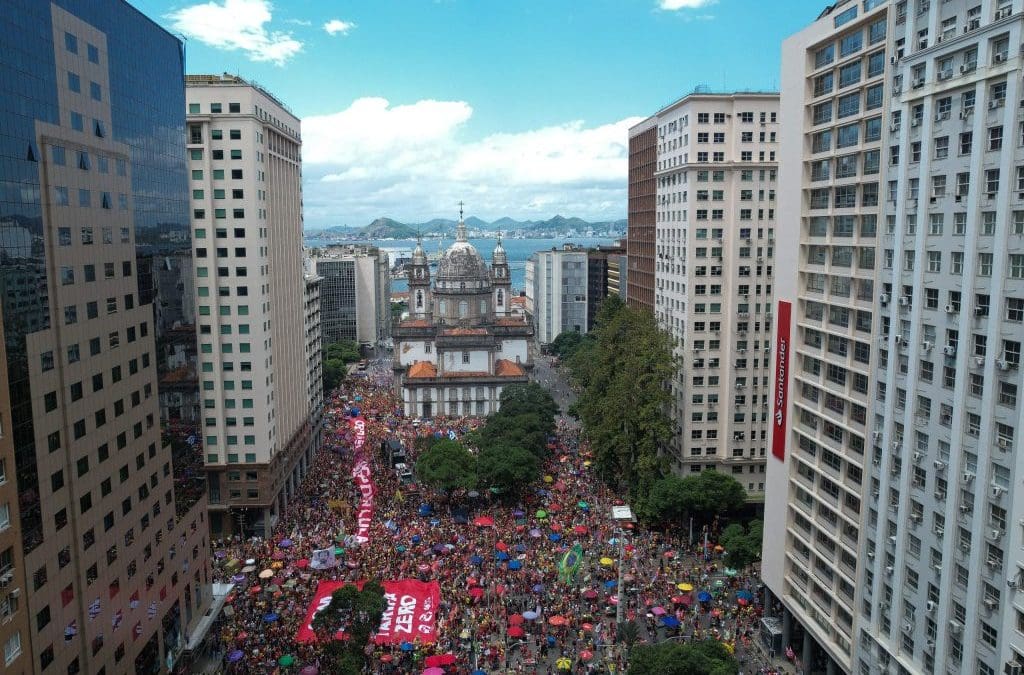
Former Paraguayan President Santiago Peña was moved from house arrest to a military unit within the Armed Forces overnight on Friday, October 6. The relocation followed an incident in which protesters surrounded his residence in Asunción, demanding his incarceration in a formal prison facility, which led to clashes with the police.
Peña was removed from office hours earlier, after the Senate voted unanimously to impeach him. The impeachment stemmed from his alleged involvement in the collapse of Ueno Bank, an institution that blocked access to funds for approximately 40% of the Paraguayan population.
The case bears similarities to the financial scandal in Brazil involving Daniel Vorcaro’s Banco Master, which implicated former presidential candidate Flávio Bolsonaro, a significant portion of the Bolsonaro movement and the political right in Brazil.
According to the Argentine digital news outlet Infobae, the military organized Peña’s extraction from his home in the La Piedad neighborhood of Asunción, using three pickup trucks for the transfer. The operation took place shortly before midnight, after escalating tensions near his residence made it untenable for the former president to remain there.
Footage captured by the Paraguayan newspaper ABC Color shows individuals throwing eggs and shouting insults at the vehicle transporting Peña as the convoy departed. The same outlet reported that Paraguayan intelligence identified the infiltration of agitators within the crowd, individuals who had previously been participating in a protest in the city center and allegedly moved to the residence with the intent of inciting violence.
🔴 AHORA | Trasladan a Santiago Peña al Regimiento Escolta.En medio de momentos de
by Adam Johnson | Nov 5, 2026 | Article, Democratic Party, elections, Israel, midterms, Politics and Movements: International, Politics and Movements: US
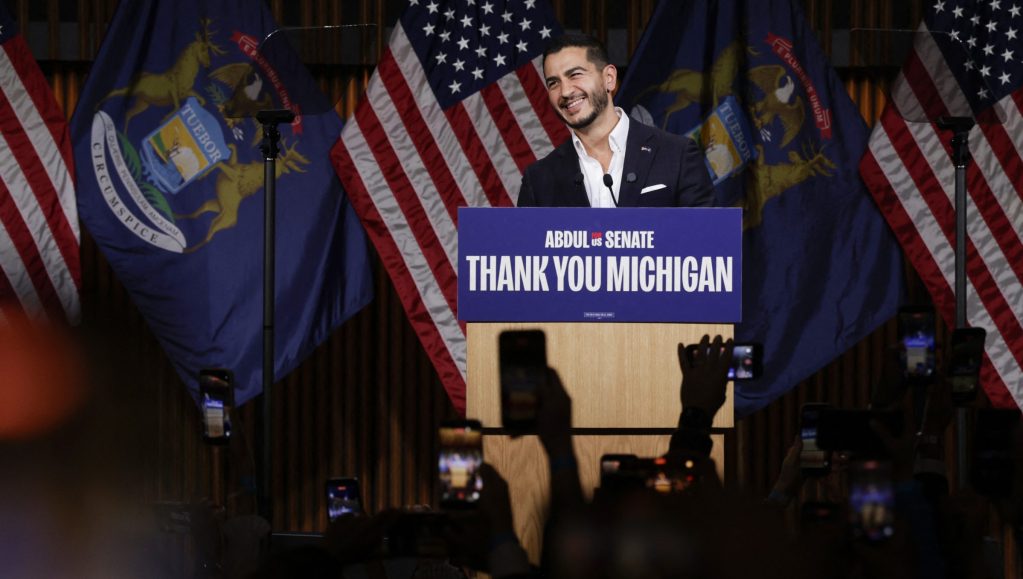
As the tide recedes on the Democrats’ “Blue tsunami” this past Tuesday, before the votes were even tallied, the internecine fight over The Narrative among the US center-left began in earnest. Centrist ideological curators, as is their function, came out strongly to paint the historic drubbing of Republicans as evidence that centrists are more electable than progressives. And progressives, likewise, have made the opposite argument, buoyed by the 7-point swing state victory of progressive and strong Israel critic Abdul El-Sayed in Michigan.
This piece won’t litigate the empirical question as such (though pollster G. Elliot Morris does an excellent job debunking the “centrists overperformed” conventional wisdom), but will highlight instead how many of the “El-Sayed is toxic and can’t win middle America” narratives completely evaporated Tuesday night, and how those pushing them will, of course, never be held to account nor asked to explain why so many outright lies were advanced about the Democratic nominee. El-Sayed won by roughly 340,000 votes despite being subject to nonstop intra-party, intra-liberal attacks emanating from everyone from the president of the most influential liberal think tank in the US, to key Democrats in Congress such as House Speaker Emerita Nancy Pelosi, Jim Clyburn, and Debbie Wasserman Schultz, to influential liberal media outlets The Atlantic magazine and The New York Times, to his largely Republican-funded primary opponent Hayley Stevens, who––unlike the others––at least had the courtesy to break kayfabe and come out in support of Republican Mike Rogers explicitly. Unlike genetic white media darlings Roy Cooper and James Talarico who, the centrist wonk expects insists, Covered The Spread, El-Sayed was subject to one of the most
by Florestan Fernandes Jr. | Nov 4, 2026 | Article, bolsonaro, brazil, elections, midterms, Opinion, Politics and Movements: International, Politics and Movements: US, Reprint, Trump
This story originally appeared in Panamerican Dispatch on Nov. 04, 2026, and is shared here with permission.
President Donald Trump’s crushing defeat in the U.S. midterm elections and President Luiz Inácio Lula da Silva’s historic victory in Brazil mean much more than two election results. They send an enormous political message to the world. In the two largest and most important countries in the Americas, voters are saying they do not accept a unipolar world order. They reject the ideology of white supremacy. They say no to political projects that turn immigrants into enemies by persecuting them, criminalizing them and denying them fundamental rights.
But the message is broader. People want peace. They want an end to wars, military threats and unilateral sanctions that undermine free trade and relations among nations. They want a world where dialogue and diplomacy prevail over force, intimidation and one power imposing its interests on all others.
The results are also excellent news for the United Nations, which Trump’s foreign policy has treated with contempt. The UN now has a chance to regain a leading role. It can advance the reforms needed to play a truly central part in building a new international order. That order would be more democratic, multipolar and committed to peace, the sovereignty of peoples and cooperation among nations.
Another phenomenon is even more significant. A wave of popular mobilization is growing in Brazil, the United States and several European countries. It brings together young people, workers and broad sectors of society. Street demonstrations have outpaced traditional parties and political leaders, and often their ability to respond. The rise of autocratic governments and projects, threats
by Brett Wilkins | Nov 3, 2026 | Article, Israel, midterms, Politics and Movements: International, Politics and Movements: US, Reprint, Trump
by Gabriel Gomes | Nov 3, 2026 | Article, brazil, elections, Politics and Movements: International, Reprint
by Jake Johnson | Nov 3, 2026 | Article, Israel, Palestine, Politics and Movements: International, Politics and Movements: US, Reprint
This story originally appeared in Common Dreams on Oct. 21, 2026. It is shared here under a Creative Commons (CC BY-NC-ND 3.0) license.
Democratic US congressional candidate Brad Lander said Wednesday that he was released by Israeli forces with a “warning” after he and dozens of others were detained while helping Palestinians harvest olives in the illegally occupied West Bank.
“Several dozen rabbis and participants harvesting olives with me are still in detention,” Lander, who is Jewish, wrote on social media. “They should all be released immediately. To be clear: Palestinians face far worse consequences every day. These detentions by the IDF are one more attempt to undermine Palestinians’ right to harvest their olive groves, travel on their roads, and live in their homes.”
Prior to his release, Lander posted a video from a bus that he said was “taking us away for processing” after settler security called the Israel Defense Forces (IDF) on the group harvesting olives.
“Let’s be clear: Occupation is a crime under international law,” said Lander, who is running to represent New York’s 10th Congressional District in the US House of Representatives. “Harvesting olives is not a crime under any law.”
I’ve been released from IDF custody with a “warning,” apparently because of my public profile (I told them I wasn’t even a congressmember yet, just a nominee).But several dozen rabbis & participants harvesting olives with me are still in detention.— Brad Lander (@bradlander.bsky.social) 2026-10-21T13:34:39.826Z
Lander was part of a group of around 80 American and Israeli rabbis and activists who were detained by the IDF on Wednesday as they helped Palestinians harvest olives from a grove near an Israeli settlement in the West