by Belal Awad, Leo Erhadt and Mahmoud Al Mashharawi | Nov 18, 2025 | Gaza, Israel, October 7: One Year Later, Palestine, Politics and Movements: International, Politics and Movements: US, video
Since October 2023, at least 34 hospitals in Gaza have been damaged or destroyed by Israel. In that same time, as the humanitarian need for urgent medical care in the Gaza Strip dramatically increased, Israeli forces detained at least 405 Palestinian healthcare workers, according to NGO Healthcare Workers Watch. In this on-the-ground report, TRNN takes you inside one of Gaza’s last functioning hospitals.
Editor’s note: This report was filmed at Al Shifa Hospital in June 2025, before it was destroyed.
Credits:
Producers: Belal Awad, Leo Erhardt
Videographers: Ruwaida Amer, Mahmoud Al Mashharawi
Video Editor: Leo Erhardt
Transcript
Dr. Moataz Harara – HEAD OF EMERGENCY ROOM AT AL-SHIFA HOSPITAL:
Hospitals have become targets for the Israeli occupation and the Israeli army. Many hospitals have been destroyed. They have been taken out of service and burned. Doctors, nurses, and medical teams have been kidnapped from hospital premises. It’s become difficult at times to convince some medical staff to remain in the hospital. They tell you: “Maybe the Israelis will come at night and kidnap me like they did my colleague?”
Narrator:
The abduction – or worse – of Gaza’s medical workers is a documented reality. According to NGO Healthcare Workers Watch: Since October 2023, Israeli forces have detained at least 405 Palestinian healthcare workers, including 28 specialist doctors – among them surgeons, pediatricians, and ICU specialists. Twenty staff were kidnapped from hospitals during military raids; while others were detained while evacuating. Two senior physicians reportedly died in detention from torture, their bodies are still being held by Israeli authorities.
Dr. Moataz Harara – HEAD OF EMERGENCY ROOM AT AL-SHIFA HOSPITAL:
All resources, capabilities, and supplies have been exhausted. Before, to treat one patient, the
by Mansa Musa | Nov 17, 2025 | Politics and Movements: US, Prison Industrial Complex, prison reform, Prisons and Policing, Rattling the Bars, video
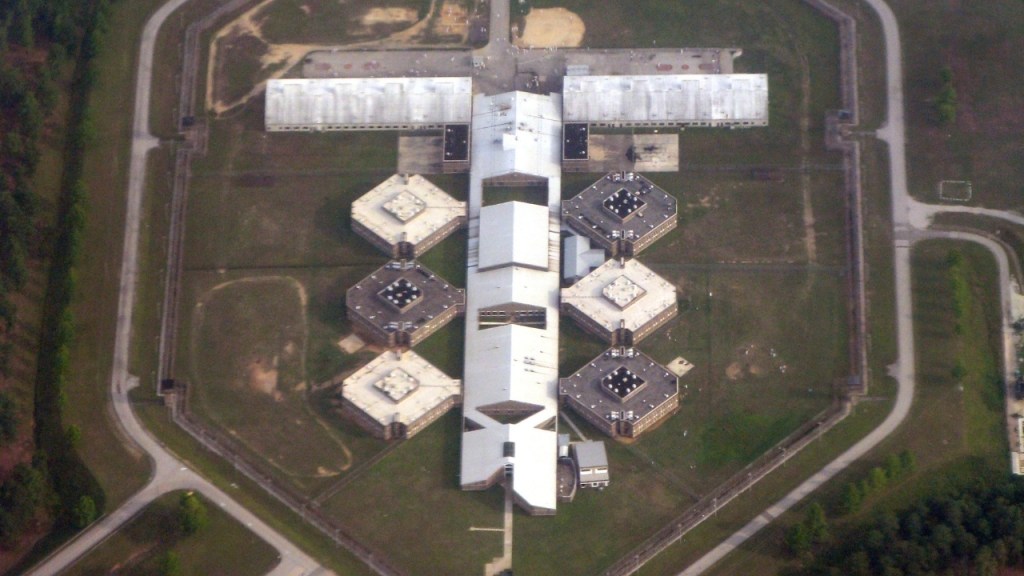
The Alabama prison system functions like a modern-day plantation: overcrowded, understaffed prisons like Bullock Correctional Facility run on forced labor, violence, and deliberate neglect. In this episode of Rattling the Bars, host Mansa Musa speaks with journalist Matthew Vernon Whalan about his book Bullock: Chronicles of Deprivation and Despair in an American Prison, and about the systematic corruption and inhumane horrors endured daily by incarcerated people in Alabama.
Guest:
Matthew Vernon Whalan is a writer and oral historian living in New England. He is the author of the book Bullock: Chronicles of Deprivation and Despair in an American Prison, and his work has appeared in Counterpunch Magazine, Alabama Political Reporter, Scheer Post, Jacobin, Eunoia Review, New York Journal of Books, The Brattleboro Reformer, and elsewhere. He runs the publication Hard Times Reviewer.
Credits:
Producer / Videographer / Post-Production: Cameron Granadino
Transcript
The following is a rushed transcript and may contain errors. A proofread version will be made available as soon as possible.
Mansa Musa:
Welcome to this edition of Rattling Bars. I’m your host, Mansa Musa. In this country, we have the right to life, liberty, and the pursuit of happiness according to the Constitution. But in this country also, we have legalized slavery under the 13th Amendment. To understand what legalized slavery is, institutionalized slavery is, all you have to do is look to Alabama and the Alabama prison system. The prison industrial complex in Alabama is one of the most notorious systems in this country, I would even venture to say in the world. Join me today is Matthew Whalan. Matthew wrote a book called Bullock: Chronicles of Deprivation and Despair in an American Prison. Thank you for joining us today, Matthew.
Matthew Whalan:
Thank you for having me.
Mansa Musa:
Alright,
by Maximillian Alvarez | Nov 14, 2025 | Economy, Economy and Inequality, labor, Politics and Movements: US, Unions, video, Working People
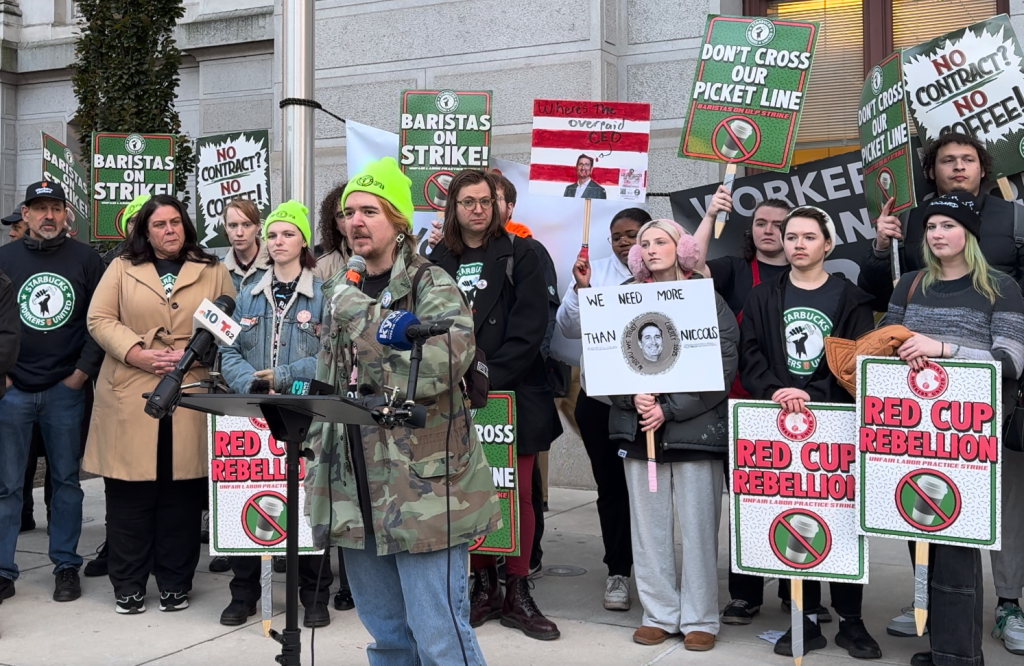
Over 1,000 unionized Starbucks workers in over 40 cities across the US walked off the job on an indefinite Unfair Labor Practice strike on Thursday, Nov. 13. The union, Starbucks Workers United, says more workers at more unionized stores will be joining the picket line during the busy holiday season to pressure Starbucks to return to the bargaining table with proposals that seriously address workers’ ongoing demands regarding better pay and work hours, safe staffing, and resolving the hundreds of Unfair Labor Practice charges that have been filed against the coffee giant. TRNN Editor-in-Chief Maximillian Alvarez reports on the ground from the picket line in Philadelphia, PA.
Credits:
Videography: Maximillian Alvarez
Post-Production: David Hebden, Maximillian Alvarez
Transcript
The following is a rushed transcript and may contain errors. A proofread version will be made available as soon as possible.
Crowd chants:
What do we want? Contract! When do we want it? Now! If we don’t get it? Shut it down! If we don’t get it? Shut it down!
Maximillian Alvarez:
I’m here in Philadelphia, Pennsylvania, just outside City Hall. It’s Thursday, November 13th, around 5:00 PM Eastern time. And earlier today, over a thousand Starbucks workers in over 45 cities around the country walked off the job and went out on an unfair labor practice strike. After last week, a super majority of unionized baristas voted to authorize the strike, demanding that Starbucks come back to the bargaining table with serious proposals to address workers’ ongoing years long concerns about safe staffing, better pay, better work hours, and all manner of unfair labor practices that have been filed against the company since the first store unionized in Buffalo, New
by Taya Graham and Stephen Janis | Nov 13, 2025 | Economy and Inequality, Epstein, Inequality, Inequality Watch, Politics and Movements: US, Prisons and Policing, video
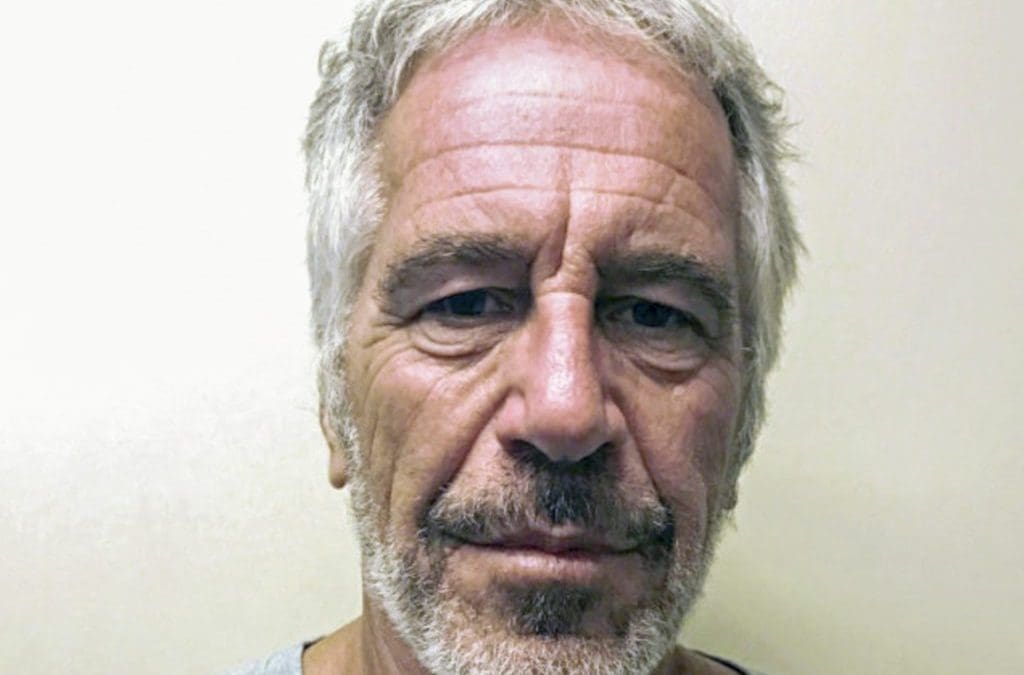
Jeffrey Epstein was able to traffic and assault young women and girls for almost two decades, without consequence. How did he get away with this? The simple answer is wealth. But how did a college dropout who was quietly dismissed from his first job as a teacher at a private school acquire a private jet and party with some of the most famous and powerful people in the world? We delve into the money and the people who may have aided and abetted Epstein’s scandalous and criminal life.
Credits:
Producers: Taya Graham, Stephen Janis
Post-Production: David Hebden
Transcript
The following is a rushed transcript and may contain errors. A proofread version will be made available as soon as possible.Taya Graham:
For most of 2025. One story and one story alone dominated the cultural and political discourse in America, the Epstein files. This phenomena was remarkable, all but more so for President Trump’s response. This was the first time in Trump’s decade long political career that we saw a significant rift in his fiercely loyal MAGA movement. By late July, 47% of Trump supporters disapproved of how he was handling the issue. Now, given Trump’s controversial association with the dead man, his obfuscation seemed like it could be the only thing to finally chip away at his political capital. Since then, a lot has happened in the American news from a major ice crackdown in blue states to the illegal bombing of ships in the Caribbean to an attempted ceasefire in Gaza, and yet Epstein’s case still looms large, large enough, some believe to have played a significant role in the October government shutdown.
Now ostensibly, the shutdown
by Mansa Musa | Nov 10, 2025 | Politics and Movements: US, Prison Industrial Complex, Prisons and Policing, Racial Justice, Rattling the Bars, The Cultural Front, video
Rattling the Bars host Mansa Musa explores how a one-woman play, The Peculiar Patriot, reveals the human cost of mass incarceration and the enduring ties between slavery and the prison system. The artist behind the play, Liza Jessie Peterson, has worked with incarcerated youth for decades, bringing their stories to the stage and to national audiences. Performed in more than 35 US prisons and filmed at Louisiana’s Angola Prison—once a plantation, now a maximum-security facility—the play became the basis of the documentary, Angola: Do You Hear Us? (Paramount Plus / Amazon Prime). As the fight for abolition and prison reform gains momentum, this story reminds us that art is not decoration—it’s a tool for awakening, organizing, and freedom.
Producer / Videographer / Post-Production: Cameron Granadino
Transcript
Mansa Musa: Welcome to this edition of Rattling the Bars. I’m your host, Mansa Musa. In African tradition, we have what is known as the griot. The griot is a storyteller, but more importantly, the griot is one that translate our oral history into telling events, activities, and monumental accomplishments of African people. Today we have a griot, but more importantly, we have a revolutionary griot. We have a woman that has been inspired to take and tell the stories of African people that’s under the 13th Amendment, but more importantly to educate people about the humanity of these people that we call prisoners and to give them a space so their voices can be heard and the value can be turned up. Liza Jessie Peterson is an activist and actress, playwright, poet, author, and youth advocate who has worked steadfast with incarcerated populations for more than two decades. Her
by Maximillian Alvarez | Nov 7, 2025 | elections, New York, Politics and Movements: US, video