by Maximillian Alvarez | May 4, 2026 | baltimore, Economy and Inequality, May Day, Politics and Movements: US, protest, video
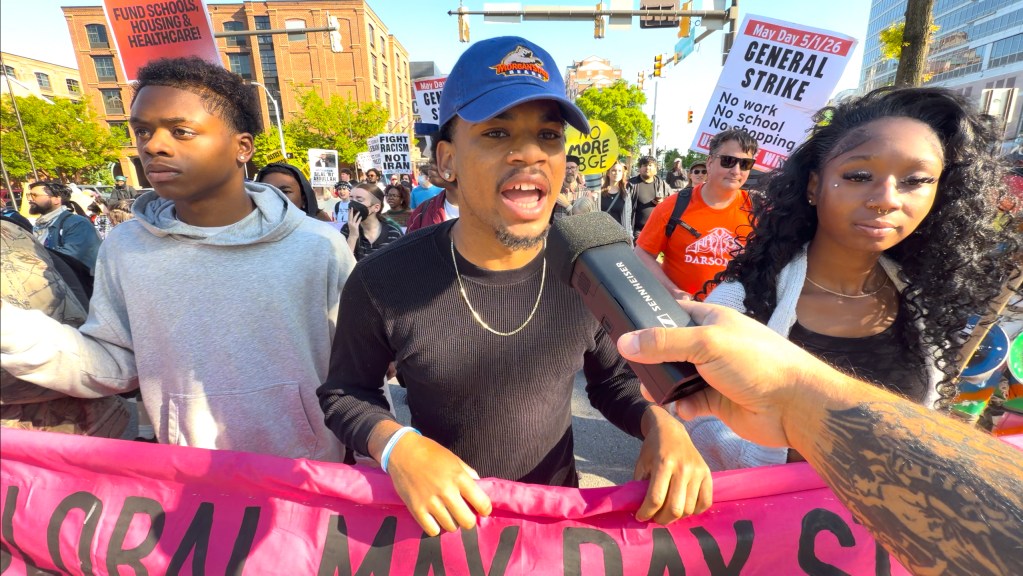
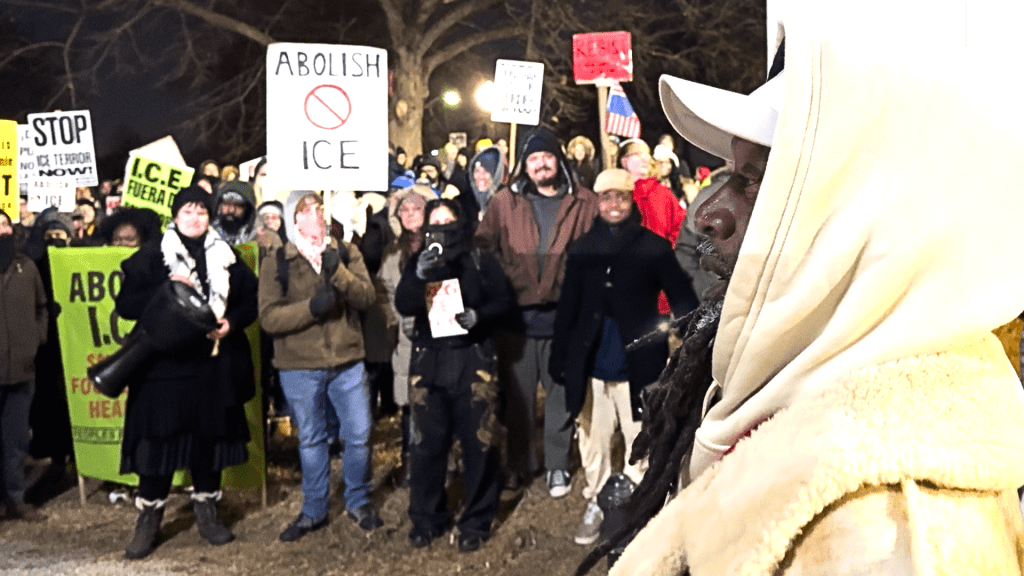
Inspired by January’s mass strike against ICE terror in Minnesota, a vast coalition of labor unions, democratic organizations, and community groups organized protests around the US on Friday, May 1, to coincide with International Workers Day (aka May Day). Organizers called for a one-day “economic blackout” (“no school, no work, no shopping”) in protest of authoritarianism and government policies that put billionaires’ needs above those of workers. TRNN takes you inside the Baltimore, Maryland, May Day march so you can see it and hear directly from protesters yourself.
Additional links/info:
Maximillian Alvarez, Working People / TRNN, “May 1: Unions, community orgs plan nationwide ‘economic blackout’ against billionaires and authoritarianism”
Hamilton Nolan, In These Times, “May Day was a reminder that we make the world run”
Credits:
Videography / Post-Production: Maximillian Alvarez
Transcript
The following is a rushed transcript and may contain errors. It will be updated as soon as possible.
Maximillian Alvarez: This is Maximillian Alvarez for the Real News Network. I’m here in downtown Baltimore and behind me. Around a hundred or more local residents are marching through the streets of downtown on Mayday in solidarity with others around the country who are participating in the Mayday Strong Day of Protests inspired by the anti-ice mass strike that shut down Minneapolis earlier this year. Organizers are calling for a day of no work, no school, no shopping. Here in Baltimore, the demonstration may be on the smaller side, but the spirit is still very lively. I’m about to take you into the heart of the march so you can see it for yourself.
So here in Baltimore, you’re seeing a lot of the signs you’re probably seeing at
by Stephen Janis | Mar 29, 2026 | baltimore, Derek Chauvin, medical examiner, News, OCME
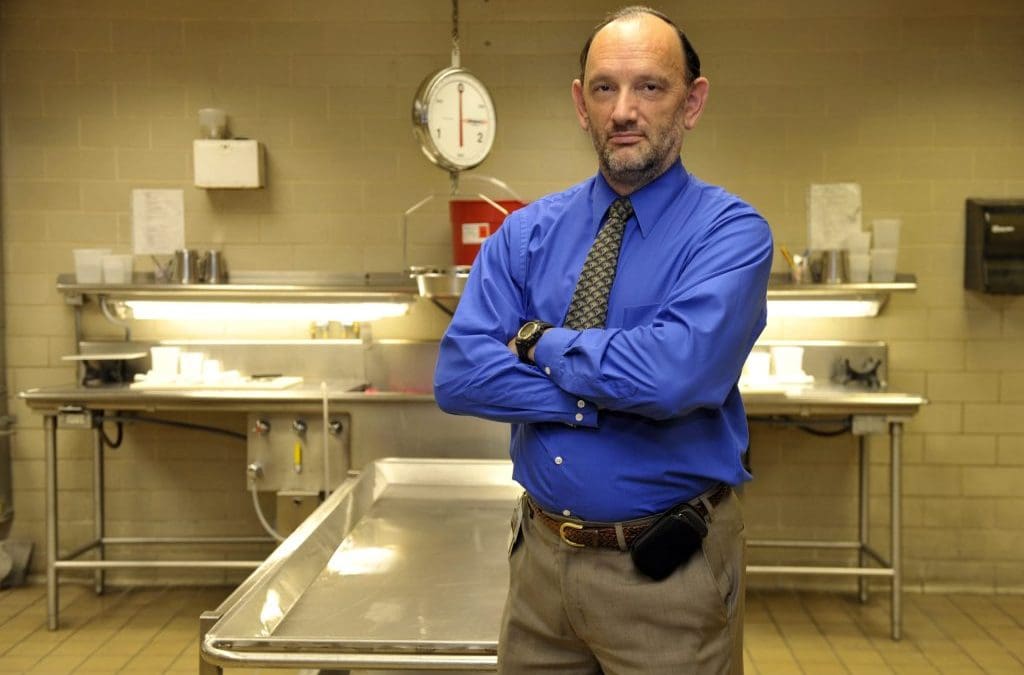
Nearly 20 years ago, I stepped into the downtown Baltimore office of an obscure state official named Dr. David Fowler. He was lanky, affable, with an Afrikaner accent that alluded to his South African roots. He was also the state’s chief medical examiner, the man who determined the fate of all cases of suspicious deaths across the state. I had no idea at the time, but roughly two decades…
Source
by Stephen Janis and Taya Graham | Mar 4, 2026 | Article, baltimore, Dr. David Fowler, Maryland, Prisons and Policing
Nearly 20 years ago, I stepped into the downtown Baltimore office of an obscure state official named Dr. David Fowler. He was lanky, affable, with an Afrikaner accent that alluded to his South African roots. He was also the state’s chief medical examiner, the man who determined the fate of all cases of suspicious deaths across the state.
I had no idea at the time, but roughly two decades later, he would become one of the most infamous pathologists in the world, his work and reputation fodder for national headlines after his stunning testimony on behalf of Derek Chauvin, the cop accused and eventually convicted of murdering George Floyd on camera in May of 2020.
Perhaps I should have expected it based on what transpired that day in Fowler’s office.
I had no idea at the time, but roughly two decades later, he would become one of the most infamous pathologists in the world, his work and reputation fodder for national headlines after his stunning testimony on behalf of Derek Chauvin, the cop accused and eventually convicted of murdering George Floyd on camera in May of 2020.
I was visiting to question him about the death of a man in police custody that occurred after he was struck with a Taser. Fowler had ruled the cause of death the result of a condition called “excited delirium.” I had never heard of it, so I wanted an explanation.
The autopsy had listed cardiac arrhythmia as a key contributor to the victim’s death, so I was curious why the Taser wasn’t identified as the primary cause. It seemed logical that the shock of thousands of volts of
by Mansa Musa | Feb 18, 2026 | baltimore, Prison Industrial Complex, prison reform, Prisons and Policing, Rattling the Bars, video
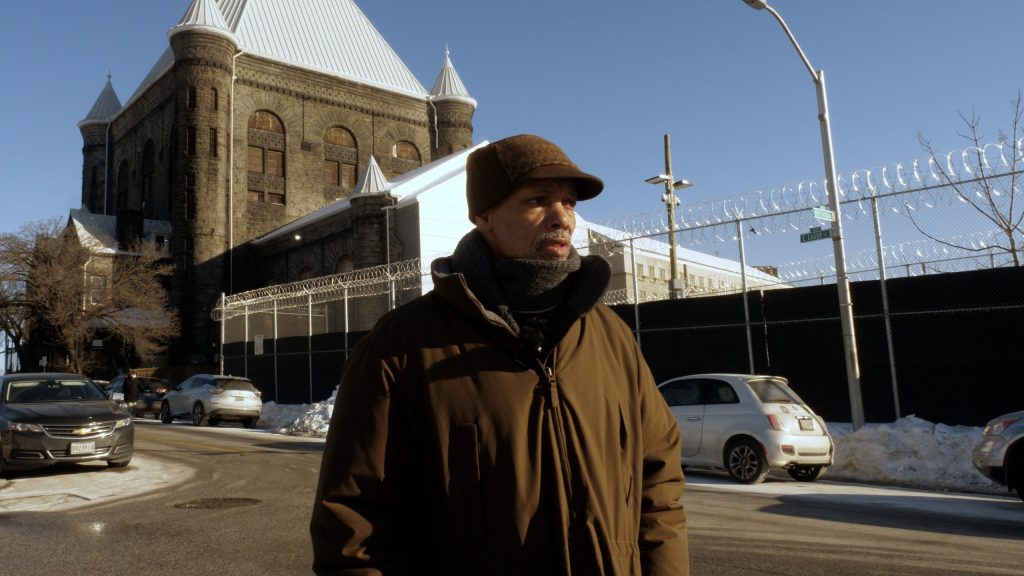
A coalition of more than 31 organizations—including the Legal Defense Fund, Leaders of a Beautiful Struggle, Maryland Justice Project, and the prison guard union AFSCME—are uniting to oppose Maryland’s proposed $1 billion “therapeutic” jail. If approved, the project would be the most expensive in state history, according to reporting by Ben Conarck and Pamela Wood for The Baltimore Banner. Coalition advocates are urging lawmakers to halt the project and instead invest in a long-overdue women’s pre-release center in Baltimore. Monica Cooper, founder of the Maryland Justice Project, highlights that the decade-long fight for a transitional space for incarcerated women remains unresolved, calling the state’s inaction a violation of law and gender equity. In a 30-minute documentary report, Rattling the Bars host and former political prisoner Mansa Musa speaks with coalition members and Baltimore residents about alternatives to the $1 billion jail.
Resource links:
How Maryland discriminates against women prisoners
‘It is torture’: Women in Maryland’s prisons have nowhere to turn
Thinking Outside the Box: Do More Humane Prisons Exist?
Credits:
Producer/Videographer/Post-Production: Cameron Granadino
Transcript
The following is a rushed transcript and may contain errors. A proofread version will be made available as soon as possible.
Mansa Musa:
Welcome to this edition of Rattling the Bars with host Mansa Musa. We’re standing outside of Brentwood and Eagle Street, which behind me is the grounds for building a new detention center that’s going to house many and women. The name of this detention center, according to legislators, is therapeutic. The problem with this is one, it’s a detention center, but the more important the problem is, it’s going to cost a billion dollars if built. This will be Maryland’s most expensive project
by Maximillian Alvarez | Jan 26, 2026 | baltimore, ICE, Minneapolis, Politics and Movements: US, video
As tens of thousands of Minnesotans launched a massive general strike in Minneapolis, MN, Baltimoreans have joined other cities and towns around the US to rally and march in solidarity with Minnesota and to protest ICE terror and Trump authoritarianism. In collaboration with the Baltimore Beat, TRNN takes you into the heart of recent protests in Baltimore, MD, and speaks directly with residents standing up to ICE. Here’s what they said…“We stand with Minneapolis”: Baltimore marches against ICE (Jan. 23, 2026)
Transcript
The following is a rushed transcript and may contain errors. A proofread version will be made available as soon as possible.
Speaker 1:
Sistance is are occupied,
Speaker 2:
Resistance is justified. I’m Becky. I’m a lifelong Baltimore resident and I’m out here today because we’ve got a real crisis in this country with ice. We’ve all seen what the goons are doing in Minnesota, and we definitely don’t want them to come here to Baltimore though they’re really actually already here. They’ve been seen at the Towson Mall, they’ve been seen in Waverly, and they’re breaking the law every single day. They’re killing people. Renee good here. They are acting in a completely lawless manner. They have to be stopped. It’s sort of amazing that they still are allowed to do what they’re allowed to do. So we just got to get out here and show our anti-ice sentiment strongly. They cannot do this to Baltimore.
Speaker 3:
My name is Guard Marquee Deba. I am a member of the DC Sisters of Perpetual Indulgence. I am here with my fellow sisters and the citizens of Baltimore, Maryland and it’s surrounding communities and cities. Because
by Maximillian Alvarez | Jan 13, 2026 | baltimore, Economy, Economy and Inequality, Politics and Movements: US, video
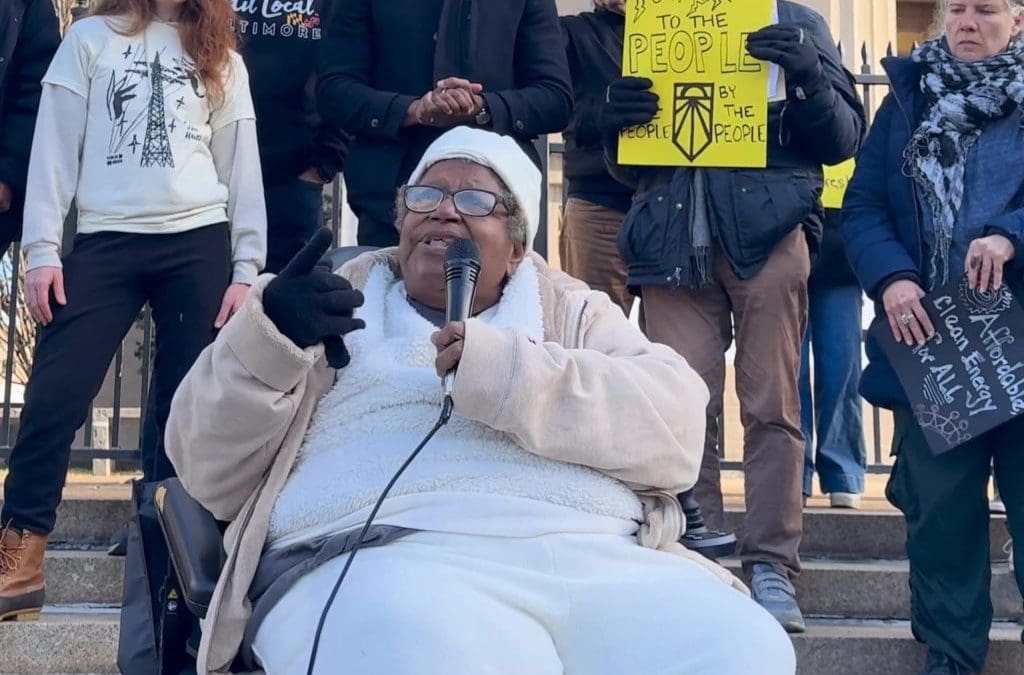
As the unaffordability crisis deepens across the US, poor and working-class residents are struggling to pay for rent and food along with exorbitant monthly utility bills charged by gas and electric monopolies that control local power grids. In Baltimore, MD, local residents’ inability to pay skyrocketing utility bills from energy giant Baltimore Gas & Electric (BGE) has sparked a grassroots “public power” campaign to establish a publicly owned energy alternative. In this on-the-ground report, TRNN takes you to the front lines of a Dec. 20 Public Power rally held in downtown Baltimore.
Additional links/info:
Baltimore Public Power campaign Instagram
Aaron Wright, Baltimore Beat, “BGE and DPW rate increases create financial woes for city residents”
Credits:
Production: Maximillian Alvarez
Post-Production: Maximillian Alvarez, David Hebden
Transparency disclaimer: Maximillian Alvarez’s spouse is a volunteer participant in the Baltimore Public Power campaign.
Transcript
The following is a rushed transcript and may contain errors. It will be updated.
Rev. Annie Chambers: Last week I went into a home and a lady had an infant that we had to get out of her house because her utilities was cut off and she had no way to keep that baby warm. Along with four other children.
Mark Conway: We had folks who were deciding between their rent and their energy bill. We had folks who were deciding between their medication and their energy bill. We had a senior roll her oxygen tank up and tell us that she was unable to refill her oxygen tank because of her energy bill.
Bobby LaPin: Last night, more than 250,000 Maryland children went to bed freezing and this morning they woke up freezing. But BG&E, but BG&E, they made $2.4 billion last year.
Taylor Smith-Hams: