
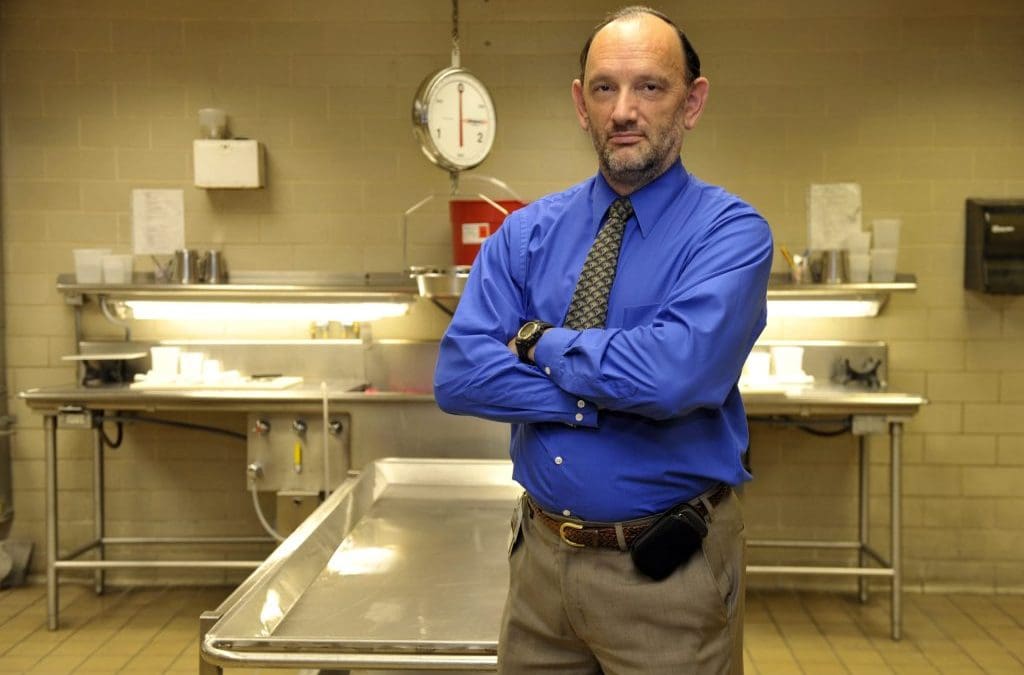
We covered a now-discredited medical examiner for two decades. These are the botched cases that still haunt us.
Nearly 20 years ago, I stepped into the downtown Baltimore office of an obscure state official named Dr. David Fowler. He was lanky, affable, with an Afrikaner accent that alluded to his South African roots. He was also the state’s chief medical examiner, the man who determined the fate of all cases of suspicious deaths across the state.
I had no idea at the time, but roughly two decades later, he would become one of the most infamous pathologists in the world, his work and reputation fodder for national headlines after his stunning testimony on behalf of Derek Chauvin, the cop accused and eventually convicted of murdering George Floyd on camera in May of 2020.
Perhaps I should have expected it based on what transpired that day in Fowler’s office.
I had no idea at the time, but roughly two decades later, he would become one of the most infamous pathologists in the world, his work and reputation fodder for national headlines after his stunning testimony on behalf of Derek Chauvin, the cop accused and eventually convicted of murdering George Floyd on camera in May of 2020.
I was visiting to question him about the death of a man in police custody that occurred after he was struck with a Taser. Fowler had ruled the cause of death the result of a condition called “excited delirium.” I had never heard of it, so I wanted an explanation.
The autopsy had listed cardiac arrhythmia as a key contributor to the victim’s death, so I was curious why the Taser wasn’t identified as the primary cause. It seemed logical that the shock of thousands of volts of