by Maximillian Alvarez | Jul 29, 2026 | baltimore, documentary, Politics and Movements: US, protest, Racial Justice, video
A 7-11 on Liberty Heights Avenue in Northwest Baltimore, Maryland, has become a flashpoint of community rage and resistance after Ade Oba Tokunbo (Stephen King), a 74-year-old resident, was attacked and brutally beaten there by six teenagers on July 7, 2026. The same location is also the site of multiple robberies and the murder of Victorious Swift in March of 2017. In response, “A Clarion Call,” a new coalition of local community organizations and residents, organized a rally at the 7-11 on Sunday, July 26, and led a community march into the store to demand the company implement policies that will keep customers safe and aid in the apprehension of the youth responsible for the July 7 attack. In this on-the-ground report, TRNN takes you inside the community rally held at the 7-11, near Mondawmin Mall, on July 26.
Additional links/info:
Organizers of A Clarion Call have set up a GoFundMe for Ade Oba Tokunbo and are asking community members to contact ClarionCallBaltimore[at]gmail[dot]com if they have any information about the perpetrators of the July 7.
Renee Anderson, Mike Hellgren, CBS Baltimore, “New video shows 74-year-old attacked outside Baltimore 7-Eleven by group wielding sword, assault rifle”
Credits:
Production: Maximillian Alvarez
Post-Production: Maximillian Alvarez, Cameron Granadino, David Hebden
Transcript
The following is a rushed transcript and may contain errors. It will be updated.
Crowd Chants:
We are we. We are we. We are we. We are we. We are we.
Gwendolyn Levi:
We need to be able to say that we in our community are willing to stand up. We’re standing up for our young people. We’re standing up for our seniors. We are standing up for our communities.
Queen Mother Victory Swift-Gye Nyame:
On July
by Amy Goodman | Jun 24, 2026 | Animals, biology, censorship, documentary, education, Gender, Interview, LGBTQ Rights, Science, Trans Rights, Wildlife
A new documentary explores a growing body of scientific research documenting the wide range of gender and sexual diversity found in the animal kingdom, from pregnant male seahorses to matriarchal monkey troops. Second Nature, directed by queer filmmaker Drew Denny, is narrated by Oscar-nominated actor Elliot Page, who says he joined the project because “I was so moved by it and found it so…
Source
by Amy Goodman | Jun 17, 2026 | documentary, Drone Strikes, Gaza, Interview, Ireland, Israel, Israeli Military, Journalism, Journalists, Lebanon, Media, Media Workers, Northern Ireland, Palestine, Propaganda
Israel has killed over 260 journalists and media workers in Gaza and 29 in Lebanon since October 7, 2023. Irish filmmaker Seán Murray investigates Israel’s killings of journalists in his new feature documentary Journacide: The War on Truth. He says the term “journacide” applies to Israel’s military actions because of the “explicit nature of the targeting and killing of journalists” as a way to…
Source
by Ross Domoney | Feb 5, 2026 | documentary, Politics and Movements: International, Rojava, Syria, video
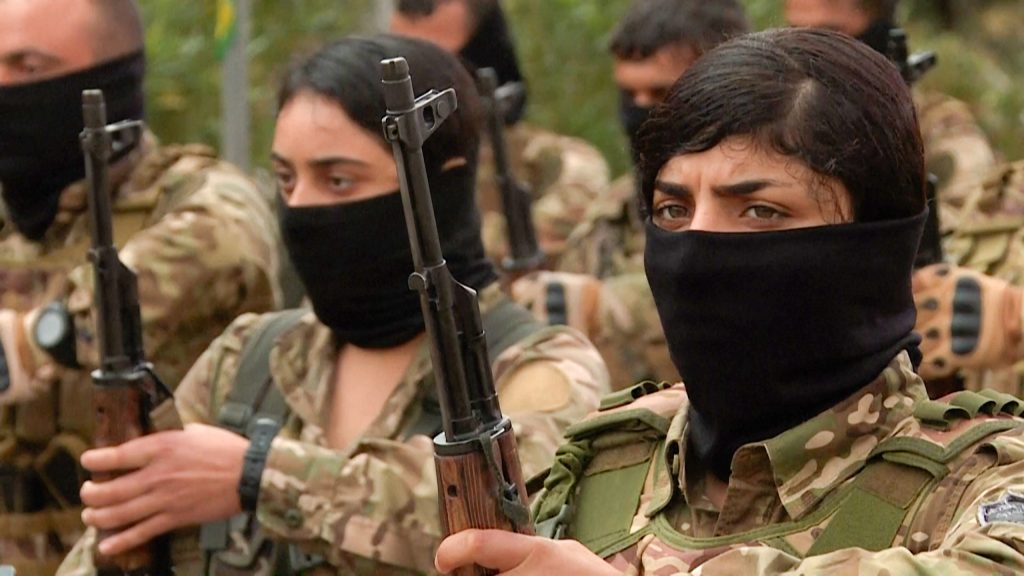
In the chaos of Syria’s war, in a region called Rojava, a revolution took shape. Women some of whom were within the SDF (Syria Defense Forces) built a radically different political system based on gender equality and collective decision-making, and formed all-female armed units known as the YPJ (Yekîneyên Parastina Jin) that helped defeat ISIS. But after the fall of Bashar al-Assad’s regime, Syria’s new governing forces moved to unify the country under a single national army and centralized rule. That push placed Rojava’s women-led project in direct ideological conflict with the state, as pressure mounted and the region faced the growing prospect of war.
TRNN was granted rare access to a YPJ commander at a hidden base in northeast Syria, offering a ground-level view of a women’s revolution as Rojava was preparing for war. Since filming, an agreement between the government in Damascus and Rojava’s governing authorities has brought the entire region under central government control. It is unclear if conflict will erupt between the two sides.
Credits:Produced by The Real News Network and Shadowgraph Media Filming, editing, and script writing by Ross Domoney Voice over by Nadia Péridot Local producer: Ossama Mohammad Translations by Sherin Yusif Special thanks to the Rojava Film Commune
Transcript
The following is a rushed transcript and may contain errors. A proofread version will be made available as soon as possible.
Narration:
After the fall of the regime of Bashar Al-Assad, Syria’s people are forming the foundations of a new state.
Through years of war, every person has made sacrifices in this ancient, multi-ethnic land.
But as rebuilding begins, control becomes the next battle.
From the capital, Damascus, Syria is now governed by
by Maximillian Alvarez | Dec 19, 2025 | documentary, east palestine, Economy and Inequality, Politics and Movements: US, railroad, sacrifice zones, video
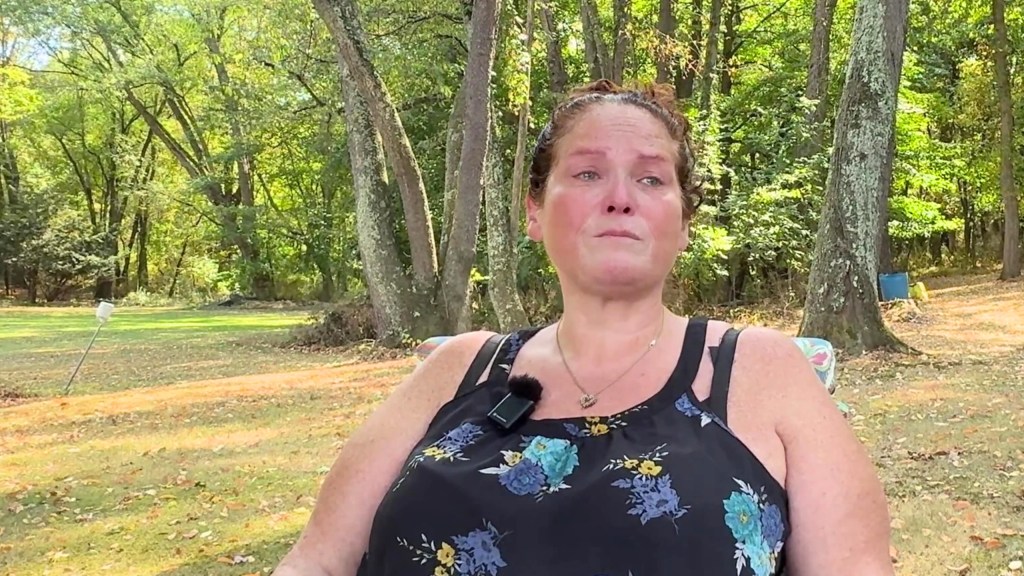
On February 3, 2023, a Norfolk Southern ‘bomb train’ carrying hazardous chemicals derailed in the small town of East Palestine, Ohio. Three days later, Norfolk Southern pressured local authorities to dump and burn five tanker cars full of chemicals, blasting a mushroom cloud of toxic phosgene and hydrogen chloride into the air. Nearly three years later, residents like Jami Wallace and her family are still suffering the toxic fallout.
Additional links/info:
Jami Wallace Facebook page
Jami’s fundraiser for Chemically Impacted Communities Coalition (CICC)
Maximillian Alvarez, The Real News Network, “An industrial disaster wrecked my home. Now I’m living out of a hotel”
Maximillian Alvarez, The Real News Network, “A billion-dollar company poisoned my home and destroyed my town”
Maximillian Alvarez, Steve Mellon, & Mike Balonek, The Real News Network, “Trainwreck in ‘Trump Country’: Partisan politics hasn’t helped East Palestine, OH (DOCUMENTARY)”
Credits:
Production: Maximillian Alvarez
Post-Production: Maximillian Alvarez, David Hebden
Additional photos courtesy of Jami Wallace
Transcript
The following is a rushed transcript and may contain errors. A proofread version will be made available as soon as possible.Jami Wallace:
It’s not fair. We’re people, our lives matter. My daughter’s life matters, and that’s what everybody is telling me is that you guys are just accosted doing business. We can kill a whole community and who cares? It didn’t hit the bottom line, so we’ll do it again.
[TEXT ON-SCREEN]:
On Feb. 3, 2023, a Norfolk Southern ‘bomb train’ carrying hazardous chemicals derailed in the small town of East Palestine, Ohio. Three days later, Norfolk Southern pressured local authorities to dump and burn five tanker cars full of chemicals, blasting a mushroom cloud of toxic phosgene and hydrogen chloride into the air. Nearly 3 years
by Ruwaida Amer, Mahmoud Al Mashharawi, Belal Awad and Leo Erhadt | Oct 14, 2025 | documentary, Gaza, Israel, October 7: One Year Later, Palestine, Politics and Movements: International, Politics and Movements: US, video
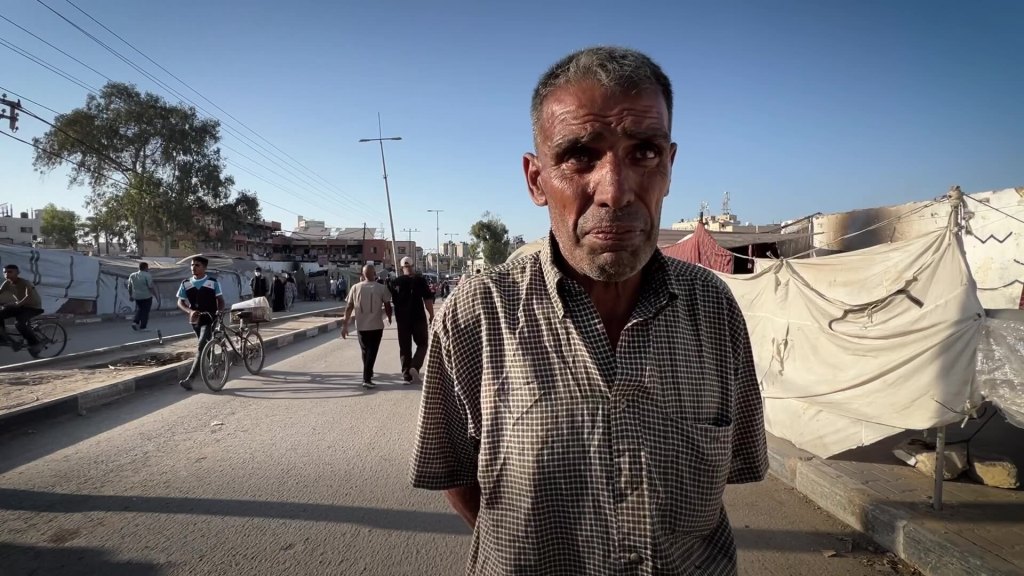
After two years of Israel’s genocidal destruction of Gaza, Palestinians have welcomed the tenuous ceasefire that began last week. However, there is little hope that the ceasefire will lead to lasting peace or an end to the occupation. “There is no optimism,” one Gaza resident, Nusfat Modin, says. “You can’t negotiate with these people. A deal, no deal—we have no hope. No one—ask anyone.”
TRNN asked Gazans what they thought about the latest ceasefire deal. This is what they told us…
Credits:
Producers: Belal Awad, Leo Erhardt
Videographers: Ruwaida Amer, Mahmoud Al Mashharawi
Video Editor: Leo Erhardt
Transcript
NUSFAT MODIN:
The Sumud Flotilla is a very beautiful thing: to break the siege and to show the world who the Zionist occupiers are. They detained them, and people have seen what Ben Gvir did to them. These people are not terrorists. It’s not terrorism; it’s about breaking the siege. These are heroes of humanity and heroes of freedom.
ADAM KHIDR HAMMOUDEH:
These are the ones who embodied dignity and who responded to the call for help and the call of humanity. They brought this message of love, peace, and security to the people of Gaza.
ABU MUSTAFA AL ABID:
Free people—you are free people—you began something good, and you should continue on your path, steadfast. The whole world is with you, all free people are with you, and all nations are with you.
MAZEN ABBAS ABU JABAL:
This is not the first flotilla; there were many attempts before by peace-loving activists and supporters of the Palestinian cause around the world. Every time, they are faced with brute military force, with the support, approval and blessing of the U.S., through the Israeli navy, which abducted and