by Mansa Musa | Dec 22, 2025 | holidays, Prison Industrial Complex, Prisons and Policing, Rattling the Bars, video
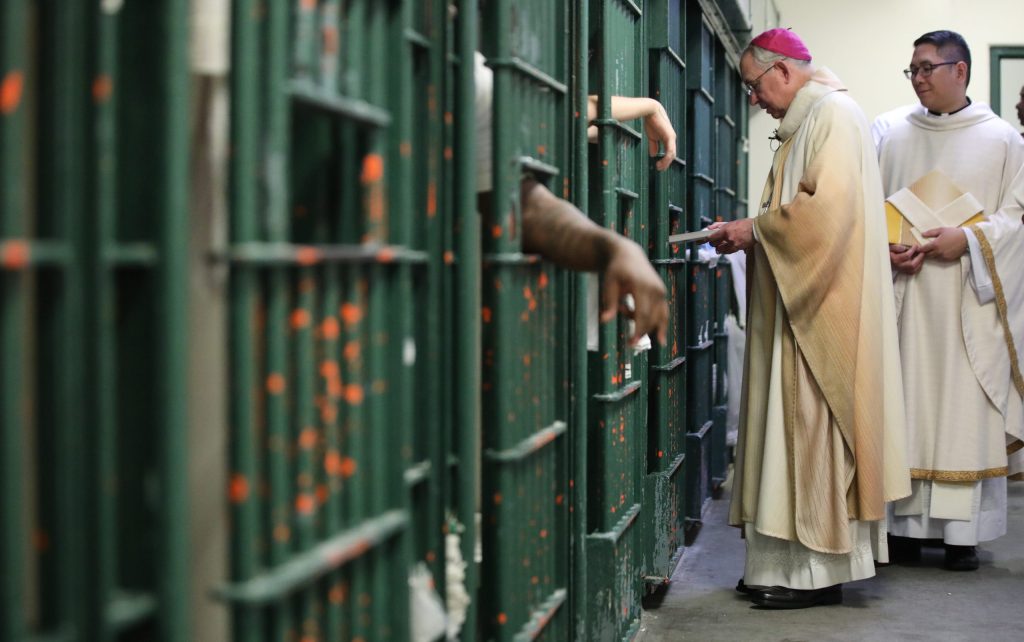
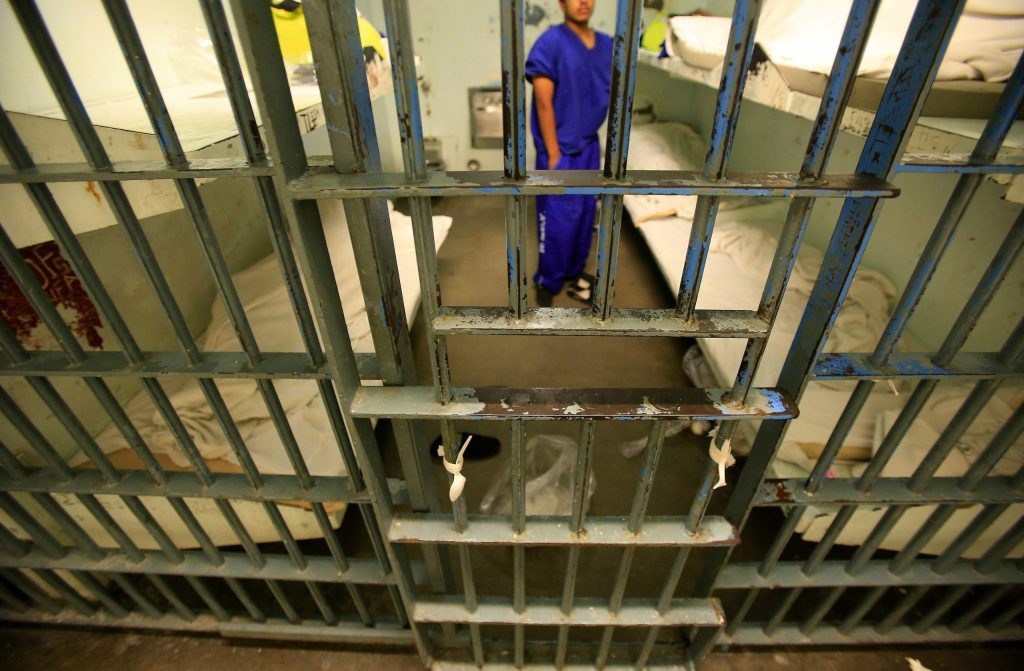
For incarcerated people and their families, the holidays are the most painful time of year. In this episode of Rattling the Bars, host Mansa Musa and TRNN Editor-in-Chief Maximillian Alvarez speak frankly about what it’s like to be locked up during the holidays, why inmate suicides, violence, and depression spike this time of year, and about the life-saving and society-improving steps we can take this holiday season to help prisoners maintain contact with the outside world.
Content Warning: Discussion of suicide and depression.
Producer / Videographer / Post-Production: Cameron Granadino
Transcript
The following is a rushed transcript and may contain errors. A proofread version will be made available as soon as possible.
Mansa Musa:
Welcome to Rattling the Bars. I’m your host, Mansa Musa.
Maximillian Alvarez:
And I’m Maximillian Alvarez, editor-in-chief of the Real News Network. As we reach the end of an impossibly long year, all of us here at the Real News want to wish you and yours a happy holiday season. Whether you celebrate or not, we hope that this time of year at least provides some time and space for you to rest and to be with the ones that you love. But of course, as we do every single year here, we also want to take this moment to remind y’all and to remind ourselves that there are so many people in this country right now who will not be able to be with their loved ones this year. The nearly two million human beings who are locked up in the United States of America right now. The tens of thousands of immigrants who have been sitting and rotting in ice detention, the vast
by Maximillian Alvarez | Dec 19, 2025 | documentary, east palestine, Economy and Inequality, Politics and Movements: US, railroad, sacrifice zones, video
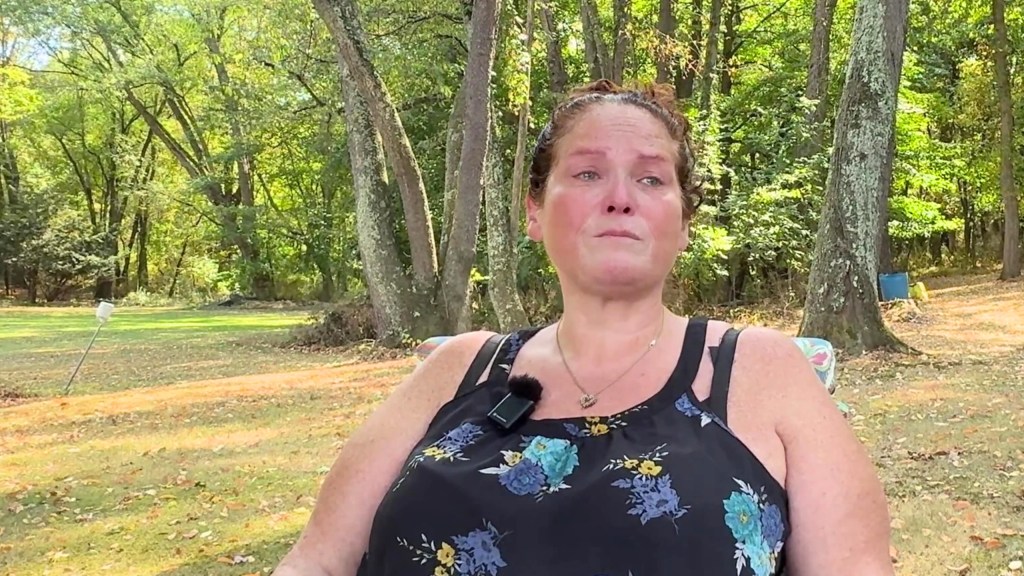
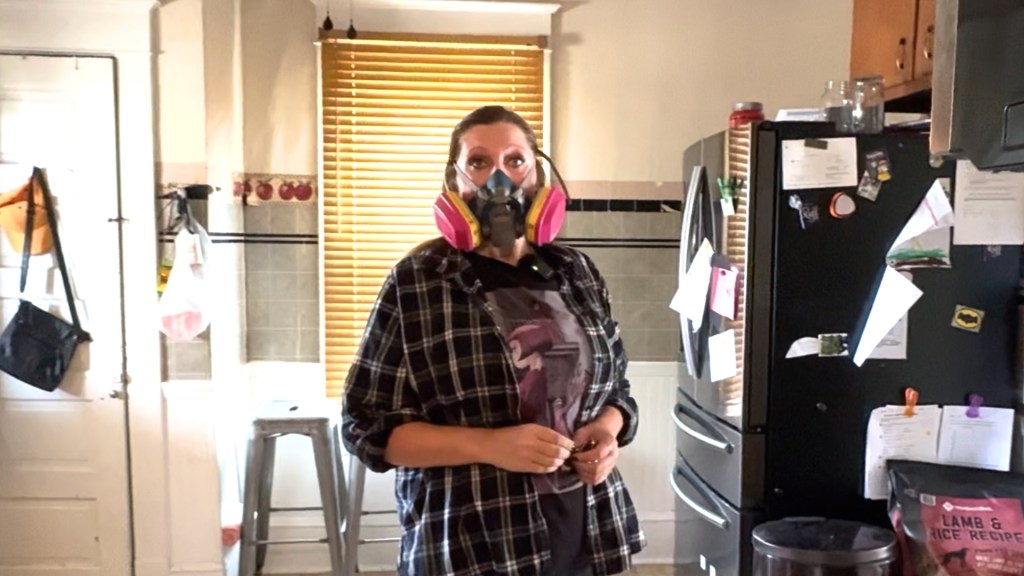
On February 3, 2023, a Norfolk Southern ‘bomb train’ carrying hazardous chemicals derailed in the small town of East Palestine, Ohio. Three days later, Norfolk Southern pressured local authorities to dump and burn five tanker cars full of chemicals, blasting a mushroom cloud of toxic phosgene and hydrogen chloride into the air. Nearly three years later, residents like Jami Wallace and her family are still suffering the toxic fallout.
Additional links/info:
Jami Wallace Facebook page
Jami’s fundraiser for Chemically Impacted Communities Coalition (CICC)
Maximillian Alvarez, The Real News Network, “An industrial disaster wrecked my home. Now I’m living out of a hotel”
Maximillian Alvarez, The Real News Network, “A billion-dollar company poisoned my home and destroyed my town”
Maximillian Alvarez, Steve Mellon, & Mike Balonek, The Real News Network, “Trainwreck in ‘Trump Country’: Partisan politics hasn’t helped East Palestine, OH (DOCUMENTARY)”
Credits:
Production: Maximillian Alvarez
Post-Production: Maximillian Alvarez, David Hebden
Additional photos courtesy of Jami Wallace
Transcript
The following is a rushed transcript and may contain errors. A proofread version will be made available as soon as possible.Jami Wallace:
It’s not fair. We’re people, our lives matter. My daughter’s life matters, and that’s what everybody is telling me is that you guys are just accosted doing business. We can kill a whole community and who cares? It didn’t hit the bottom line, so we’ll do it again.
[TEXT ON-SCREEN]:
On Feb. 3, 2023, a Norfolk Southern ‘bomb train’ carrying hazardous chemicals derailed in the small town of East Palestine, Ohio. Three days later, Norfolk Southern pressured local authorities to dump and burn five tanker cars full of chemicals, blasting a mushroom cloud of toxic phosgene and hydrogen chloride into the air. Nearly 3 years
by Maximillian Alvarez | Dec 18, 2025 | east palestine, Economy, Economy and Inequality, Politics and Movements: US, video
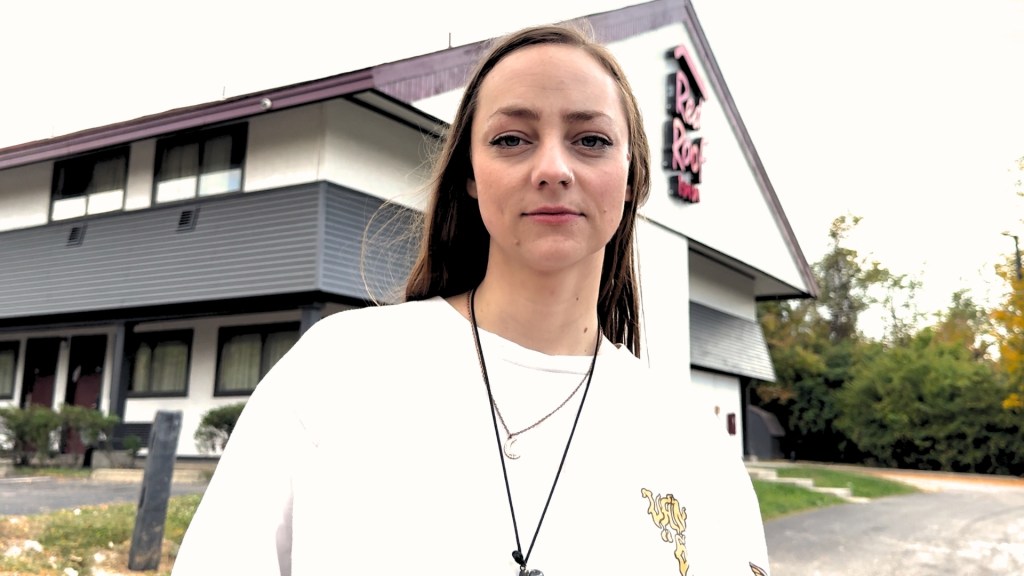
Life for Zsuzsa Gyenes has become a never-ending nightmare after a Norfolk Southern “bomb train” carrying hazardous chemicals derailed in her hometown of East Palestine, OH, on Feb. 3, 2023. “When the derailment happened, my son and I [got] very sick,” Gyenes says, “we were forced to leave our home very shortly afterwards, and we had been displaced continuously for over a year and a half.” When Norfolk Southern eventually helped Gynes locate and pay for a new home, she hoped it was a chance for a fresh start—but her troubles were only just beginning.
Additional links/info:
Zsuzsa Gyenes Facebook page and fundraiser page
Maximillian Alvarez, The Real News Network, “A billion-dollar company poisoned my home and destroyed my town”
Maximillian Alvarez, Steve Mellon, & Mike Balonek, The Real News Network, “Trainwreck in ‘Trump Country’: Partisan politics hasn’t helped East Palestine, OH (DOCUMENTARY)”
Credits:
Production: Maximillian Alvarez
Post-Production: Maximillian Alvarez, David Hebden
Transcript
The following is a rushed transcript and may contain errors. A proofread version will be made available as soon as possible.
Zsuzsa Gyenes:
When the derailment happened, my son and I were very sick the night that it had happened, and we were forced to leave our home very shortly afterwards, and we had been displaced continuously for over a year and a half. We still don’t have any help. We know that people are still sick. We’ve known people are sick. There’s still people in town wanting to get out.
Maximillian Alvarez:
So I’m back here in East Palestine, Ohio where the Norfolk Southern train derailment and chemical disaster happened in early February, 2023. The media since then has moved on. Politicians have moved on, and just recently, Norfolk Southern itself said that
by Maximillian Alvarez | Dec 17, 2025 | east palestine, Economy, Economy and Inequality, Inequality, Politics and Movements: US, video
Ashley McCullom’s quiet, small-town life “changed in an instant” on the night of Feb. 3, 2023, when a Norfolk Southern “bomb train” derailed near her home in East Palestine, OH. The derailment, followed by the disastrous decision to “vent and burn” multiple carloads of hazardous chemicals, exposed residents in East Palestine and the surrounding area to toxins that have made them sick, poisoned their homes, and changed their community forever. While Norfolk Southern, politicians, and media pundits have all moved on from the East Palestine train derailment and chemical disaster, residents like McCullom are still dealing with the toxic fallout.Additional links/info:
Maximillian Alvarez, Steve Mellon, & Mike Balonek, The Real News Network, “Trainwreck in ‘Trump Country’: Partisan politics hasn’t helped East Palestine, OH (DOCUMENTARY)”
Credits:
Production: Maximillian Alvarez
Post-Production: Maximillian Alvarez, David Hebden
Transcript
The following is a rushed transcript and may contain errors. A proofread version will be made available as soon as possible.
WKYC Channel 3:
Breaking news from Columbiana County. East Palestine is now under an urgent mandatory evacuation order after a toxic train derailment
ABC News:
State of emergency in Ohio. After a train derailment and massive fire, some of the cars were carrying hazardous chemicals.
NBC News:
Some 2000 residents, nearly half of East Palestine still under evacuation orders. Visitors told to stay away.
PBS NewsHour:
For Ashley McCullum, the fear is warranted. She lived two blocks from the derailment site.
Ashley McCullom:
When I looked out, everything looked like it was on fire. The entire entire thing looked like it was going up in smoke in flames. I’m Ashley McCollum and this is my house. It’s pretty bad inside. I had multiple chemical testing done. I don’t go in without
by Ross Domoney, Nadia Péridot, Yussif Mohammed Sharqawi, Siham Shamalakh and Bassel Akkawi | Dec 9, 2025 | Politics and Movements: International, Syria, video
Yarmouk, Syria, was originally a temporary refugee camp for thousands of Palestinians displaced by the 1948 Nakba; however, the camp eventually grew to a lively metropolis with a vibrant community of artists, intellectuals, and families. Home to an estimated one million residents, Palestinians and Syrians lived together in Yarmouk under the authoritarian regime of the notorious Assad family. During the protracted civil war in Syria, Yarmouk became the site of repeated bombardment by heavy artillery and intense sieges. Fleeing war, illness, and starvation, hundreds of thousands left Yarmouk; yet, a handful of residents remained, determined to fight against tyranny.
In December 2024, the Assad regime finally fell. Now, residents of war-torn Yarmouk are returning to rebuild their homes and their lives once again. For this on-the-ground documentary report, TRNN was granted access to the camp and spoke to residents about what life was like in Yarmouk during the many violent years before the fall of Assad’s regime—and about what life in Yarmouk can be now.
Credits:
Produced, directed, filmed and edited by Ross Domoney
Script and Voice-over by Nadia Péridot
Translations by Siham Shamalakh
Local Producers: Yussif Mohammed Sharqawi, Bassel Akkawi
Transcript
VO:
This is not Gaza.
This is Yarmouk, a refugee camp in Damascus in Syria.
First established in 1957 to house those forced out of Palestine during the Nakba, when Zionist militia violently expelled and murdered Palestinians and occupied their homes.
Yarmouk began as a temporary refugee camp and evolved into a vibrant community of exiled families.
It became the capital of the Palestinian diaspora.
Khaldoun Abdel Rahman Al Malah:
In Yarmouk, every street, school, clinic, and bakery in the camp carries the name “Palestine”.
VO:
When the Syrian civil war erupted in 2011, residents
by Mansa Musa | Dec 8, 2025 | Prison Industrial Complex, prison reform, Prisons and Policing, Rattling the Bars, video
Fifty years into the era of mass incarceration, states like Arkansas, Montana, California, and Colorado are pushing to build new prisons and expand immigrant detention. In this episode of Rattling the Bars, host Mansa Musa talks with Nicole Porter of The Sentencing Project about how federal and state governments are doubling down on new prison construction and ICE contracts to expand the prison-industrial complex, what sets the US criminal justice system apart from other countries around the world, and how organizers are fighting for real prison population reductions instead of more cages.
Guest:
Nicole D. Porter, named a “New Civil Rights Leader” by Essence Magazine for her work to challenge mass incarceration, manages The Sentencing Project’s state and local advocacy efforts on sentencing reform, voting rights, and confronting racial disparities in the criminal legal system. Since joining The Sentencing Project in 2009, Porter’s advocacy and findings have supported criminal legal reforms in several states including Kentucky, Maryland Missouri, California, Texas and the District of Columbia. Porter’s areas of expertise include research and grassroots support around challenging racial disparities, felony disenfranchisement, in addition to prison closures and prison reuse. Her research has been cited in several major media outlets including Salon and the Washington Post, and she has appeared in the New York Times, Washington Post, and on National Public Radio and MSNBC.
Additional links/info:
The Sentencing Project website, Facebook page, and Instagram
Lisa Armstrong, Essence, “The new Civil Rights leaders”
Credits:
Producer / Videographer / Post-Production: Cameron Granadino
Transcript
The following is a rushed transcript and may contain errors. A proofread version will be made available as soon as possible.
Mansa Musa:
Welcome to this edition of Rattling the Bars. I’m your host, Mansa Musa. Today we have with us Nicole Porter.