by Marc Steiner | Feb 17, 2026 | cuba, Economy, Economy and Inequality, Podcast, Politics and Movements: International, Politics and Movements: US, The Marc Steiner Show
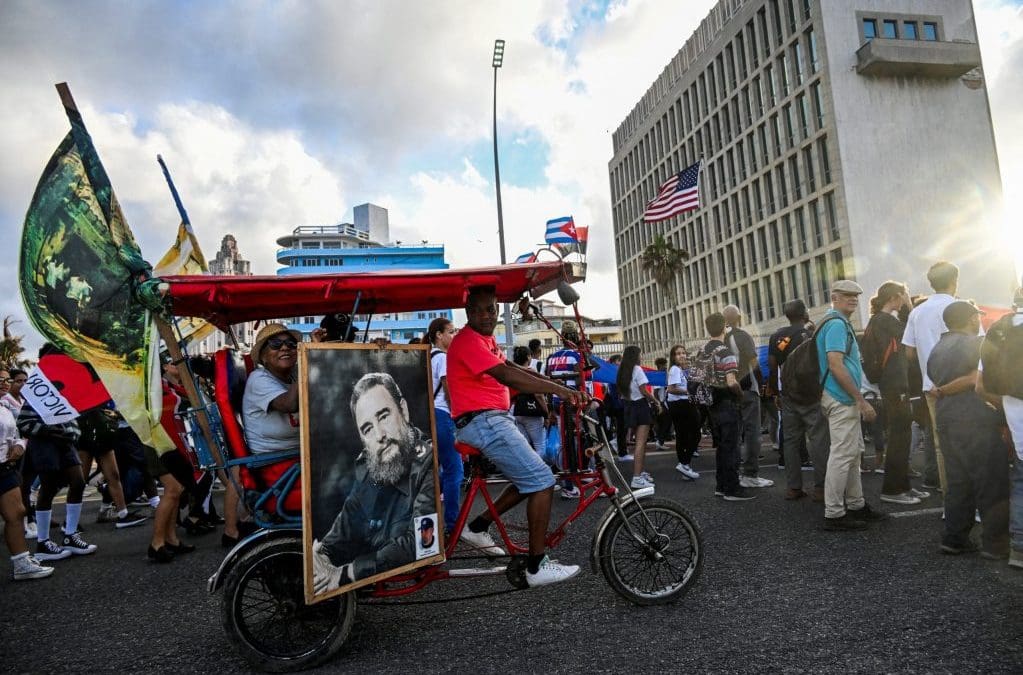
The Trump administration is deliberately plunging Cuba into a national and humanitarian crisis, and the US-imposed blockade of oil imports is wreaking havoc on daily life for Cubans. In this urgent episode of The Marc Steiner Show, Marc speaks with Cuban journalist and documentary filmmaker Liz Oliva Fernández about the unfolding nightmare in Cuba and what the international community can do to stop it.
Guest:
Liz Oliva Fernández is a Cuban journalist with the outlet Belly of the Beast, and she is the presenter of documentary series The War on Cuba, for which she won a Gracie Award. Apart from her journalism and filmmaking, Oliva Fernández is a dedicated anti-racist and feminist activist.
Additional links/info:
Belly of the Beast website, Facebook page, Instagram, and YouTube channel
Belly of the Beast, The War on Cuba
Al Jazeera Staff & Reuters, Al Jazeera, “Waste piles up in Cuba as US-imposed fuel blockade halts collection trucks”
Amy Goodman, Democracy Now!, ““Policy of aggression”: Cuba’s U.N. ambassador denounces U.S. oil blockade, push to topple government”
Credits:
Producer: Rosette Sewali
Studio Production: Cameron Granadino
Audio Post-Production: Stephen Frank
Transcript
The following is a rushed transcript and may contain errors. A proofread version will be made available as soon as possible.
Marc Steiner:
Welcome to the Marc Steiner Show here on The Real News. I’m Marc Steiner. It’s great to have you all with this. One of my great passions in life is Cuba and I’ve been to Cuba numerous times and now it’s at the center of Trump attacking Cuba again and trying to isolate it and want to try to overthrow the Cuban government. All that’s taking place as we speak and we are lucky to have today our
by Brad Reed | Feb 17, 2026 | AI, Article, Climate Crisis, Economy and Inequality, Politics and Movements: US, Reprint, Water
This story originally appeared in Common Dreams on Feb. 16, 2026. It is shared here under a Creative Commons (CC BY-NC-ND 3.0) license.
An artificial intelligence data center development venture has signed a multimillion-dollar deal that will allow it to consume over 40% of a Pennsylvania town’s excess water supply.
PennLive reported on Monday that Carlisle Development Partners, a joint venture created by developers Pennsylvania Data Center Partners and PowerHouse Data Centers, had signed a $14.1 million agreement that will let it tap into the public water and sewer systems of Middlesex Township, Pennsylvania.
According to PennLive, the deal will formalize the 18-building data center’s right to access up to 400,000 gallons of water per day, which the publication notes is “equal to the consumption of 2,367 dwelling units.”
Middlesex Township Supervisor Phil Neiderer said during a recent planning commission meeting that the big influx of revenue to the local government would more than make up for the massive amounts of water being consumed by the data center.
“What that’s going to do is it’s going to fund a lot of projects that have already been in the books that are completely unrelated to the data center,” Neiderer said, according to PennLive.
In recent months, residents of Middlesex Township and Cumberland County have raised concerns about not only water use but also pollution and utility rates tied to the project.
AI data centers have become a major controversy throughout the US in recent months, as their massive energy needs have pushed up utility bills and put a strain on communities’ water supplies.
A study published in the journal Nature Sustainability last year found that data centers could soon consume as much water as 10 million Americans and emit as much carbon dioxide as 10 million cars, or roughly the
by Taya Graham and Stephen Janis | Feb 13, 2026 | ICE, police accountability, Police Accountability Report, Politics and Movements: US, Prisons and Policing, video
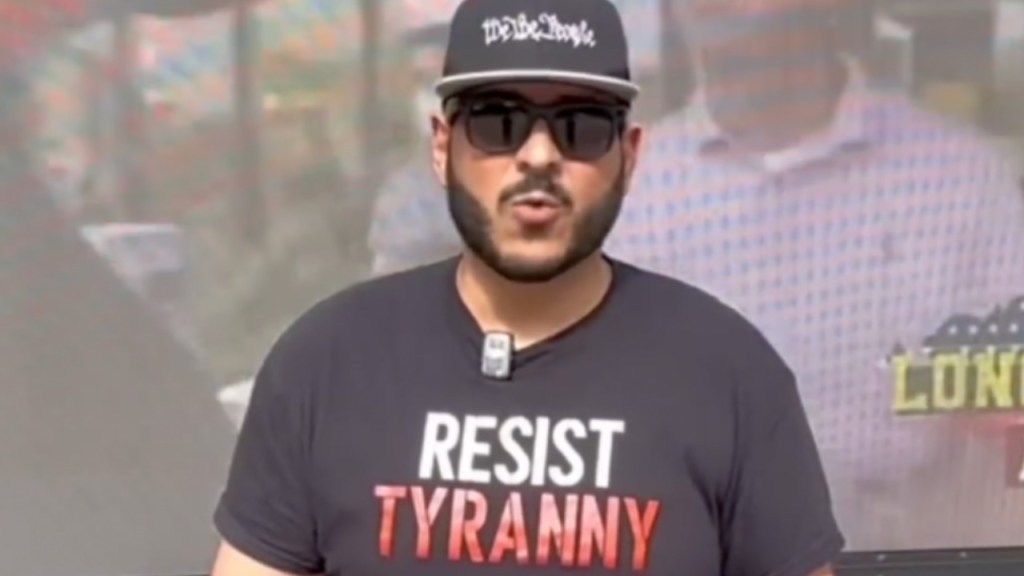
Taya Graham and Stephen Janis speak with Sean-Paul Reyes, better known as Long Island Audit on YouTube, about his choice to risk detention and stand up for his constitutional rights at a Texas checkpoint. We think you can guess which he chose. Reyes explains the difficulties and dangers in cop watching federal law enforcement officers like those with Immigration and Customs Enforcement (ICE) and Customs and Border Protection (CBP).
Credits:
Written by: Stephen Janis
Produced by: Stephen Janis, Taya Graham
Transcript
The following is a rushed transcript and may contain errors. A proofread version will be made available as soon as possible.
Taya Graham:
Hello, my name is Taya Graham and welcome to the Police Accountability Report. As I always make clear, this show has a single purpose holding the politically powerful institution of policing accountable. And to do so, we don’t just focus on the bad behavior of individual cops. Instead, we examine the system that makes bad policing possible. And today, we will achieve this goal by talking to popular cop watcher Long Island audits about his recent battles with federal authorities. He is one of the fiercest defenders of First Amendment rights and a fearless advocate for police accountability. And today he will be breaking down for us his recent encounters with federal officers and border patrol agents. Shocking video that shows just how tenuous our rights are and why it is vitally important that auditors like Sean are on the streets defending them. But before we get started, I don’t have a sponsor.
We don’t run any ads on our channel. All that we ask is that you like the video, share it and
by Maximillian Alvarez | Feb 13, 2026 | Economy, Economy and Inequality, labor, Podcast, Politics and Movements: US, Unions, Working People
The longest-running nurses strike in New York City history has come to an end—for some. Nurses at NewYork-Presbyterian Hospital, however, overwhelmingly voted this week to reject a tentative agreement and to stay on strike until their demands for safer staffing and more job security are met. In this unscheduled strike update episode, TRNN Editor-in-Chief Maximillian Alvarez speaks with Beth Loudin, a neonatal nurse and member of the executive committee of the New York State Nurses Association at NewYork-Presbyterian Hospital.
Additional links/info:
New York State Nurses Association website, Facebook page, Bluesky page, and Instagram
Claudia Irizarry Aponte & Ben Fractenberg, The City, “NewYork-Presbyterian nurses reject contract by overwhelming margin”
Luis Feliz Leon, Sarah Hughes, & Danielle Smith, Labor Notes, “Fifteen thousand New York City nurses strike”
Featured Music:
Jules Taylor, Working People Theme Song
Credits:
Audio Post-Production: Jules Taylor
Transcript
The following is a rushed transcript and may contain errors. A proofread version will be made available as soon as possible.
Maximillian Alvarez:
Alright. Welcome everyone to Working People, a podcast about the lives, jobs, dreams, and struggles of the working class today. Working People is a proud member of the Labor Radio Podcast Network and is brought to you in partnership within these Times Magazine and the Real News Network. This show is produced by Jules Taylor and made possible by the support of listeners like you. My name is Maximillian Alvarez and I know that you guys may have just listened to our latest episode with healthcare workers on strike at Kaiser Permanente over on the West Coast, but we’ve got another urgent strike update episode for y’all today on another critical healthcare worker strike that was actually mentioned in that
by Maximillian Alvarez | Feb 13, 2026 | Economy, labor, Podcast, Politics and Movements: US, Unions, Working People
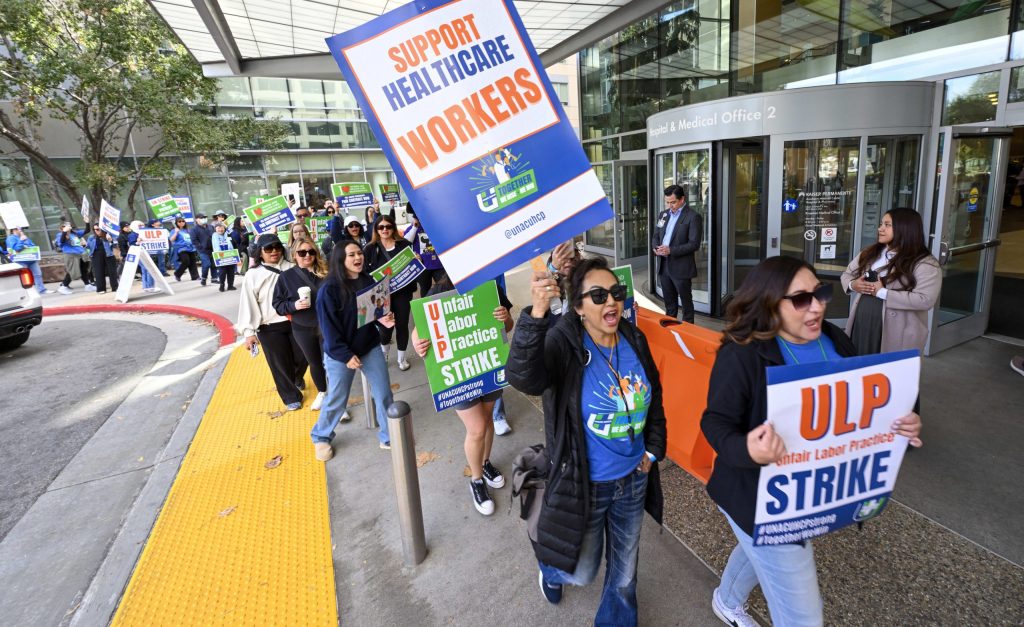
An estimated 31,000 health care workers in California and Hawaii walked off the job on Jan. 26 in their ongoing battle with healthcare giant Kaiser Permanente to address workers’ demands for safe staffing, more manageable workloads, and a livable wage. The United Nurses Associations of California/Union of Health Care Professionals (UNAC/UHCP) strike is now in its third week, and more than 3,000 pharmacy technicians, pharmacy assistants, and clinical laboratory professionals represented by the United Food and Commercial Workers. In this urgent strike update episode, we speak with a panel of UNAC/UHCP members who are all currently on strike at Kaiser Permanente.
Guests:
Sanayo Kondo is a physical therapist at Kaiser Permanente – Redwood City in Northern California, and she is also on the bargaining team for her UNAC/UHCP group.
Kadi Gonzalez is an outpatient Registered Nurse at Kaiser Permanente who works in OB/Gyn care and is on the board of directors for UNAC/UHCP.
Lucky Longoria is a Registered Nurse who works in pediatrics at Kaiser Permanente – Downey in Southern California and previously worked as a travel nurse.
Additional links/info:
United Nurses Associations of California / Union of Health Care Professionals website, Facebook page, and Instagram
UNAC/UHCP Press Release: “Massive Kaiser strike enters third week”
Kaiser Permanente, “Our statement on the UNAC/UHCP strike (Jan. 25, 2026)”
Featured Music:
Jules Taylor, Working People Theme Song
Credits:
Audio Post-Production: Jules Taylor
Transcript
The following is a rushed transcript and may contain errors. A proofread version will be made available as soon as possible.
Maximillian Alvarez:
Alright. Welcome everyone to Working People, a podcast about the lives, jobs, dreams, and struggles of the working class today. Working People is a proud member of the Labor Radio Podcast Network and
by Chris Walker | Feb 12, 2026 | Article, Climate, Climate Crisis, Politics and Movements: US, Reprint, Trump
This story was originally published on Truthout on Feb. 12, 2026. It is shared here under a Creative Commons (CC BY-NC-ND 4.0) license.
On Wednesday, President Donald Trump ordered two executive branch departments to take actions that would increase the use of coal in the United States, despite fossil fuels becoming an obsolete form of energy production that is devastating to the health of the planet.
Under his plan, intended to bolster the dwindling U.S. coal industry, the Department of Defense would purchase electricity from coal-fired power plants. Meanwhile, the Department of Energy will be doling out $175 million in upgrades for six coal plants in coal-rich states, including Kentucky, North Carolina, Ohio, Virginia, and West Virginia.
Trump announced his plans while hosting an event at the White House, where he also received an “Undisputed Champion of Coal” award from a coal-based special interest group.
“Sir, to show our appreciation, the trophy says ‘the undisputed champion of beautiful, clean coal'” pic.twitter.com/D16HNy2CKQ— Aaron Rupar (@atrupar) February 11, 2026
“I will sign an executive order that directs the Department of War [sic] to work directly with coal plants on the new power purchasing agreements, ensuring that we have more reliable power and stronger and more resilient grid power, and we’re going to be buying a lot of coal through the military now,” Trump said during the event.
The president’s executive order, which cites a so-called “national emergency” on energy he signed at the start of his second term, also described increasing the use of coal as “a matter of national security, strategic deterrence, and American energy dominance.”
Experts have decried Trump’s claims that there is an energy emergency.
“We’re the world’s number one exporter