
Trump doesn’t rule out ‘national security emergency for elections’ floated by far-right host
This story originally appeared in Common Dreams on Aug. 11, 2026. It is shared here under a Creative Commons (CC BY-NC-ND 3.0) license.
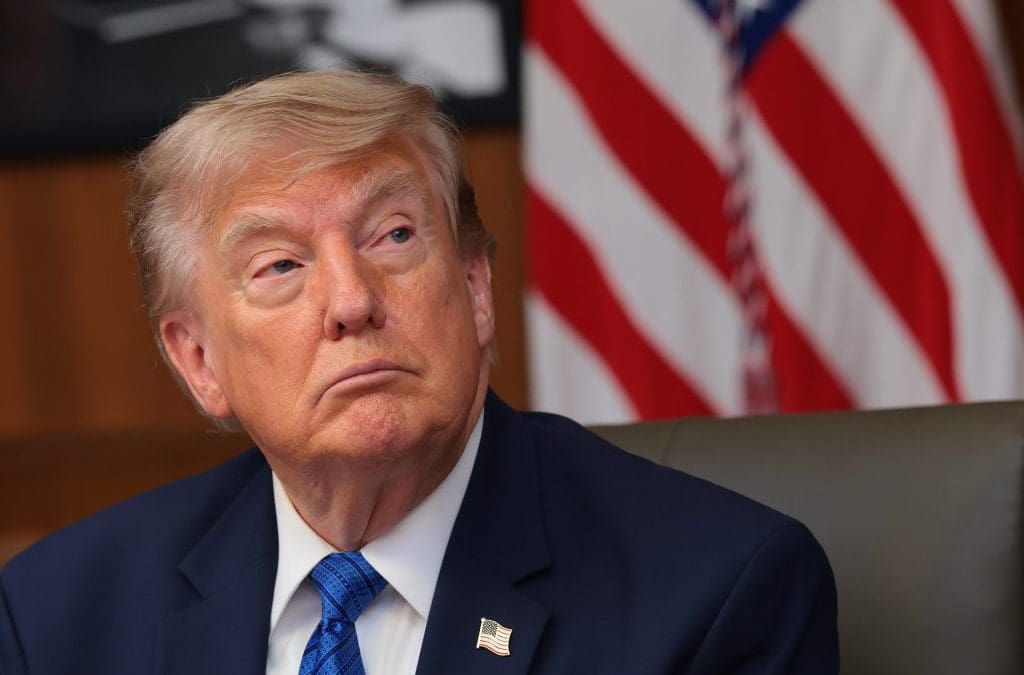
A right-wing talk show host on Tuesday pushed President Donald Trump to declare a “national security emergency” that would let him meddle in the 2026 midterm elections—and the president did not rule it out.
In an appearance on Real America’s Voice, Trump listened as host Wayne Allyn Root rattled off actions he would like to see the president take ahead of the midterms.
“Let me put an idea in your head,” Root told Trump. “Because it’s so hard to get the Senate to do anything, now they’re on recess, they never get anything done. If they never get the SAVE America Act done, you have the right to declare a national security emergency for elections.”
🚨🚨🚨WAYNE ALLYN ROOT: You have the right to declare a national security emergency for elections. If you do this in the next month, we will get photo ID, proof of citizenship, and a limit to mail ballotsTRUMP: Let me just say stranger things have happened. I’ll leave it at… pic.twitter.com/SvXYoYI0lQ— Aaron Rupar (@atrupar) August 11, 2026
Root then told the president that “if you do this in the next month” it would allow for the implementation of photo identification and proof of citizenship requirements, as well as restrictions on mail-in ballots.
“Let me just say that stranger things have happened,” Trump said in response. “I’ll leave it at that.”
The US Constitution does not give the president power to declare a “national emergency” that would allow him to unilaterally rewrite states’ election laws.
Regardless, ABC News reported in February that a group of pro-Trump attorneys were circulating a 17-page draft order that

First came the Flock cameras. Now local cops want autonomous drones.
Foreign oil giant BP locks out workers at its last unionized refinery in USA
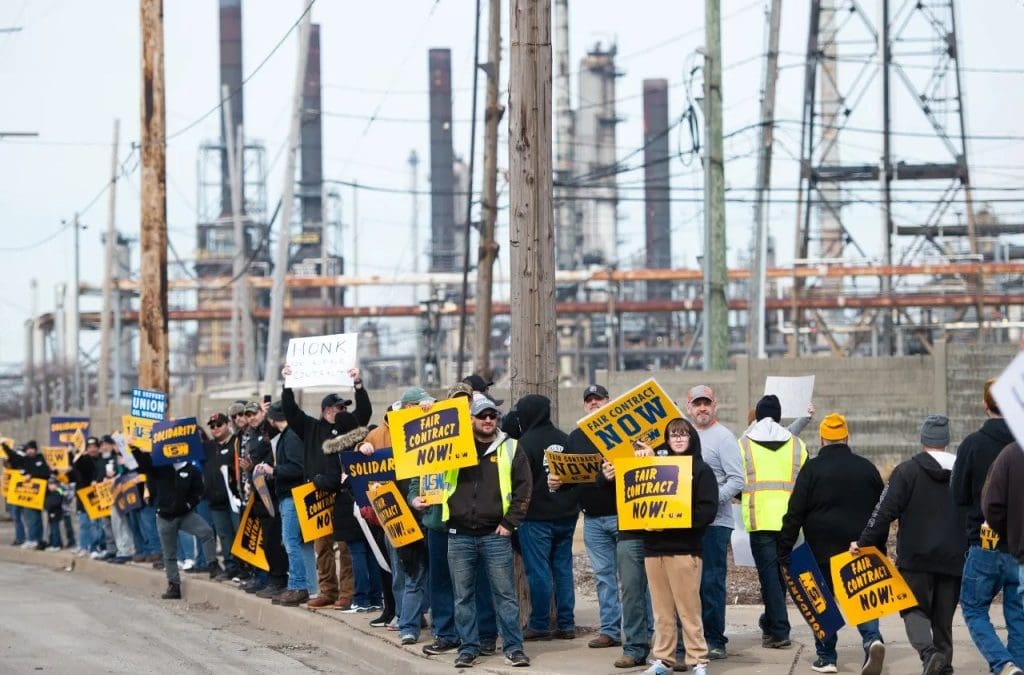
For the last five months, oil giant British Petroleum (BP) has locked 800 workers out of their jobs at a crude oil refinery in Whiting, Indiana. The facility, located on the southwestern shore of Lake Michigan, is BP’s last unionized oil refinery in the United States. BP says it is pursuing “modernized job structures, training, and upskilling,” but workers and their union—United Steelworkers Local 7-1—say that the company has not bargained in good faith, that its contract proposals pose blatant existential threats to workers’ jobs, pay, and collective bargaining rights, and that the company is illegally trying to crush the union out of existence with the lockout. In this episode of Working People, we speak with three locked out workers at the BP oil refinery in Whiting: Eric Schultz, president of USW Local 7-1; Leno Miller, assistant griever for USW Local 7-1; Tim Powell, a 19-year member of USW Local 7-1, and a volunteer for the lockout assistance committee.
Additional links/info:
USW Local 7-1 Official Lockout Update/Support Page
USW Local 7-1 Facebook page and Instagram
Sarah Lazare, Workday Magazine / The American Prospect, “Locked out refinery workers say BP is trying to ‘starve us,’ crush union”
Maximillian Alvarez, Working People / TRNN, “I survived the rig explosion that caused the Deepwater Horizon oil spill. This is what I saw”
Featured Music:
Jules Taylor, Working People Theme Song
Credits:
Audio Post-Production: Jules Taylor
Transcript
The following is a rushed transcript and may contain errors. It will be updated.
Maximillian Alvarez:
Alright. Welcome everyone to Working People, a podcast about the lives, jobs, dreams, and struggles of the working class today. Working People is a proud member of the Labor Radio Podcast Network and is brought to you in partnership with In These
Economist Baker explains: AI bubble is about to burst
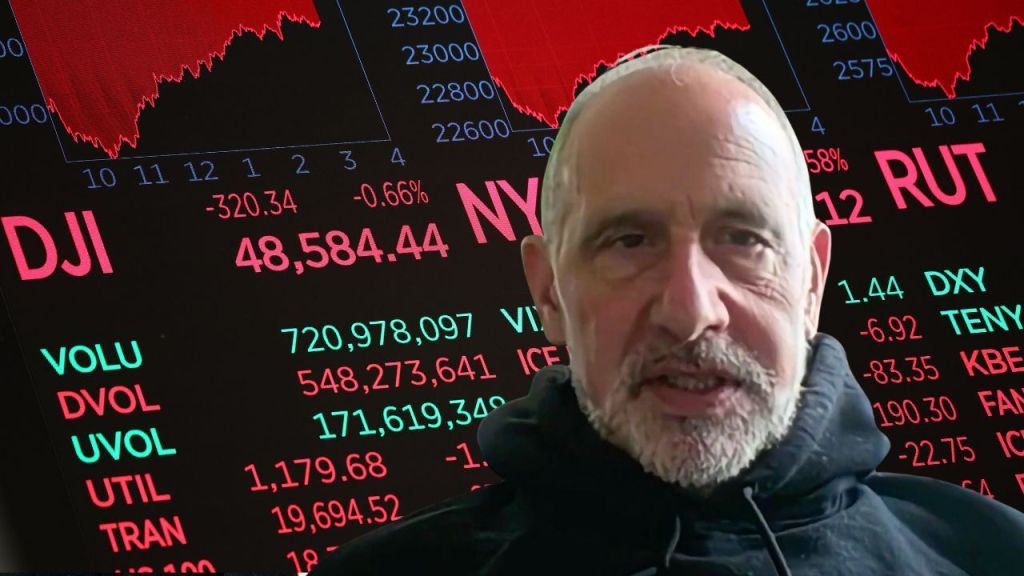
Economist Dean Baker (Center for Economic and Policy Research, author of Rigged and creator of the AI Bubble Monitor) joins Taya Graham and Stephen Janis to break down why the productivity data doesn’t match the hype, why Palantir’s CEO seemed to be panicking on live TV, why Bernie Sanders’ AI sovereign wealth fund idea might backfire, and what signs to watch for if this bubble bursts.
Credits:
Transcript
The following is a rushed transcript and may contain errors. It will be updated.
Taya Graham:
Hello, my name is Taya Graham and welcome to the Inequality Watch Report, a show that examines government policy and action through the lens of extreme economic inequality, the existential issue of our time. Today, we’re going to discuss a technology which we’ve been told will transform our lives, an invention that has been touted as the ultimate arbiter of our collective futures, whether we like it or not. Of course, I’m talking about artificial intelligence, but with the promise also comes doubt and questions and most of all, a lack of clarity on how we’ll impact the working people of this country. AI leaders have casually warned us that their products could eliminate 40 to 50% of white collar jobs more than the losses in the Great Depression. They’ve promised that technology will be so disruptive that even staunch capitalists have discussed providing a UBI or universal basic income for Americans who will be left out.
They’ve borrowed money at such predigious rates to fund data centers that even Wall Street is beginning to just say no. And now some of the biggest names are saying it’s not working out as
Senators urge regulator to ‘crack down on prediction markets’ amid wildfire betting
This story originally appeared in Common Dreams on AUg. 04, 2026. It is shared here under a Creative Commons (CC BY-NC-ND 3.0) license.
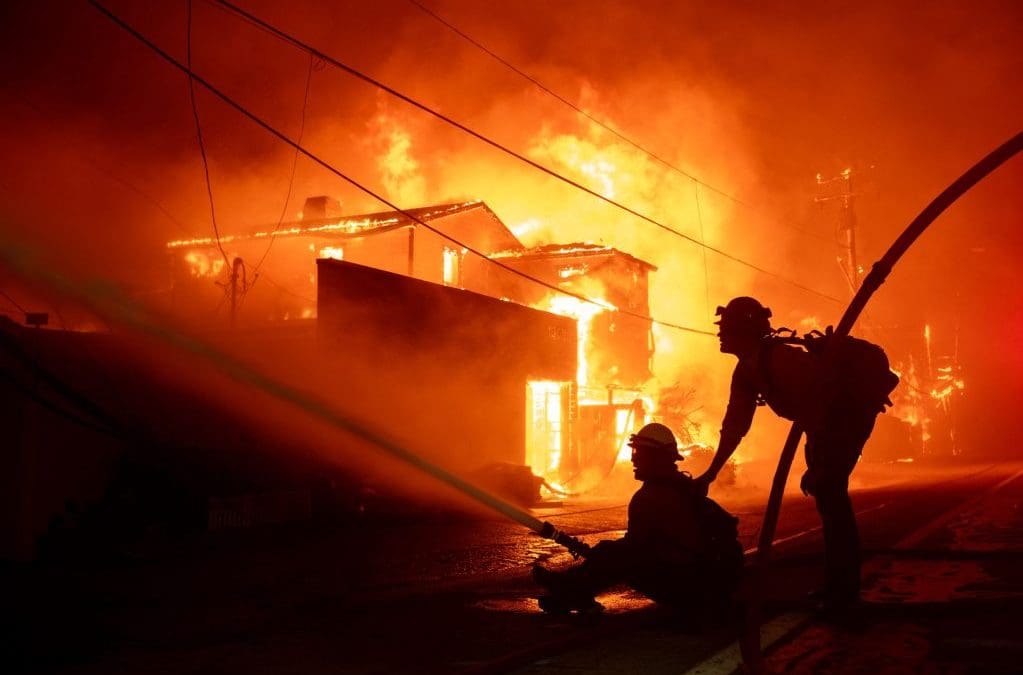
As wildfires ravaged large swaths of the Western US, a group of Democratic senators on Monday called on federal regulators to rein in prediction markets offering contracts tied to such disasters, warning that turning climate-fueled extreme weather into financial wagers creates “perverse incentives” that could motivate arson and other crimes.
In a letter to Commodity Futures Trading Commission (CFTC) Chair Michael Selig, Sens. Jeff Merkley (Ore.), Alex Padilla (Calif.), Jeanne Shaheen (NH), Adam Schiff (Calif.), Jacky Rosen (Nevada), Catherine Cortez Masto (Nevada), Martin Heinrich (NM), Ron Wyden (Ore.), and Amy Klobuchar (Minn.) wrote that “prediction markets have been enabled to expand rapidly, increasingly inviting speculation on war, political violence, disasters, and public emergencies that raise ethical and public policy concerns.”
These markets risk creating perverse incentives, undermining public trust, and commodifying human suffering in ways that warrant careful scrutiny,” the lawmakers continued. “Recent public reports have highlighted how Polymarket—the largest prediction market platform in the world—accepted more than $1.2 million in bets surrounding the Palisades and Eaton fires in January 2025. These fires devastated the Los Angeles area, claiming the lives of 31 people and destroying more than 16,000 structures.”
“Offering bets on destructive wildfires threatens to minimize communities’ suffering all so the rich and powerful can profit,” the letter argues. “There’s also the heightened risk—according to state and local fire officials—that individuals could be tempted to commit arson in order to make sure their bets are successful.”
Allowing prediction markets on wildfires is outrageously dangerous and will incentivize bad actors to spread or even start fires themselves. Frankly, this is betting on the suffering of our neighbors