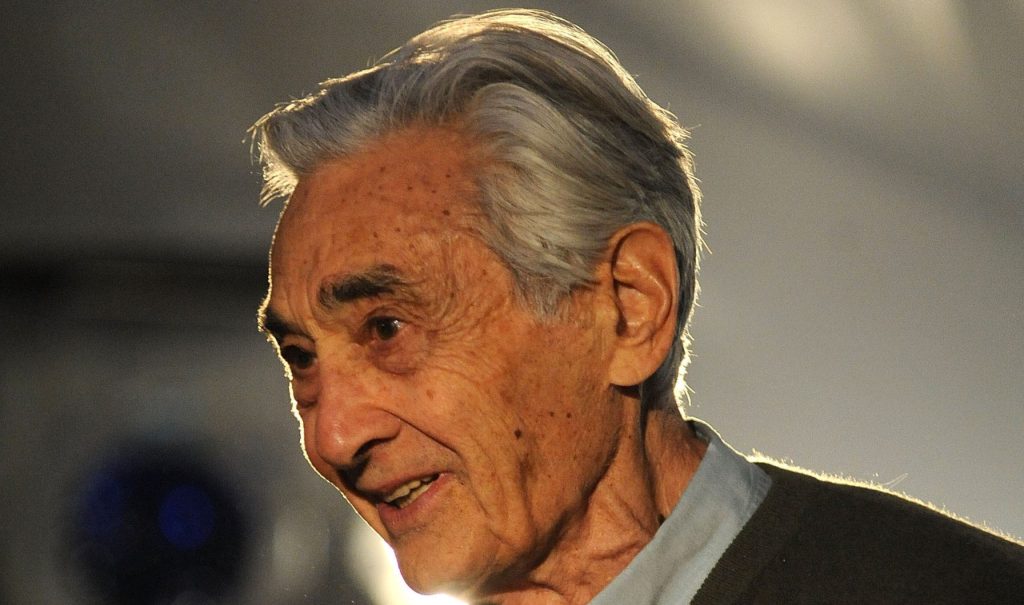
by Maximillian Alvarez | Sep 29, 2026 | education, Gaza, ICE, Israel, Palestine, Politics and Movements: International, Politics and Movements: US, video
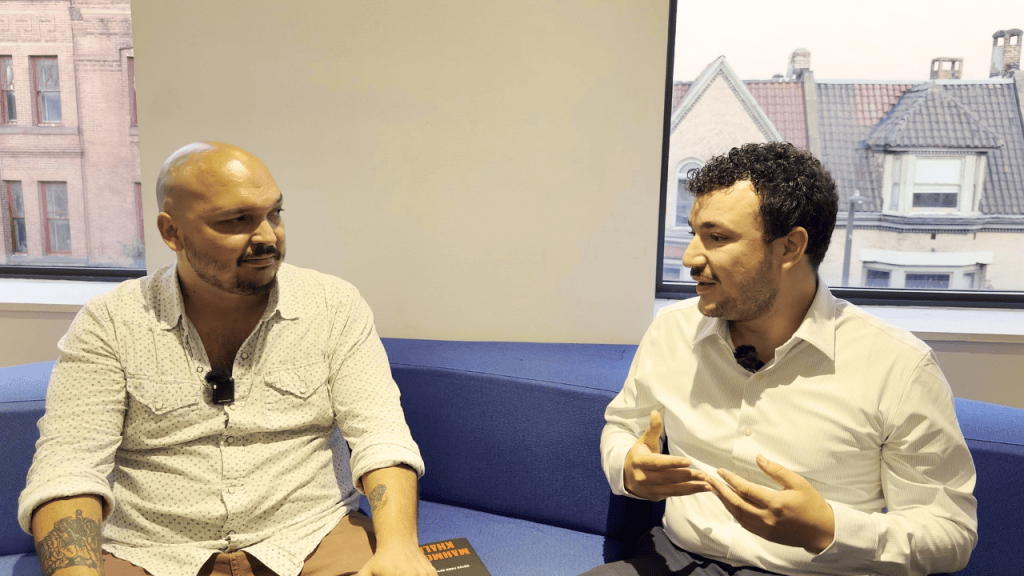
After being abducted by plainclothes ICE agents from his New York apartment building in March of 2025 and locked away in immigration jail for 104 days, Mahmoud Khalil has been freed and reunited with his family. But Khalil, a former Columbia University graduate student who was heavily involved in the student-led justice for Palestine movement, is still being targeted by the Trump administration and still faces the possibility of deportation. In this exclusive interview, TRNN Editor-in-Chief Maximillian Alvarez sits down with Khalil to speak about his new book, “No Land to Stand On,” and his continuing fight for freedom and justice.
Credits:
Post-Production: David Hebden
Transcript
The following is a rushed transcript and may contain errors. It will be updated.Maximillian Alvarez:
I’m here at the Parkway Theater and I’m sitting with Mahmoud Khalil, freed political prisoner and former Columbia graduate student who was heavily involved in the student-led Justice for Palestine movement and who because of that was abducted by plainclothes ICE agents from his New York apartment building in March of 2025 and locked away in immigration jail for 104 days. But he’s here with us now. Brother Mahmoud, welcome home, man.
Mahmoud Khalil:
Thank you for having me, Max. Thank you so much.
Maximillian Alvarez:
It’s such an honor to be here with you in person. I don’t even know how you begin to answer this question, but I can’t begin without asking it. How are you and your family doing after enduring this horrific nightmare that is sadly still not over?
Mahmoud Khalil:
We’re doing all right and we’re taking it day by day, really sort of surviving under the threat of deportation at any second or worse
by Maximillian Alvarez | Sep 28, 2026 | ICE, Maryland, police accountability, Politics and Movements: US, Prisons and Policing, Racial Justice, video
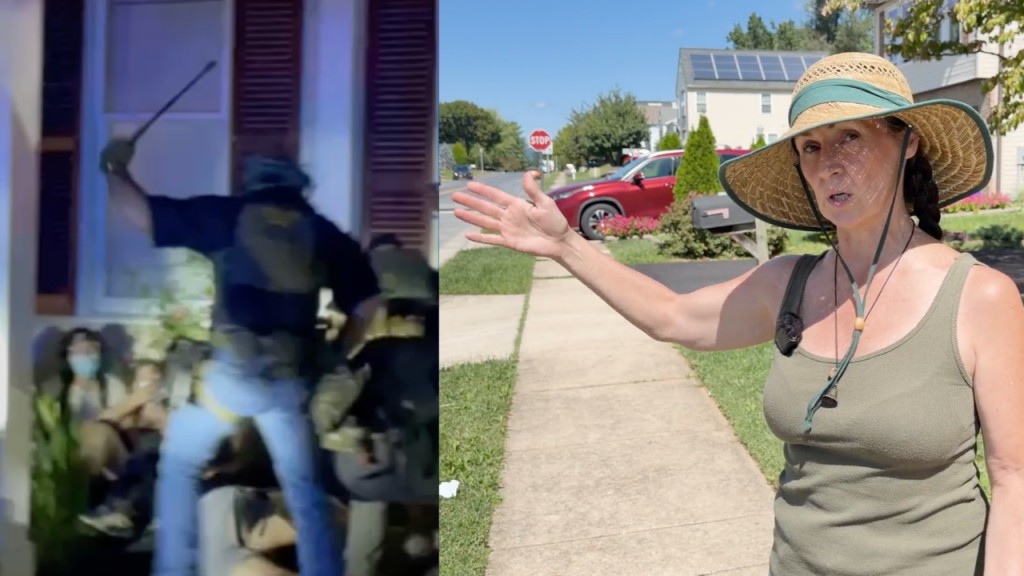
Residents are shaken and demanding answers after ICE agents terrorized a quiet, suburban neighborhood in Frederick, Maryland, earlier this month. On September 4, federal agents swarmed the Tasker’s Chance neighborhood in West Frederick, invaded the home of one family, and eventually left without making any arrests. ICE agents were filmed beating peaceful protestors and menacingly driving their unmarked cars onto sidewalks and private property while local police officers stood by and watched. In this on-the-ground report, TRNN takes you to the very spot in Frederick where these terrifying events transpired, and we speak with an eyewitness who saw everything.
Credits:Videography: Maximillian AlvarezPost-Production: Cameron Granadino
Transcript
The following is a rushed transcript and may contain errors. It will be updated.Reporter 1:
Breaking story in Frederick. We have been told that ICE agents have been camped out in the Taskers Chance neighborhood. Neighbors
Reporter 2:
Say ICE has made a move on one home under the cover of night. That’s exactly what you are seeing right now.
Soolah:
There were protestors next to me. There are protestors across the street. And then I turned to this car and it was right here. And then I heard out of the side, the siren go off and I turned and here’s this car coming at me from on the sidewalk. By
Reporter 1:
Friday night, protestors were chanting on the sidewalk, also trying to block the street and a home they believed ICE was targeting. That’s when Santos says ICE became aggressive. This video shows when an ICE officer drove up on the sidewalk toward protestors. Santos and local activist Sula Kemp say ICE officers became violent.
Maximillian Alvarez:
I’m standing here in Frederick, Maryland, just
by Maximillian Alvarez | Sep 23, 2026 | AI, baltimore, Economy, Politics and Movements: US, video
Editor’s Note: Council Bill 26-0174 (data centers) will get another public hearing in front of the Baltimore City Council’s Land Use & Transportation Committee on the 4th floor of City Hall on the morning of September 24.
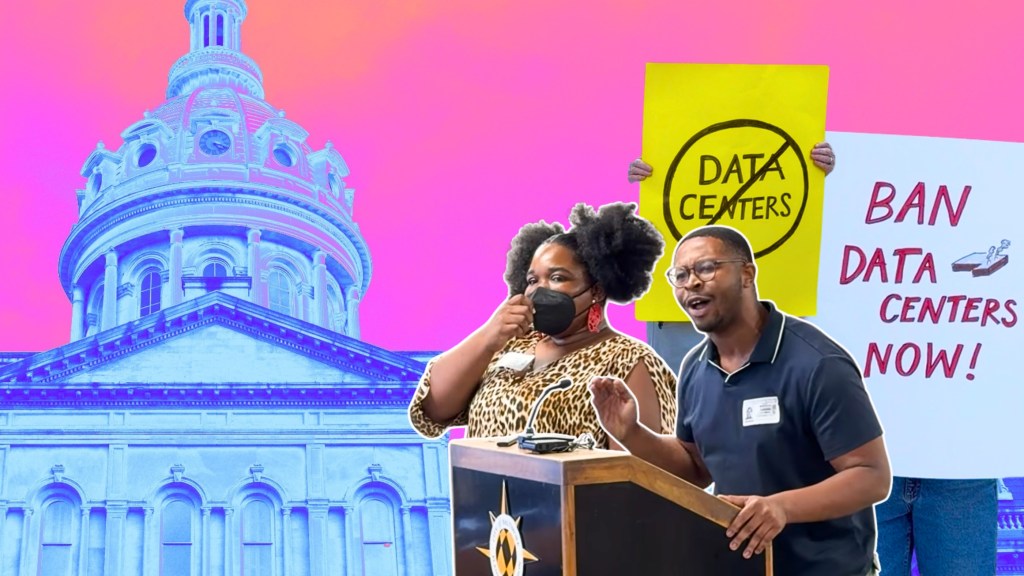
Baltimore, Maryland, currently has a moratorium on new data center development, but a proposed City Council bill has residents nervous that the door is creaking open for data centers to come into the city—and that City Council views this as “inevitable.”
Council Bill 26-0174, sponsored by City Councilmember Phylicia Porter, would require new data center projects in Baltimore to go through a conditional use approval process that includes a health equity assessment. Residents opposed to the bill say that while the bill may be well intentioned, they want a full data center ban, not stricter guidelines for data centers operating in Baltimore.
In this on-the-ground report, TRNN takes you inside the August 27 Baltimore City Planning Commission public hearing on Council Bill 26-0174:
TRNN also published a full, unedited recording of the August 27 Baltimore City Planning Commission public hearing on Council Bill 26-0174, which is free and available to the public on our YouTube channel:
Credits:
Videography: Maximillian Alvarez
Post-Production: Dave Hebden, Cameron Granadino
Transcript
The following is a rushed transcript and may contain errors. It will be updated.
Speaker 1:
We all are well aware that we’re not dealing with good faith actors when it comes to the people who want to build data centers.
Speaker 2:
I currently work at a data center. That doesn’t mean that I approve of data centers. Every
Speaker 3:
Every time it storms, it seems that a bunch of lights go down in the city. I’m confused why we’re
by Mansa Musa | Sep 22, 2026 | elections, midterms, Politics and Movements: US, Rattling the Bars, video
What will a DSA-led state look like — will it back defund and community control of police, or bow to the powers that block affordability? Lawrence Grandpre, political commentator for Leaders of a Beautiful Struggle, explores this question in his recent Baltimore Times article, “The Dangers of ‘Law and Order’ Leftism: Toward a Black Power Public Safety,” asking whether DSA will embrace the outmoded Law and Order politics that fueled America’s prison boom. As officials like AOC and Mamdani backtrack on defunding police — one of the biggest carceral drains on housing, healthcare, and education funding — Grandpre sits down with former political prisoner and Rattling the Bars host Mansa Musa to unpack these contradictions ahead of the midterms, where Democrats hope to retake the House and Senate. Tune in for an unflinching look at the Left’s relationship to the state and to law and order.
Related Links:
The Dangers of “Law and Order” Leftism- Toward a Black Power Public Safety
Leaders of a Beautiful Struggle Facebook, X, Instagram, Bluesky, LinkedIn, Youtube
Credits:
Production/Post-production: Cameron Granadino
Transcript
The following is a rushed transcript and may contain errors. It will be updated.
Mansa Musa:
Welcome to Rattling the Bars. I’m your host Mansa Musa. Today I’m joined by Lance Grandpre, political commentator with Leaders of a Beautiful Struggle, to discuss his recent article for Baltimore Times, “The Dangers of ‘Law and Order’ Leftism—Toward a Black Power Public Safety.” Thank you for joining me, Lance.
Lawrence Grandpre:
Thank you for having me.
Mansa Musa:
Alright, so let’s start like this here. At one point we had in 2020 where you had a push for the abolishment of prisons and to dismantle the police system as
by Ruwaida Amer, Mahmoud Al Mashharawi, Belal Awad, and Leo Erhadt | Sep 21, 2026 | documentary, Gaza, Israel, Palestine, Politics and Movements: International, video
In Gaza, everyone is struggling to survive. For disabled people in Gaza, that struggle is multiplied. Rabab Nawfal and Suha Maqat, both wheelchair users, were champion athletes on Palestine’s national teams before Israel’s US-backed genocidal war. Two days before it began, they were playing qualifiers to represent Palestine abroad.
In this TRNN documentary report, they describe living through famine twice, fleeing bombardment in wheelchairs that no longer work, and asking for help that never comes. With 81% of Gaza’s roads damaged or destroyed and the UN documenting thousands of amputations, Israel is not only making life impossible for disabled Palestinians; it is creating a new generation of them.
Editor’s Note: This documentary report was filmed in Gaza City three weeks before the ceasefire in Gaza was shakily implemented beginning on October 10, 2025. Since the “ceasefire” began, Israeli forces have killed over 1,300 Palestinians, including 301 children, according to the Gaza Ministry of Health.
Credits:
Producers: Belal Awad, Leo Erhardt
Videographers: Ruwaida Amer, Mahmoud Al Mashharawi
Video Editor: Leo Erhardt
Transcript
Suha Maqat, Palestinian Athlete:
I’m in a wheelchair—how am I going to escape?
Rabab Nawfal, Palestinian Athlete:
There were days when we ate animal food, bird food.
Suha Maqat, Palestinian Athlete:
I lost my eye. What more do you want?
Rabab Nawfal, Palestinian Athlete:
My dreams have been shattered.
Narrator:
In Gaza, everyone is struggling to survive. But for people with disabilities, that struggle is multiplied. Rabab Nawfal and Suha Maqat – both wheelchair users – were champion athletes before this war.
Rabab Nawfal, Palestinian Athlete:
I’m one of those people who didn’t go to the south. I lived through famine twice. I lived it twice. No one asked after me. There were days when we didn’t
by Maximillian Alvarez and Dave Zirin | Sep 18, 2026 | Media Criticism, Politics and Movements: US, The Cultural Front, Trump, video
Long after his death in 2010, the books and speeches of Howard Zinn are frequently targeted by right-wing critics, MAGA book-bans, and fundamentalist politicians. In 2020, President Trump called out Zinn by name from the White House lawn, smearing Zinn’s work as “propaganda… that tries to make students ashamed of their own history.” So, who was Howard Zinn? And why are his critics so determined to keep his work from the public? In this live event, hosted at Red Emma’s Cooperative Bookstore and Coffeehouse in Baltimore, Maryland, TRNN Editor-in-Chief Maximillian Alvarez speaks with author and TRNN contributor Dave Zirin about his latest book, “The People’s Historian: The Outsized Life of Howard Zinn.”
Credits:
Studio Production / Post-Production: David Hebden
Transcript
The following is a rushed transcript and may contain errors. It will be updated.
Howard Zinn:
Protest will always be useful. Protest will always be important. Protest always looks futile at the time that it takes place, but protest mounts up. If they though protest was futile, they wouldn’t send the police out every time. There’s a demonstration. Have you noticed that you set up a picket line of somewhere of seven people and 12 policemen show up? They must worry about protest because they know that small protests lead to large ones.
Maximillian Alvarez:
All right. Well, thank you all. It is such an honor to be here with y’all tonight in Red Emma’s cooperative bookstore and coffee house in our great city of Baltimore. Give it up. And I am really, really honored and excited that we get to chat to the man, the myth, legendary sports writer, book author, documentary maker, political thinker, a true