by Adam Johnson | Sep 15, 2026 | Article, Israel, Media Criticism, Opinion, Palestine, Politics and Movements: International, Politics and Movements: US
Once again, anti-semitism is being cynically—and falsely—redefined in the press and broader Discourse as “pointing out uncomfortable facts about the nation state of Israel.”
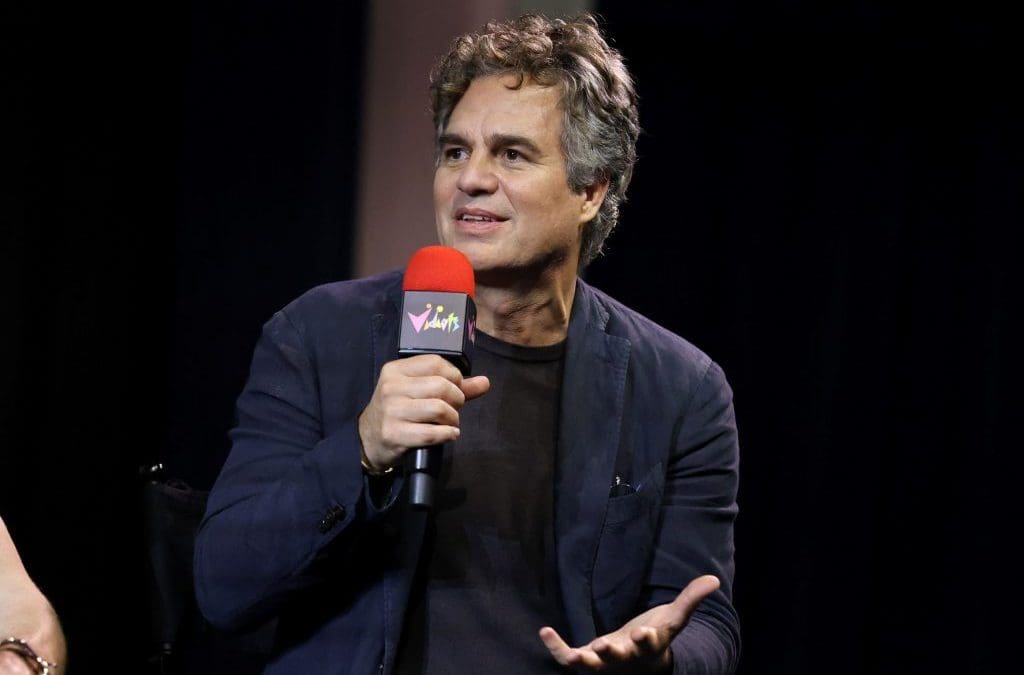
This past weekend, the Israel Crybully Lobby, using a familiar script I’ve detailed before, led a smear campaign against actor Mark Ruffalo because he had the temerity and integrity to note that the family vying to control not only 60 Minutes and CBS News, but CNN and HBO, is a committed and open supporter of Israel and its genocidal military.
Ruffalo is leading a broad coalition of antitrust activists, creatives, and filmgoers to oppose the pending Skydance Paramount-Warner Brothers Discovery merger and, in doing so, violated an unwritten rule against noting that the father-son duo behind the merger, David and Larry Ellison, are well-documented and open zionist advocates that not only lobby for and support Israel, but “privately” donate to their military. A military that—it’s worth noting—Human Rights Watch, Doctors Without Borders, B’Tselem, Physicians for Human Rights Israel, OxFam, the International Association of Genocide Scholars, and dozens of other humanitarian and human rights organizations have determined is committing genocide in Gaza. Ruffalo also pointed out that the Ellisons’ $400 billion fortune was largely built on military and surveillance technology from Oracle that is used, in part, to surveil, imprison, and kill Palestinians, as well combat opposition to Israel stateside.
Ruffalo simply noted the open and well-documented ideological commitments that the Ellisons themselves have long championed.
Predictably, the Israel Crybully Lobby and its one-note propaganda organs in the nonprofit and media world responded to these comments by accusing Ruffalo of “antisemitism” and engaging in “tropes”—many of which are not, of course,
by Taya Graham and Stephen Janis | Sep 14, 2026 | Media Criticism, police accountability, Police Accountability Report, Prisons and Policing, video
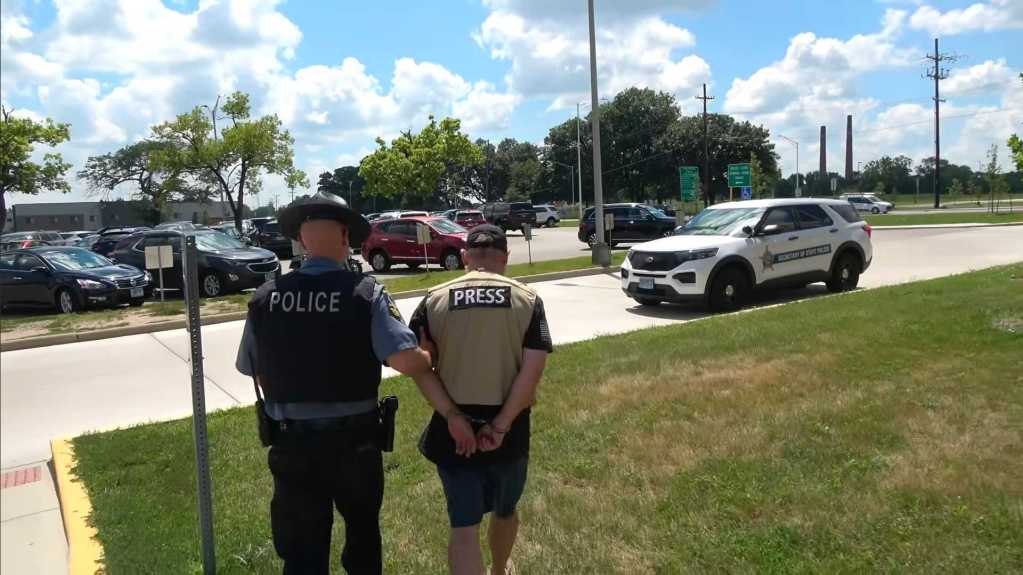
Something strange is happening to the cop-watching community on YouTube. The obvious explanation might be YouTube’s enforcement against repetitive, mass-produced or AI-generated content. But the creators we’re investigating aren’t AI channels. They’re filming police, publishing encounters with public officials and, in some cases, using body-camera footage. So what is happening?
In this live stream, cop watchers and First Amendment activists Rights Crispy and Long Island Audit debate who’s behind this demonetization wave.
Credits:
Pre-production: Taya Graham/Stephen Janis
Written by: Stephen Janis
Production: Cameron Granadino/David Hebden/Maximillian Alvarez
Transcript
The following is a rushed transcript and may contain errors. It will be updated.
Taya Graham:
Hello, my name is Taya Graham and welcome to this breaking news edition of our Police Accountability Report livestream. Now, we decide to do the show because there have been serious widespread disruptions across the 1A and Copwatcher YouTube community, namely a broad and still unexplained demonetization of an array of channels related to both copwatching and First Amendment auditing. Whether this is targeted, random, part of YouTube’s overhaul to its partnership system, what it means for some very popular activists is what we will unpack today. And to help us, we’ll be joined by two influential copwatchers, Long Island Audits, also known as Sean Paul Reyes and Wright’s Crispy or Finn Vargas. Both have been instrumental members of the Copwatcher movement and both have been affected by YouTube’s mysterious move to end their ability to monetize their content, at least on YouTube for now. But before I get to them, I want to check in with my reporting partner, Steven Janis, who has been researching and reporting on what’s happening.
So Stephen, thank you for joining
by Adam Johnson | Aug 12, 2026 | Article, Democratic Party, elections, Media Criticism, midterms, Opinion, Politics and Movements: US
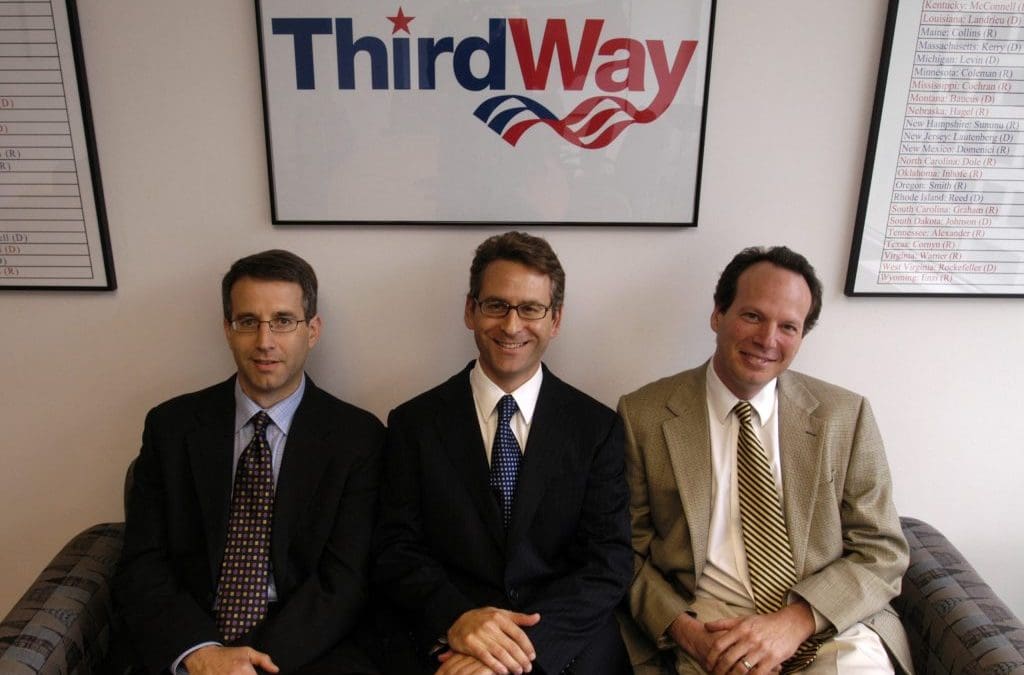
As progressive, DSA, and DSA-adjacent candidates win primaries throughout the US, corporate media is rushing to prop up their favorite “centrist” and “moderate” critics—who, ostensibly, are just looking out for the wellbeing of the Democratic Party—to explain why these candidates people are voting for are actually dangerous and “unelectable.” What the media is refusing to do, on an institutional level, is disclose the glaring conflicts of interests these groups—backed by billionaires, health insurance giants, pro-Israel lobbying firms, and massive corporations —would have in attacking candidates who undermine their sponsors’ bottom lines and ideological agendas.
As progressive, DSA, and DSA-adjacent candidates win primaries throughout the US, corporate media is rushing to prop up their favorite “centrist” and “moderate” critics—who, ostensibly, are just looking out for the wellbeing of the Democratic Party—to explain why these candidates people are voting for are actually dangerous and “unelectable.”
As I noted in TRNN in June, certain personalities and parties with blatant conflicts of interest are being boosted by US media—presented as mere neutral observers who are Deeply Concerned About Electability—to dump on insurgent candidates such as Claire Valdez, Darializa Avila-Chevalier, Melat Kiro and, most recently, Michigan Democratic Senate nominee Abdul El-Sayed. El-Sayed’s primary victory in Michigan signaled serious upward momentum for the latest progressive insurgency within the Democratic Party—and triggered a PR crisis for the Democratic establishment. That momentum was stemmed this week, if only for now, as DSA-endorsed candidate for Wisconsin Governor Francesca Hong was narrowly defeated—a defeat that was reportedly due, in part, to voter concerns over “electability.”
But who shapes “electability” perceptions in our media?
Let’s examine a recent article in The New York Times,
by Adam Johnson | Jul 8, 2026 | Article, Israel, Media Criticism, Opinion, Palestine, Politics and Movements: International, Politics and Movements: US
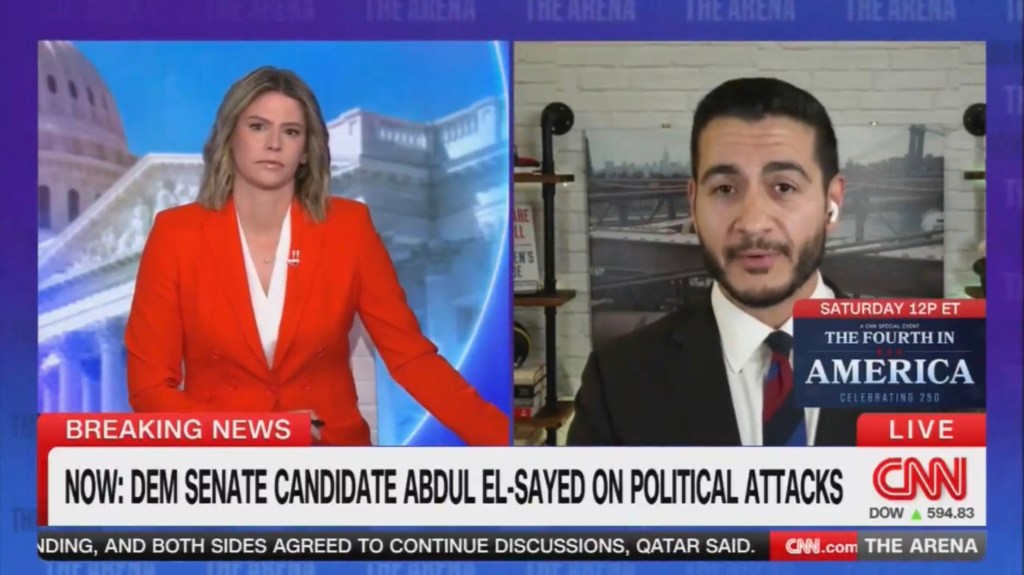
While he was being grilled by CNN over his positions on Israel this past Thursday, candidate for the Democratic nomination for Michigan’s Senate seat, Abdul El-Sayed, was asked the bog-standard cable news question for anyone not on program with the pro-Israel Washington consensus—Do you think Israel has a right to exist?—three different times. It’s a ritual so routine one could hardly notice the exchange, but there was something in El-Sayed’s reply that exposed how facile this line of questioning is and that is worth examining in its own right. He responded, in part, by noting that “nobody has ever asked [him] if [he] thinks Palestine has a right to exist.” Watch the full exchange below.
Hunt: Do you believe Israel has a right to exist?El-Sayed: Now the question about a right to exist is interesting because nobody’s ever asked me whether or not I believe Palestine has a right to exist. Israel exists. The question is whether or not we want a politics where our… pic.twitter.com/Utr3kRQKJd— Acyn (@Acyn) July 2, 2026
It was a throw-away line before he moved on to his long, fairly pointed, reply, but it’s an essential point, and worth making. And it is an empirical question one can survey and analyze. So, does US media ever ask politicians if they think Palestine has a right to exist? The answer: never.
A survey of the New York Times, Washington Post, Wall Street Journal, Politico, USA Today, Fox News, MSNBC/MSNOW, and CNN over the past 10 years shows that not a single candidate for office has ever been asked by a cable news anchor or reporter if “Palestine has a right
by Adam Johnson | Jun 26, 2026 | Article, elections, Israel, Media Criticism, Opinion, Palestine, Politics and Movements: US
It’s simply taken for granted in US legacy media that “left-wing/progressive” electeds are driven by rigid ideology while centrists are motivated by cold, calculated, and semi-scientific concern with How To Defeat Republicans. This is a premise basically no one in our media challenges. It is asserted as pure dogma that “centrist” or “moderate” Democrats are only “centrist” or “moderate” because they are forced to be by electoral realities, and thus every position they advance is not the end result of donor pressure or class interest, but a good-faith, totally organic demand from purple-area voters they must channel if they want to “take back Congress.”
Never is this dynamic more evident in media coverage than after the left-wing flank of the party has the kind of electoral success they saw this past Tuesday, when self-identified Democratic Socialist candidates scored major victories in New York City and state office. Immediately, before the votes were even counted, corporate media rushed to take the predictable angle, “Does electing far left-ideologues undermine Democrats’ ability to win in November,” because it’s simply taken for granted that left-wing policy perspectives are mutually exclusive with “electability.”
Leading the charge was, as always, the New York Times. “Democrats find themselves squeezed by competing forces,” the paper lamented. “The party’s leaders in Washington are pushing for moderate candidates who they hope will be competitive in states and areas that have been inhospitable to Democrats in recent years. But primary voters in New York and other recent contests are moving in the opposite direction, increasingly turning to progressives and even socialists who excite the base.”
It’s simply taken for granted that left-wing policy perspectives
by Mansa Musa | Jun 23, 2026 | baltimore, Media Criticism, Policing, Politics and Movements: US, Prisons and Policing, Rattling the Bars, video
A new, thought-provoking documentary hits theaters this summer. Beyond the Wire, by filmmaker and researcher Dr. S. Rasheem, offers a powerful counternarrative to the popular crime series The Wire. In this exclusive, one-on-one interview between Dr. Rasheem and Rattling the Bars host Mansa Musa, they explore how her background in community organizing compelled her to tell a different story of Baltimore—one focused on the boots-on-the-ground activism that defies the narrative of a hopeless, crime-ridden city in need of over-policing. Premiering this June, Beyond the Wire is already being hailed by critics and organizers alike as an indispensable representation of “The Greatest City in America.”
Credits:
Producer / Videographer / Editor: Cameron Granadino
Transcript
The following is a rushed transcript and may contain errors. It will be updated as soon as possible.
Mansa Musa:
Welcome to this edition of Rattling the Bars. I’m your host, Mansa Musa. A new documentary Beyond the Why, which provides a powerful counter narrative to the popular crime series, The Wire is premiering this month. Today I’m honored and joined by the filmmaker, Dr. S. Rasheen. Welcome to the show, Dr. Rashid.
Dr. S. Rasheem:
Thank you so much for having me. I’m really excited to be here. All
Mansa Musa:
Right tell our audience a little bit about yourself and more importantly, your background and community organizing.
Dr. S. Rasheem:
Yeah. So my background as it relates to this work, how I came to even being able to a point where I’m doing filmmaking, I’ll also share that. So I am a social scientist by socialization and training. So it just means that I largely study people, large populations of people. The people that I particularly focus