by Maximillian Alvarez | Jun 12, 2026 | Gaza, Israel, Media Criticism, Palestine, Podcast, Politics and Movements: International, Politics and Movements: US
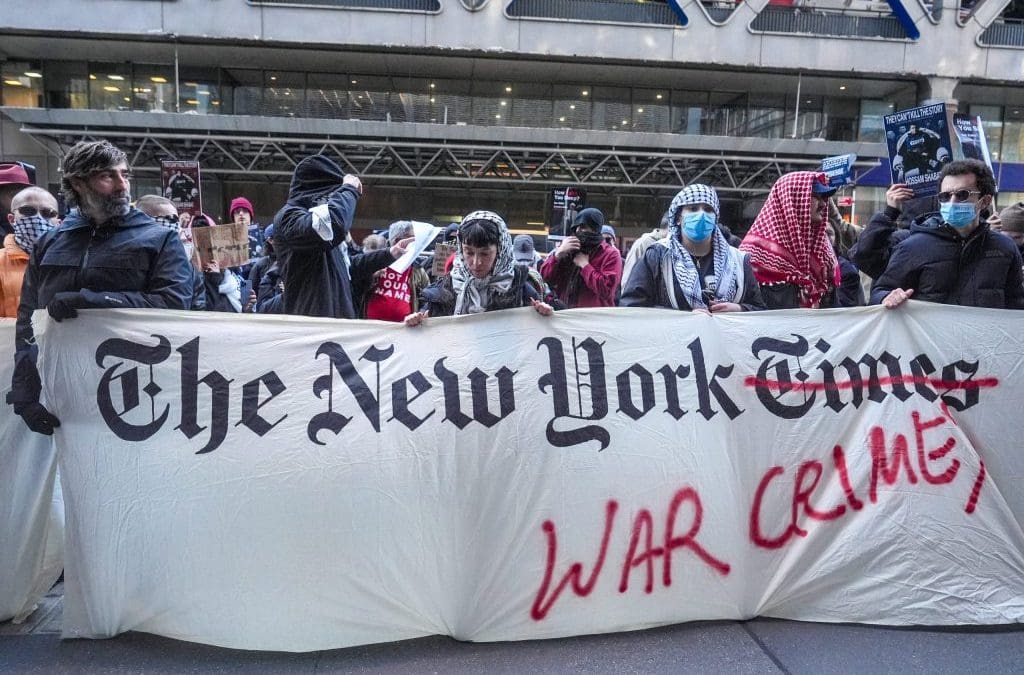
As a writer, podcaster, and columnist for TRNN, Adam Johnson has been one of the fiercest, sharpest, and most consistent critics of legacy and Western media’s roles in laundering, obscuring, justifying, and manufacturing consent for crimes against humanity committed in the Gaza genocide by Israel and with the full support of the United States. But critique is not enough anymore; to ensure that these horrific crimes don’t continue, we need accountability for the political actors and media organizations that made it happen, or helped. At a live event hosted by Red Emma’s Cooperative Bookstore and Coffeehouse in Baltimore, Maryland, TRNN Editor-in-Chief Maximillian Alvarez speaks with Johnson about his new book, How to Sell a Genocide: The Media’s Complicity in the Destruction of Gaza, and about how to hold media organizations accountable for their roles in manufacturing the conditions for genocide.
Guests:
Adam Johnson is a writer, media critic, co-host of the podcast Citations Needed, and a columnist for TRNN. He is the author of the book How to Sell a Genocide: The Media’s Complicity in the Destruction of Gaza.
Credits:
Audio Post-Production: Alina Nehlich
Transcript
The following is a rushed transcript and may contain errors. It will be updated as soon as possible.
Maximillian Alvarez:
Welcome back to The Real News Network. I’m Maximillian Alvarez. As a writer, podcaster and a columnist for us here at The Real News, Adam Johnson has been one of the fiercest, sharpest and most consistent critics of legacy in Western media’s roles in laundering, obscuring, justifying and manufacturing consent for crimes against humanity committed in the Gaza genocide by Israel with the full support of the United States. Crimes committed in our
by Adam Johnson | May 22, 2026 | Article, Economy, Media Criticism, Opinion, Politics and Movements: US
by Marc Steiner | May 21, 2026 | Article, Gaza, Israel, Media Criticism, Palestine, Podcast, Politics and Movements: International, Politics and Movements: US, The Marc Steiner Show
by Adam Johnson | Apr 30, 2026 | Article, Israel, Media Criticism, Opinion, Politics and Movements: US, The Cultural Front
The Atlantic, along with the New York Times, is the quintessence of elite liberal opinion. It is popular with Democrat-aligned readers who are high-income and high-status, and shapes the Acceptable Range of Discourse on the American left, such as it is. What it publishes matters, but—more importantly—it matters to people who matter. Thus, it’s useful to, on occasion, stop and highlight their editorial priorities.
In the past two weeks, the Atlantic has published five stories with substantive discussion of left-wing Twitch streamer Hasan Piker, adding to a broader media outrage over the streamer’s alleged taboo comments on Hamas and shoplifting:
Israel Moderates Are Losing the Democratic Party (April 16) by Jonathan Chait: “The Democrats’ establishment opposes terrorism and backs a two-state solution; Piker and his allies want to cast that position as de facto support for the status quo, which is a single state controlled by Israel.”
The Problem With Hasan Piker’s Einstein Story (April 18) by Yair Rosenberg: “Critics on the right and left highlighted his refusal to condemn Hamas.”
Something Is Happening to America’s Moral Code (April 24) by Graeme Wood: “Piker said he would steal cars, ‘if I could get away with it.’”
Theft Is Now Progressive Chic (April 24) by Thomas Chatterton Williams: “At a time of kleptocratic governance and corporate oligarchy, Tolentino and Piker resort to a game of jaded whataboutism.”
Calling Trump a Tyrant Is Not a Call to Violence (April 28) by Jonathan Chait: “The prominence of Hasan Piker, an apologist for terrorism and a proponent of authoritarian regimes, has revealed a much broader comfort on the left with illiberal ideas and violent methods.”
This broader media panic, it’s worth
by Sharon Zhang | Apr 30, 2026 | Article, Israel, Media Criticism, Politics and Movements: International, Politics and Movements: US, Reprint
This article was originally published by Truthout on April 29, 2026. It is shared here under a Creative Commons (CC BY-NC-ND 4.0) license.
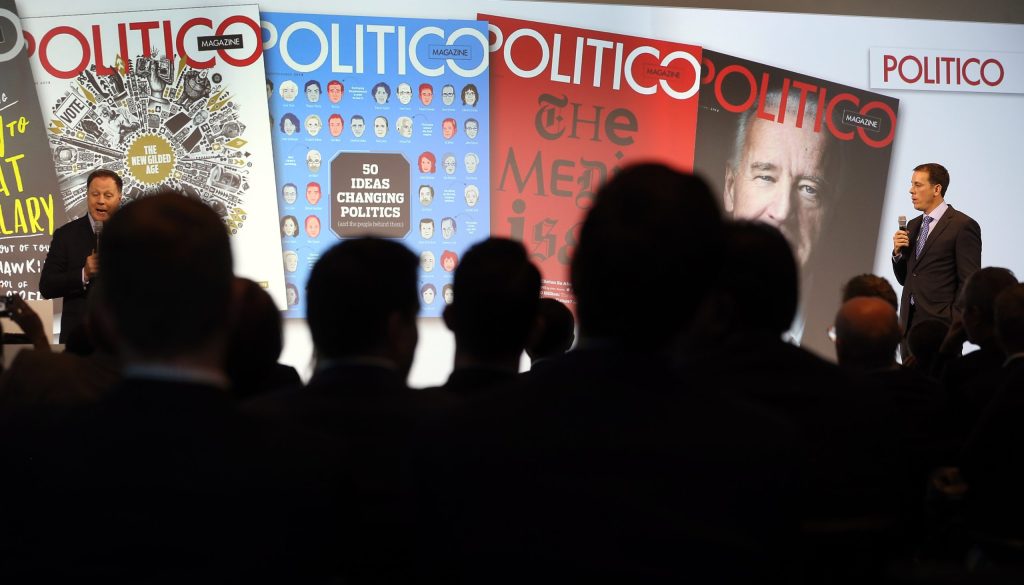
The CEO for the parent company of Politico reportedly told editorial staff at the outlet this week that they should wholly embrace the company’s corporate “values,” which include support for Israel, or find work elsewhere, new reporting reveals.
Jewish Insider reported on the meeting held this week between Axel Springer CEO Mathias Döpfner and Politico staffers and executives.
He told staff on the call that “nobody should work for Axel Springer despite the essentials or in disagreement with one of the essentials.” Appearing to suggest that staff should find work elsewhere if they disagree, he went on to note that “there are many options where values do not play such a role — or where other values play a role.”
The CEO is referring to a set of corporate values, which it calls the “Essentials,” written by German founder Axel Springer in 1967. According to the company’s website, the second of the company’s five values is: “We support the right of existence of the State of Israel and oppose all forms of antisemitism.” Other values include that the company works to “uphold the principles of a free market economy.”
The meeting came after Politico staffers sent a letter on Friday to their new editor-in-chief and former Politico executive, Jonathan Greenberger, expressing concerns over Döpfner’s “repeated use of POLITICO to promote his political agenda.”
The letter, per Semafor, referred to two recent op-eds by Döpfner for Politico Magazine. One, in March, cheered on the U.S. and Israel’s war on Iran and called for European states to take action against the “terrorist state,” which he claims aims for “the destruction of Israel and all
by Adam Johnson | Apr 5, 2026 | Article, Iran, Media Criticism, Opinion, Politics and Movements: International, Politics and Movements: US, War
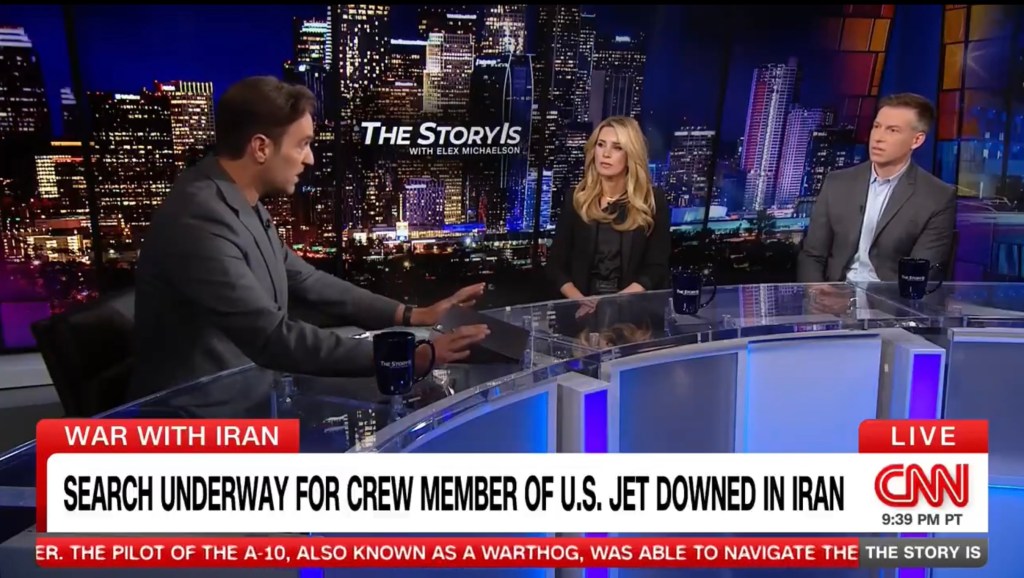
The term “hostage” is broadly understood to be the illegitimate capture of a civilian in order to extract concessions from a government or military actor. A “prisoner of war” is broadly understood to be a combatant captured by an adversary in the course of a battle. The former conveys innocence on the part of the captured and illegitimacy, terrorism and criminality on the part of the capturer. The latter conveys a lawful and reasonable response to being attacked by another military actor. Thus, how and why our media is framing Iran’s response to the unprovoked attack by the US is of tremendous importance: any potential “hostage crisis” could be used to further escalate the conflict and rally public support behind increased military aggression on the part of the US-Israeli coalition.
So it’s noteworthy that the mere potential of a single American being captured by Iran is immediately being framed by western media as an illegitimate act of aggression on the part of the country he or she was bombing. Indeed, several major Western media outlets are already rushing to frame the capture of a prisoner of war as a “hostage”:
Times of London: “US fighter pilot feared to have been taken hostage by Iran”
BBC: “If the airman is taken hostage and images circulated, it will be a propaganda victory for Iran”
ABC News Australia: “If the missing pilot is taken hostage…” “A US pilot taken hostage…”
“US fighter pilot… taken hostage by Iran.” Let us stew in that Orwellian phrasing for a bit. Though they do not explicitly call the downed pilot is a “hostage,” the New York Times dutifully orients his capture squarely