by Taya Graham and Stephen Janis | Jul 31, 2026 | First Amendment, livestream, Police Accountability Report, Politics and Movements: US, Prisons and Policing, video
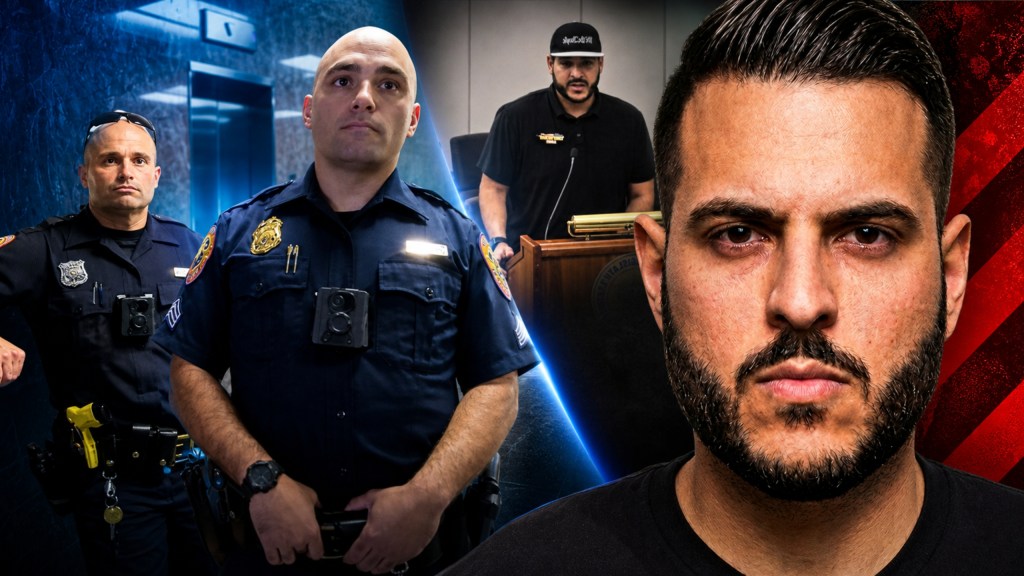
Police auditors, better known as “copwatchers,” have become both famous and notorious for using cell phone cameras and YouTube channels to monitor police activity, confront cops who are breaking the law, and fight for accountability and reform. But is copwatching a form of citizen journalism, or is it just provocation masquerading as accountability?
In this special Police Accountability Report livestream, (in)famous copwatcher Sean Paul Reyes, better known as Long Island Audit, joins hosts Taya Graham and Stephen Janis for a lively, candid debate about one of the most popular and controversial forms of police accountability today.
Credits:
Pre-Production; Stephen Janis, Taya Graham
Production: Stephen Janis, Taya Graham, David Hebden, Ryan Johnson, Maximillian Alvarez
Transcript
The following is a rushed transcript and may contain errors. It will be updated.
Taya Graham:
My name is Taya Graham and welcome to the Police Accountability Report livestream, the great American Copwatcher debate edition. Tonight, we are going to be exploring the controversy surrounding a popular Copwatcher, Long Island audit, specifically his encounter with Suffolk County Police Union officials that was the subject of our last episode. Now, a confrontation that started with Sean showing up at union headquarters to ask questions and then escalated when union officials stormed out of the building and put Sean Paul into handcuffs. Let’s just watch a few seconds of the encounter to set the scene.
Sean Paul Reyes (Long Island Audit):
Have you seen me leaving? I immediately began to leave. Lucivillo, would you like to come on? I am leaving. Would you like to come on the channel? I’m leaving. I am leaving. You seem to leave me? I am leaving. I’m leaving. I’m leaving. Lucivillo, you
by Maximillian Alvarez | Jul 30, 2026 | Democratic Party, elections, midterms, Politics and Movements: US, video
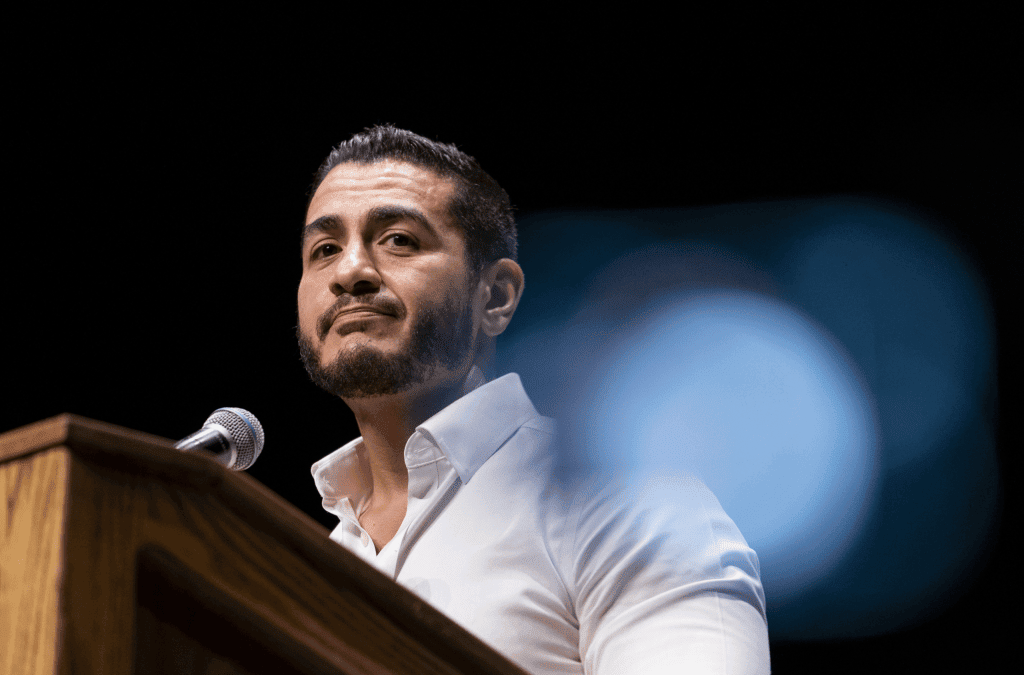
Michigan’s Senate race has become one of the most pivotal electoral battlegrounds in the country. With primaries taking place on August 4, all eyes are on the high-stakes competition between progressive candidate Dr. Abdul El-Sayed and establishment candidate Haley Stephens to see who will represent Democrats in the general election.
In this raw, unedited interview, TRNN Editor-in-Chief Maximillian Alvarez sits down with El-Sayed in Saginaw, Michigan, to talk about his campaign, the civil war within the Democratic party, and about fighting corporate oligarchy and MAGA fascism at the same time.
Credits:
Videography: Maximillian Alvarez
Post-Production: David Hebden
Transcript
The following is a rushed transcript and may contain errors. It will be updated.
Maximillian Alvarez: I’m here in the Mexican American Council Building in Saginaw, Michigan, and I’m sitting with Dr. Abdul El-Sayed, who is running to represent Michigan in the United States Senate. Brother Abdul, great to see you again, man. Thanks for joining me. I really appreciate it.
Dr. Abdul El-Sayed: An honor.
Maximillian Alvarez: And we first met when you were running for governor here in Michigan in 2018.
Dr. Abdul El-Sayed: Feels like yesterday. It feels like 15 years ago.
Maximillian Alvarez: Exactly. Both a day ago and a lifetime ago. And I think the circumstances around each election can sort of trick us into feeling like they’re very similar moments. When you were running in 2018, the question was how are Democrats going to respond to Trump? But also, who’s going to inherit the Bernie Sanders mantle? AOC just won. And so you were part of that progressive cohort. And now we kind of have a similar situation. How are Democrats going to respond to Trump
by Maximillian Alvarez | Jul 29, 2026 | baltimore, documentary, Politics and Movements: US, protest, Racial Justice, video
A 7-11 on Liberty Heights Avenue in Northwest Baltimore, Maryland, has become a flashpoint of community rage and resistance after Ade Oba Tokunbo (Stephen King), a 74-year-old resident, was attacked and brutally beaten there by six teenagers on July 7, 2026. The same location is also the site of multiple robberies and the murder of Victorious Swift in March of 2017. In response, “A Clarion Call,” a new coalition of local community organizations and residents, organized a rally at the 7-11 on Sunday, July 26, and led a community march into the store to demand the company implement policies that will keep customers safe and aid in the apprehension of the youth responsible for the July 7 attack. In this on-the-ground report, TRNN takes you inside the community rally held at the 7-11, near Mondawmin Mall, on July 26.
Additional links/info:
Organizers of A Clarion Call have set up a GoFundMe for Ade Oba Tokunbo and are asking community members to contact ClarionCallBaltimore[at]gmail[dot]com if they have any information about the perpetrators of the July 7.
Renee Anderson, Mike Hellgren, CBS Baltimore, “New video shows 74-year-old attacked outside Baltimore 7-Eleven by group wielding sword, assault rifle”
Credits:
Production: Maximillian Alvarez
Post-Production: Maximillian Alvarez, Cameron Granadino, David Hebden
Transcript
The following is a rushed transcript and may contain errors. It will be updated.
Crowd Chants:
We are we. We are we. We are we. We are we. We are we.
Gwendolyn Levi:
We need to be able to say that we in our community are willing to stand up. We’re standing up for our young people. We’re standing up for our seniors. We are standing up for our communities.
Queen Mother Victory Swift-Gye Nyame:
On July
by Mansa Musa | Jul 27, 2026 | prison reform, Prisons and Policing, Rattling the Bars, Trump, video, Washington
Republicans in Congress are attempting to push policies in the District of Columbia that would charge 14-year-olds as adults, increase mandatory minimum sentences, repeal the Second Look Act, and re-institute cash bail, which was banned in 1992. In this week’s episode of Rattling the Bars, host Mansa Musa reports from U Street and sits down with Bethany Young and Darby Hickey from the DC Justice Lab to discuss how the GOP is using Washington, DC, as a laboratory to wage a national crusade against decades of criminal justice reforms.
This is part one of a two-part series. Subscribe to TRNN and stay tuned for Part 2 next week.
Additional links/info:
DC Justice Lab website, Facebook page, X page, and Instagram
Sarah Staudt, Prison Policy Initiative, “Bad Omens: Reform rollbacks in Washington D.C. are a warning sign for state-level advocates”
Credits:
Producer / Videographer / Editor: Cameron Granadino
Transcript
The following is a rushed transcript and may contain errors. It will be updated.
Mansa Musa: Welcome to this edition of Rattling the Bars. We’re here in the historical part of the District of Columbia, U Street, 14th and U, 13th and U, 11th and U, 12th and U, all historic. Lincoln Theater and Benz Chillibo. We’re here today to talk to two representatives from DC Justice Lab about current legislation that Congress is attempting to pass to minimize the DC City Council’s ability to pass laws to govern this District of Columbia. Stay tuned for this interview. The District of Columbia has become the testing ground for Congress in terms of reforming so-called reform of laws that the city council has passed. So let’s talk about cash bill, what’s going
by Maximillian Alvarez | Jul 24, 2026 | Democratic Party, Democrats, elections, midterms, Politics and Movements: US, video
The outcome of Michigan’s Senate race will have major implications for the balance of power in Washington, DC, and for the future of the Democratic Party itself. With primaries taking place on August 4, all eyes are on the battle between progressive candidate Dr. Abdul El-Sayed and establishment candidate Haley Stephens to see who will represent Democrats in the general election. TRNN Editor-in-Chief Maximillian Alvarez sits down with El-Sayed to talk about his campaign, the civil war within the Democratic party, and about fighting corporate oligarchy and MAGA fascism at the same time.
Credits:
Videography: Maximillian Alvarez
Post-Production: Maximillian Alvarez, David Hebden
Transcript
The following is a rushed transcript and may contain errors. It will be updated.
Speaker 1:
Michigan is shaping up to be one of the most closely watched Senate races of this entire cycle.
Speaker 2:
Democrats will choose between Congresswoman Haley Stevens and former director of the Department of Health, Human and Veterans Services, Wayne County, Dr. Abdul El-Sayed.
Dr. Abdul El-Sayed:
We pay more for the stuff we got to buy, get paid less for the work that we do and watch as our tax dollars get misappropriated abroad to drop bombs on other people’s kids instead of to invest in our own kids and their schools and their healthcare.
Speaker 4:
We’re done. Business as usual politics is over.
Dr. Abdul El-Sayed:
Most people don’t walk around thinking, where do I stand on the left right spectrum? Most people walk around thinking, how am I going to afford my groceries? How am I going to pay for my rent? Can I ever afford a home? What am I going to do if I get sick? The majority of Democrats
by Mansa Musa | Jul 21, 2026 | Prison Industrial Complex, prison reform, Prisons and Policing, Rattling the Bars, video
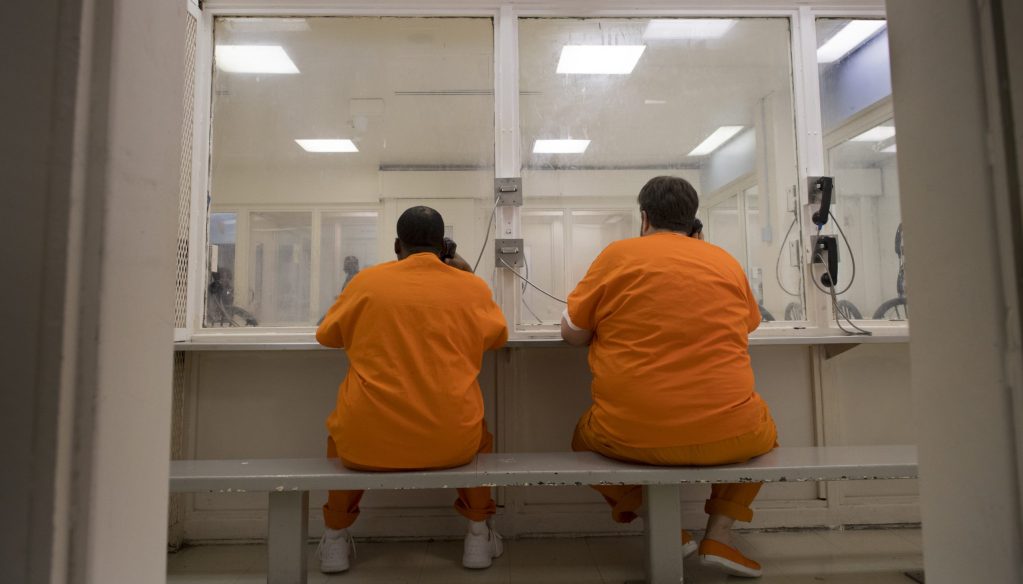
A groundbreaking new report reveals a direct link between prison phone call rates and prison safety: higher rates fuel more violence within prisons; lower rates and free phone calls dramatically reduce it. In this episode of Rattling the Bars, host and former political prisoner Mansa Musa speaks with Peter Mayer, director of research and data innovation for Worth Rises.
Additional links/info:
Worth Rises website, Facebook page, Bluesky page, X page, and Instagram
Peter Mayer & Bianca Tylek, Worth Rises (May 2026), “Critical Connections: The Power of Free Communication in Prisons and Jails”
Credits:
Producer / Videographer / Editor: Cameron Granadino
Transcript
The following is a rushed transcript and may contain errors. It will be updated.
Mansa Musa:
Welcome to this edition of Rattling the Bars. I’m your host, Mansa Musa. Prior to being released from prison, I served 48 years and days and months. When I first went in prison, we ain’t had no telephone system. So everything was letters. Then they put a telephone system in. And when they put the telephone system in, this created a whole new attitude in the prison population. People was able to get on the phones to talk to their families. They had organized a phone system where you can get designated time so you ain’t have to worry about staying in line. It was like something unusual. And when they first started talking about it, most of us were skeptic. Oh, they ain’t going to put no telephone. But now this is a major feature in every prison in the United States of America and county jails and detention centers as well.
Joining me today to talk about the groundbreaking new report