by Chris Walker | Nov 3, 2026 | Article, health care, Politics and Movements: US, prison reform, Prisons, Prisons and Policing, Reprint, Supreme Court, Trump
This article was originally published by Truthout on Oct. 21, 2026. It is shared here under a Creative Commons (CC BY-NC-ND 4.0) license.
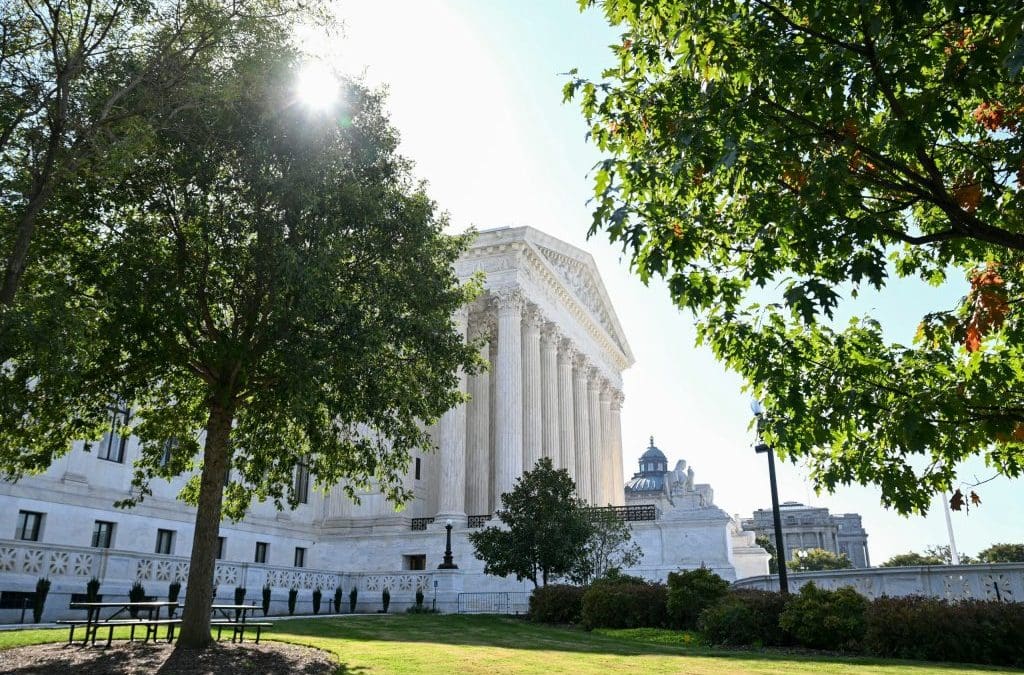
The U.S. Supreme Court has denied an emergency petition from the Trump administration, which sought a stay on a lower court’s injunction on a policy that would have denied gender-affirming care to federally incarcerated transgender people.
That policy was implemented by the Bureau of Prisons (BOP) after President Donald Trump signed an executive order in January 2025 that denied the existence of transgender people. The order also directed federal agencies to take steps that would be consistent with that view, and included specific instructions for the BOP.
“The Attorney General shall ensure that the Bureau of Prisons revises its policies concerning medical care to be consistent with this order, and shall ensure that no Federal funds are expended for any medical procedure, treatment, or drug for the purpose of conforming an inmate’s appearance to that of the opposite sex,” the order reads.
After the BOP conformed to the order, a group of incarcerated trans people who had been receiving gender-affirming care sued the administration. The group is being represented by the American Civil Liberties Union (ACLU), which argued that their Eighth Amendment protections against cruel and unusual punishment were being infringed upon.
A federal judge agreed, and, in August, ordered the policy to be blocked. The Trump administration challenged that finding, but the U.S. Court of Appeals for the District of Columbia Circuit upheld it, prompting Solicitor General John Sauer to submit an emergency appeal to the Supreme Court.
The court has regularly ruled against transgender people, allowing state bans on trans athletes’
by Olivia Rosane | Nov 3, 2026 | Article, bolsonaro, brazil, elections, Politics and Movements: International, Politics and Movements: US, Reprint, Trump
by Julia Conley | Nov 3, 2026 | Article, brazil, Democracy, elections, Politics and Movements: International, Reprint
This story originally appeared in Common Dreams on Oct. 26, 2026. It is shared here under a Creative Commons (CC BY-NC-ND 3.0) license.
“There is nothing inevitable about the far right,” said one former Obama administration official Sunday night as supporters of the left-wing Student List in Serbia poured into the streets of Belgrade and other cities across the Balkan country, celebrating their defeat of right-wing President Aleksandar Vučić, who has led the nation for nearly a decade and has been accused of corruption and autocratic rule.
The Student List’s victory coincided with that of Brazilian President Luiz Inácio Lula da Silva, who was also backed by a student-led movement that marched through Rio de Janeiro and other cities in recent weeks, as US President Donald Trump was accused of election interference on behalf of right-wing Sen. Flávio Bolsonaro, Lula’s opponent.
Both countries reported high voter turnout in the pivotal elections, proving, as journalist Anne Applebaum said, “that voters can alter what feels like a historical shift.”
In years of genocidehope came from the youngIn Serbia2 yrs of youth-led protest -integrity, unity, perseverance- brought changeToday that hope is a rainbowits far end in BrazilMay it shinewherever wounds run deepand the young are fighting the oldHumanity will prevail pic.twitter.com/jKA6n4EmFR— Francesca Albanese, UN Special Rapporteur oPt (@FranceskAlbs) October 26, 2026
In Serbia, Vučić said it was “clear that we have lost the election,” as results showed his Serbian Progressive Party (SNS) had won about 105 seats while the Student List had won at least 135.
The Student List movement, officially registered by the Republic Electoral Commission as “Studentska lista—Studenti pobeđuju” (Student List—Students Win) began in November 2024 after the concrete
by Petala Ironcloud | Nov 2, 2026 | AI, Article, Climate, Climate Crisis, Politics and Movements: US, Reprint
This article was originally published by Truthout on Oct. 26, 2026. It is shared here under a Creative Commons (CC BY-NC-ND 4.0) license.
The Northern Cheyenne Tribal Council voted unanimously this October to ban data centers on tribal land in Montana. The ban follows a decision in August by the Fort Peck Tribes to bar officials from projects involving data center developers.
But Montana’s Tribes are now split. Next door to the Northern Cheyenne, the Apsáalooke, or Crow Tribe, has not taken an official position and remains open to hearing proposals from companies, according to Shane Doyle, an Apsáalooke tribal member and The Nature Conservancy’s Indigenous right relations director. Doyle grew up on the Crow Reservation and has consistently advocated for reciprocity with the land, rendering him a voice in the dissent, whether he intends to be or not.
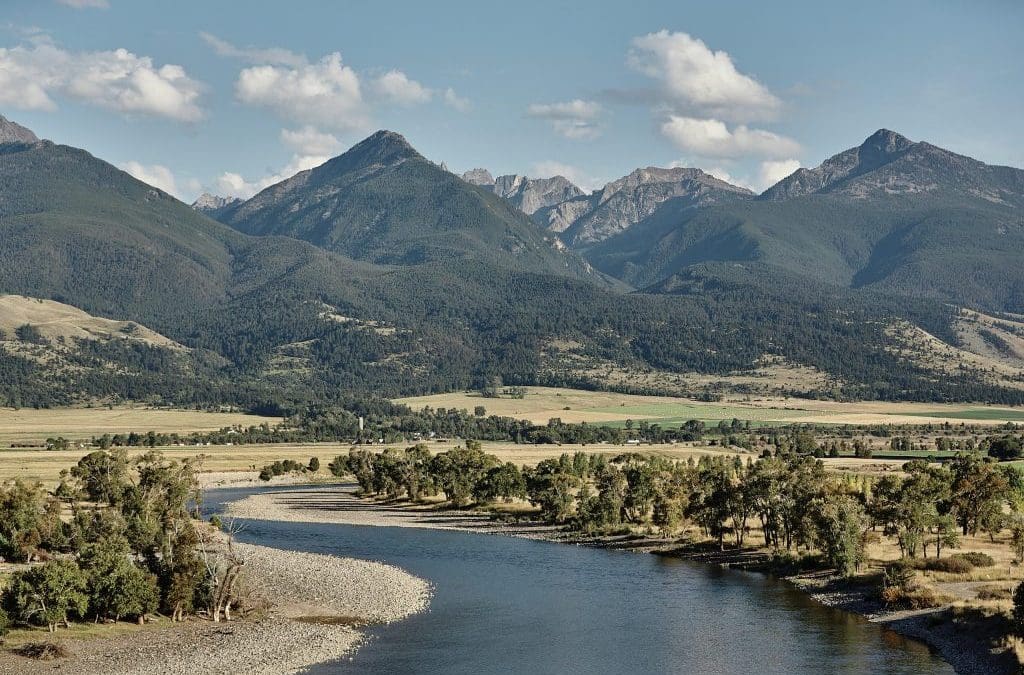
The stakes are highest in Crow country. In the small city of Hardin, at the Crow Indian Reservation’s northern edge, a former cryptocurrency mine is being actively converted into an AI data center. About 14 miles northwest of the reservation, Texas-based Quantica Infrastructure plans to build its Big Sky campus on nearly eight square miles of ranchland near the town of Broadview, north of Billings, Montana’s most populous city. As it’s currently planned, the data center would rank among the largest data centers in the world. The Yellowstone River Valley is “the heart of the Crow Nation,” Doyle said.
Krystal Two Bulls, who is Oglala Lakota and Northern Cheyenne, has been tracking these data centers closely. As the executive director of Honor the Earth, a nonprofit tracking data centers on or near reservation lands, she
by Emanuela Godoy | Nov 2, 2026 | Article, bolsonaro, brazil, Politics and Movements: International, Politics and Movements: US, Reprint, Trump
by Julia Conley | Nov 2, 2026 | Article, Economy and Inequality, labor, Politics and Movements: US, Reprint
This story originally appeared in Common Dreams on Oct. 28, 2026. It is shared here under a Creative Commons (CC BY-NC-ND 3.0) license.
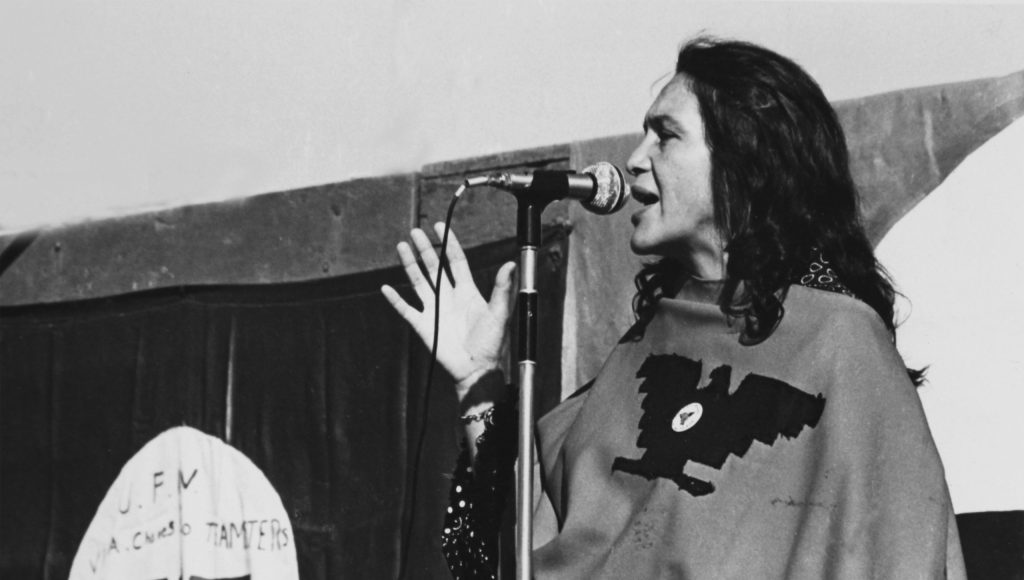
Labor advocates and Democratic lawmakers called on Americans to honor the legacy of the legendary union organizer Dolores Huerta, who died Wednesday at age 96, by “continuing to fight for her dream” of justice for all.
A spokesperson for Huerta’s family said she died of cancer, and her family members said they would share plans “to recognize and celebrate her incredible life and legacy” at a later date.
“We know that many of you around the world share in our mourning,” said her family, including her 13 children who survive her.
Huerta became a hero to workers across the world in the 1960s when she joined Cesar Chavez to establish the National Farm Workers Association, which became known as the United Farm Workers in 1972.
She helped lead a strike by Filipino workers in the grape-growing industry in Southern California, as well as boycotts of companies that paid migrant workers low wages, while exposing them to toxic chemicals and providing no job security.
Huerta faced violence by strikebreakers and police, 22 arrests for her nonviolent protests, and surveillance by the FBI, which suspected her and Chavez of Communist ties—but nevertheless organized one of the most successful produce boycotts in US history in 1968, garnering support from 17 million households and thousands of grocery stores that pledged not to purchase California table grapes due to growers’ abuse of workers.
Dolores Huerta has passed away from cancer at 96. She was a founder of what became the United Farm Workers and an inspiration for generations of organizers.Her courageous