by Julia Conley | Oct 6, 2026 | Article, California, Iran, Politics and Movements: International, Politics and Movements: US, Reprint, Trump
This story originally appeared in Common Dreams on Oct. 06, 2026. It is shared here under a Creative Commons (CC BY-NC-ND 3.0) license.
“Keep our city out of your reckless war talk,” said San Diego’s mayor, Todd Gloria, Monday night after President Donald Trump’s rambling speech at a rally in Nebraska included a particularly violent mention of the California city.
Gloria was among several Democratic political leaders who were incensed after Trump—moments after predicted the Republican Party would see a “tremendous victory” in the November 3 midterm elections—suggested that he would not object to an Iranian military or nuclear attack on San Diego and Los Angeles.
The president said that soaring prices for gas, groceries, and other essentials are a “small price to pay for keeping the world safe—keeping our country safe.”
Trump on Iran: Let ’em take out Los Angeles and San Diego, it’s a small price to pay pic.twitter.com/Fc4BcjVDKj— Headquarters (@HQNewsNow) October 6, 2026
He warned that Iran could “take out a city,” before adding that he would “let them” attack the two deep-blue cities—home to a collective 5.2 million people, with more than 20 million residents in the surrounding areas
“Let them take out Los Angeles. Let them take out San Diego,” Trump said at the rally in Grand Island. “This is a very small price to pay… It’s gonna be over very soon.”
The crowd responded to Trump’s comments with laughter and cheers. The president has frequently made Democratic strongholds like Los Angeles, Chicago, and his own hometown of New York City the targets of rhetorical attacks. He has also targeted those cities with the deployment of armed federal agents as part of his mass
by Yuri Ferreira | Oct 5, 2026 | Article, bolsonaro, brazil, elections, Politics and Movements: International, Reprint
This story originally appeared in Panamerican Dispatch on Oct. 05, 2026, and is shared here with permission.
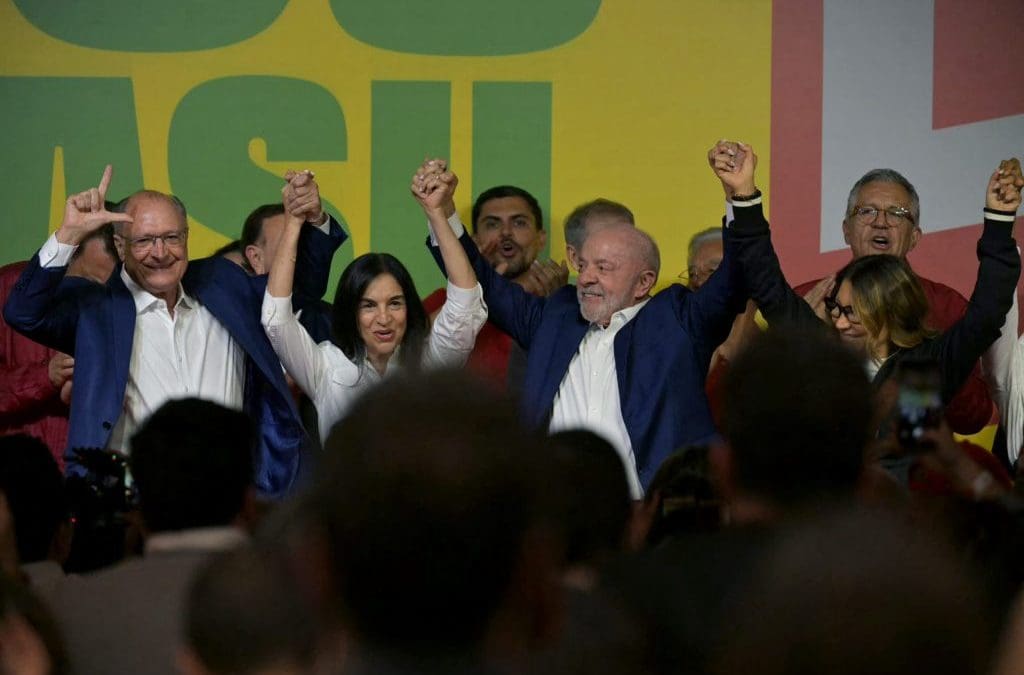
President Luiz Inácio Lula da Silva spoke on Sunday, after the release of the results of the first round of the 2026 elections. He said his campaign for a second round of the presidential race begins this Monday, October 5.
Lula will face Senator Flávio Bolsonaro in the runoff, scheduled for October 25.
In his speech, Lula stated that he intends to present to voters the differences between the two candidates’ platforms.
“Starting tomorrow, we begin a new campaign,” he said. “We will be able to show the difference between the proposals that exist for Brazil. The Brazilian people will have no doubt about choosing who will win the election.”
Lula also launched direct attacks on Flávio Bolsonaro’s political track record and cited the candidate’s past.
“He has a dark history,” Lula said. “With dark connections, with extremely serious suspicions, with ties to militia members and organized crime. All of this will become clear.”
The president mentioned Banco Master. He claimed that Flávio had a hand in the institution’s creation.
“Banco Master resulted in the greatest corruption scandal in this country and the biggest free-for-all involving politicians,” he said.
The accusations raised by Lula are part of his runoff campaign rhetoric and are expected to be a key point of contention between the two candidates in the coming weeks.
The president also argued that the race should be framed as a choice over the country’s future. He stated that his candidacy represents an opportunity to drive change in the Brazilian economy.
“We will show what has been done and what society expects to be
by Brad Reed | Oct 2, 2026 | Article, elections, midterms, Politics and Movements: US, Reprint, Voting Rights
This story originally appeared in Common Dreams on Oct. 02, 2026. It is shared here under a Creative Commons (CC BY-NC-ND 3.0) license.
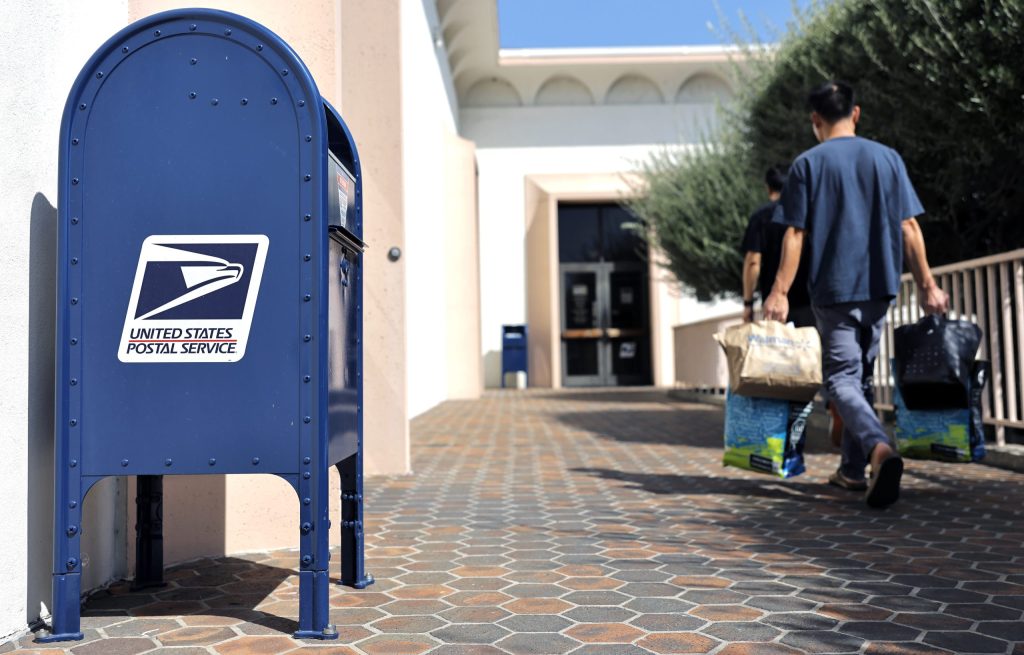
An analysis published Friday by Democracy Docket warned that “tens of thousands” of voters across the US face “risk of disenfranchisement” thanks to actions being taken by the United States Postal Service.
The analysis, written by veteran election reporter Jim Saksa, points to a new USPS policy known as Regional Transportation Optimization (RTO) that “will eliminate evening mail pickups from post offices more than 50 miles away from a regional processing facility, most of which are located in major urban areas.”
For people who live in these areas, ballots sent on Election Day will be postmarked and delivered at least a day later than in previous election years, thus making it ineligible to be included in final election tallies.
“In every state, a day’s delay in delivery means that if mail voters wait until the last day or two before the election to mail their ballot,” Saksa explained, “they could be disenfranchised.”
Saksa reported that this policy is currently active in “about 42.5% of all ZIP codes” in the continental US, and is scheduled to eventually take effect in around 70% of all ZIP codes. No additional ZIP codes are expected to be added between now and election day.
Saksa also said that voters concerned about their ballots not being counted should deliver them in person to their local post office, where they can ask an employee to postmark it.
President Donald Trump has tried for the last several months to use USPS to meddle with states’ mail-in voting systems.
In March, the president signed an executive
by Ali Harb | Oct 2, 2026 | Article, Gaza, ICE, Israel, Palestine, Politics and Movements: International, Politics and Movements: US, Prisons and Policing, Reprint
Florida lawyer Jalal Shehadeh is convinced that the warrantless seizure of his cell phone by federal agents at the Newark International Airport after he returned from Palestine this September was not random.
Shehadeh, a Miami-based attorney and Palestinian rights advocate, was held for several hours for a secondary inspection and had his phone seized by U.S. Customs and Border Protection (CBP) after he refused to allow federal agents to search it.
“It’s just a wildly invasive thing to do to somebody with no individualized justifiable basis to do it,” Shehadeh told Truthout.
He suspects federal authorities targeted him for his activism. The lawyer is involved in a legal complaint against a federal judge in Florida over the judge’s anti-Palestinian statements.
Shehadeh is one of several Palestinian rights advocates who have been detained and had their personal devices searched by CBP while returning to the U.S. from international travel since the start of Israel’s war on Gaza in October 2023.
Other similar cases include Amir Makled, a lawyer from the Detroit area who was representing University of Michigan students involved in pro-Palestine activism, journalist Max Blumenthal, and Osama Abu Irshaid, the executive director of American Muslims for Palestine (AMP).
Jenin Younes, president of the American-Arab Anti-Discrimination Committee (ADC), which filed a legal motion earlier this week demanding the return of Shehadeh’s phone, said CBP appears to be escalating phone searches against opponents of President Donald Trump’s agenda.
“Common sense tells us that they are targeting people who have pro-Palestine views,” Younes told Truthout.
She stressed that the searches are illegal. The Fourth Amendment of the U.S. Constitution protects “persons, houses, papers, and effects, against unreasonable searches and seizures.”
Younes said
by Jonathan Rosenblum | Oct 1, 2026 | AI, Amazon, Article, Economy and Inequality, labor, Politics and Movements: US, Reprint, Unions
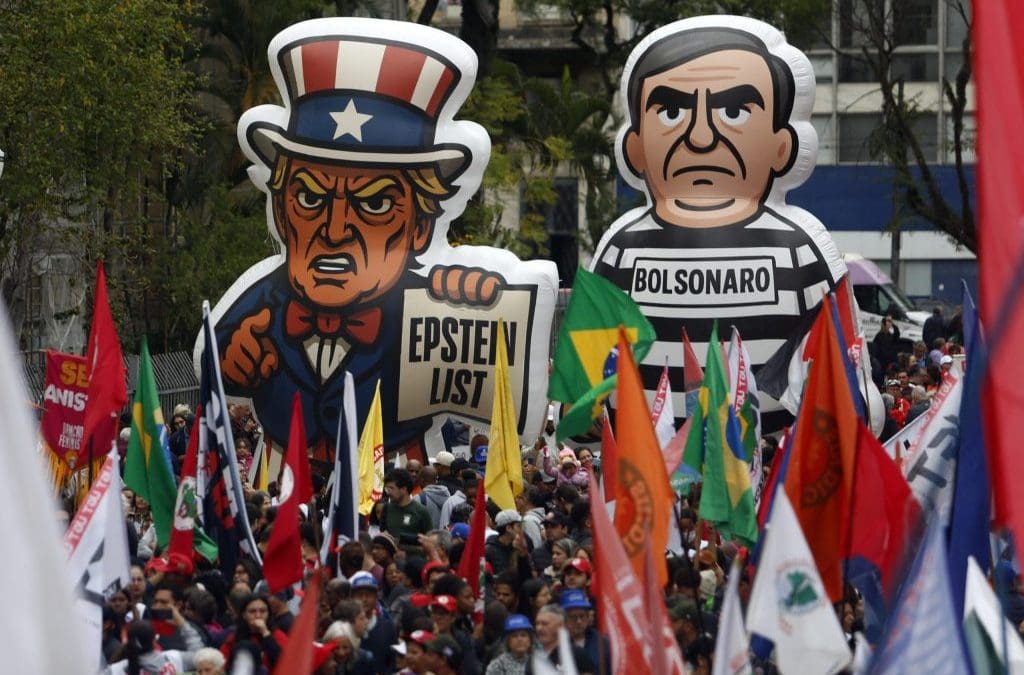
by Miguel Manso | Sep 30, 2026 | Article, bolsonaro, brazil, elections, Politics and Movements: International, Politics and Movements: US, Reprint, Trump
This story originally appeared in Panamerican Dispatch on Sep. 29, 2026, and is shared here with permission.
The close relationship between the Bolsonaro family and key figures in the international far right like Steve Bannon and U.S. President Donald Trump has been public knowledge for over eight years. In this article, tech specialist Miguel Manso looks at the state of that relationship, right now, just days before Brazil’s first-round presidential elections. – ed.
Just days before the first round of Brazil’s presidential election, a confidential report from the Brazilian Intelligence Agency (Abin) warns that the United States is influencing the country’s electoral process. Titled “Threats to the 2026 Electoral Process,” the report was sent in late August to the presidency, the Superior Electoral Court and the Justice Ministry, warning that U.S. interference has reached a “critical” level.
Sen. Flávio Bolsonaro’s campaign has become the target of legal action over claims that it benefited from paid ads and mass messaging originating in the United States.
The coalitions backing Luiz Inácio Lula da Silva of the Workers’ Party and Renan Santos of the Missão party asked the Superior Electoral Court and the Supreme Federal Court to investigate the senator for economic and political abuse of power and foreign interference.
The court filings allege the following:
Foreign amplification: U.S.-based right-wing profiles and influencers, including American political figures, allegedly ran paid campaign content on X in support of Flávio Bolsonaro.
Paid partnerships: The posts, labeled “paid partnership,” cited figures from the foreign betting platform Polymarket to claim that Bolsonaro was the favorite, distorting the actual state of Brazilian polling.
Prohibited financing: The parties allege that this amounts to the use of funds