by Kori Skillman | Nov 24, 2025 | Article, baltimore, ICE, Politics and Movements: US, Prisons and Policing, Reprint
This story originally appeared in Baltimore Beat on Aug. 25, 2025. It is shared here with permission.
Immigration officials in Maryland are skirting scrutiny after a federal judge threw out a lawsuit challenging conditions inside Baltimore’s downtown ICE holding facility and lawmakers were initially denied entry to investigate reports of inhumane conditions.
Despite being allowed a one-hour visit into the holding facility in the George H. Fallon Federal Building weeks after they were first denied access, Maryland’s congressional members said they were left with more questions than answers about how detained people were being treated.
While lawmakers have focused the national spotlight on conditions in Baltimore’s downtown ICE holding facility, attorneys from the Amica Center for Immigration Rights — a nonprofit organization providing legal and social services to immigrants seeking status in the U.S. — filed a class-action suit in early May arguing that inhumane conditions were widespread among people detained there.
A late July hearing would have considered suspending use of the facility while the full case played out, but Maryland U.S. District Judge Julie Rubin denied the class certification and sent lawyers back to the drawing board.
“The hearing would have confirmed what we have known… which is that the conditions there are absolutely impermissible under the law and under the Constitution,” said Amelia Dagen, lead litigator in the class action suit. “There is a special weight to hearing it from people who have experienced those and endured those conditions.”
The lawsuit represents two immigrant women who were held in a freezing, windowless room without access to basic hygiene or medical care. The lawsuit had the support of Maryland Attorney General Anthony G. Brown, who wrote in a brief
by Brad Reed | Nov 18, 2025 | Article, Fascism, ICE, Politics and Movements: US, Prisons and Policing, Reprint
This story originally appeared in Common Dreams on Nov. 18, 2025. It is shared here under a Creative Commons (CC BY-NC-ND 3.0) license.
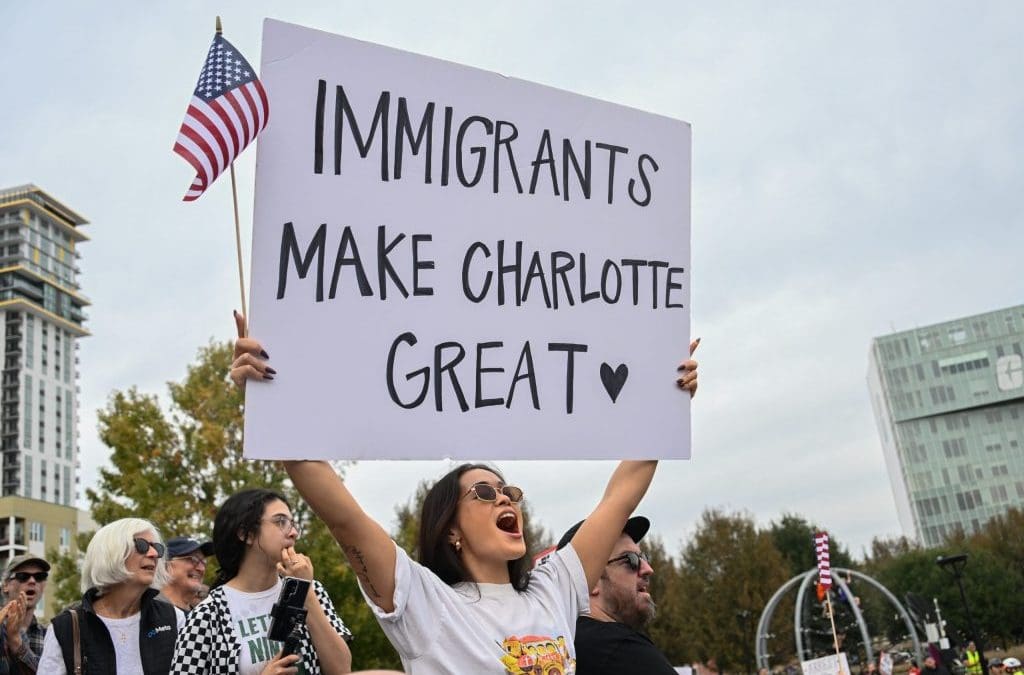
Residents in Charlotte, North Carolina are expressing outrage after two local women were arrested for honking their car horn to alert others that US Border Patrol was in the area.
Local news station WCNC reported on Monday that the two women, who are US citizens, were taken into custody in the city’s Plaza Midwood neighborhood after Border Patrol agents pulled them over and accused them of interfering in operations by honking their horn.
Video of the incident shows masked federal agents yelling at the women and demanding that they roll down their car windows. When the women do not comply, one officer smashes through the window and then he and other officers pull them out of the vehicle.
The two women, who have not been identified, then spent several hours in an FBI facility before being released with citations.
Local resident Shea Watts, who took video of the encounter, told WCNC that he was feeling “somewhere between disbelief and just being really upset that this is our reality now” as he watched the incident unfold.
Watts also discussed his own interactions with the federal officers whom he was filming.
“I was already close to despair and feeling helpless and hopeless,” he said. “But I think just the reminder that if we see something, to document it. I tried to be respectful and ask questions and knowing my own rights, and I was told to back up a couple times, which, that’s fine, but at the end of the day, this all feels a little heavy handed.”
Charlotte has become the latest target of the
by Brad Reed | Nov 17, 2025 | Article, doj, Politics and Movements: US, Prisons and Policing, Reprint, Trump
by Mansa Musa | Nov 17, 2025 | Politics and Movements: US, Prison Industrial Complex, prison reform, Prisons and Policing, Rattling the Bars, video
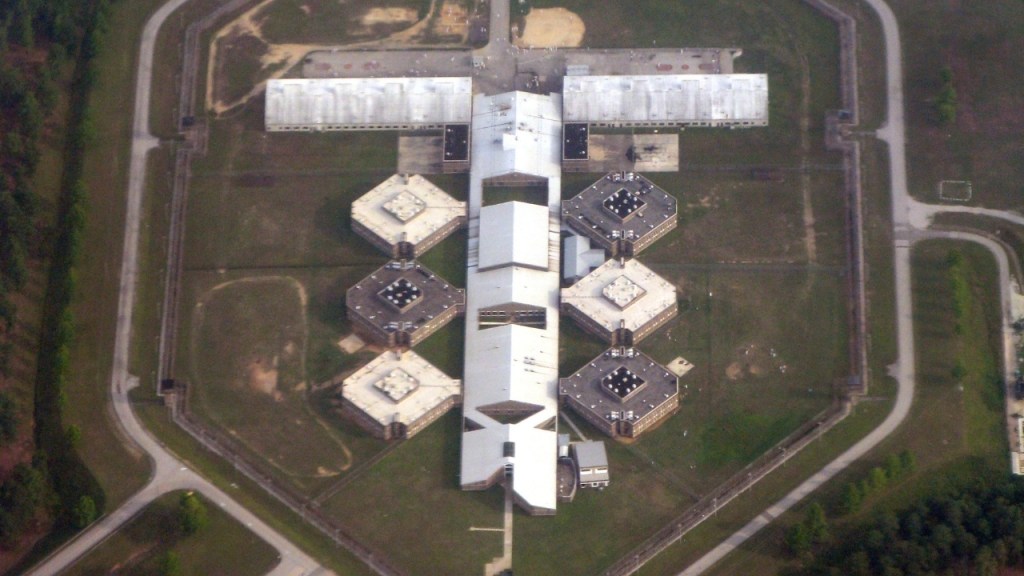
The Alabama prison system functions like a modern-day plantation: overcrowded, understaffed prisons like Bullock Correctional Facility run on forced labor, violence, and deliberate neglect. In this episode of Rattling the Bars, host Mansa Musa speaks with journalist Matthew Vernon Whalan about his book Bullock: Chronicles of Deprivation and Despair in an American Prison, and about the systematic corruption and inhumane horrors endured daily by incarcerated people in Alabama.
Guest:
Matthew Vernon Whalan is a writer and oral historian living in New England. He is the author of the book Bullock: Chronicles of Deprivation and Despair in an American Prison, and his work has appeared in Counterpunch Magazine, Alabama Political Reporter, Scheer Post, Jacobin, Eunoia Review, New York Journal of Books, The Brattleboro Reformer, and elsewhere. He runs the publication Hard Times Reviewer.
Credits:
Producer / Videographer / Post-Production: Cameron Granadino
Transcript
The following is a rushed transcript and may contain errors. A proofread version will be made available as soon as possible.
Mansa Musa:
Welcome to this edition of Rattling Bars. I’m your host, Mansa Musa. In this country, we have the right to life, liberty, and the pursuit of happiness according to the Constitution. But in this country also, we have legalized slavery under the 13th Amendment. To understand what legalized slavery is, institutionalized slavery is, all you have to do is look to Alabama and the Alabama prison system. The prison industrial complex in Alabama is one of the most notorious systems in this country, I would even venture to say in the world. Join me today is Matthew Whalan. Matthew wrote a book called Bullock: Chronicles of Deprivation and Despair in an American Prison. Thank you for joining us today, Matthew.
Matthew Whalan:
Thank you for having me.
Mansa Musa:
Alright,
by Taya Graham and Stephen Janis | Nov 13, 2025 | Economy and Inequality, Epstein, Inequality, Inequality Watch, Politics and Movements: US, Prisons and Policing, video
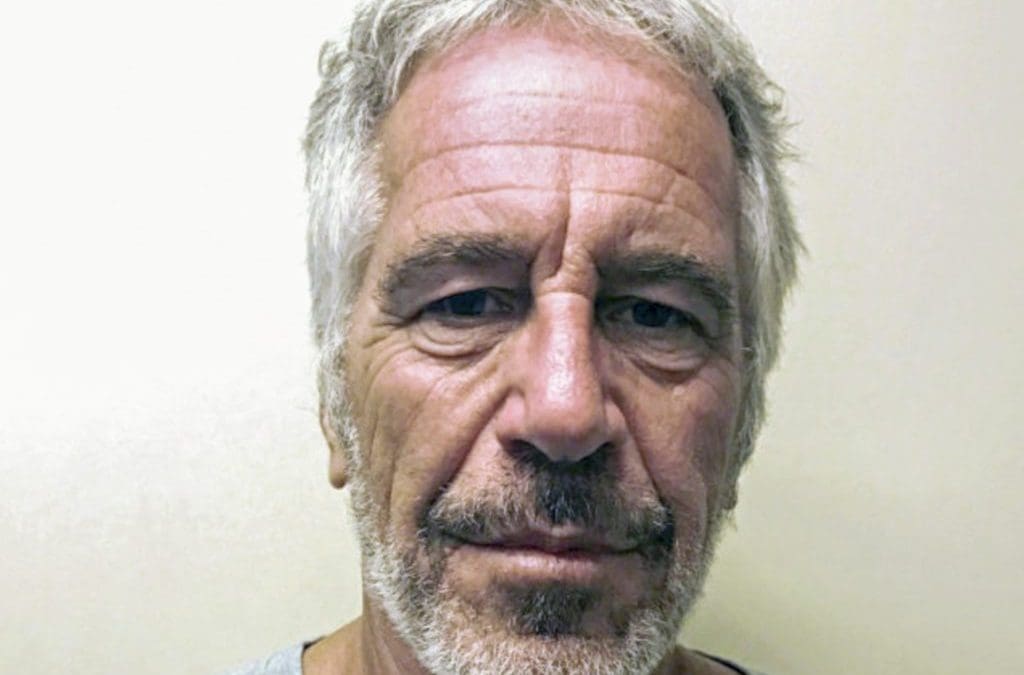
Jeffrey Epstein was able to traffic and assault young women and girls for almost two decades, without consequence. How did he get away with this? The simple answer is wealth. But how did a college dropout who was quietly dismissed from his first job as a teacher at a private school acquire a private jet and party with some of the most famous and powerful people in the world? We delve into the money and the people who may have aided and abetted Epstein’s scandalous and criminal life.
Credits:
Producers: Taya Graham, Stephen Janis
Post-Production: David Hebden
Transcript
The following is a rushed transcript and may contain errors. A proofread version will be made available as soon as possible.Taya Graham:
For most of 2025. One story and one story alone dominated the cultural and political discourse in America, the Epstein files. This phenomena was remarkable, all but more so for President Trump’s response. This was the first time in Trump’s decade long political career that we saw a significant rift in his fiercely loyal MAGA movement. By late July, 47% of Trump supporters disapproved of how he was handling the issue. Now, given Trump’s controversial association with the dead man, his obfuscation seemed like it could be the only thing to finally chip away at his political capital. Since then, a lot has happened in the American news from a major ice crackdown in blue states to the illegal bombing of ships in the Caribbean to an attempted ceasefire in Gaza, and yet Epstein’s case still looms large, large enough, some believe to have played a significant role in the October government shutdown.
Now ostensibly, the shutdown
by Marc Steiner | Nov 13, 2025 | Civil Rights, Podcast, Politics and Movements: US, Prisons and Policing, Racial Justice, The Marc Steiner Show
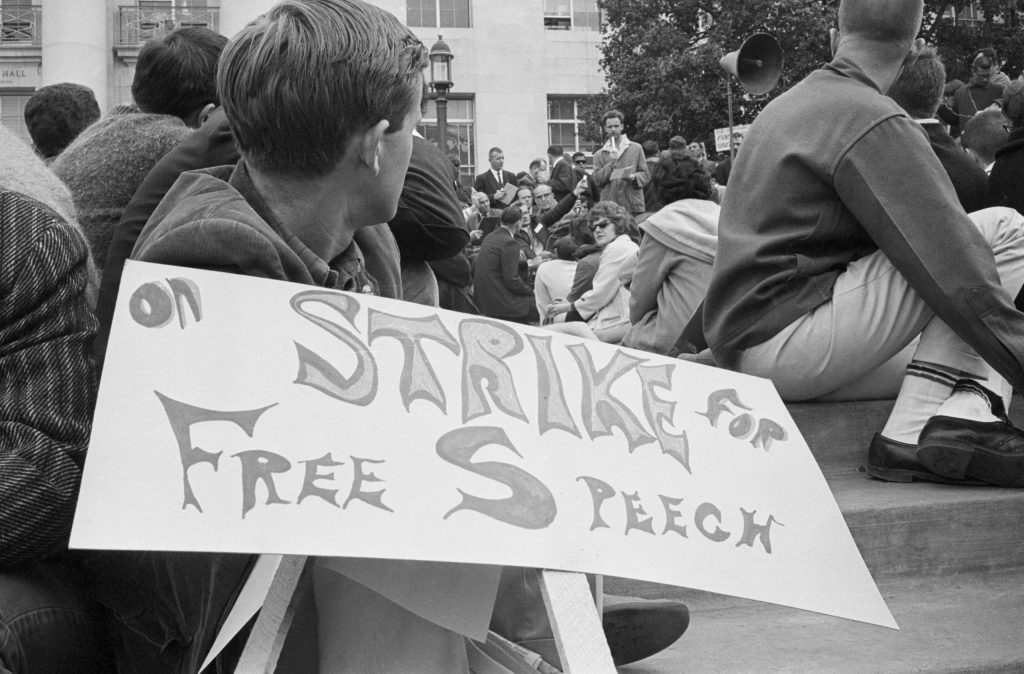
Historian David Hollinger connects the history of the 1964 Free Speech Movement in Berkeley, California, to the protest movements and repressive crackdowns on free speech gripping universities today. In this episode of The Marc Steiner Show, co-hosted by Marc Steiner and Michael Fox, Hollinger draws on his firsthand experience and decades of research to explain the lessons we can learn from 1960s civil rights activists and antiwar organizers about how to defend free speech and academic freedom from extinction today.
Guest:
David A. Hollinger is the Preston Hotchkis Professor of History Emeritus at the University of California, Berkeley, and earlier taught at the University of Michigan, the State University of New York at Buffalo, and the University of Oxford. Hollinger’s books include Protestants Abroad: How Missionaries Tried to Change the World but Changed America (Princeton, 2017), After Cloven Tongues of Fire: Protestant Liberalism in Modern American History (Princeton, 2013), Science, Jews, and Secular Culture (Princeton, 1996) and Postethnic America: Beyond Multiculturalism (New York, 1995, 2000, and 2006). He is an elected member of the American Philosophical Society and the American Academy of Arts and Sciences, and a former President of the Organization of American Historians.
Credits:
Producer: Rosette Sewali
Studio Production: David Hebden
Audio Post-Production: Stephen Frank
Transcript
The following is a rushed transcript and may contain errors. A proofread version will be made available as soon as possible.
Marc Steiner:
Welcome to the Marc Steiner Show here on The Real News. I’m Marc Steiner. It’s good to have you all with us. My cohost today is my colleague Mike Fox, who hosts Stories of Resistance for the Real News and covers Latin America and world issues. Today we’re talking with David Hollinger about free Speech, the movement that