by Marc Steiner | Nov 13, 2025 | Civil Rights, Podcast, Politics and Movements: US, Prisons and Policing, Racial Justice, The Marc Steiner Show
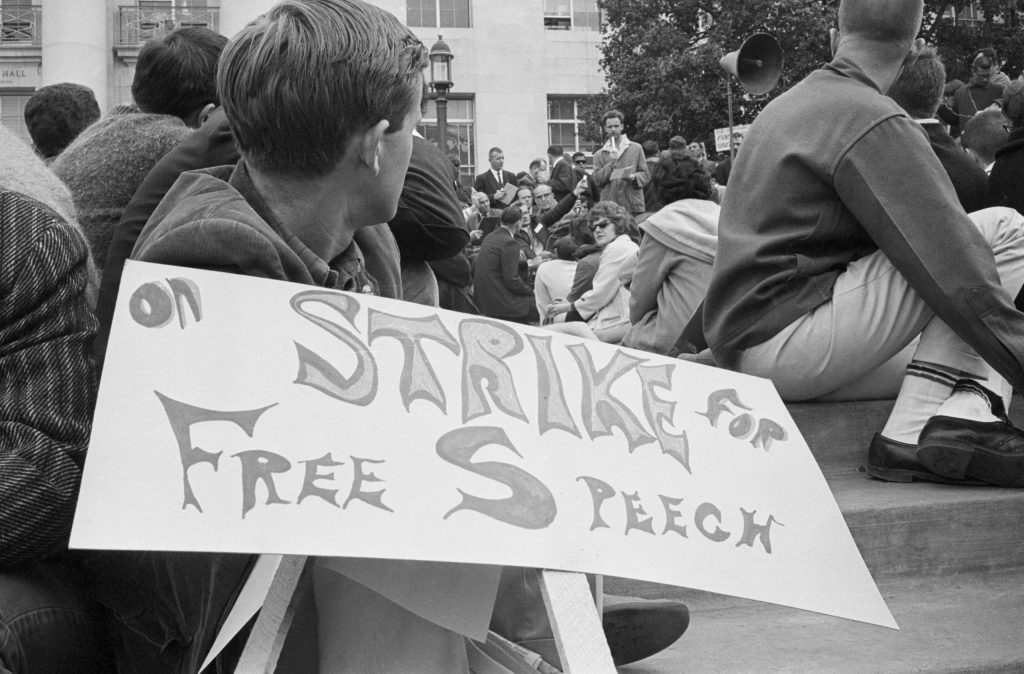
Historian David Hollinger connects the history of the 1964 Free Speech Movement in Berkeley, California, to the protest movements and repressive crackdowns on free speech gripping universities today. In this episode of The Marc Steiner Show, co-hosted by Marc Steiner and Michael Fox, Hollinger draws on his firsthand experience and decades of research to explain the lessons we can learn from 1960s civil rights activists and antiwar organizers about how to defend free speech and academic freedom from extinction today.
Guest:
David A. Hollinger is the Preston Hotchkis Professor of History Emeritus at the University of California, Berkeley, and earlier taught at the University of Michigan, the State University of New York at Buffalo, and the University of Oxford. Hollinger’s books include Protestants Abroad: How Missionaries Tried to Change the World but Changed America (Princeton, 2017), After Cloven Tongues of Fire: Protestant Liberalism in Modern American History (Princeton, 2013), Science, Jews, and Secular Culture (Princeton, 1996) and Postethnic America: Beyond Multiculturalism (New York, 1995, 2000, and 2006). He is an elected member of the American Philosophical Society and the American Academy of Arts and Sciences, and a former President of the Organization of American Historians.
Credits:
Producer: Rosette Sewali
Studio Production: David Hebden
Audio Post-Production: Stephen Frank
Transcript
The following is a rushed transcript and may contain errors. A proofread version will be made available as soon as possible.
Marc Steiner:
Welcome to the Marc Steiner Show here on The Real News. I’m Marc Steiner. It’s good to have you all with us. My cohost today is my colleague Mike Fox, who hosts Stories of Resistance for the Real News and covers Latin America and world issues. Today we’re talking with David Hollinger about free Speech, the movement that
by Jessica Corbett | Nov 12, 2025 | Article, Israel, Palestine, Politics and Movements: International, Prisons and Policing, Reprint
This story originally appeared in Common Dreams on Nov. 11, 2025. It is shared here under a Creative Commons (CC BY-NC-ND 3.0) license.
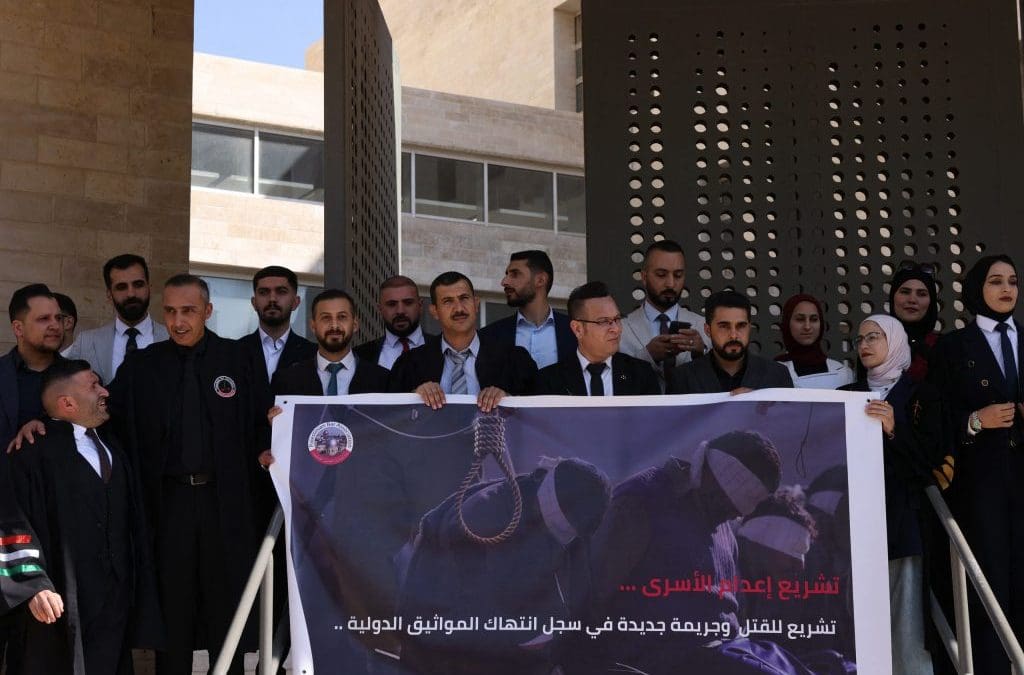
As Israel continues its “silent genocide” in the Gaza Strip one month into a supposed ceasefire with Hamas and Israeli settler attacks on Palestinians in the illegally occupied West Bank hit a record high, Amnesty International on Tuesday ripped the advancement of a death penalty bill championed by far-right National Security Minister Itamar Ben-Gvir.
Israel’s 120-member Knesset “on Monday evening voted 39-16 in favor of the first reading of a controversial government-backed bill sponsored by Otzma Yehudit MK Limor Son Har-Melech,” the Times of Israel reported. “Two other death penalty bills, sponsored by Likud MK Nissim Vaturi and Yisrael Beytenu MK Oded Forer, also passed their first readings 36-15 and 37-14.”
Son Har-Melech’s bill—which must pass two more readings to become law—would require courts to impose the death penalty on “a person who caused the death of an Israeli citizen deliberately or through indifference, from a motive of racism or hostility against a population, and with the aim of harming the state of Israel and the national revival of the Jewish people in its land.”
Both Hamas—which Israel considers a terrorist organization—and the Palestine Liberation Organization slammed the bill, with Palestinian National Council Speaker Rawhi Fattouh calling it “a political, legal, and humanitarian crime,” according to Reuters.
Amnesty International’s senior director for research, advocacy, policy, and campaigns, Erika Guevara Rosas, said in a statement that “there is no sugarcoating this; a majority of 39 Israeli Knesset members approved in a first reading a bill that effectively mandates courts to impose the death penalty exclusively against Palestinians.”
Amnesty opposes the death penalty under all circumstances and tracks such killings annually. The international human rights group has also forcefully spoken out against Israeli abuse of Palestinians, including the genocide in
by Mansa Musa | Nov 10, 2025 | Politics and Movements: US, Prison Industrial Complex, Prisons and Policing, Racial Justice, Rattling the Bars, The Cultural Front, video
Rattling the Bars host Mansa Musa explores how a one-woman play, The Peculiar Patriot, reveals the human cost of mass incarceration and the enduring ties between slavery and the prison system. The artist behind the play, Liza Jessie Peterson, has worked with incarcerated youth for decades, bringing their stories to the stage and to national audiences. Performed in more than 35 US prisons and filmed at Louisiana’s Angola Prison—once a plantation, now a maximum-security facility—the play became the basis of the documentary, Angola: Do You Hear Us? (Paramount Plus / Amazon Prime). As the fight for abolition and prison reform gains momentum, this story reminds us that art is not decoration—it’s a tool for awakening, organizing, and freedom.
Producer / Videographer / Post-Production: Cameron Granadino
Transcript
Mansa Musa: Welcome to this edition of Rattling the Bars. I’m your host, Mansa Musa. In African tradition, we have what is known as the griot. The griot is a storyteller, but more importantly, the griot is one that translate our oral history into telling events, activities, and monumental accomplishments of African people. Today we have a griot, but more importantly, we have a revolutionary griot. We have a woman that has been inspired to take and tell the stories of African people that’s under the 13th Amendment, but more importantly to educate people about the humanity of these people that we call prisoners and to give them a space so their voices can be heard and the value can be turned up. Liza Jessie Peterson is an activist and actress, playwright, poet, author, and youth advocate who has worked steadfast with incarcerated populations for more than two decades. Her
by Marc Steiner | Nov 7, 2025 | Chicago, Fascism, Podcast, Politics and Movements: US, Prisons and Policing, Racial Justice, The Marc Steiner Show, Trump
by Maximillian Alvarez | Nov 6, 2025 | education, Israel, Palestine, Podcast, Politics and Movements: US, Prisons and Policing, Trump, Working People
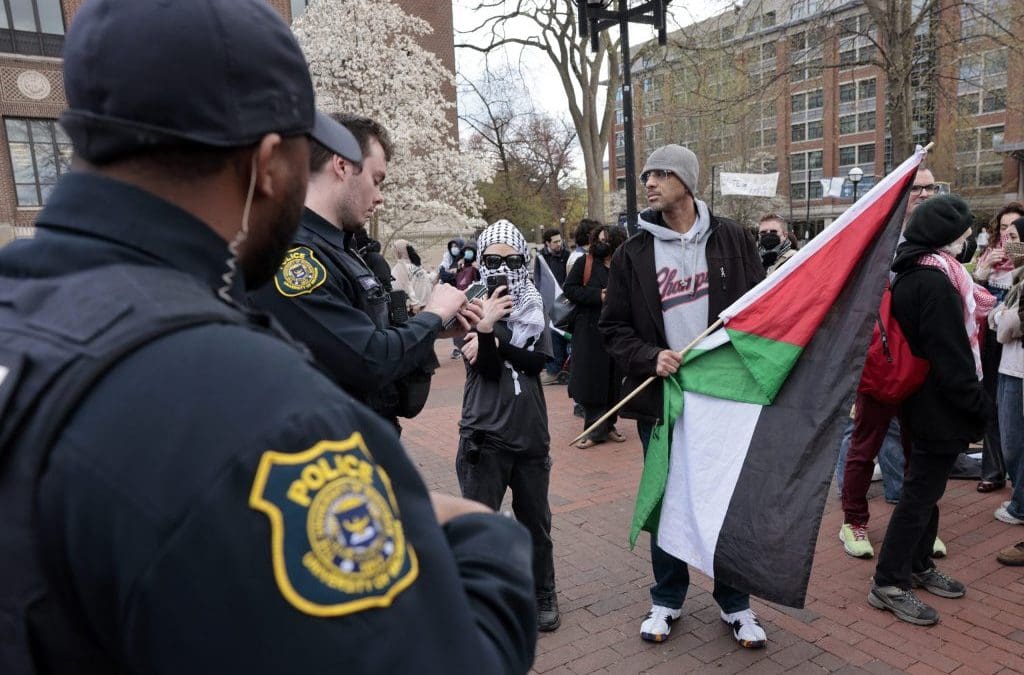
Life on college campuses has changed dramatically in the last 10 months. While institutions of higher education continue to reel from the Trump administration’s top-down attacks and scramble to adjust, workers on campus say that their universities are simultaneously expanding their own internal repression and surveillance apparatuses to squash dissent. In this episode, we speak with a panel of graduate student workers and union members from Columbia University and the University of Michigan about the chilling new reality on their campuses and what it’s like to live, learn, and work there today.
Panelists include; Vayne, a PhD candidate in history at Columbia University and a member of the bargaining committee for Student Workers of Columbia; Conlan Olson, a PhD student in computer science at Columbia University and a member of the bargaining committee for Student Workers of Columbia; Jared Eno, a grad worker in sociology and public policy at the University of Michigan and a rank-and-file member of the Graduate Employees Organization.
Additional links/info:
Graduate Employees Organization (GEO) website, Instagram, Facebook page, and X page
Student Workers of Columbia-UAW Local 2710 website, Instagram, Facebook page, and X page
Glenn Hedin & Barrett Dolata, The Michigan Daily, “Three pro-Palestine activists arrested for protesting speech given by former Israeli soldiers”
Student Workers of Columbia press release: “Columbia threatens discipline for union picket, extends repression to labor action”
Maximillian Alvarez, Working People / The Real News Network, “‘The raids happened Wednesday, finals started Thursday’: FBI agents raid homes of pro-Palestine students at University of Michigan”
Maximillian Alvarez, The Real News Network, “‘Worse’ than McCarthyism: Trump’s war on higher education, free speech, and political dissent”
Maximillian Alvarez, Working People / The Real News Network, “‘A tremendous chilling effect’: Columbia students describe dystopian reality on campus amid
by Mansa Musa | Nov 3, 2025 | Politics and Movements: US, Prison Industrial Complex, prison reform, Prisons and Policing, Rattling the Bars, video
From chronic overcrowding and inmate deaths to systematic abuse and lawbreaking by corrections officers, prison conditions in the state of Alabama have reached a crisis point. And yet, state leaders continue to push an “Alabama solution” that involves building more mega-prisons and expanding qualified immunity for officers. In this episode of Rattling the Bars, host Mansa Musa speaks with Dakarai Larriett, a Democratic candidate for US Senate in Alabama, about about the true cost of Alabama’s carceral crisis and his vision for an alternative vision of criminal justice.
Guest:
Dakarai Larriett is a community leader, entrepreneur, and Democratic candidate for US Senate in Alabama
Credits:
Producer / Videographer / Post-Production: Cameron Granadino
Transcript
The following is a rushed transcript and may contain errors. A proofread version will be made available as soon as possible.
Mansa Musa:
Welcome to this edition of Rattling the Bars. I’m your host Mansa Musa. We’ve been hitting hard on covering what’s going on down in Sweet Home, Alabama. We’ve been intentional about giving people a voice or turn the volume up on their voice about what they should be done in Alabama. What is the Alabama solution? This term came out of a documentary where prison system in Alabama was being highlighted, and when they confronted the governor with some of the realities of the abuse that was taking place in the Alabama prison system in general, and the fact that the United States Attorney General had issued a mandate that the conditions in Alabama were so horrendous that they had to do something about it, the governor respond was this is not a Justice Department solution. This is not the Justice Department responsible correcting.