by Michael Fox | Nov 14, 2025 | Economy and Inequality, farmers, Podcast, Politics and Movements: US, Stories of Resistance
It was the Great Depression. Early 1930s. United States. More than a thousand mortgages a day were being foreclosed on. Hundreds of thousands of families were losing their homes each year.
Times were hard for everyone. Especially hard for farmers. But neighbors found a way to push back and help their friends in a very creative way. They called it a penny auction.
BIG NEWS! This podcast has won Gold in this year’s Signal Awards for best history podcast! It’s a huge honor. Thank you so much to everyone who voted and supported.
And please consider signing up for the Stories of Resistance podcast feed on Spotify, Apple Podcasts, Spreaker, or wherever you listen. And please take a moment to rate and review the podcast. A little help goes a long way.
The Real News’s legendary host Marc Steiner has also been in the running for best episode host. And he also won a Gold Signal Award. We are so excited. You can listen and subscribe to the Marc Steiner Show here on Spotify or Apple Podcasts.
Please consider supporting this podcast and Michael Fox’s reporting on his Patreon account: patreon.com/mfox. There you can also see exclusive pictures, video, and interviews.
Written and produced by Michael Fox.
Transcript
Michael Fox: It’s the Great Depression. Early 1930s. United States. More than a thousand mortgages a day are being foreclosed on. Hundreds of thousands of families are losing their homes each year.
Times are hard for everyone. Especially hard for the farmers. See, it’s also the dust bowl. Intense drought. Huge dust storms roll across the midwest. And for farmers, a couple of bad seasons can break you. You borrow some
by Julia Conley | Nov 13, 2025 | Article, Economy, Economy and Inequality, elections, Inequality, Politics and Movements: US, Reprint
This story originally appeared in Common Dreams on Nov. 13, 2025. It is shared here under a Creative Commons (CC BY-NC-ND 3.0) license.
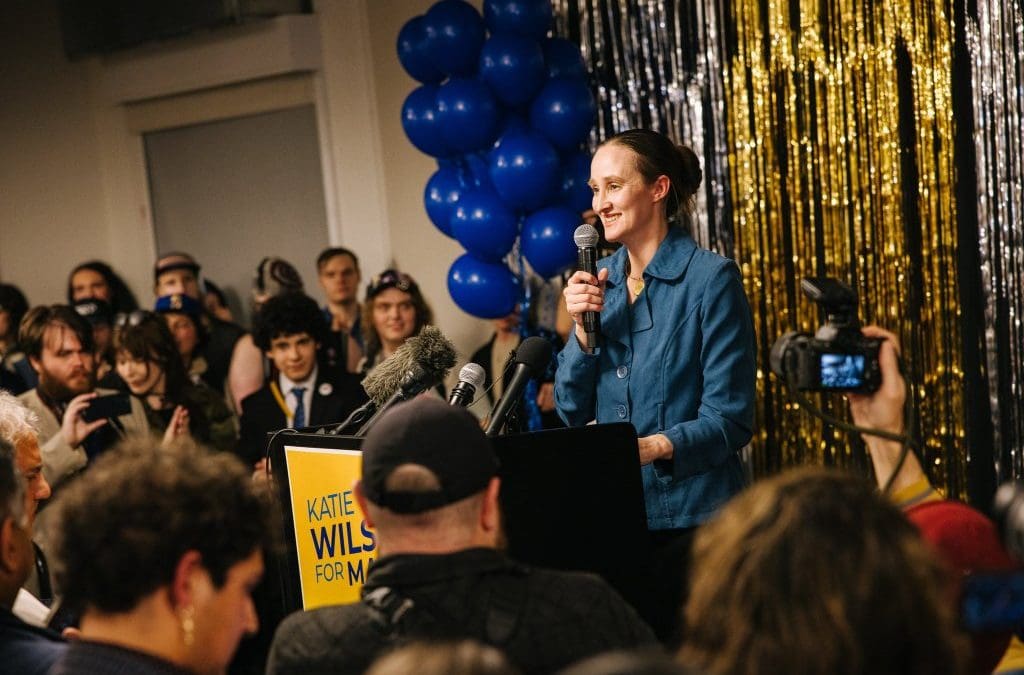
With the help of an “army of grassroots volunteers” and the support of Seattle’s working-class neighborhoods, progressive candidate Katie Wilson was named the winner of the city’s mayoral election on Wednesday night, beating corporate-backed Democratic Mayor Bruce Harrell after a campaign that focused heavily on how unaffordable Seattle is for many families—including Wilson’s.
Wilson, who rents a one-bedroom apartment with her husband and young child and spoke on the campaign trail about how her parents have helped her pay for childcare, was elected after taking a 1,976-vote lead over Harrell, with just 1,320 ballots remaining.
The Seattle Times called the race for Wilson and reported that it was unclear whether the close race would go to a recount, and Harrell said he would address voters on Thursday.
“Ahead by almost 2,000 votes, we now believe that we’re in an insurmountable position,” said Wilson in a social media post on Wednesday night. “We’re so grateful to all the volunteers who have powered this grassroots campaign to victory. We look forward to hearing the mayor’s address to the city tomorrow.”
The mayoral election results were mirrored by other municipal elections in Seattle, with the Times reporting a “progressive sweep” of City Hall as voters elected left-leaning nonprofit leader Dionne Foster as City Council president and progressive challenger Erika Evans as city attorney.
Wilson’s victory also proved wrong the commentators who had dismissed New York Mayor-elect Zohran Mamdani’s victory over corporate-backed former Gov. Andrew Cuomo as an aberration that would not be replicated outside of the solidly Democratic city.
Wilson has never held public office and is the co-founder of the Transit Riders Union, where she
by Taya Graham and Stephen Janis | Nov 13, 2025 | Economy and Inequality, Epstein, Inequality, Inequality Watch, Politics and Movements: US, Prisons and Policing, video
Jeffrey Epstein was able to traffic and assault young women and girls for almost two decades, without consequence. How did he get away with this? The simple answer is wealth. But how did a college dropout who was quietly dismissed from his first job as a teacher at a private school acquire a private jet and party with some of the most famous and powerful people in the world? We delve into the money and the people who may have aided and abetted Epstein’s scandalous and criminal life.
Credits:
Producers: Taya Graham, Stephen Janis
Post-Production: David Hebden
Transcript
The following is a rushed transcript and may contain errors. A proofread version will be made available as soon as possible.Taya Graham:
For most of 2025. One story and one story alone dominated the cultural and political discourse in America, the Epstein files. This phenomena was remarkable, all but more so for President Trump’s response. This was the first time in Trump’s decade long political career that we saw a significant rift in his fiercely loyal MAGA movement. By late July, 47% of Trump supporters disapproved of how he was handling the issue. Now, given Trump’s controversial association with the dead man, his obfuscation seemed like it could be the only thing to finally chip away at his political capital. Since then, a lot has happened in the American news from a major ice crackdown in blue states to the illegal bombing of ships in the Caribbean to an attempted ceasefire in Gaza, and yet Epstein’s case still looms large, large enough, some believe to have played a significant role in the October government shutdown.
Now ostensibly, the shutdown
by Marc Steiner | Nov 13, 2025 | Civil Rights, Podcast, Politics and Movements: US, Prisons and Policing, Racial Justice, The Marc Steiner Show
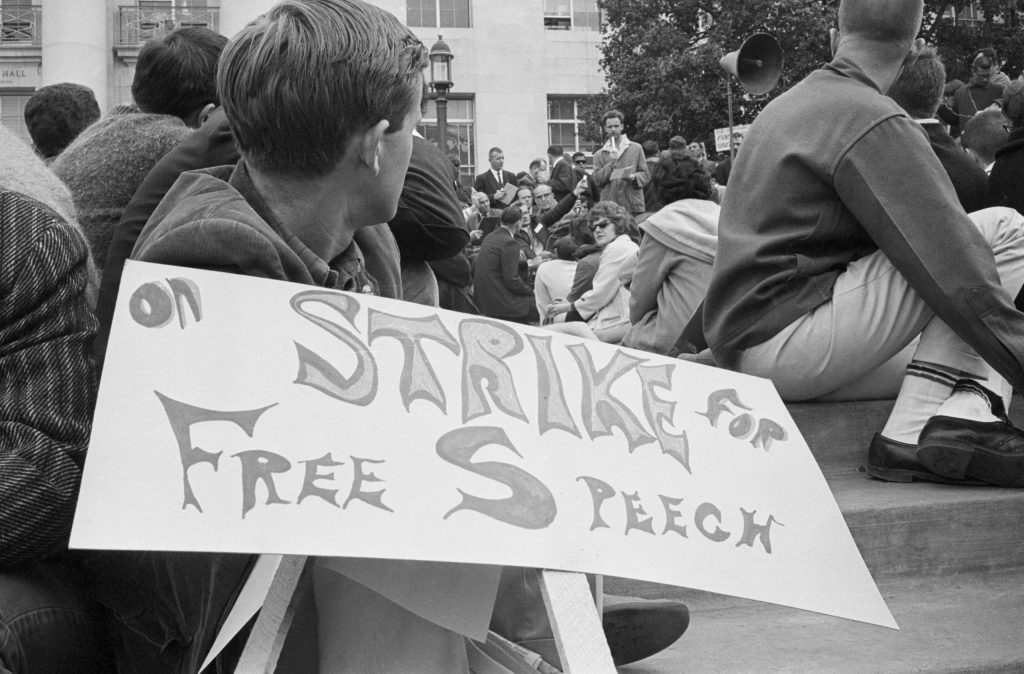
Historian David Hollinger connects the history of the 1964 Free Speech Movement in Berkeley, California, to the protest movements and repressive crackdowns on free speech gripping universities today. In this episode of The Marc Steiner Show, co-hosted by Marc Steiner and Michael Fox, Hollinger draws on his firsthand experience and decades of research to explain the lessons we can learn from 1960s civil rights activists and antiwar organizers about how to defend free speech and academic freedom from extinction today.
Guest:
David A. Hollinger is the Preston Hotchkis Professor of History Emeritus at the University of California, Berkeley, and earlier taught at the University of Michigan, the State University of New York at Buffalo, and the University of Oxford. Hollinger’s books include Protestants Abroad: How Missionaries Tried to Change the World but Changed America (Princeton, 2017), After Cloven Tongues of Fire: Protestant Liberalism in Modern American History (Princeton, 2013), Science, Jews, and Secular Culture (Princeton, 1996) and Postethnic America: Beyond Multiculturalism (New York, 1995, 2000, and 2006). He is an elected member of the American Philosophical Society and the American Academy of Arts and Sciences, and a former President of the Organization of American Historians.
Credits:
Producer: Rosette Sewali
Studio Production: David Hebden
Audio Post-Production: Stephen Frank
Transcript
The following is a rushed transcript and may contain errors. A proofread version will be made available as soon as possible.
Marc Steiner:
Welcome to the Marc Steiner Show here on The Real News. I’m Marc Steiner. It’s good to have you all with us. My cohost today is my colleague Mike Fox, who hosts Stories of Resistance for the Real News and covers Latin America and world issues. Today we’re talking with David Hollinger about free Speech, the movement that
by Maximillian Alvarez | Nov 12, 2025 | Economy, Economy and Inequality, labor, Podcast, Politics and Movements: US, Unions, Working People
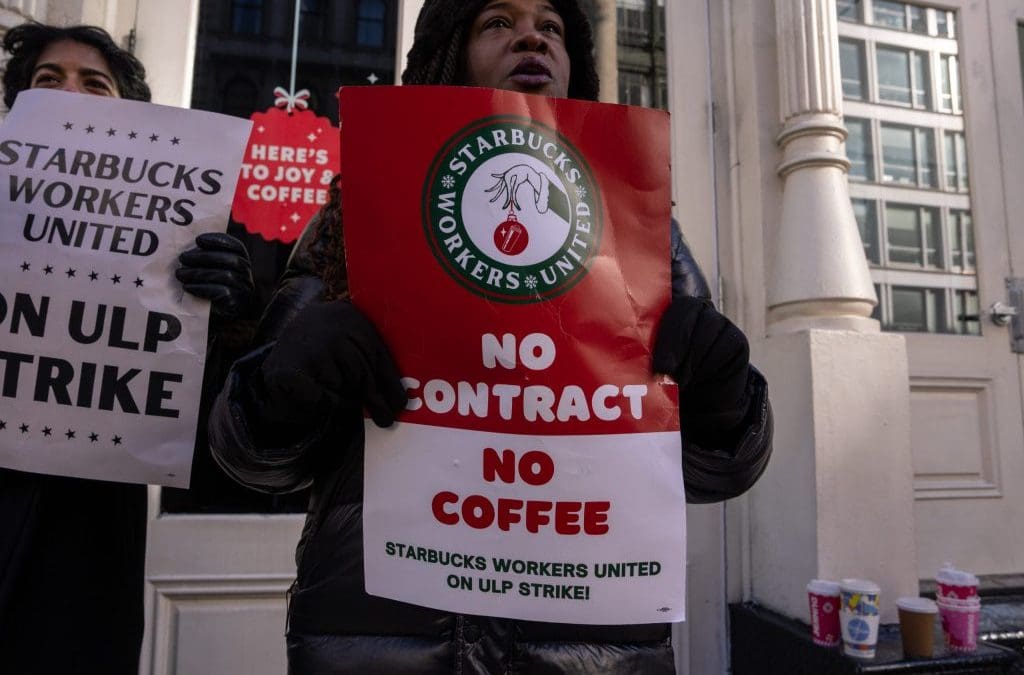
Four years after the first Starbucks store in the US unionized in 2021, workers across the country are still facing rampant union busting and still fighting for a first contract with the coffee giant. That is why a supermajority of unionized baristas with Starbucks Workers United recently voted to authorize an Unfair Labor Practice strike, which is set to begin on Thursday, Nov. 13, on “Red Cup Day,” in over 25 cities around the US. “Union baristas mean business and are ready to do whatever it takes to win a fair contract and end Starbucks’ unfair labor practices,” says Michelle Eisen, Starbucks Workers United spokesperson and 15-year veteran barista. “If Starbucks keeps stonewalling, they should expect to see their business grind to a halt. The ball is in Starbucks’ court.” In this urgent episode, we speak with Eisen about the impending strike and the state of the yearslong union struggle at Starbucks.
Additional links/info:
“No Contract, No Coffee!” website
Starbucks Workers United website, Facebook page, Bluesky page, Instagram, and TikTok
Starbucks Workers United press release: “With 92% ‘Yes’ vote, union Starbucks baristas overwhelmingly authorize ULP strike”
Dee-Ann Durbin, Associated Press, “Starbucks’ union workers plan strike next week unless company agrees to a contract”
Alina Selyukh, NPR, “Starbucks is closing more stores and laying off 900 workers”
Michael Sainato, The Guardian, “A year under CEO Niccol: Starbucks workers’ long fight for a union contract”
Featured Music:
Jules Taylor, Working People Theme Song
Credits:
Audio Post-Production: Jules Taylor
Transcript
The following is a rushed transcript and may contain errors. A proofread version will be made available as soon as possible.
Maximillian Alvarez:
Alright. Welcome everyone to Working People, a podcast about the lives, jobs, dreams, and struggles of the working class today. Working People is a proud member
by Mansa Musa | Nov 10, 2025 | Politics and Movements: US, Prison Industrial Complex, Prisons and Policing, Racial Justice, Rattling the Bars, The Cultural Front, video
Rattling the Bars host Mansa Musa explores how a one-woman play, The Peculiar Patriot, reveals the human cost of mass incarceration and the enduring ties between slavery and the prison system. The artist behind the play, Liza Jessie Peterson, has worked with incarcerated youth for decades, bringing their stories to the stage and to national audiences. Performed in more than 35 US prisons and filmed at Louisiana’s Angola Prison—once a plantation, now a maximum-security facility—the play became the basis of the documentary, Angola: Do You Hear Us? (Paramount Plus / Amazon Prime). As the fight for abolition and prison reform gains momentum, this story reminds us that art is not decoration—it’s a tool for awakening, organizing, and freedom.
Producer / Videographer / Post-Production: Cameron Granadino
Transcript
Mansa Musa: Welcome to this edition of Rattling the Bars. I’m your host, Mansa Musa. In African tradition, we have what is known as the griot. The griot is a storyteller, but more importantly, the griot is one that translate our oral history into telling events, activities, and monumental accomplishments of African people. Today we have a griot, but more importantly, we have a revolutionary griot. We have a woman that has been inspired to take and tell the stories of African people that’s under the 13th Amendment, but more importantly to educate people about the humanity of these people that we call prisoners and to give them a space so their voices can be heard and the value can be turned up. Liza Jessie Peterson is an activist and actress, playwright, poet, author, and youth advocate who has worked steadfast with incarcerated populations for more than two decades. Her