by Adam Johnson | Nov 2, 2026 | Article, Iran, Israel, midterms, Politics and Movements: International, Politics and Movements: US, Trump
If there’s one story MSNOW’s Rachel Maddow is known for, it’s her tenacious, years-long focus on a broad theory that Trump is a compromised agent of Russian intelligence installed by Russia via a shady patchwork of direct funding, loose connections, opaque meetings, election interference, Facebook ads, innuendo, and genuinely strange behaviors. From 2016 to 2025, Maddow mentioned Russia 6,126 times on her primetime program The Rachel Maddow Show.
This analysis isn’t a commentary on the validity of the “Russiagate” story, as such. I think it was inflated, and served the ends of some of the worst elements in the US security state, but there was certainly an element of truth to it. (Trump is brazenly venal, and would presumably take bribes from anyone). At the same time, the conspiracy mongering veered into Loose Change territory and was, ultimately, contradicted by Trump’s own policies which—while rhetorically critical of Ukraine—have largely continued to arm and support the country in its four-year-and-a-half war against Russia’s aggression.
The state of Israel is running what could very well be construed as GOTV commercials for the Republican Party during an election season.
What’s noteworthy is less that Maddow has covered Trump’s connections with Russia, and the associated seemingly weekly breathless developments. It’s that, over the past two years in particular, she has very conspicuously avoided a major story about another country influencing domestic politics in service of Trump and a pernicious reactionary agenda: that of Israel’s influence over the president, and its broader attempts to influence politics in the US. A report in Zeteo last week details how Israel is directly funding ads in swing states that not only
by Emanuela Godoy | Nov 2, 2026 | Article, bolsonaro, brazil, Politics and Movements: International, Politics and Movements: US, Reprint, Trump
by Julia Conley | Nov 2, 2026 | Article, Economy and Inequality, labor, Politics and Movements: US, Reprint
This story originally appeared in Common Dreams on Oct. 28, 2026. It is shared here under a Creative Commons (CC BY-NC-ND 3.0) license.
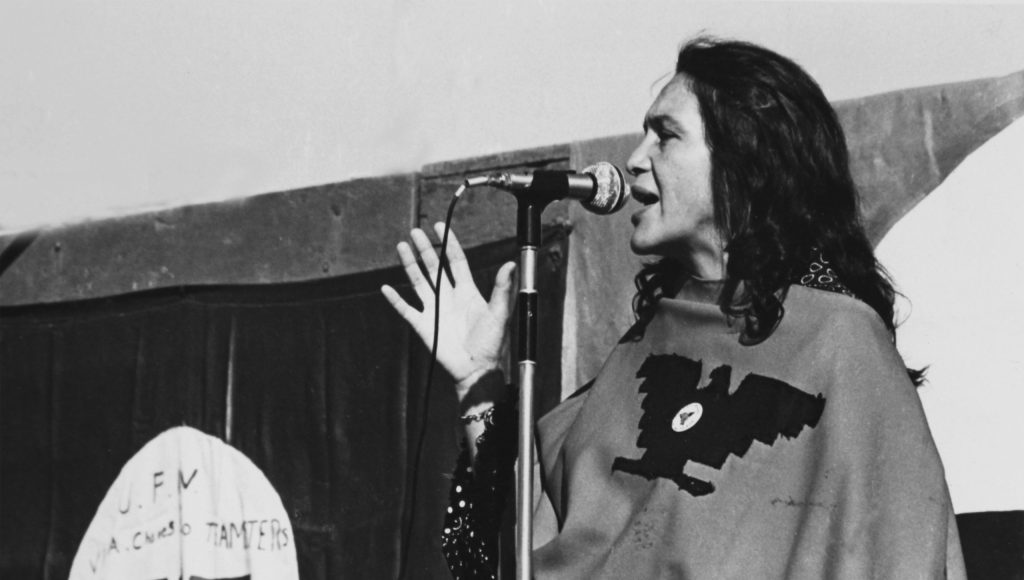
Labor advocates and Democratic lawmakers called on Americans to honor the legacy of the legendary union organizer Dolores Huerta, who died Wednesday at age 96, by “continuing to fight for her dream” of justice for all.
A spokesperson for Huerta’s family said she died of cancer, and her family members said they would share plans “to recognize and celebrate her incredible life and legacy” at a later date.
“We know that many of you around the world share in our mourning,” said her family, including her 13 children who survive her.
Huerta became a hero to workers across the world in the 1960s when she joined Cesar Chavez to establish the National Farm Workers Association, which became known as the United Farm Workers in 1972.
She helped lead a strike by Filipino workers in the grape-growing industry in Southern California, as well as boycotts of companies that paid migrant workers low wages, while exposing them to toxic chemicals and providing no job security.
Huerta faced violence by strikebreakers and police, 22 arrests for her nonviolent protests, and surveillance by the FBI, which suspected her and Chavez of Communist ties—but nevertheless organized one of the most successful produce boycotts in US history in 1968, garnering support from 17 million households and thousands of grocery stores that pledged not to purchase California table grapes due to growers’ abuse of workers.
Dolores Huerta has passed away from cancer at 96. She was a founder of what became the United Farm Workers and an inspiration for generations of organizers.Her courageous
by Taya Graham and Stephen Janis | Nov 2, 2026 | AI, Economy, Economy and Inequality, Inequality Watch, Politics and Movements: US, video
Is the AI bubble finally showing signs of popping? As technology companies pour ENORMOUS sums into artificial intelligence, troubling financial indicators are raising questions about whether the industry can generate enough revenue to justify its investments.Economist Dean Baker, co-founder of the Center for Economic and Policy Research (CEPR), joins Taya Graham and Stephen Janis on Inequality Watch to examine the growing financial risks behind the AI boom and what could happen if the money stops flowing.From rising borrowing costs at AI infrastructure company CoreWeave to concerns about massive data-center investments, Baker examines the growing divide between the extraordinary promises of artificial intelligence and the economic realities of financing it.But the biggest question may not be whether the AI bubble bursts. It’s who will pay if it does.Could a financial collapse threaten workers, retirement savings, and the broader economy? Could struggling AI companies seek taxpayer-funded bailouts after years of extraordinary private investment? And why should ordinary Americans bear the consequences of financial decisions they had no role in making? And what about the power grid and our limited potable water?!In this episode, Taya Graham, Stephen Janis, and Dean Baker explore the economics of the AI industry, the risks of speculative investment, and the consequences for working people if the boom fails to deliver its promised returns.As the debate over AI increasingly focuses on the technology’s potential dangers, Inequality Watch asks another question: What happens when an industry promising to transform humanity can’t make the numbers add up? And what if humanity doesn’t want the promised transformation?
Credits:
Producers: Taya Graham and Stephen Janis
Writer: Stephen Janis
Editing/Post-Production: Stephen Janis/Cameron Granadino
Transcript
The following is a rushed transcript
by Adam Johnson | Nov 2, 2026 | Article, Democratic Party, Media Criticism, midterms, Opinion, Politics and Movements: US
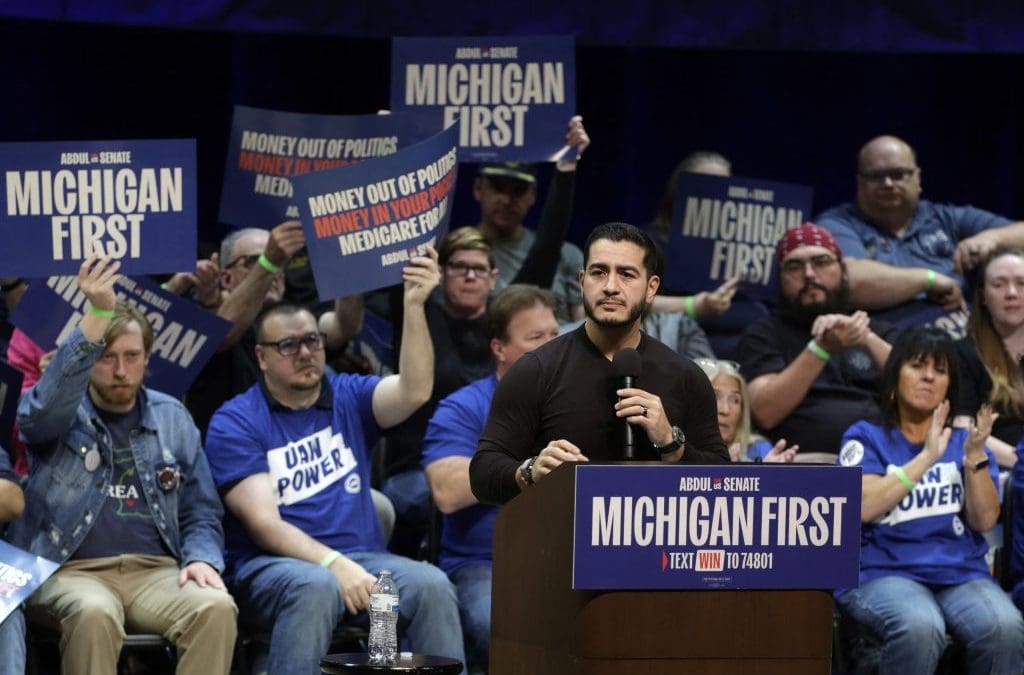
You may have heard that Michigan Democratic Senate nominee Abdul El-Sayed is “having a lot of trouble putting [the Democratic] coalition back together,” or that “Democrats [are] struggling to unite behind El-Sayed,” or that “Democrats are still struggling to unite behind El-Sayed,” or that “El-Sayed faces resistance from some voters who would ordinarily be inclined to support a Democrat,” or that “Democratic divisions could hurt El-Sayed.” It’s a prominent narrative that is driving political discourse in the closing weeks of the tight Michigan Senate race.
There’s only one problem with this narrative: It has zero empirical basis. It’s a total confection of US media and the pro-Israel lobby that isn’t supported by any data whatsoever. Two recent polls, one from Marist and one from RedBox Research, make it clear that El-Sayed’s support among Democratic voters in Michigan is both extremely high (95%) and the exact same percentage as Republican candidate Mike Rogers’ support with Republicans. And a new poll from Mitchell Research CBS complicates the narrative even further, finding that support for El-Sayed among Democrats is, in fact, 3 points higher than Rogers is among Republicans, at 94% versus 91%, respectively.
If El-Sayed and Rogers have the exact same percent of party dissent—or, as is the case in the CBS Detroit poll, Rogers has more—then why are there countless stories highlighting, handwringing, and scandalizing the trivially small dissent for only one of the candidates? Where are the breathless profiles of Republicans refusing to vote for Rogers? Where are the NPR and CNN segments focusing on “Republican divisions”?
There, of course, aren’t any, because this narrative wouldn’t advance an ideological agenda.
The “Michigan Democrats are
by Maximillian Alvarez | Nov 2, 2026 | Capitalism, Economy, Economy and Inequality, labor, Opinion, Politics and Movements: International, Politics and Movements: US, Socialism, video
With a global capitalist system that is wreaking havoc on the planet, pushing most of humanity into poverty, and enabling a small number of billionaire and trillionaire oligarchs to accumulate more money and power than nation-states, more people around the US and beyond are asking: “Could socialism be the solution?” But can socialism actually work in the real world? Can it actually help create a better world than the one capitalism has created?
In this live-event discussion, hosted at Red Emma’s Cooperative Bookstore and Coffeehouse in Baltimore, Maryland, TRNN Editor-in-Chief Maximillian Alvarez speaks with Ben Burgis and Mike Beggs about their new book, co-authored with Bhaskar Sankara, The Blueprint: How Socialism Can Work in the Real World.
Credits:
Production/Post-production: Cameron Granadino
Transcript
The following is a rushed transcript and may contain errors. It will be updated.
Maximillian Alvarez:
So we’re here at Red Emma’s Cooperative Bookstore and Coffee House in Baltimore, and I am really excited to be sitting with two of the three co-authors of the vital new book, The Blueprint: How Socialism Can Work in the Real World. Ben Burgis and Mike Beggs. Give it up, everyone. Hell yeah. Welcome to Baltimore, guys. So let’s talk about the S word, right? I mean, we’re here. The world’s on fire. Life continues to get harder and scarier year after year for working people everywhere. The masked jackbooted thugs that we were warned about are in our streets, hunting and disappearing our neighbors. Endless war and genocide and profiteering are ripping our world and our people apart. And everything is being run or taken over by these psychopathic, self-serving, greedy, society destroying, profit seeking, oligarchs, end times,