by Taya Graham and Stephen Janis | Nov 2, 2026 | Democrats, Economy, elections, Inequality Watch, midterms, Politics and Movements: US, Socialism, video
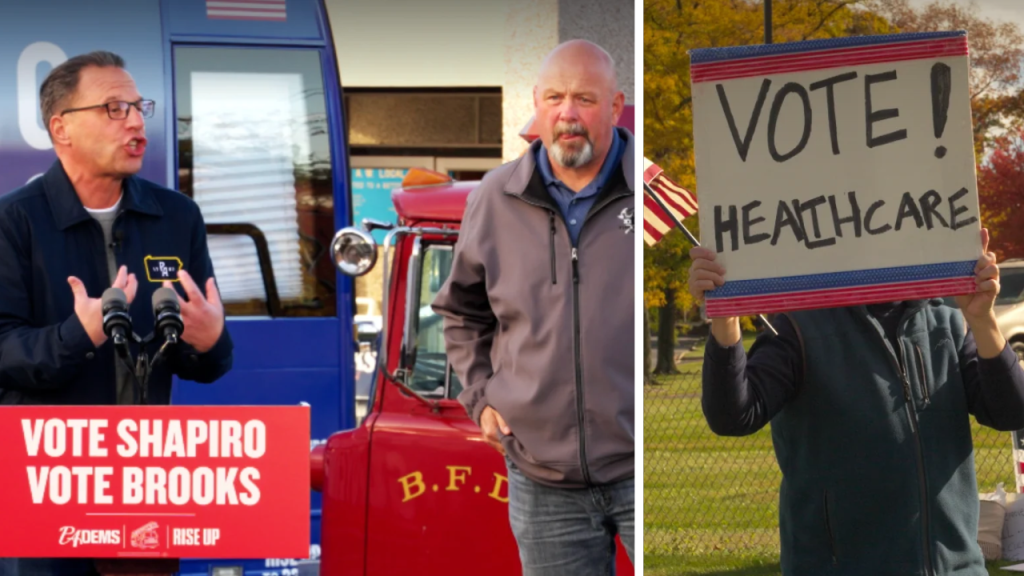
Democrats are fired up. Some MAGA voters are questioning whether to show up. And in one of America’s most closely watched congressional battlegrounds, that divide could have enormous implications for the fight over control of the House.The Real News Network traveled to Pennsylvania’s Lehigh Valley, home to the fiercely contested 7th Congressional District, to speak directly with voters about the issues, frustrations, and political ideas shaping their decisions for the 2026 midterm elections.From Allentown to Bethlehem, we talked with voters across the political spectrum about what motivates them to head to the polls and what might convince others to stay home.In a district where Republican incumbent Ryan Mackenzie faces Democratic challenger Bob Brooks, questions about economic inequality, the cost of living, war and the role of government are taking center stage.We also explore the debate over socialism and progressive economic ideas. While mainstream media’s political commentary often portrays socialism as politically toxic, conversations with voters raise interesting questions about how those ideas are actually being received on the ground.Could voter enthusiasm, political disillusionment, and changing attitudes toward economic policy help shape the outcome of one of the country’s most closely watched House races?Join Taya Graham and Stephen Janis for an on-the-ground look at Pennsylvania’s 7th District, where the battle for Congress is playing out one voter at a time.
Credits:
Production/Post-production: Taya Graham, Stephen Janis
Transcript
A transcript will provided when ready
by Petala Ironcloud | Nov 2, 2026 | AI, Article, Climate, Climate Crisis, Politics and Movements: US, Reprint
This article was originally published by Truthout on Oct. 26, 2026. It is shared here under a Creative Commons (CC BY-NC-ND 4.0) license.
The Northern Cheyenne Tribal Council voted unanimously this October to ban data centers on tribal land in Montana. The ban follows a decision in August by the Fort Peck Tribes to bar officials from projects involving data center developers.
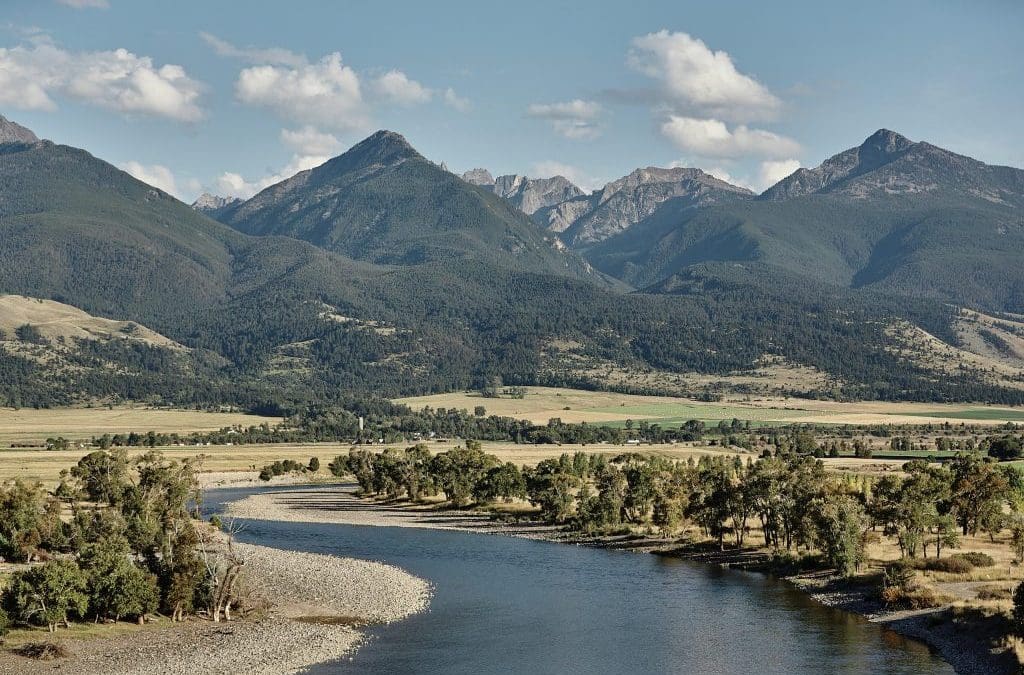
But Montana’s Tribes are now split. Next door to the Northern Cheyenne, the Apsáalooke, or Crow Tribe, has not taken an official position and remains open to hearing proposals from companies, according to Shane Doyle, an Apsáalooke tribal member and The Nature Conservancy’s Indigenous right relations director. Doyle grew up on the Crow Reservation and has consistently advocated for reciprocity with the land, rendering him a voice in the dissent, whether he intends to be or not.
The stakes are highest in Crow country. In the small city of Hardin, at the Crow Indian Reservation’s northern edge, a former cryptocurrency mine is being actively converted into an AI data center. About 14 miles northwest of the reservation, Texas-based Quantica Infrastructure plans to build its Big Sky campus on nearly eight square miles of ranchland near the town of Broadview, north of Billings, Montana’s most populous city. As it’s currently planned, the data center would rank among the largest data centers in the world. The Yellowstone River Valley is “the heart of the Crow Nation,” Doyle said.
Krystal Two Bulls, who is Oglala Lakota and Northern Cheyenne, has been tracking these data centers closely. As the executive director of Honor the Earth, a nonprofit tracking data centers on or near reservation lands, she
by Mansa Musa | Nov 2, 2026 | cuba, Economy and Inequality, Latin America, Politics and Movements: International, Politics and Movements: US, Rattling the Bars, video
In this episode of Rattling the Bars, Mansa Musa speaks with Dr. Kimberly Dawn Miller, Co-Coordinator of the Haiti/Americas Team for the Black Alliance for Peace. They examine geopolitical relations and the unfiltered history of U.S. imperialism in the Caribbean—including economic warfare against Cuba, the state of Florida’s recent arrest warrant for former Cuban leader Raúl Castro, Trump and JD Vance’s racist criminalization of Haitians, and over a century of capitalist resource extraction and regime change in Haiti.
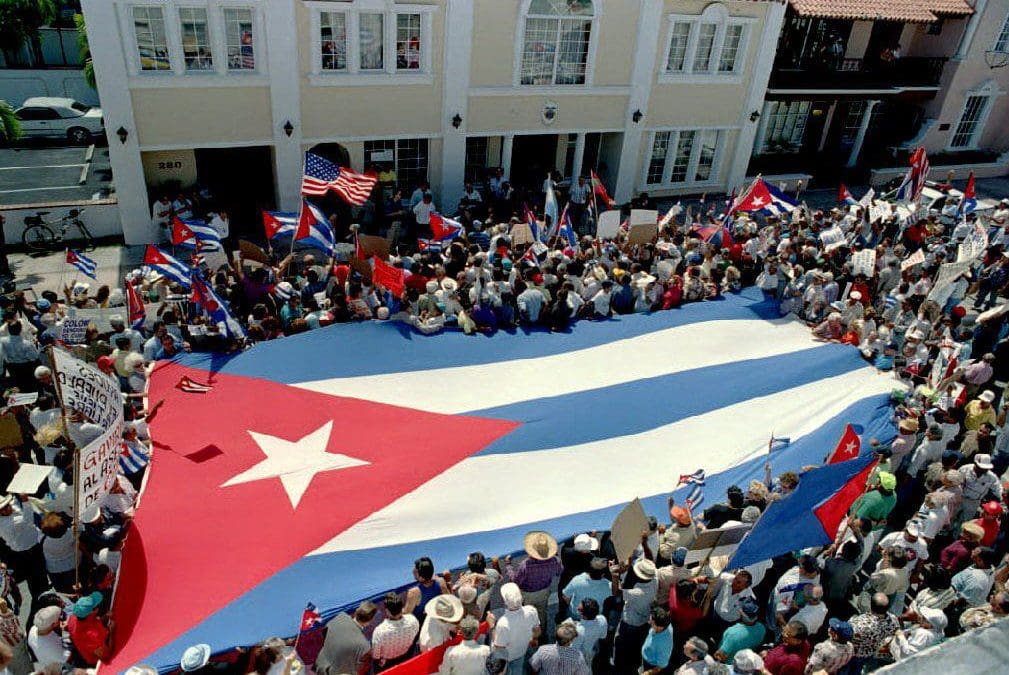
The Black Alliance for Peace in Miami, organizing alongside the Miami Coalition, seeks to end the blockade against Cuba. October 24–31 marks the Cuba Week of Action against the U.S. chokehold on Cuba, leading up to the International and National Day of Action on October 28. This aligns with the United Nations’ annual vote, where the international community will once again vote on the U.S. embargo on Cuba.
Credits:
Production/Post-production: Cameron Granadino
Transcript
The following is a rushed transcript and may contain errors. It will be updated.
Mansa Musa:
Welcome to Rattling the Bars. I’m your host, Mansa Musa. At Rattling the Bars, we examine the prison industrial complex, both domestically and internationally. Miami floor sits at the direct intersection of US imperialism across the Caribbean and Latin America. Joining me today is Dr. Kim Miller, an organizer in Miami fighting to end sanctions and the embargo on Cuba opposing termination of TPS for Haiti and building solidarity with nations targeted for their socialist or abolitionist revolutions. Welcome, Kim.
Dr. Kimberly Dawn Miller:
Thank you. I’m really excited to be here for this conversation.
Mansa Musa:
All right, so first introduce yourself to our audience and tell them about your work with Black
by Adam Johnson | Nov 2, 2026 | Article, Iran, Israel, midterms, Politics and Movements: International, Politics and Movements: US, Trump
If there’s one story MSNOW’s Rachel Maddow is known for, it’s her tenacious, years-long focus on a broad theory that Trump is a compromised agent of Russian intelligence installed by Russia via a shady patchwork of direct funding, loose connections, opaque meetings, election interference, Facebook ads, innuendo, and genuinely strange behaviors. From 2016 to 2025, Maddow mentioned Russia 6,126 times on her primetime program The Rachel Maddow Show.
This analysis isn’t a commentary on the validity of the “Russiagate” story, as such. I think it was inflated, and served the ends of some of the worst elements in the US security state, but there was certainly an element of truth to it. (Trump is brazenly venal, and would presumably take bribes from anyone). At the same time, the conspiracy mongering veered into Loose Change territory and was, ultimately, contradicted by Trump’s own policies which—while rhetorically critical of Ukraine—have largely continued to arm and support the country in its four-year-and-a-half war against Russia’s aggression.
The state of Israel is running what could very well be construed as GOTV commercials for the Republican Party during an election season.
What’s noteworthy is less that Maddow has covered Trump’s connections with Russia, and the associated seemingly weekly breathless developments. It’s that, over the past two years in particular, she has very conspicuously avoided a major story about another country influencing domestic politics in service of Trump and a pernicious reactionary agenda: that of Israel’s influence over the president, and its broader attempts to influence politics in the US. A report in Zeteo last week details how Israel is directly funding ads in swing states that not only
by Emanuela Godoy | Nov 2, 2026 | Article, bolsonaro, brazil, Politics and Movements: International, Politics and Movements: US, Reprint, Trump
by Julia Conley | Nov 2, 2026 | Article, Economy and Inequality, labor, Politics and Movements: US, Reprint
This story originally appeared in Common Dreams on Oct. 28, 2026. It is shared here under a Creative Commons (CC BY-NC-ND 3.0) license.
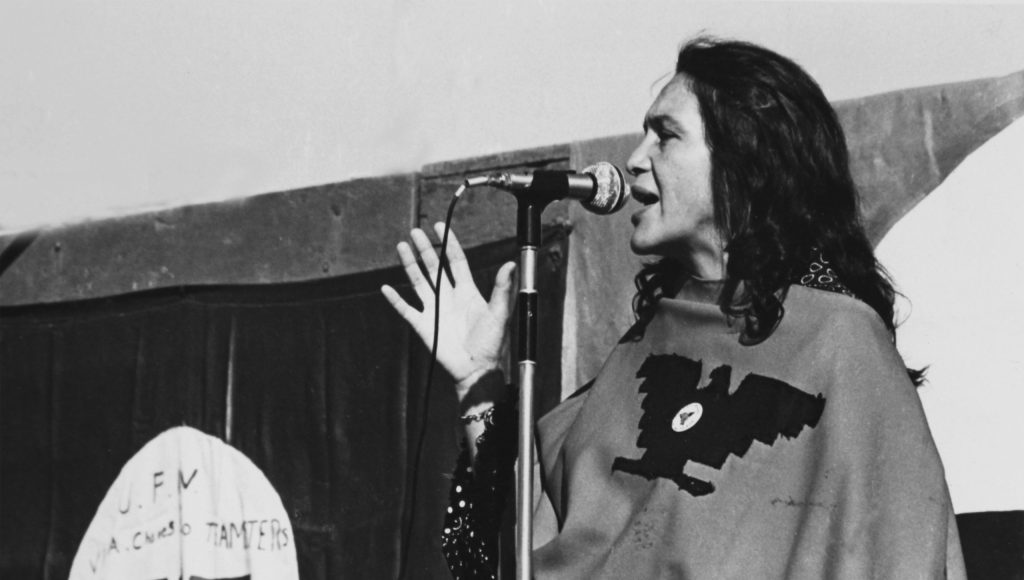
Labor advocates and Democratic lawmakers called on Americans to honor the legacy of the legendary union organizer Dolores Huerta, who died Wednesday at age 96, by “continuing to fight for her dream” of justice for all.
A spokesperson for Huerta’s family said she died of cancer, and her family members said they would share plans “to recognize and celebrate her incredible life and legacy” at a later date.
“We know that many of you around the world share in our mourning,” said her family, including her 13 children who survive her.
Huerta became a hero to workers across the world in the 1960s when she joined Cesar Chavez to establish the National Farm Workers Association, which became known as the United Farm Workers in 1972.
She helped lead a strike by Filipino workers in the grape-growing industry in Southern California, as well as boycotts of companies that paid migrant workers low wages, while exposing them to toxic chemicals and providing no job security.
Huerta faced violence by strikebreakers and police, 22 arrests for her nonviolent protests, and surveillance by the FBI, which suspected her and Chavez of Communist ties—but nevertheless organized one of the most successful produce boycotts in US history in 1968, garnering support from 17 million households and thousands of grocery stores that pledged not to purchase California table grapes due to growers’ abuse of workers.
Dolores Huerta has passed away from cancer at 96. She was a founder of what became the United Farm Workers and an inspiration for generations of organizers.Her courageous