by Maximillian Alvarez | Nov 2, 2026 | Article, elections, midterms, Opinion, Politics and Movements: US, Trump
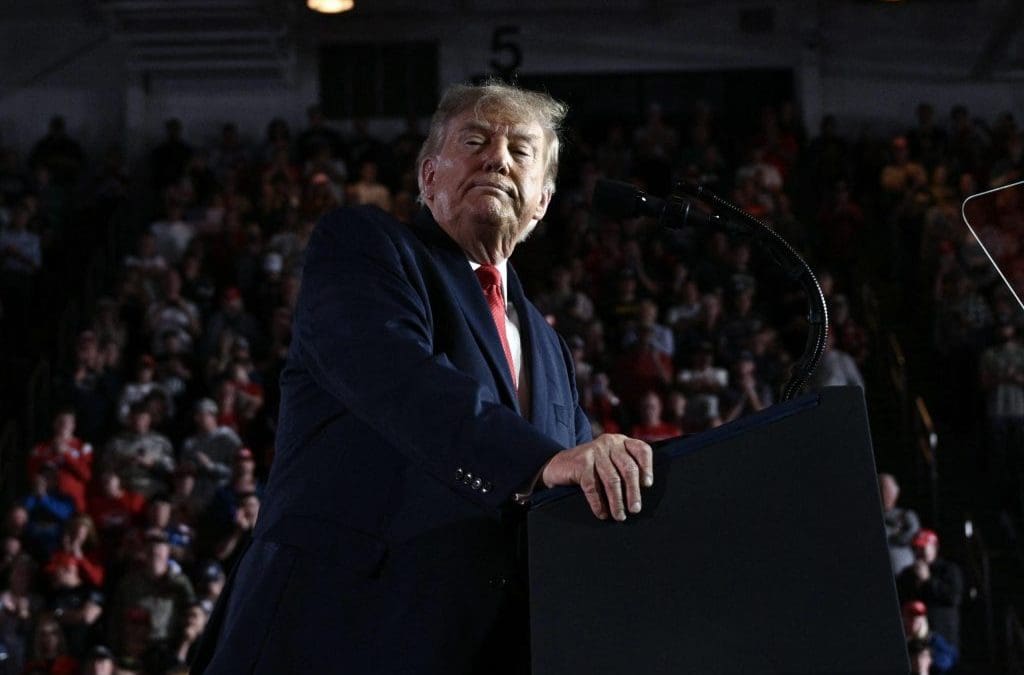
It’s been 4,154 days since Donald Trump came down that golden escalator in 2015 to announce he was running to be president of the United States of America. Looking back, I think it’s safe to say that none of us fully understood then all that was coming our way.
After the 2016 election, we knew that the world as we knew it then was going to change, but I don’t think any of us knew how much. None of us grasped at the time how much of ourselves and our society we would lose over the next decade; if we had, I gotta believe we would have done more to avoid ending up where we’ve ended up now, but I could be wrong.
More than anything—as a journalist and media pundit, as TRNN’s editor-in-chief, but also just as a person in the world—these last 10 years have taught me the hard way to be extremely humble when it comes to making predictions about our political future.
From Trump 1.0 to Trump 2.0; from Covid-19 to January 6; from the war in Ukraine and the genocide in Gaza to the invasion of Venezuela; from the techno-fascists and (wannabe) trillionaire oligarchs taking everything over and shoving AI down our throats to the total, gangsterish dismantling of the administrative state and the rule of law in the USA; from ICE’s war of terror on the public to the US-Israeli war on Iran; anyone who tells you they saw all this coming is lying (to you and to themselves). And so is anyone who tells you they know exactly how things are going to shake out with
by Taya Graham and Stephen Janis | Nov 2, 2026 | Democrats, Economy, elections, Inequality Watch, midterms, Politics and Movements: US, Socialism, video
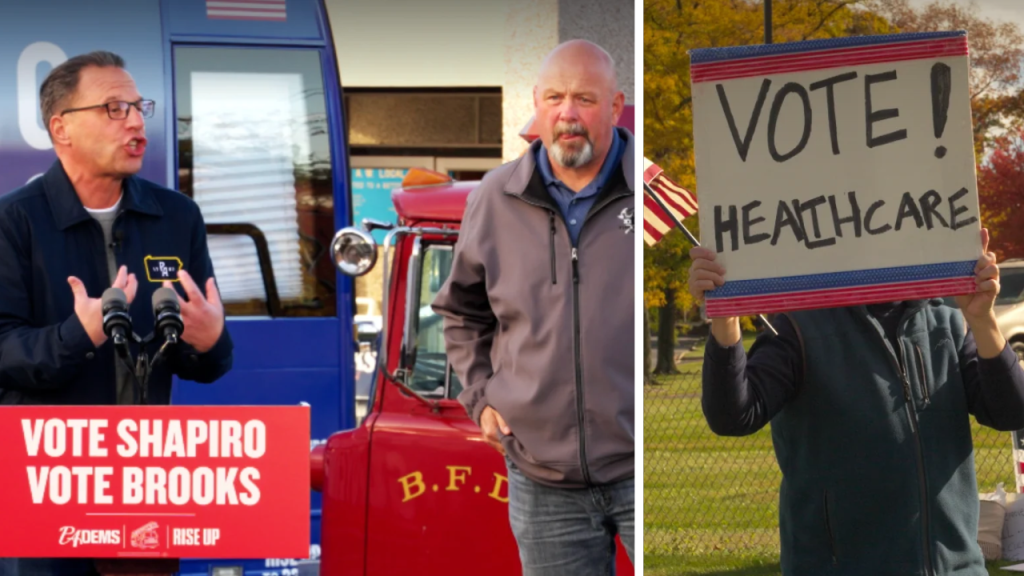
Democrats are fired up. Some MAGA voters are questioning whether to show up. And in one of America’s most closely watched congressional battlegrounds, that divide could have enormous implications for the fight over control of the House.The Real News Network traveled to Pennsylvania’s Lehigh Valley, home to the fiercely contested 7th Congressional District, to speak directly with voters about the issues, frustrations, and political ideas shaping their decisions for the 2026 midterm elections.From Allentown to Bethlehem, we talked with voters across the political spectrum about what motivates them to head to the polls and what might convince others to stay home.In a district where Republican incumbent Ryan Mackenzie faces Democratic challenger Bob Brooks, questions about economic inequality, the cost of living, war and the role of government are taking center stage.We also explore the debate over socialism and progressive economic ideas. While mainstream media’s political commentary often portrays socialism as politically toxic, conversations with voters raise interesting questions about how those ideas are actually being received on the ground.Could voter enthusiasm, political disillusionment, and changing attitudes toward economic policy help shape the outcome of one of the country’s most closely watched House races?Join Taya Graham and Stephen Janis for an on-the-ground look at Pennsylvania’s 7th District, where the battle for Congress is playing out one voter at a time.
Credits:
Production/Post-production: Taya Graham, Stephen Janis
Transcript
A transcript will provided when ready
by Adam Johnson | Nov 2, 2026 | Article, Iran, Israel, midterms, Politics and Movements: International, Politics and Movements: US, Trump
If there’s one story MSNOW’s Rachel Maddow is known for, it’s her tenacious, years-long focus on a broad theory that Trump is a compromised agent of Russian intelligence installed by Russia via a shady patchwork of direct funding, loose connections, opaque meetings, election interference, Facebook ads, innuendo, and genuinely strange behaviors. From 2016 to 2025, Maddow mentioned Russia 6,126 times on her primetime program The Rachel Maddow Show.
This analysis isn’t a commentary on the validity of the “Russiagate” story, as such. I think it was inflated, and served the ends of some of the worst elements in the US security state, but there was certainly an element of truth to it. (Trump is brazenly venal, and would presumably take bribes from anyone). At the same time, the conspiracy mongering veered into Loose Change territory and was, ultimately, contradicted by Trump’s own policies which—while rhetorically critical of Ukraine—have largely continued to arm and support the country in its four-year-and-a-half war against Russia’s aggression.
The state of Israel is running what could very well be construed as GOTV commercials for the Republican Party during an election season.
What’s noteworthy is less that Maddow has covered Trump’s connections with Russia, and the associated seemingly weekly breathless developments. It’s that, over the past two years in particular, she has very conspicuously avoided a major story about another country influencing domestic politics in service of Trump and a pernicious reactionary agenda: that of Israel’s influence over the president, and its broader attempts to influence politics in the US. A report in Zeteo last week details how Israel is directly funding ads in swing states that not only
by Adam Johnson | Nov 2, 2026 | Article, Democratic Party, Media Criticism, midterms, Opinion, Politics and Movements: US
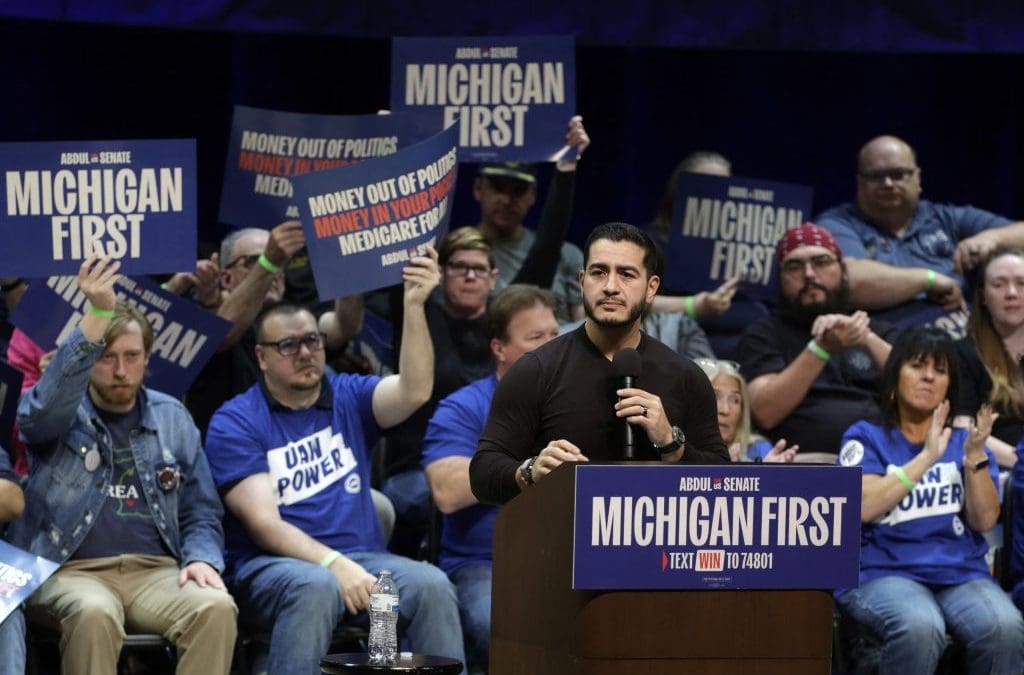
You may have heard that Michigan Democratic Senate nominee Abdul El-Sayed is “having a lot of trouble putting [the Democratic] coalition back together,” or that “Democrats [are] struggling to unite behind El-Sayed,” or that “Democrats are still struggling to unite behind El-Sayed,” or that “El-Sayed faces resistance from some voters who would ordinarily be inclined to support a Democrat,” or that “Democratic divisions could hurt El-Sayed.” It’s a prominent narrative that is driving political discourse in the closing weeks of the tight Michigan Senate race.
There’s only one problem with this narrative: It has zero empirical basis. It’s a total confection of US media and the pro-Israel lobby that isn’t supported by any data whatsoever. Two recent polls, one from Marist and one from RedBox Research, make it clear that El-Sayed’s support among Democratic voters in Michigan is both extremely high (95%) and the exact same percentage as Republican candidate Mike Rogers’ support with Republicans. And a new poll from Mitchell Research CBS complicates the narrative even further, finding that support for El-Sayed among Democrats is, in fact, 3 points higher than Rogers is among Republicans, at 94% versus 91%, respectively.
If El-Sayed and Rogers have the exact same percent of party dissent—or, as is the case in the CBS Detroit poll, Rogers has more—then why are there countless stories highlighting, handwringing, and scandalizing the trivially small dissent for only one of the candidates? Where are the breathless profiles of Republicans refusing to vote for Rogers? Where are the NPR and CNN segments focusing on “Republican divisions”?
There, of course, aren’t any, because this narrative wouldn’t advance an ideological agenda.
The “Michigan Democrats are
by Brad Reed | Oct 2, 2026 | Article, elections, midterms, Politics and Movements: US, Reprint, Voting Rights
This story originally appeared in Common Dreams on Oct. 02, 2026. It is shared here under a Creative Commons (CC BY-NC-ND 3.0) license.
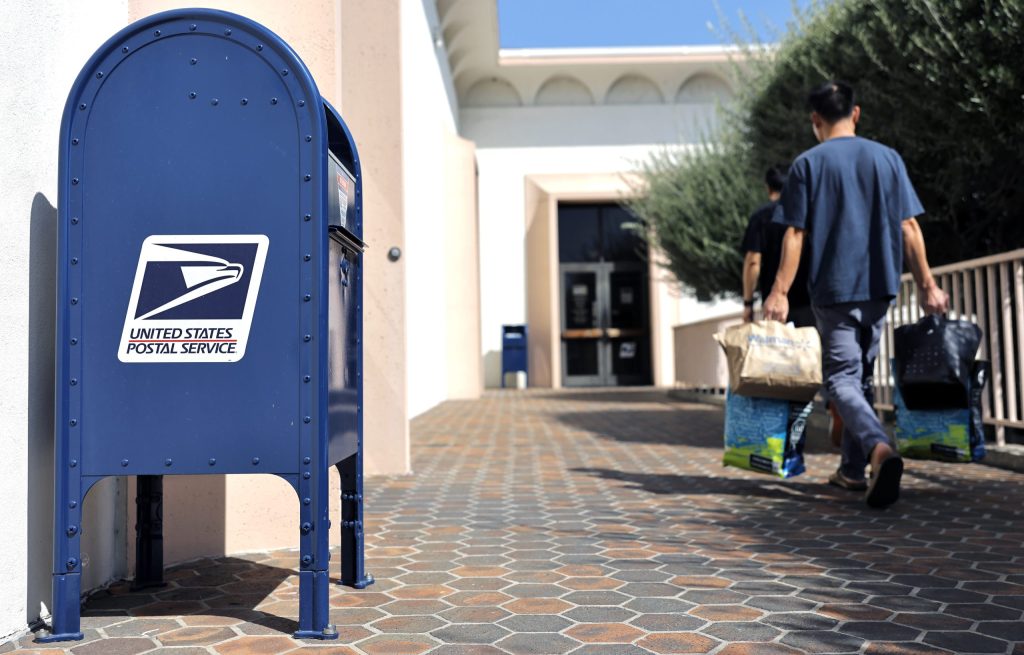
An analysis published Friday by Democracy Docket warned that “tens of thousands” of voters across the US face “risk of disenfranchisement” thanks to actions being taken by the United States Postal Service.
The analysis, written by veteran election reporter Jim Saksa, points to a new USPS policy known as Regional Transportation Optimization (RTO) that “will eliminate evening mail pickups from post offices more than 50 miles away from a regional processing facility, most of which are located in major urban areas.”
For people who live in these areas, ballots sent on Election Day will be postmarked and delivered at least a day later than in previous election years, thus making it ineligible to be included in final election tallies.
“In every state, a day’s delay in delivery means that if mail voters wait until the last day or two before the election to mail their ballot,” Saksa explained, “they could be disenfranchised.”
Saksa reported that this policy is currently active in “about 42.5% of all ZIP codes” in the continental US, and is scheduled to eventually take effect in around 70% of all ZIP codes. No additional ZIP codes are expected to be added between now and election day.
Saksa also said that voters concerned about their ballots not being counted should deliver them in person to their local post office, where they can ask an employee to postmark it.
President Donald Trump has tried for the last several months to use USPS to meddle with states’ mail-in voting systems.
In March, the president signed an executive
by Mansa Musa | Sep 29, 2026 | elections, midterms, Politics and Movements: US, prison reform, Prisons and Policing, Rattling the Bars, video
In this episode of Rattling the Bars, the midterms edition, we take you to the Commonwealth, where Andrea James—abolitionist, author, and organizer—is currently running for governor of Massachusetts. The countdown to November 3 is officially underway. Debates are scheduled for October, but independent and third-party candidates are being excluded from participating.
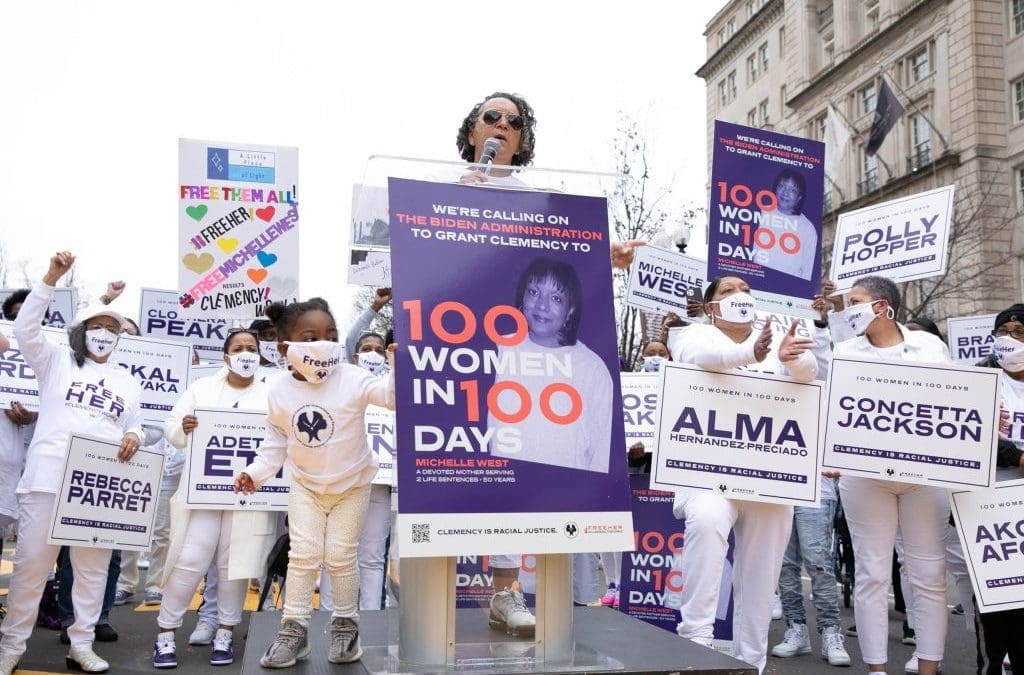
Andrea James has led national campaigns to reunite families by demanding clemency from high-level officials for incarcerated women and men. Now, she is running for governor with a platform focused on rent stabilization, lower energy costs, free childcare and stopping the construction of a new $360M women’s prison.
As a 501(c)(3) organization, The Real News Network does not endorse candidates. However, as an independent news network, TRNN understands how corporate media gives disproportionate airtime to the DNC and GOP compared to independent and third-party candidates.
Related Links:
Andrea James’ Facebook, X, Instagram, TikTok, Bluesky
Credits:
Production/Post-production: Cameron Granadino
Transcript
The following is a rushed transcript and may contain errors. It will be updated.
Mansa Musa:
Welcome to this edition of Rattling the Bars. I’m your host, Mansa Musa. Joining me today is Andrea James, activist in every sense of the word. I want to say abolitionist, but she’s an activist in every sense of the word, organizing and is currently running for the governor of Massachusetts. Thank you for joining me, Andrea.
Andrea James:
Thank you for having me. It’s really great to be back in your studio and just to have the privilege of being a part of how you disseminate information. It’s really an honor to be here and I thank you for this opportunity.
Mansa Musa:
And we want to go on record right now saying that here at Rattling