by Jane Slaughter | Apr 13, 2026 | Article, Economy and Inequality, labor, Politics and Movements: US, Reprint, Unions
This story originally appeared in Labor Notes on April 6, 2026. It is shared here with permission.
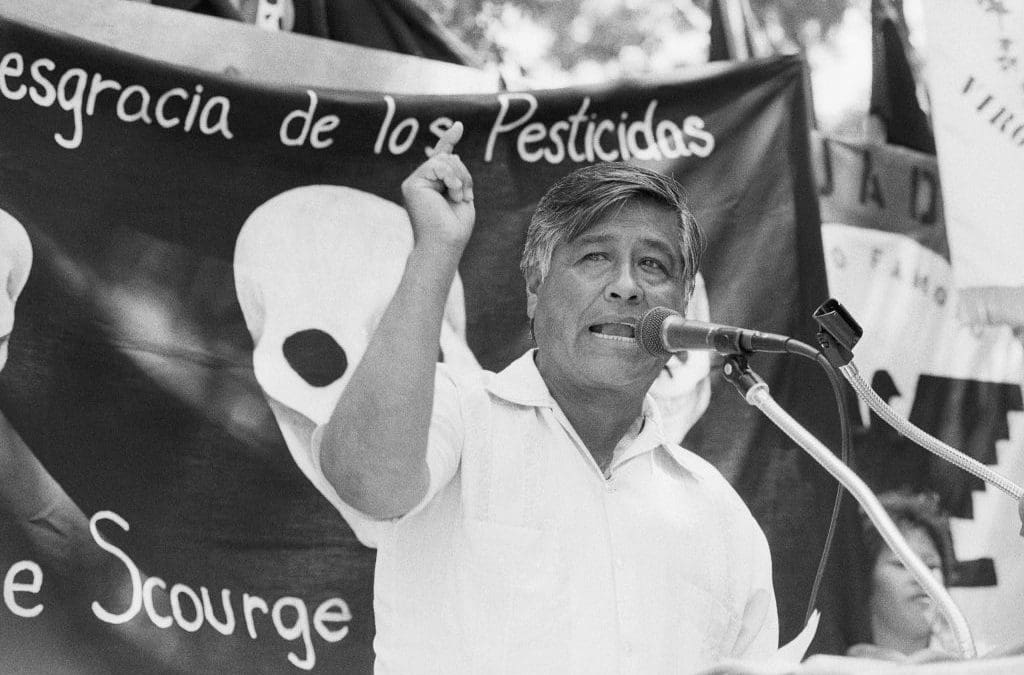
In 2011 Frank Bardacke published an 800-page history of the Farm Workers union: Trampling Out the Vintage: Cesar Chavez and the Two Souls of the United Farm Workers. It opened many eyes to the reasons the UFW became a shadow of its former self.
Bardacke starts the book with an epigraph, a quote from Shakespeare’s Julius Caesar: “O what a fall was there, my countrymen! Then I, and you, and all of us fell down…”
Bardacke was a farmworker in the fields of the Salinas Valley for six seasons in the 1970s. When he decided to write his book years later, he went back to his carpool co-workers, finding them still at work in the fields. In 1994, the union had been thoroughly defeated for nearly 10 years—but his old friends were afraid even to mention its name where the foreman might hear.
I interviewed Frank Bardacke after a New York Times investigation revealed evidence that Chavez had sexually abused young girls who were volunteering with the union, and the allegation that he had also assaulted union co-founder Dolores Huerta. –Jane Slaughter
Jane Slaughter: The revelations about Cesar Chavez as a sexual predator: many people have said they were “surprised but not shocked” or “shocked but not surprised.” How did you react?
Frank Bardacke: The abuse of Ana Murguia was rumored at the time among UFW staff, primarily at the La Paz headquarters. Many of the rumors originated with Ana’s stepmother, Kathy Murguia. But people just didn’t want to hear it. They didn’t want to look into it very deeply because Cesar was one of these
by Jake Johnson | Apr 10, 2026 | Article, Economy, Economy and Inequality, Politics and Movements: International, Politics and Movements: US, Reprint, War
This story originally appeared in Common Dreams on April 09, 2026. It is shared here under a Creative Commons (CC BY-NC-ND 3.0) license.
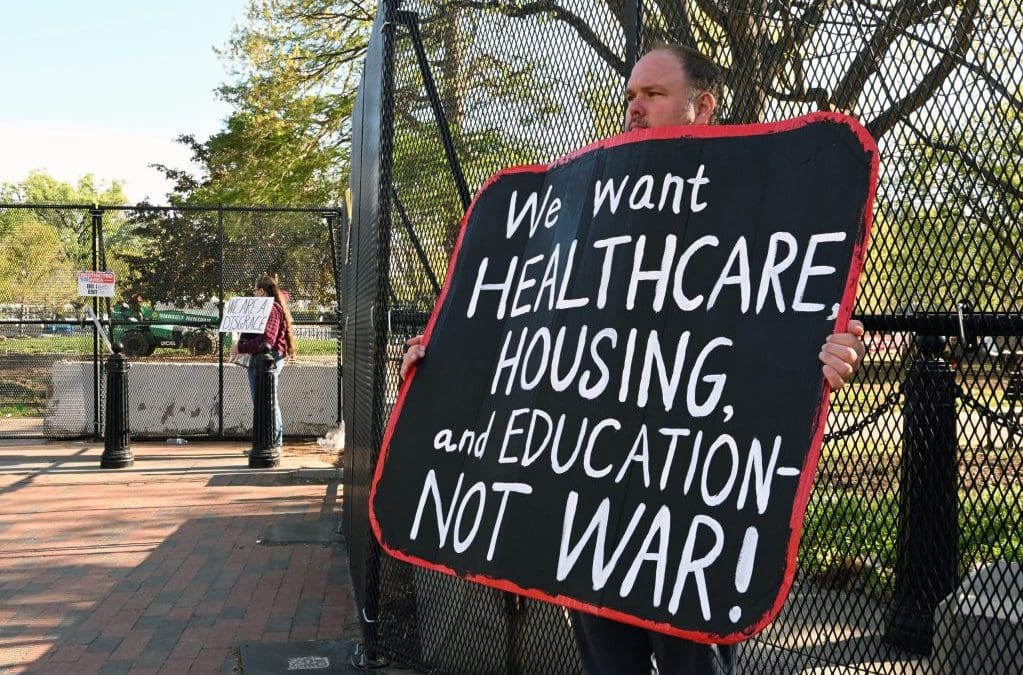
A new analysis released Thursday estimates that the average American taxpayer shelled out over $4,000 to the federal government last year “for militarism and its support systems” such as the Pentagon, whose already-massive annual budget is poised to surge to $1.5 trillion if President Donald Trump gets his way.
The National Priorities Project (NPP) at the Institute for Policy Studies found in its latest annual Tax Receipt report that, through their federal taxes, the average US taxpayer contributed $4,049.35 to Pentagon contractors, military personnel, nuclear weapons, aid to foreign militaries, and last year’s bombing of Iran’s nuclear energy facilities. That’s significantly more than the average US taxpayer contributed to healthcare for low-income Americans through Medicaid—$2,492.
NPP’s estimated militarism sum for last year does not include costs related to the current, massively unpopular US-Israeli war on Iran, which began on February 28, 2026 and has already cost Americans billions at the pump.
“But if we place the 2026 Iran war costs in the context of our 2025 tax receipt and put the cost at $35 billion—a line the US is likely on the verge of crossing—the average taxpayer will have paid $130 for the war on Iran, eight times more than the $16 the average taxpayer paid for a full year of home heating and energy assistance in 2025,” NPP said.
The $1,870 that the average US taxpayer paid toward Pentagon contractors in 2025 was “fifteen times as much as the $124 the average taxpayer paid for school lunches and other nutrition programs,” the analysis found.
“It’s shameful that our tax dollars are doing more to bomb children in Iran and other countries than to feed
by Stephen Prager | Apr 10, 2026 | Article, Economy and Inequality, health care, mexico, Politics and Movements: International, Politics and Movements: US, Reprint
This story originally appeared in Common Dreams on April 10, 2026. It is shared here under a Creative Commons (CC BY-NC-ND 3.0) license.
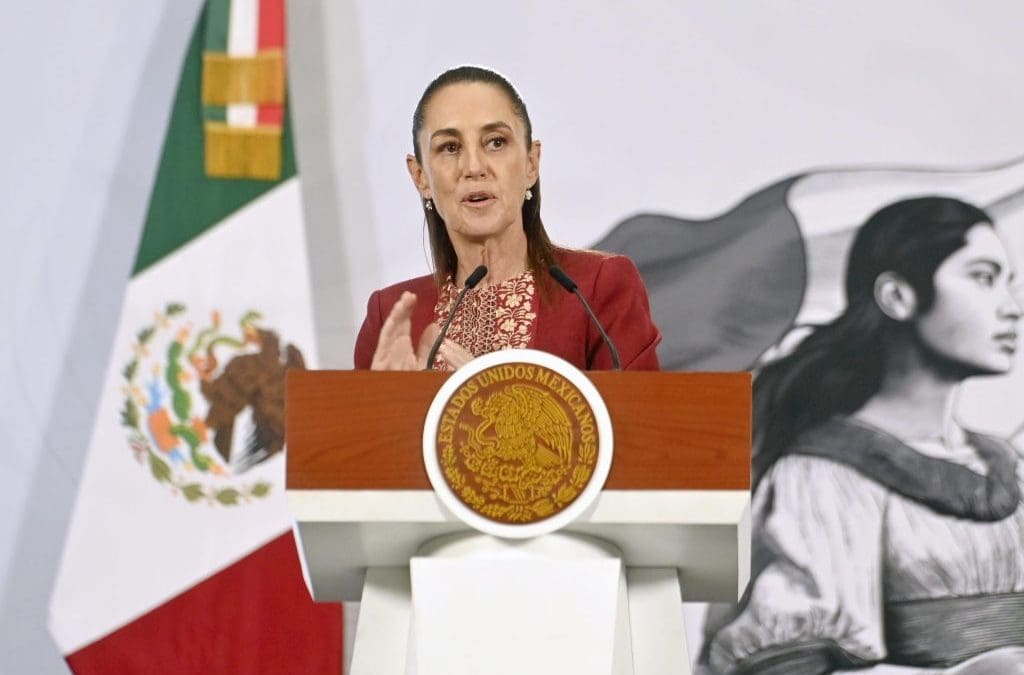
As Mexican President Claudia Sheinbaum moves forward with a plan to enact universal healthcare for her country’s more than 130 million people, a longtime advocate for Medicare for All in the US called the development “both inspiring and frustrating.”
“Inspiring because it shows what is possible,” Wendell Potter, a former insurance company communications director who has become a leading critic of the industry, told Common Dreams. “Frustrating because here in the US we are going in the opposite direction.”
Earlier this week, Sheinbaum announced a decree that she called “a historic step” for Mexico.
Beginning in 2027, her government plans to unify Mexico’s public health institutions into a single Universal Health Service, allowing patients across the country to receive care from the Mexican Social Security Institute (IMSS), the Social Security Institute and Social Services of Workers of the State (ISSSTE), and the IMSS‑Bienestar program, which provides free services to those without employer-provided insurance.
According to TeleSur, universal access would be rolled out gradually, with universal emergency care and continuity of treatment, free of financial constraints, beginning in January. Specialized services such as radiotherapy, laboratory tests, and imaging studies would be phased in later that year, and universal prescription fulfillment and hospitalization would also be added to the program in 2028.
“The goal is that when we leave the government [in 2030], any Mexican man or woman can go to any health institution for treatment for any ailment and be received,” Sheinbaum said.
🇲🇽🏥 SHEINBAUM TO DECREE UNIVERSAL HEALTH SYSTEMBy presidential decree, any Mexican will be able to receive healthcare at any public institution, regardless of enrollment. 120M
by Ashley Smith | Apr 10, 2026 | Article, Economy, Economy and Inequality, Iran, Politics and Movements: International, Politics and Movements: US, Reprint, War
This article was originally published by Truthout on April 09, 2026. It is shared here under a Creative Commons (CC BY-NC-ND 4.0) license.
On February 28, the U.S. and Israel expanded their joint genocidal war on Gaza onto Iran as well as Lebanon. After weeks of assassinations and bombing, President Donald Trump agreed to a ceasefire on April 7. This war of aggression by the U.S. and Israel is part of a continued attempt to wipe out any and all opposition to their dominance over the Middle East and its strategic energy reserves.
But they underestimated the capacity of the Iranian state. In addition to launching missile and drone attacks throughout the region, Iran blockaded the Strait of Hormuz, disrupting the production and shipment not only of fossil fuels but also an array of other commodities vital to global capitalism. With fossil fuel prices spiking and stocks crashing, Trump called off his threat to wipe out Iranian civilization and agreed to a ceasefire with Iran.
But Israel has already violated it, Iran has re-closed the Strait of Hormuz, and the ceasefire seems in jeopardy on the eve of negotiations for a settlement of the conflict in Pakistan. As a result, the world stands at the precipice of a multidimensional economic crisis.
In this interview for Truthout, Adam Hanieh discusses the U.S. and Israel’s imperialist goals, the war’s impact on the economies of the Global North and Global South, and its consequences for the geopolitical order as well as class and social struggles in the region and around the world. Hanieh is a professor in development studies and director of the SOAS Middle East Institute, University of London.
by Maximillian Alvarez | Apr 8, 2026 | Economy, Economy and Inequality, health care, labor, Podcast, Politics and Movements: US, Unions, Working People
Nearly a year after workers voted to authorize a strike, non-union city and commercially contracted security officers in Baltimore, MD, will walk off the job on April 9 in an Unfair Labor Practice strike against their employer, Abacus Corporation. In their yearslong effort to unionize and secure more job security, better pay, accessible healthcare, and safer working conditions, workers at Abacus have reported rampant union busting and violations of their labor rights. In this episode, we speak with Laura Dixon, a veteran security officer and Abacus employee, and Jaimie Contreras, executive vice president of the Service Employees International Union, Local 32BJ.
Additional links/info:
SEIU Local 32BJ website, Facebook page, and Instagram
Katherine Wilson, Baltimore Sun, “Baltimore contract security officers at city properties prepare to strike”
Featured Music:
Jules Taylor, Working People Theme Song
Credits:
Audio Post-Production: Jules Taylor
Transcript
The following is a rushed transcript and may contain errors. A proofread version will be made available as soon as possible.
Maximillian Alvarez:
All right. Welcome everyone to Working People, a podcast about the lives, jobs, dreams, and struggles of the working class today. Working People is a proud member of the Labor Radio Podcast Network and is brought to you in partnership with In These Times Magazine and the Real News Network. This show is produced by Jules Taylor and made possible by the support of listeners like you. My name is Maximillian Alvarez, and today we are going back to the picket line. We’ve got another strike update episode for you guys, and this time we’re talking about a strike that’s happening right here in our hometown of Baltimore. As stated in a press release from the Service Employees International
by Marianne Dhenin | Apr 7, 2026 | Article, Economy, Economy and Inequality, Politics and Movements: US, Reprint
This article was originally published by Truthout on April 06, 2026. It is shared here under a Creative Commons (CC BY-NC-ND 4.0) license.
When Elon Musk’s “Department of Government Efficiency” (DOGE) was running roughshod over the Social Security Administration (SSA) last year, experts warned it could spell disaster for disabled, ill, and aging Americans who depend on its programs. A March 2026 report by the Disability Rights Education and Defense Fund (DREDF) and the American Association of People with Disabilities (AAPD) offers insights into just how dire the situation has become.
“It seems that applications are taking longer and being denied more often and running into more errors in the process,” Matthew Borus, a professor at Binghamton University and one of the report’s authors, told Truthout.
The new report is based on interviews with more than 50 benefits specialists working at dozens of organizations nationwide that, together, assist about 8,000 claimants each year in obtaining and maintaining Supplemental Security Income (SSI) or Social Security Disability Insurance (SSDI). Those programs provide financial assistance to about 13.5 million older Americans and those with disabilities.
The programs have long been criticized for their inadequacy and steep barriers to access. Now, things are getting worse. “It just feels like you’re banging your head against the wall,” Brenna, who is using a pseudonym for fear of retaliation against her organization or clients, told Truthout.
Brenna works as an attorney at a medical-legal partnership in Washington, D.C., an organization comparable to those interviewed for the DREDF and AAPD report. She helps vulnerable patients apply for SSI/SSDI.
“It seems that applications are taking longer and being denied more often and running into more errors in the process.”
“It becomes difficult to trust even what advice you can give