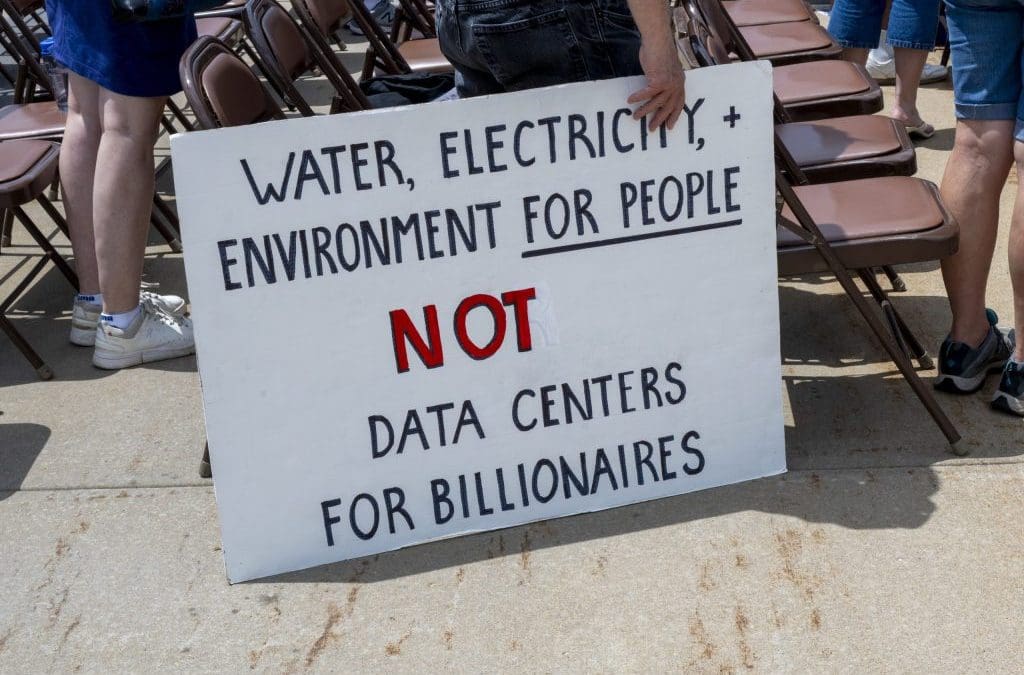
As heat wave spreads across the US, data centers strain electrical grids
This article was originally published by Truthout on July 01, 2026. It is shared here under a Creative Commons (CC BY-NC-ND 4.0) license.
A heat wave is spreading across the U.S. this week that will affect over 250 million people from the Midwest to the East Coast.
Last week, a heat dome covered much of Europe, causing over 1,300 excess deaths. This week, a new heat dome is bringing record-shattering heat to two thirds of the U.S. population, affecting areas that normally do not see such high temperatures.
The heat wave is expected to worsen as the week continues. Heat indexes – or how hot the temperature feels to the body, worsened by high humidity – are expected to reach between 100 and 110 degrees over large parts of the country. On Tuesday, the highest heat index value was 113.6 degrees Fahrenheit in southern Illinois.
Temperatures are expected to peak on Thursday and Friday, with cities like Newark, New Jersey, and Philadelphia, Pennsylvania, expecting actual temperatures of 105 degrees Fahrenheit starting Thursday. Parts of Virginia and North Carolina are expecting four to five consecutive days of 100-degree heat, from Wednesday, July 1 through the July 4 weekend.
Last week, a study from World Weather Attribution found that Europe’s heat wave would have been “virtually impossible” without climate change. Similar findings are expected for this U.S. heat wave.
In France alone, around 1,000 excess deaths were reported during the heat wave last week – hundreds more deaths per day compared with the daily death rate before the heat wave.
Fewer Americans are expected to die from heat in the U.S. than in Europe, largely because the U.S. has far more air conditioning, particularly in homes.
But

Supreme Court blocking Trump birthright citizen attack a ‘real relief,’ but also ‘bare minimum’
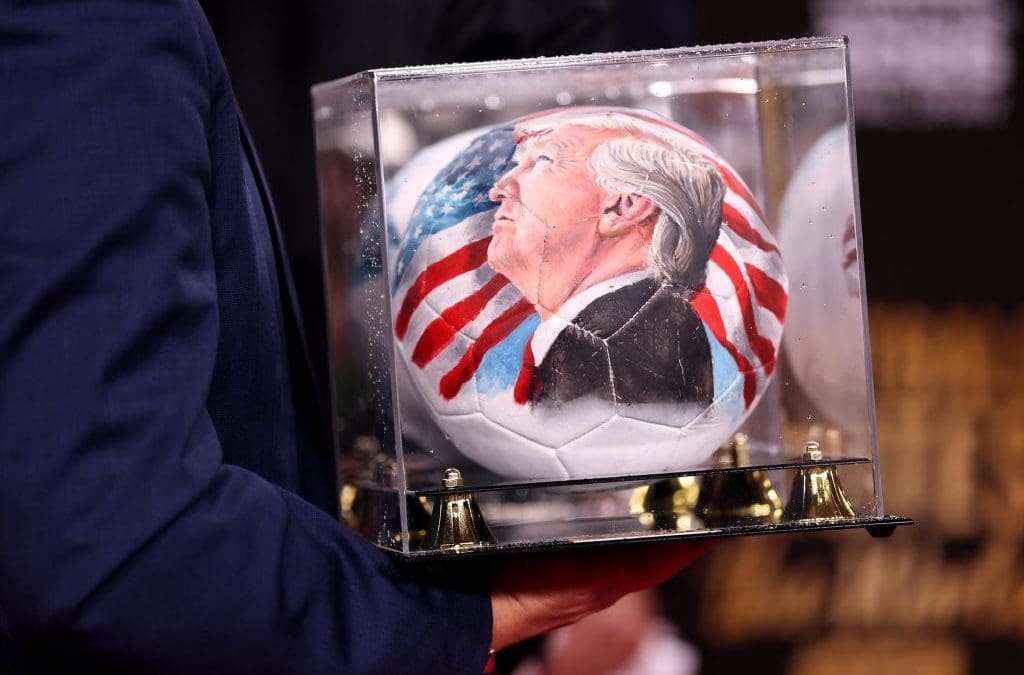
How Trump’s World Cup echoes dictatorships of the past
The 2026 World Cup has captured the world’s attention.
The highs and lows. The surprises. The United States’ defeat of Paraguay 4-1 in their first game. Cabo Verde’s tie with Spain. Ecuador’s defeat of Germany. Fans cried in the stadium and around the world from joy and disbelief.
Here in Brazil, it is an obsession. Around-the-clock coverage. Watch parties on huge screens in cities across the country. People glued to their TVs.
But the 2026 games in the United States, Mexico, and Canada have also been overshadowed by US President Donald Trump’s administration—specifically, his anti-immigration crackdown and authoritarian backslide.
Fans, players, and even world-class referees have been barred from entering the United States for the World Cup. Players have been detained, questioned, and had their luggage searched by dogs. Videos have gone viral of African players facing extended searches and security checks. The Democratic Republic of Congo’s most avid supporter was forced to return home after he failed to obtain a visa.
US officials forced Iran’s team to stay in Mexico, even though their games were played in the United States. Their logistics people were blocked from entering the US at all because they couldn’t get visas.
“This is a disaster World Cup,” Mehdi Taremi, the Iran National Team captain, said in a press conference. “We can’t stay in the country and have to travel every time we play without any recovery. Now we can’t stay in Seattle and have to return to Tijuana. This is not fair.”
The captain of Iran’s National Team, Mehdi Taremi, calls out FIFA and the U.S.:“This is a disaster World Cup. We can’t stay in the country and have to travel
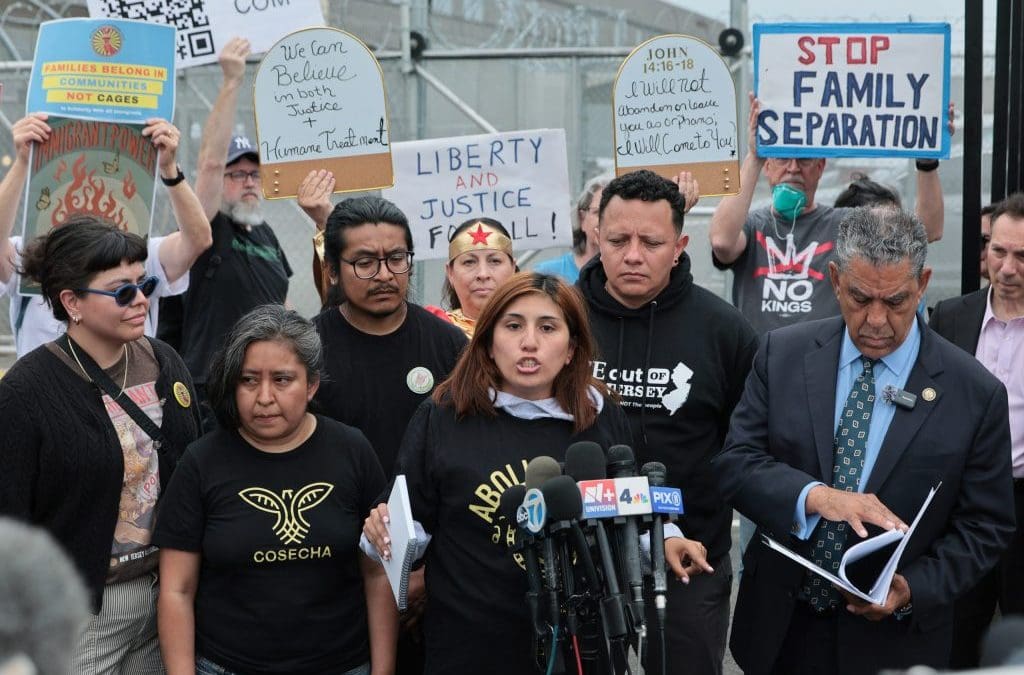
ICE kidnapped my husband on his way to buy diapers for our infant son
This article was originally published by Truthout on June 29, 2026. It is shared here under a Creative Commons (CC BY-NC-ND 4.0) license.
My husband, Martin Soto, was abducted by Immigration and Customs Enforcement (ICE) this February when he left our home at night to buy diapers for our 11-month-old son.
Martin — who is a loving father, husband, son, church member, worker, and neighbor in the town of Kearny, New Jersey, where we live — was then jailed for four months at Delaney Hall, the ICE jail in Newark, New Jersey. Privately run by GEO Group, a for-profit prison company, Delaney Hall has quickly developed a reputation for medical neglect, rotten food, and abusive staff.
Then, in apparent retaliation for his participation in the hunger strike at Delaney Hall, and for my decision to speak out publicly about what he has experienced, he was transferred this May to Elizabeth Detention Center in Elizabeth, New Jersey, where he continues to be jailed.
When my husband arrived at Delaney Hall in February, he weighed 168 pounds. Now he weighs 117 pounds.
During the almost five months that Martin has wasted away in ICE custody, he has missed our daughter’s fourth birthday, our son’s first birthday, our wedding anniversary, his own 30th birthday, my birthday, Mother’s Day, and Father’s Day. ICE’s cruel decision has left me — pregnant with our third child on the way — suddenly forced to fend for our two young children and myself alone.
Martin has committed no harm. He is married to me, a U.S. citizen, and he has an asylum case pending for 2028. ICE has the power to release my husband right

The chimpanzees paying the price in the global wildlife trade
Max hears the plane before anyone else.
A low hum threads through the morning air above the Sweetwaters Chimpanzee Sanctuary in Kenya’s central highlands. As it grows louder — a small propeller drifting in from Mount Kenya — Max is already moving.
He snatches a dry branch, paces the electric fence, and begins shouting — ah-ah-ah — his cries rising into a scream at the sky. He swings his arm and sends the stick flying upward. His hair bristles along his spine.
“It’s because of the plane,” says Stephen Mukundi, the sanctuary’s head caregiver. “He is remembering Burundi during the civil war.”
An view of Sweetwaters Chimpanzee Sanctuary, set on the southeastern edge of the 360-square-kilometer Ol Pejeta Conservancy in Laikipia County — the only refuge of its kind in Kenya. Photo by Jaclynn Ashly.
A caregiver hands food through the fence at Sweetwaters. The sanctuary’s caregivers live on-site around the clock, learning each chimpanzee’s temperament so closely that they decide every evening who can safely sleep beside whom. Photo by Jaclynn Ashly.
Stephen Mukundi, the sanctuary’s head caregiver, walks the perimeter of the enclosure. He arrived at Ol Pejeta in 1996 and has known most of the chimpanzees here since they were infants — a second family, he says, that he has watched go from trauma to becoming chimpanzees again. Photo by Jaclynn Ashly.
Max was born in Burundi in 1988. Captured as an infant — his mother presumed killed — he spent his early years with a French film crew before being confiscated in 1990 at around two years old, and transferred to the Jane Goodall Institute’s rescue center in Bujumbura.
When the Burundian civil war