Israel is murdering Dr. Hussam Abu Safiya. The US media is covering up the crime.
This story originally appeared in Mondoweiss on July 08, 2026. It is shared here with permission.
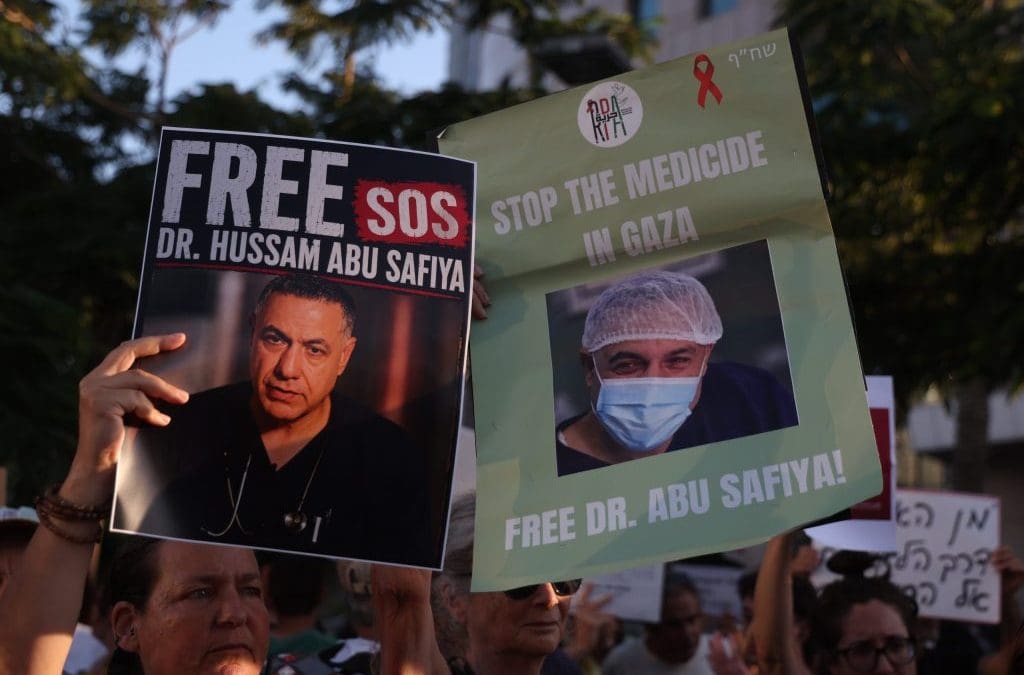
By now, editors at the New York Times and producers at CNN are surely squirming over what to do about Dr. Hussam Abu Safiya, the Gazan doctor and hospital director who Israel has locked up for a year and a half without trial, and who says his jailers are trying to kill him.
Worldwide campaigns, by Amnesty International and other human rights groups, have called for Dr. Abu Safiya’s release and global media coverage has been significant. Britain’s flagship newspaper, the Guardian, has naturally already reported about Dr. Abu Safiya. Here is its July 6 headline: “Detained Gaza doctor almost unrecognisable after injuries in Israel jail, lawyer says.” Even the Israeli press have reported about him, including covering a demonstration in Tel Aviv on July 6 drawing attention to his case.
But in the American media, there has been a complete blackout about his case and his dire condition.
As of July 7, the New York Times has not mentioned his name a single time since January 2025. The Washington Post did run an Associated Press report, but there was no fanfare on the Post home page and you had to search hard for the article. In the Wall Street Journal so far: nothing. CNN’s website did have a short video report, but it apparently never appeared on the network’s U.S. outlet. Dr. Abu Safiya is also missing on MS Now, supposedly the most progressive cable network.
As this site and other alternative media have regularly reported, Dr. Abu Safiya, a pediatrician who was the administrator of the Kamal Adwan hospital in Gaza, turned himself in to the Israeli army on December 27, 2024. There
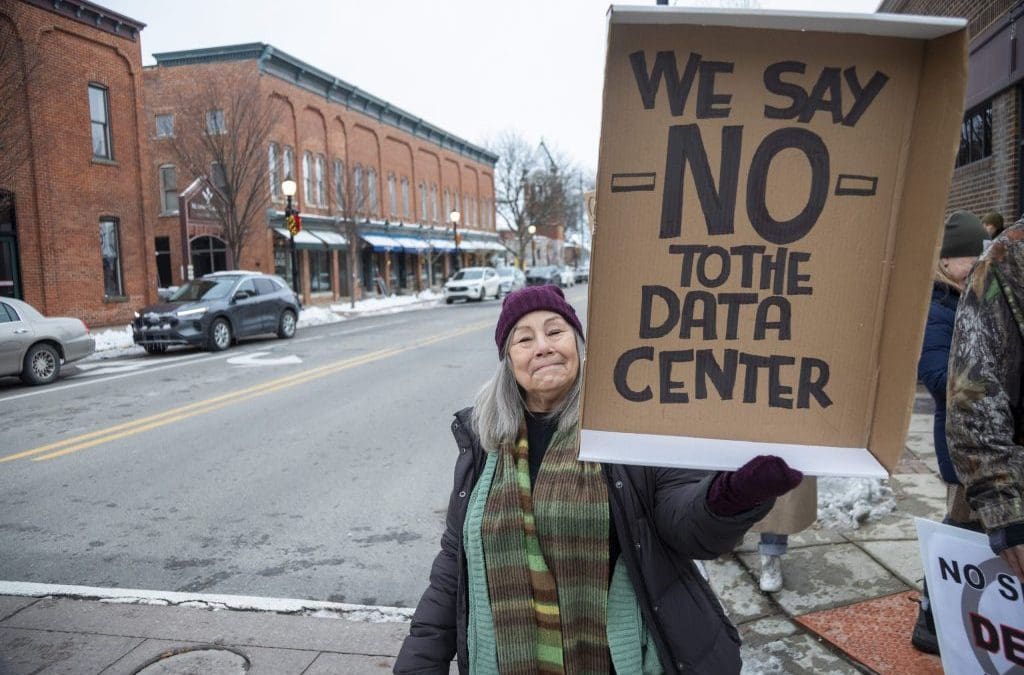
In a divided country, U.S. residents agree on one thing: no data centers
This story originally appeared in Prism on June 29, 2026.
Across the country, politicians are starting to heed the public’s concerns about data centers.
Almost 75% of Americans across the political spectrum oppose constructing data centers near their homes, according to a recent Gallup poll. A majority—63%—are concerned by federal regulatory agencies’ practice of approving projects without first evaluating environmental and public health concerns.
These numbers not only paint a stark picture of the massive backlash to the rapid and rapacious buildout of data processing facilities (some of which consume enough energy to power a midsize city), but they’re also an indicator that the public feels very differently than the corporations pushing for their construction. The country has never been more divided, but on data centers, residents agree: It’s time to pump the brakes.
Communities that are already forced to contend with the consequences of data centers warn of their near-constant noise pollution, voracious consumption of water, and discharge of pollutants into local ecosystems. However, it’s not just environmental concerns that undergird the community-led protests against data center development. Many are also concerned about how data centers come to fruition—often through violations of democratic processes in the form of shadowy backroom deals and nondisclosure agreements. There’s also the continued rise in utility rates at a time when nearly half (49%) of American households don’t make enough money to cover expenses. Americans contend with issues of drought, fossil fuel dependence, and habitat loss. Generational farmland is being gobbled up to prop up acres of data warehouses. The list goes on.
Three years after OpenAI’s artificial intelligence (AI) tool Chat GPT forever changed the world’s orientation to computing, governments are responding
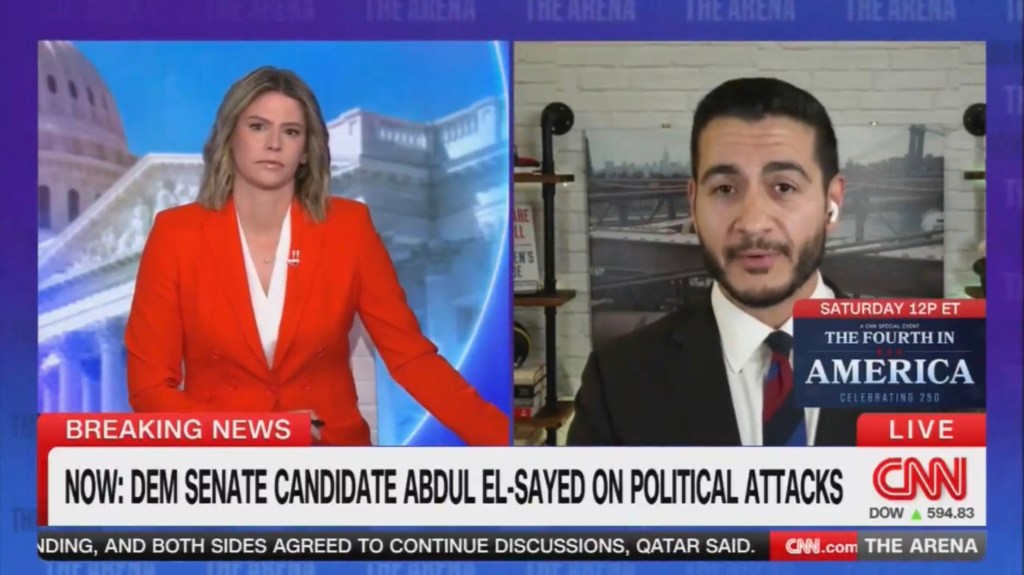
US Media doesn’t think Palestine ‘has a right to exist’
While he was being grilled by CNN over his positions on Israel this past Thursday, candidate for the Democratic nomination for Michigan’s Senate seat, Abdul El-Sayed, was asked the bog-standard cable news question for anyone not on program with the pro-Israel Washington consensus—Do you think Israel has a right to exist?—three different times. It’s a ritual so routine one could hardly notice the exchange, but there was something in El-Sayed’s reply that exposed how facile this line of questioning is and that is worth examining in its own right. He responded, in part, by noting that “nobody has ever asked [him] if [he] thinks Palestine has a right to exist.” Watch the full exchange below.
Hunt: Do you believe Israel has a right to exist?El-Sayed: Now the question about a right to exist is interesting because nobody’s ever asked me whether or not I believe Palestine has a right to exist. Israel exists. The question is whether or not we want a politics where our… pic.twitter.com/Utr3kRQKJd— Acyn (@Acyn) July 2, 2026
It was a throw-away line before he moved on to his long, fairly pointed, reply, but it’s an essential point, and worth making. And it is an empirical question one can survey and analyze. So, does US media ever ask politicians if they think Palestine has a right to exist? The answer: never.
A survey of the New York Times, Washington Post, Wall Street Journal, Politico, USA Today, Fox News, MSNBC/MSNOW, and CNN over the past 10 years shows that not a single candidate for office has ever been asked by a cable news anchor or reporter if “Palestine has a right

US provides $300 million in earthquake recovery money to Venezuela while sitting on $8 billion in stolen oil wealth
This story originally appeared in Common Dreams on July 06, 2026. It is shared here under a Creative Commons (CC BY-NC-ND 3.0) license.
The Trump administration has seized at least $8 billion worth of Venezuela’s oil wealth since it overthrew President Nicolás Maduro in January, according to the New York Times.
Now, as Venezuela struggles to cope with a catastrophic pair of earthquakes late last month that killed at least 3,300 people and left tens of thousands more injured and homeless, and 41,000-50,000 people are reported missing, the US is providing just $300 million in humanitarian aid, a small fraction of the money it purloined.
The Associated Press reported on Monday that international rescue teams have begun to pull out as hopes of finding missing loved ones alive dwindle each day after the disaster.
🇻🇪 Update: The death toll has risen to 3,342, with 16,740 people injured, the country’s Communication and Information Ministry said Sunday. https://t.co/HQfKAMomRZ— Drop Site (@DropSiteNews) July 6, 2026
Shortly after deposing Maduro, US President Donald Trump declared that the US “took over Venezuela… and the oil is flowing.”
Economist Francisco Rodriguez has found that during the first quarter of 2026, after Trump overthrew Maduro and the US began expropriating Venezuelan oil, the country experienced the lowest rate of economic growth since 2021, even as oil exports rose.
As Roxanna Vigil, a former senior sanctions policy adviser at the US Treasury Department’s Office of Foreign Assets Control, explained in an article for the Council on Foreign Relations last month, “almost 100 million barrels of oil worth an estimated $8 billion have flowed through a process marked by no transparency and minimal oversight.”
“While the Trump administration has repeatedly framed this control as benefiting both countries, it has not publicly disclosed how much Venezuelan oil it