More federal layoffs, healthcare cuts, and blocking the Epstein files: Breaking down the GOP government shutdown

More federal layoffs, healthcare cuts, and blocking the Epstein files: Breaking down the GOP government shutdown

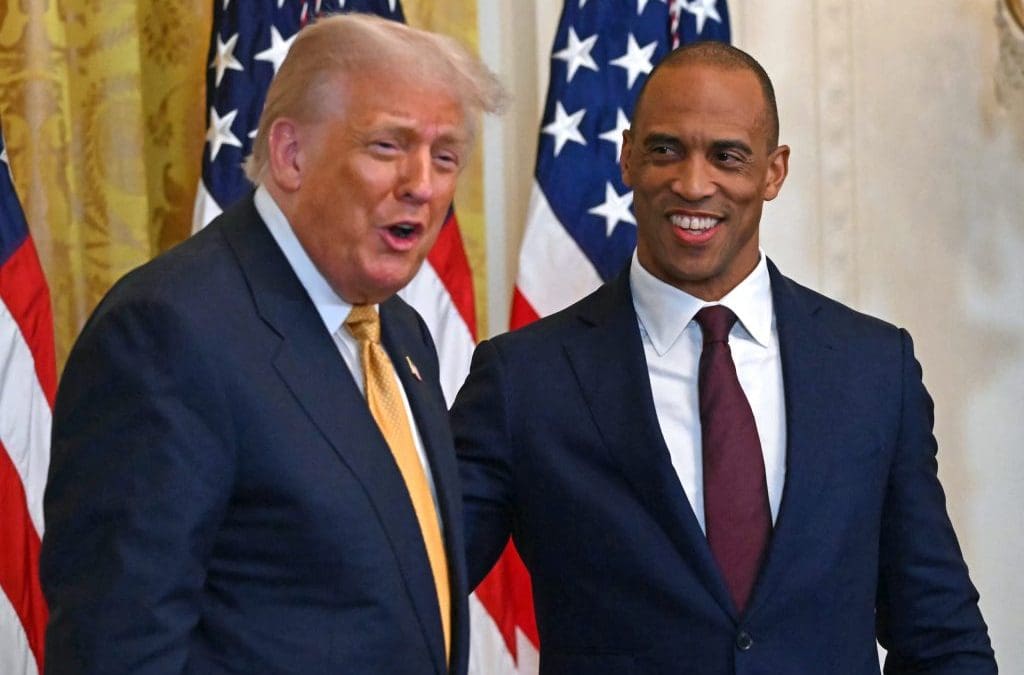
Seven years ago, during Donald Trump’s first presidential term, the US endured the longest government shutdown in its history: 35 days. Now, in the first year of Donald Trump’s second presidential term, with Republicans and Republican appointees controlling all three branches of government, the government is shut down again. How long will this shutdown last? What short-term and long-term impacts will the shutdown have on poor and working people, on the Affordable Care Act, on the Trump agenda, and on the congressional battle to release the Epstein files? TRNN Editor-in-Chief and “Inequality Watch” hosts Taya Graham and Stephen Janis break down your questions on Day 1 of the 2025 government shutdown.

Additional resources:

Follow Taya Graham on Instagram and TikTok for more on-the-ground updates

Follow Stephen Janis on Instagram and TikTok for more on-the-ground updates

Credits:

Studio Production / Post-Production: Cameron Granadino

Transcript
The following is a rushed transcript and may contain errors. A proofread version will be made available as soon as possible

Maximillian Alvarez:

Seven years ago during Donald Trump’s first presidential term, America endured the longest government shutdown in our history. 35 days Now in October of 2025, in the first year of Donald Trump’s second presidential administration. When Republicans and Republican appointees control all three branches of government, the government is shut down. Again, we don’t know how long this is going to go on, but the real news is going to be here for as long as it takes to get you the information and perspectives you need to act. And our resident inequality watchdogs, Taya Graham and Steven, Janice were on the ground in Washington, DC earlier this week doing just that. And this was just hours before the shutdown actually

Original

Federal whistleblowers illegally fired after exposing ‘chaos’ at Trump’s HUD

Federal whistleblowers illegally fired after exposing ‘chaos’ at Trump’s HUD

Last week, The Real News Network published a bombshell interview with two federal whistleblowers working in the Department of Housing and Urban Development (HUD). TRNN Editor-in-Chief Maximillian Alvarez spoke with Paul Osadebe and Palmer Heenan, two attorneys in HUD’s Office of Fair Housing, about the “chaos” that has upended HUD under the new Trump administration, and the vulnerable Americans who are being systematically abandoned as a result. Then, on Monday, Sept. 29, exactly one week after going public, Osadebe and Heenan were fired in what the Federal Unionist Network describes as “a stunning act of illegal retaliation.” In this urgent followup interview, we speak once again with Osadebe and Heenan about the conditions of their firing, and what this attack on whistleblowers means for the future of government transparency and the future of HUD itself.

Guests:

Paul Osadebe is a shop steward for the American Federation of Government Employees (AFGE) – Local 476, a member of the Federal Unionists Network, and, until recently, an attorney working in the federal government. Osadebe is one of the four employees within HUD who have filed formal whistleblower complaints through the office of Senator Elizabeth Warren (D – Massachusetts). Osadebe was fired for his whistleblowing on Sept. 29.

Palmer Heenan is a rank-and-file member of AFGE – Local 476, a member of the Federal Unionists Network, and, until recently, an attorney working in the federal government. Heenan is one of the four employees within the Department of Housing and Urban Development who have filed formal whistleblower complaints through the office of Senator Elizabeth Warren (D – Massachusetts). Heenan was fired for his whistleblowing on Sept. 29.

Additional resources:

Debra

Original

‘If I’m killed on this mission…’: Global Sumud Flotilla sets sail for Gaza despite Israel’s threats

‘If I’m killed on this mission…’: Global Sumud Flotilla sets sail for Gaza despite Israel’s threats

The Global Sumud Flotilla sets sail from Barcelona towards Gaza, in Barcelona, Spain, on August 31, 2025. Hundreds gather at Moll de la Fusta to bid farewell to the flotilla, with dozens of boats and thousands of supporters wearing kufiyas (Palestinian scarves) and waving flags. Photo by Albert Llop/NurPhoto via Getty Images

The Global Sumud Flotilla has embarked on the most dangerous leg of its mission to break Israel’s blockade of the Gaza Strip and deliver life-saving aid to Palestinians in the midst of genocide. As of Monday morning, over 40 vessels with delegations of peace activists from around the world are just over 300 nautical miles from Gaza, and will be entering the “high risk” zone within the next 24-48 hours. Naval ships from three countries—Spain, Italy, and Turkey—are now accompanying the humanitarian fleet as a security escort. Calling in from the Mediterranean Sea, flotilla members Iara Modarelli and Leila Hegazy speak with TRNN Editor-in-Chief Maximillian Alvarez about the current status of the Global Sumud Flotilla and the critical days ahead.

Guests:

  • Iara Modarelli  is a broadcast journalist and humanitarian from Spain who is sailing with the Global Sumud Flotilla
  • Leila Hegazy  is a musician and social media creator from the United States who is sailing with the Global Sumud Flotilla.  

Additional Links/Info:

Credits:

  • Studio Production: Maximillian Alvarez
  • Post-Production: Cameron Granadino
  • Audio Post-Production: Stephen Frank
Transcript

The following is a rushed transcript and may contain errors. A proofread version will be made available as soon as possible.

Original

Trump’s loophole for mass-jailing immigrants: The US Marshals

Trump’s loophole for mass-jailing immigrants: The US Marshals

US Marshals patrol The National Mall in Washington D.C. on orders from Pres. Donald Trump, Aug. 25, 2025. Photo by DOMINIC GWINN/Middle East Images/AFP via Getty Images

There are two primary federal agencies tasked with immigration detention: ICE, which is well known, and the US Marshal Service. Under the Trump administration, the US Marshals have dramatically increased their role in detaining and incarcerating undocumented immigrants, using their federal power to override restrictions on immigrant detention in local jails around the country. In this episode of Rattling the Bars, host Mansa Musa speaks with Wanda Bertram, communications strategist for the Prison Policy Initiative, about how the Trump administration is weaponizing legal loopholes and the US Marshal Service to execute the mass incarceration of immigrants.

Guest:

Additional links/info:

Credits:

  • Producer / Videographer / Post-Production: Cameron Granadino
Transcript

The following is a rushed transcript and may contain errors. A proofread version will be made available as soon as possible.

Mansa Musa:

Welcome to the edition of Rattling the Bars. I’m your host, Mansa Musa. We’ve been hearing terms like deportation, immigration, arrest, ice, the federal marshals. When we hear these terms, we hear ’em relative to people. People that’s undocumented in this country under the pretense that they’re committed a crime in this country, that they’re being arrested. But the reality is they’re being rounded up. They’re being rounded up like slaves was rounded up. They’re being rounded up like the Japanese was being rounded up and placed in tournament camps. Joining me today is Wanda Bertram, communication strategist with the Prison Policy Initiative at one of the most reliable research hubs for Data on Incarceration. A recent report by the Prison Policy Initiative titled Hiding in Plain Sight Revealed how local jails are central to Trump’s deportation. Wanda, welcome to Rallying the Bars.

Wanda Bertram:

I’m happy to be here. Thanks for having me.

Mansa Musa:

And so let’s start here. Explain to our audience the loophole that the Trump administration is using to bypass city and county sanctuary policies. Unpack that for our audience.

Wanda Bertram:

So I think the place to start is that there are two main federal agencies that are tasked with immigration detention, and one of them is ice, which most people have heard of Immigration and Customs Enforcement. And then the other one, which is a little bit less well known is called the US Marshall Service. And the Marshall Service does things that are not immigration too. They’re generally speaking, the federal agency that handles pretrial detention. And in our report, one of the things we did was we gave an estimate of how many people are in ICE detention and US Marshals detention because a lot of people don’t think about the US Marshals. Right. And then one of the other things we did was we pointed out this loophole that you mentioned and what we call the loophole is just the fact that lots of local jails, including many that have said, we are not going to cooperate with ice,

Have contracts with the US Marshals to house, to detain immigrants who are under the jurisdiction of that agency. And actually, ICE can also piggyback off those US marshals contracts. So whether someone is under the jurisdiction of the US Marshals, and I can explain the difference between that and ice, whether someone is under the jurisdiction of the US Marshals or with ice, hundreds of local jails across the country are making room for those detainees to be held. So there are thousands and thousands of detainees who are being held in local jails that are run by sheriffs that the people left.

Mansa Musa:

Right. Okay. So in terms of the difference between ICE and the Federal marshals, because I think we was talking off camera, when you think of a person being detained by the Federal Marshals, we’re thinking about actually a crime has actually been committed a crime in form of like a gun violation of a federal statute violate of federal criminal code, violate of federal law. I’m in possession of large quantities of drugs. I’m doing counterfeit, I’m in possession of weapons. I think they had in Baltimore City, they had passed this law saying that anyone court, in order to get control over what they dubbed as a serious possession of guns in the city, they created this law where they say that anyone arrested with a gun in Baltimore, they federalized it. So they called it, I’m trying to think if they had a term that they was using. But everybody that got caught with federal guns got caught with guns during that time was arrested and put under Federal Marshall jurisdiction. At that time, I was in Supermax in Baltimore City and they took a whole section and specifically design it for that. So talk about that. Talk about the difference between the two and why it’s important that people understand that.

Wanda Bertram:

Yeah, I’m really glad you brought that up. The US Marshals, like you’re saying, when I think of the US Marshals, I think about people being charged with gun related crimes, with drug related crimes. Sometimes with federal violent offenses, the federal government has a wide latitude to choose to prosecute certain cases. And once they bring someone under their jurisdiction, or if they arrest someone, obviously they can also bring people who are under state or local jurisdiction into their jurisdiction through these state and local agreements. So the long and short of it is if you are charged with a federal crime, you are under the US Marshal’s jurisdiction. The rub here is that there, there’s been an increase in several thousand people since Trump took office in January who were under US Marshals, who were booked into US Marshalls jurisdiction for immigration related crimes. And what is an immigration crime? Come on. That can be as simple as just being undocumented illegal entry or illegal reentry. I think most people think, okay, if you’re under US Marshalls’ jurisdiction, you must have committed some horrible crime. But there’s a lot of people there who are just undocumented and their cases are becoming criminalized.

Mansa Musa:

And I was talking to one of the staff members here and I was telling that, and this is my thinking, right, the criminal element that will be under the Federal Marshals, they be like, in their mind they like, hurry up, hurry up and get me out. Send me to wherever you want to send me at so I can hurry up and get back in the country. A person that’s a person that’s committed immigration crime or whatever these terms they’re using, these people know the threat that they represent is, I’m a threat because I’m working hard, I’m paying taxes. But talk about how local jails specifically playing Trumps mass deportation program, both in terms of scale and conservation and immigration arrest, and you spoke on it earlier about how many people being arrested and being detained, but talk about how it’s planned out.

Wanda Bertram:

We know. So we estimate that on any given day, currently there’s about 83,000 people, immigrants being held for ice. And the US Marshals, I can break down how we got to that number, but of those, we know that about 10,000, a little over 10,000 people are being held in local jails for ice. We unfortunately can’t tell how many people are being held in local jails for the Marshall who just don’t have that granular data. But we actually, I will say one more thing. I’ll throw out one more statistic, which is that between January and May of this year, the number of people held for immigration reasons grew more in local jails than it did in privately run detention centers. I’m throwing this out there just to say that jails play an essential role in housing immigrants for these agencies.

I think a lot of people think about ICE as having tons of detention centers, its own detention centers around the country. And it’s true, there are several, but these agencies depend on local facilities that can hold people temporarily or for a longer time after they’re arrested. In fact, in 26 states, jails provide the sole detention capacity to ice US marshals. So a lot of people think, okay, sure. This is going on in Texas, it’s going on in Florida with alligator Alcatraz. It’s not happening where I live. You might be wrong. It might be happening where you live. A lot of jails caught up in this.

Mansa Musa:

Right? And that right there, the impact, talk about the impact that have on the population because I know if I’m a state and I’m outsourcing or I’m contracting with the federal government, I’m contracting with ICE to provide so many bids for immigration or a section for immigration, then how does that play out in terms of the way that particular detention center function overall? Because now I have to allocate staff, I have to allocate extra money, I have to allocate. And in terms of what they’re entitled to versus what people that’s is entitled to have Y, is it a problem with that or from your investigation and your study, have you seen this being problematic?

Wanda Bertram:

Well, I think we need to start talking about the money. That’s the reason that ICE and the Marshals, or excuse me, that’s the reason that local jails have these agreements in the first place. Jails are keen to bring in money from the federal government that they get in exchange for housing people, and they get somewhere anywhere between 50 and a hundred dollars per person. So it’s thousands of dollars that come in just every month for a local jail. And importantly, we have very little transparency into what that money is used

Mansa Musa:

For.

Wanda Bertram:

But some jails have been open about saying, we are using this to pay our staff. We’re using it to cover costs of the jail.

It ties into a very toxic pattern that we’ve seen over the last couple of decades, which is that counties will build, actually, they will build bigger jails anticipating that they’ll be able to allocate some of their new jail space to renting to the federal government or to their state prison system. And where there’s two ways that this all goes wrong, one is that oftentimes these jails are already understaffed. They don’t have the staff to care for their own populations, much less an additional influx of immigrants or people held by the US Marshal for any reason. And then the second thing, the second way this goes haywire is that these populations, these populations that come in from the feds, they flux, right? They come and go. And when those populations, when that source of revenue dries up for the jail,

Mansa Musa:

They’re

Wanda Bertram:

Going to need to justify the existence of such a large facility in other ways, and that’s going to lead to more local incarceration. We like to say that if you build it, they will fill it. And when counties build bigger jails anticipating renting beds to ICE or the Feds in some other capacity, they find a way to fill those beds, whether it’s with federal detainees or their own community members.

Mansa Musa:

And then in some states like California, Massachusetts, New York and Illinois have laws that restrict local law enforcement from collaborating with ice. But that’s like when you do a comparison versus the amount of money that y’all talked about how this past great, beautiful nightmare of a bill that they passed, they allocated a lot of money to ICE and a lot of money to the federal government. So how do you see the pushback, or what can states do to eliminate this nightmare? Because as you said, at the end game, the end game, the state going to be holding the bag and the end game, they’re going to have to come with some way to fill themselves, and that’s going to be at the expense of the citizens of their particular state or county. Talk about that.

Wanda Bertram:

Yeah. One thing in the report that we really hammer on is that communities have, in so far as communities are providing some of the backbone of detention. They also have the power to be a real thorn in the side of the Trump administration by resisting that. Like you pointed out, some states and several counties have instituted sanctuary city policies, and often that means, or sanctuary state policies, and that limits the jail’s. Collaborations of ICE communities also need to cancel their contracts at the US Marshals, because as I said, at the top, ICE can piggyback off of the US marshals. They can put people in jails through a US Marshals contract, and those often go overlooked. Again, the marshals are not an agency most people think about. So that’s a step that counties have been able to take to several years. They can do it now and they should do it now.

I think the other thing is on a longer timeframe, being critical of your local government, when they talk about building a new and bigger jail, just to throw something out there, this is not related to immigration at all, but about 80% of people in local jails are their pretrial. Now, this is another thing that Trump has been trying to attack is bail reform. But when counties are facing overcrowded or understaffed jails and they have these large pretrial populations, one thing that most places most counties have not tried is decarceration, right? Pursuing bail reform, pursuing cashless bail as a way of decreasing their jail populations. Instead, what many counties will do is they will try to build a bigger jail thinking it’s going to solve the problem.

And sometimes that’s what gets counties into this pickle with the federal government is they build this big new jail, and then they have a big tab to cover. And it’s very helpful if the federal government comes in and says, well, we can offset some of your costs. You just have to house some people for us. So I mean, definitely to anyone listening who’s wondering, what can I do in my community? I definitely would say being critical, being skeptical of any plans to expand your county jail and show up to city council meetings about that. Be a sticky wheel, because that’s how this happens. That’s how it starts.

Mansa Musa:

Okay. And thank you wa tell our audience how they can stay in touch with you or stay aware of some of the work that you’re doing with Prison Policy Initiative as we close out.

Wanda Bertram:

Well, no. I mean, first, thank you so much for having me. I think it’s great to be able to come on and talk about this stuff. Our website is www prison policy.org. We have a newsletter. If you sign up for that, you’ll get everything that we publish. It’s about a once a week newsletter. We also have social media. If you go to basically whatever social media you’re on, we’re at slash prison policy.

Mansa Musa:

Thank you. And as we close out, we thank you and appreciate all the work that y’all are doing at Prison Policy Initiative. And we want to tell our audience, remind our audiences that we deal with evidence, and it’s based on the statistics that the Prison Policy Initiative has offered us, that you can fact check ’em to get a clear understanding. But what we do know is this here, we know that people are being rounded up. We know that agencies that supposed to protect, serve and protect people’s rights are being used to help aid and assist in rounding people up. We know that people are being housed in astronomical numbers, in inhumane environments for one reason and one reason only. All because they’re undocumented in this country. They haven’t committed no crimes. To the extent that’s being perpetuated by the Trump administration, they’re here, they’re undocumented, and the most crime that they committed is driving without license or picking tomatoes. We ask that you continue to support real news and rallying bars. We ask that you continue to evaluate this information. We ask that you weigh in on what you think about this information, but more importantly, we ask that you make a decision on what you think should be done and do that. Thank you.

Original

‘We have experienced every kind of oppression’: Gaza’s children speak

‘We have experienced every kind of oppression’: Gaza’s children speak

A group of three children in war-torn Gaza look directly at the camera. Still image from TRNN documentary report ‘We have experienced every kind of oppression’: Gaza’s children speak (September, 2025)

For the last two years, Israel’s US-backed genocide has destroyed every facet of normal life in the Gaza Strip. While Palestinians cling to hope that they will live to see the end of the war, the incalculable trauma inflicted on Gaza’s children will leave permanent scars. “In these two years, we have experienced every kind of oppression,” 13-year-old Abdelrahman Bashir Jundia tells TRNN. “From living in tents, to refugee centers that are not fit for living in at all… We have suffered torture, torture, and more torture.” In this on-the-ground report, TRNN speaks with children in Gaza about how the war has forever changed their lives.

Producers: Belal Awad, Leo Erhardt
Videographers: Ruwaida Amer, Mahmoud Al Mashharawi
Video Editor: Leo Erhardt

Transcript

ABDELRAHMAN BASHIR JUNDIA – 13 YEARS OLD: 

In these two years, we have experienced every kind of oppression: From displacement, to living in tents, to refugee centers that are not fit for living in at all. We have endured every form of oppression, from relying on soup kitchens, and depending on water stations, and the water trucks that arrive. We have suffered torture, torture and more torture. I’m Abderahman Bashir Jundiya, I’m 13 years old, in the 8th grade. During the war, I took on the role of an electrical engineer. I started working with electrical appliances that I didn’t know much about before. The war taught me these things. Electrical equipment: we opened a charging station. Electrical equipment, inverters, chargers, [inaudible], fans, batteries, electrical panels, things like that. Before the war, I used to be bigger, but since the war, I’ve lost a lot of weight due to hunger and lack of nutrition. Before the war, my blood was healthy. Now, I have anemia, because of a lack of vitamins and iron. Before the war, we had healthy food, we had buildings and electricity, we had schools—my right to health and education was guaranteed. Now, we’ve been deprived of all of that. 

UM ALAA JUNDIYA – ABDELRAHMAN’S MOTHER: 

They used to be calm—very calm. Honestly, after the war started, it felt like all the children became aggressive. All of them, including my son, Abderahman. He’s become really aggressive, and it’s the same with all the children. Every time I speak to other moms, they say: “My child wasn’t like this before the war.” “I don’t know what’s happened to my child since the war.” “My child used to be calm and relaxed.” And it’s true—I knew these kids. They were calm kids. Now, they say, “My child is very aggressive.” They cause trouble; if anyone speaks to them outside, they immediately start fighting. What should I do? Even when I try to tell him to come meditate or recite the Quran, he refuses. 

ABDELRAHMAN BASHIR JUNDIA – 13 YEARS OLD: 

Before, water and food were always in our homes. Water used to come to our doorstep or be stored in tanks above our houses. Now, we have to collect water and go from soup kitchen to soup kitchen. When the water truck arrives, we run to get drinking water. All of this was available before the war, but now it’s gone. This exhausts us physically, and all the kids are suffering the same way I am. Nowadays, when I feel hungry, I try to distract myself sleeping or playing. I feel like I want to escape how I feel, through sleep or play. 

UM ALAA JUNDIYA – ABDELRAHMAN’S MOTHER: 

Every mom I meet says the same thing about her child: Why? Because all their dreams have been destroyed. Their neighborhoods are in ruins, and they live in tents. Their lives now revolve around soup kitchen—water—soup kitchen—water. It’s either, “I need to get water,” or, “The soup kitchen is here!” Even when we were in the south, there were some tent schools. The kids would go there, but as soon as the soup kitchen arrived, they’d run out of class while the teacher was talking to get food. The teacher would turn around and find the classroom empty. This has become their entire life. They’ll receive a qualification in chasing after water and soup kitchens.

ABDELRAHMAN BASHIR JUNDIA – 13 YEARS OLD: 

Before the war, my friends and I used to meet up at the mosque, in our homes, at the playground, at school—but now, all of that has been cut off. We only see each other occasionally while evacuating, getting water, or at the soup kitchens. Some have been killed, and others have survived, but we can’t reach them. I miss them more and more, because I was really attached to them before the war. Now, we’ve lost them suddenly. Some were martyred—may God rest their souls—and for the others, we pray for their safety. My dream is to live in safety—me and the children. To have a home, to live securely. My right to health, my right to education. To live like any other child in the world: and be able to go to school. To have all the rights that every child deserves. 

UM ALAA JUNDIYA – ABDELRAHMAN’S MOTHER: 

I want to provide everything for my children, but I can’t—I’m out of options, as they say. The grief in my heart—my heart is being torn apart, and my tears never stop falling. My tears say it all. Once, my child Abderahman and I were looking at the phone, and we saw a video of a chef cooking a feast—delicious food, meats, and other dishes. He turned to me and said, “Oh my God, if I die and go to heaven, will I get to eat food like this?” I said, “No, you’ll find even better than this!” Because the wonders of heaven are beyond our imagination. He put his head down and went to sleep. The next day, he woke up and said: “Mom, seriously, will I get food like this in heaven?” We just have to be patient, and we’ll find this in this world and the next, God willing. My heart is breaking—I despair for my child and all the children. You hear all of them saying, “I’m hungry, give me food! I’m hungry, give me food!” But there’s nothing we can do.

Original

How Democrats set the stage for Trump’s assault on free speech

How Democrats set the stage for Trump’s assault on free speech

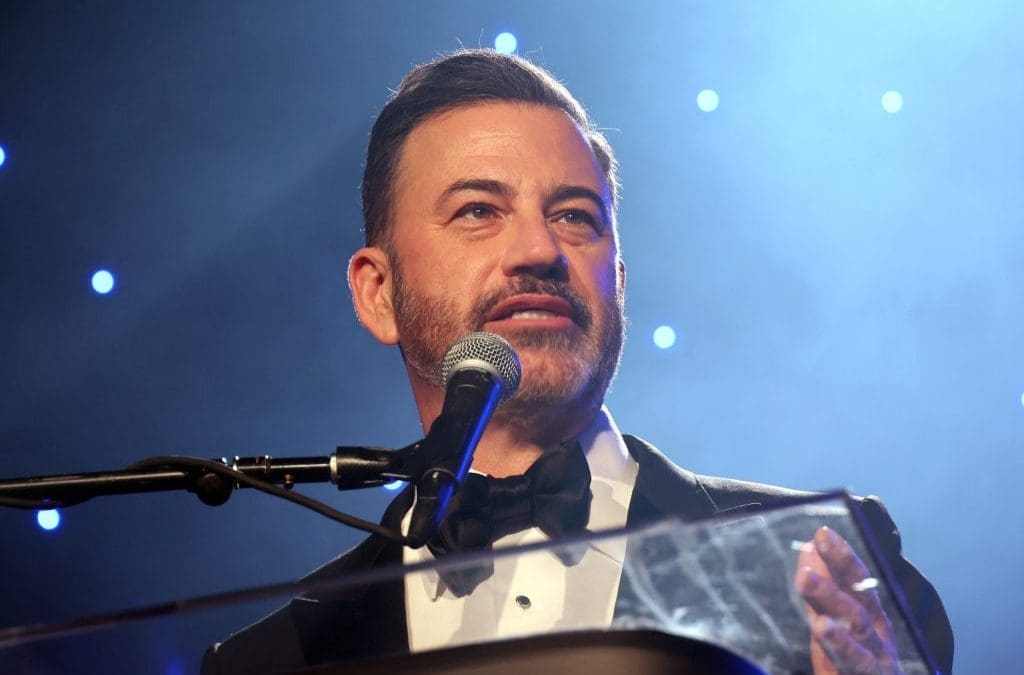
LOS ANGELES, CALIFORNIA - FEBRUARY 01: Jimmy Kimmel speaks onstage during the 67th GRAMMY Awards Pre-GRAMMY Gala & GRAMMY Salute to Industry Icons Honoring Jody Gerson on February 01, 2025 in Los Angeles, California. Photo by Johnny Nunez/Getty Images for The Recording Academy

By pressuring broadcast giant ABC to suspend Jimmy Kimmel’s late-night show—a decision that ABC reversed this week—the Trump administration has taken its assault on the First Amendment to new heights over the past week. Kimmel’s show is back on the air for now, but the whole debacle has revealed just how vulnerable free speech in America is to political and corporate authoritarianism. This is a crisis, and both Democrats and Republicans have set the stage for it. “As corporate media accelerate their censorship of comedians and journalists,” renowned media analyst Jeff Cohen writes, “we must realize that we got to this dire situation because of old-fashioned, bipartisan corruption in Washington, DC.” In this episode of The Marc Steiner Show, Marc speaks with Cohen about how the consolidation of corporate control over the media, mixed with a ravenously censorious Trump administration, has left free speech in America hanging by a thread.

Guest:

Additional resources:

Credits:

  • Producer: Rosette Sewali
  • Studio Production: David Hebden
  • Audio Post-Production: Stephen Frank
Transcript

The following is a rushed transcript and may contain errors. A proofread version will be made available as soon as possible.

Marc Steiner:

Welcome to the Marc Steiner Show here in The Real News. I’m Marc Steiner. It’s great to have you all with us. Our democracy is under attack and one of the underpinnings of a free society is a free and independent press. Right now, 90% of our media is controlled by just six corporations, and when those in media do their job and confront power, they’re attacked by their corporate owners and by the right wing. We’re in control of the White House. Trump said in response to the firing of Jimmy Kimmel, congratulations to a, b, C for finally having the courage to do what had to be done.

And while Jimmy Kimmel may be back on many stations controlled by right-wing conglomerates like Nexstar, which controls over 200 stations, reaching 220 million people will not carry Kimmel. This monopolistic control of our media is a canary in the coal mine. And to unravel we face, we’re joined today by Jeff Cohen, founder of the Media Watchdog Group, Fairness and Accuracy in Reporting, and co-founder of RootsAction.org. He’s a retired journalism professor at the college and author of Cable News Confidential: My Misadventures in Corporate Media. Jeff, it’s good to have you with us. I really appreciate you taking the time here.

Jeff Cohen:

Great to be with you

Marc Steiner:

And a propitious moment as well. I mean, we could talk about, as we will, the state of media in America today and where we are, but the Kimmel episode was really a frightening in the beginning, but enlightening and how this is unfolding talk. I really want to hear, start off with your kind of analysis of where that is, why this bloody thing happened in the first place and why it’s turned around the way it turned around.

Jeff Cohen:

Yeah, it’s been a long time coming. We’d almost have to talk about the decades of the federal government, both parties, Congress and the White House, allowing the media, placing the media in the hands of fewer and fewer ever larger conglomerates. That’s the beginning. And then these conglomerates, when they want to merge even bigger, they need to get federal approval. So if there’s too many employees that are interfering or making things difficult with them, for them, with whoever the government is, I experienced this as you know, Marc, I was at MSNBC in the run up to the Invasion of Iraq in 2003.

Marc Steiner:

I remember.

Jeff Cohen:

And we were muzzled by management and then terminated three weeks before the invasion and all the internal memos leaked out. Why? Because of what we were trying to question, ask journalistic questions about the invasion. So it’s been happening decade after decade, but it’s never been worse than now because the conglomerates are bigger than they ever were. And we have the Trump team. So you have all of these companies doing somersaults to please Trump, especially if they have merger business before the Federal Communications Commission. The reason that Colbert was terminated, many of us believe is because Paramount needed to merge with Skydance. When that happened, the boss of Paramount, Sherry Redstone became $2 billion richer than the day before the merger, and the merger could not go through until 60 Minutes had been squeezed. The executive producer 60 minutes left in protest, as did his boss, and they were still holding out.

That’s when I suspected they’re waiting for something to be done to either Colbert on CBS, which Paramount owns or comedy the Daily Show on Comedy Central. So now we come to Kimmel, and it’s the same thing. Disney had merger business before the Federal Communications Commission. Disney already owns Hulu, the streaming service, and they wanted to get fubu, and that needs federal approval. It’s currently at the Justice Department, Trump’s Justice Department. And then perhaps even more important than Disney’s collaboration with Trump in suspending, Kimmel was two big television groups. One is the right wing Sinclair Broadcast Group, which is as Trumpian as any media company in our country and the other, and they own or operate nearly 200 television stations. And nexstar owns even more TV stations. And both of them after the FCC threatened to go after a B, C affiliates carrying Kimmel. That’s also unprecedented. Those two companies said were preempting Kimmel and that put pressure on Disney and then Disney folded. But what it has to be understood about both Nexstar and Sinclair Broadcast Group, their government created conglomerates prior to the 1996 Telecommunications Act that was pushed through by Democratic President Bill Clinton, hand in hand with Republican Speaker of the House, Newt Gingrich.

You could only own 12 TV stations in the whole country. You couldn’t own 200 like Nexar and Sinclair owned. So that brings us up today. They’re going to bring Kimmel back this week according to Disney, but Nexstar and have said, no, he’s not coming back on our stations. I heard from someone in Washington DC they won’t be able to watch Kimmel’s return because of who owns the Washington DC ABC affiliates and nearly somewhere between 25 and 30% of ABC affiliates will not be carrying Kimmel on his return.

Marc Steiner:

It’s so convoluted, but also very dangerous. I’m going to take a step back for just a minute. People may not, who are watching and listening to us now may not be aware of what happened in 1996 and how that allowed all this to unfold and why the Democrats team built Republicans to allow it to happen, why Clinton allowed it to happen to kind of take this massive media world we have in our country owned by many different people across the country, local stations, doing it in local ways. Why that changed? Well, what was the dynamic in 1996 that allowed that to happen and exactly what did happen so people understand really what we’re facing?

Jeff Cohen:

Yeah, it’s really important. When we, for decades, one individual or company could only own in the whole country, seven television and 7:00 AM radio and seven FM radio, and you couldn’t own two in one market. When Reagan took over Fowler, his FCC chair got it changed. So it was 12, 12, 12. That’s how it stood until the point you want me to talk about, which is 1996 when there was this corrupt law written by the telecommunications and media company lobbyists that sort of divided up the media pie among fewer companies that were allowed to get bigger because the caps were relaxed. So instead of being able to own 12 TV stations, now you could own hundreds. And so Sinclair Broadcast Group only owned 12 in 1996, and they’re completely Trumpian, totally right wing. They’ve been right wing since they intervened. I remember in the 2004 presidential election

Marc Steiner:

Running

Jeff Cohen:

A smear documentary attacking Kerry two weeks before the election of Kerry and George W. Bush in 2004. So those companies, thanks to the Telecommunications Act of 1996, they now own or operate around 200 stations. That was illegal in 1995. You could only own 12 nationwide. So other things that happened, Murdoch, because of the 1996 bill, he was able to build his Fox Empire Clear Channel, a right wing radio company out of Texas, closely allied with George W. Bush. Prior to the Telecommunications Act, they owned 50 radio stations. Within two years, they owned about 1200 radio stations. Again, this was written by lobbyists Fair, the media watch group that I founded, we were protesting, we were trying to get journalists to even cover this 1996 telecommunications act, which was the biggest change in media since the 1930s, and you couldn’t get coverage. I remember the Consumer Federation of America was so concerned about how little attention this very dangerous corporate media bill was getting. They went to CNN and said, Hey, we’ve raised the money for a 32nd ad to warn the public, and CNN wouldn’t sell them the 32nd ad time

Marc Steiner:

Would not sell them the ad,

Jeff Cohen:

Right? So it was horrific at the time. I was able back then to write stuff in the Baltimore Sun actually

Marc Steiner:

About

Jeff Cohen:

How dangerous this bill was. And we’ve now seen the implications both parties back then. This is before Citizens United Corporations couldn’t give to politicians, but they could give to party organizations. That was what was called soft money. And the big media companies were giving big dollars to the Democratic party organizations and the Republican party organizations. And it passed the Senate, the Telecommunications Act of 1996, 81 to 18. And I remember talking shortly after it passed with Senator Paul Simon, not the singer, the senator from Illinois,

And Paul Simon was the only journalist in the Senate. He had been a newspaper publisher in Illinois, and he said, it’s one of the proudest votes I’ve ever cast was to vote no on this horrible bill giving all of our media information power to fewer and fewer big companies. So the 1996 Act, when I say to people, don’t just blame Trump. If you’re blaming presidents for the censorship that’s going on, whether it’s journalists, whether it’s Colbert, whether it’s Kimmel, also you have to blame President Bill Clinton, a Democrat because of the role he played in pushing this corrupt legislation. And again, Democrats were getting big money from the media companies as well as Republicans.

Marc Steiner:

That period I remember, well, I was on public radio with my show and we covered this. It was almost like was deafening the silence of the opposition to what we saw unfold. And I think so especially what you’ve been writing lately is we are reaping what was sowed then. And I think that this is, as I said earlier, we’re on a very dangerous precipice with corporate control of everything we see, read and hear, and a very right, right-wing government in power in our country. And I don’t think people really understand the clear danger

Jeff Cohen:

That

Marc Steiner:

This poses for us.

Jeff Cohen:

And remember, when these companies want to get even bigger, they need federal approval. And that means Trump and Trump’s basically told every federal agency, you work for me. So the Federal Communications Commission used to be somewhat independent. Now it’s headed by a Trump bite. He wrote part of Project 2025,

He wrote the part of it on the media, and that’s Brendan Carr. He’s maybe even more ferociously right wing than Trump. And so these companies, Nexar, which already owns or operates 200 television stations, and they won’t be running Kimmel, when Kimmel comes back, they want to merge with a company called TEGNA Media. And instead of just reaching 39% of US households, which is what the cap is now, they want it changed to 80%. And Brendan Carr at the FCC has basically said he would do that. So the FCC has to approve the Nexar merger. They need to approve that. The Justice Department will have to, is now investigating the merger Disney wants, where they will take over FUBU to go along with their Hulu. And it’s also the internet tycoons. I mean the billionaires control the media, and you had all of them sitting in the front row of the Trump inauguration. That was unprecedented. Marc, you and I go back a few decades, but for young viewers,

We have to let them know how abnormal all of this is. That instead of in the front row being US Senators who’ve been in office for 20, 30 years, it was the tech moguls. It was Zuckerberg, it was Bezos, it was Elon Musk. Bezos owns the Washington Post. He’s demanded that the opinion page only have free market propaganda. You can’t be critical of corporate capitalism on the Washington Post. People have had to resign their political cartoonists, their award winner. Ann, tell Nate, she had to resign recently over comments about Charlie Kirk that were accurate just quoting what Kirk stands for

Marc Steiner:

Said what actually said. Right?

Jeff Cohen:

Yes. She got fired. The Global Opinions editor and African-American woman, Karen Atia. So the censorship is worse than ever. It’s happening because the media are concentrating in the hands of a few. People always say, well, at least Colbert can go until May. I’ll be shocked if he survives till May Kimmel’s contract. He’s coming back, but he’s coming back limping because those huge station groups aren’t carrying it. At least not now. And I saw a great quote from the head of Nexstar or from their pr, they’re not going to bring Kimmel back to their, I think they have more than 30 ABC affiliates because approval is pending. They want to see if Kimmel will be fostering an environment of respectful dialogue. Now, I guess that means they can’t cover anything that comes out of the mouth of Trump. He’s usually so abusive and name calling, but Kimmel, they want to be more obedient.

So yeah, it’s utterly dangerous that the billionaires and these conglomerates have been having so much handed, so much media power. All they care about is profit maximization. They don’t care about journalism. They don’t care about the right to dissent. A, B, C News is a shrinking part of the Disney conglomerate. They don’t care about news or journalism. Paramount Skydance because they got rid of, or they’ve terminated Colbert as of May. That merger went through with Paramount that owns Comedy Central and CBS merging with Skydance, which is Larry Ellison’s money. He’s the 81-year-old billionaire who founded Oracle. His son David is the CEO of Skydance. They’ve already announced they’re going to move CBS news to the right. They’re going to make sure there’s no bias, nothing that will offend Trump. People have already left CBS news because of this. It’s going to get worse. And there was an amazing column by a former Wall Street banker who’s now a publisher in the New York Times a couple days ago.

And he said, Larry Ellison, the 81-year-old billionaire who’s now perhaps the billionaire most closely allied with Trump since Trump had his falling out with Musk, this guy is now the behind Paramount Skydance, which owns CBS Comedy Central and so much more. He’s going to get a majority stake. He’s part of this consortium taking over TikTok, and there’s evidence that Larry Ellison wants to take over Warner Brothers discovery, which owns HBO CNN. So we’re in, and again, if Trump gets what he wants out of these conglomerates, he’s going to approve these mergers that would not have been able to be approved years or decades ago.

Marc Steiner:

So one of the things I was thinking about reading all this and leading up to this conversation, but also just covering this because of the years I’ve been doing this work in media, is that this reminds me of the period of the trusts that ran America in the late 1890s, early 19 hundreds before Teddy Roosevelt broke them up. All you can say about Teddy Roosevelt, you can say about him, but he broke up the trusts, he went after

Jeff Cohen:

Them,

Marc Steiner:

He didn’t back down. So where do you think that political force today to take this on?

Jeff Cohen:

Well, what’s fascinating is when you do polls of the public, whether it’s right wing people, left wing people, everyone thinks there’s too much corporate power and too much corporate. It’s just not debatable that the masses want these things broken up. You can do polls on this. Are the insurance companies too big? Is big pharma too big? So you bring up the key point that the reason the media have been able to be put in the hands of such a few companies is antitrust law quit being enforced.

The Federal Communications Commission kept changing its rules to loosen ownership caps. And I mean, think about antitrust, one of the most important cases in the area of media and information when governments still enforced antitrust law that as you say, came about at the turn of the 20th century with a Republican president, Teddy Roosevelt in 1948, the Justice Department in a suit initiated under Franklin Roosevelt’s government that was continued under Harry Truman’s government. They said to the big movie studios, the case is called United States versus Paramount, the movie studios, you want to own movie studios. You shouldn’t be able to own the where you produce the content. You shouldn’t be able to own the movie theaters that are at the end delivery point of the product or the content. Classic vertical monopoly

Marc Steiner:

Was

Jeff Cohen:

Not allowed. And they had to sell off their theaters. And it allowed independent movies to sometimes be shown in theaters because there was no longer this vertical monopoly. That was 1948, beginning in the eighties with Reagan continuing with Clinton in the nineties. And Bush and Obama. They don’t enforce antitrust law. And what was interesting is one of Biden’s best appointments of all was the head of the Federal Trade Commission, Lena Kahn. And she was really a break on some of these mergers. And you had big democratic donors like Kamala Harris’s big donor, Reed Hoffman was demanding month after month. They’ve got to get rid of Lena Khan at the Federal Trade Commission

Because she was obstructing these ridiculous mergers that all would’ve been illegal 10, 20, 50 years ago. And if Kamala Harris had been elected and Kahn was probably going to go. So that’s the problem you bring up antitrust. We used to have rules that made the economy more competitive and allowed smaller outlets, smaller companies, including smaller media companies to compete. That’s a bygone era, and it’s not a natural process that the media were handed over to a few companies. It’s utterly corrupt. These companies were funding both parties, usually done behind closed doors. As you know, the 1996 Telecommunications Act, the biggest change in media law for 60 years was hardly discussed in mainstream media.

Marc Steiner:

Nobody covered it. I mean, in that period, I forced a conversation on Capitol Hill with our Maryland Congressman about that bill, because you saw the handwriting on the wall. You knew what it was going to mean. So I just wonder, in all the ways of looking where our media is at this moment, how do you see the political opposition organizing to stop it? Or does it exist?

Jeff Cohen:

Well, the fascinating thing is most of the people getting censored are not as famous or big as Jimmy Kimmel, but when he got suspended, it was an uprising. There were demonstrations in the streets. There were all these online petitions. There was let’s boycott Disney, boycott Hulu, 400 of the biggest names in Hollywood all signed an ACLU petition protesting the FCC, putting pressure to get Kimmel suspended. So that’s the good news is people know how to organize on behalf of freedom of speech, the right to dissent. But a broader answer to your question is independent media. That’s the key. I’ve supported The Real News Network since day one. If you know about The Real News Network, and most Americans do not.

Marc Steiner:

Right

Jeff Cohen:

Fund it, tell your neighbors and friends and relatives about it, independent news outlets are doing the serious journalistic work and having the serious debates that are not happening in mainstream media. And so if you’re an activist who cares about these big issues, whether it’s labor rights, environmental rights, environmental justice, anti-racism, you’ve got to also be, if you’re an activist on any of those issues, your second issue should be media activism. And if you’re a media activist, that means you resist censorship wherever you see it, and you use your own email, your own social media, your own word of mouth to promote The Real News Network, to support these places that are doing the real digging and having the voices. I can’t get on mainstream media anymore. I was banned in 2003. They

Marc Steiner:

Won’t have you.

Jeff Cohen:

I mean, with Phil Donahue, I saw what media censorship was up close. And so I’m a big believer in independent media. The independent media is strong, but it needs activist to promote it because The Real News Network doesn’t exactly have a big ad budget.

Marc Steiner:

It does not. I think one of the things in terms of what you’re laying out for people to hear is that most Americans, I think at this point don’t understand the danger we’re in with this kind of right wing authoritarian power in Washington dc. The destruction of our independent media, the monopolies taking place over our media and what we hear and learn. I mean, this is a moment where I think that people have to, the most we can do is to make people understand what we face. Our democracy is under threat. Our media independence is under threat. One of the things about America that made it blossom was freedom of the press. People speaking their minds and presses in the newspapers being owned locally by people in the community.

Jeff Cohen:

You’ve said it. I mean, we were the original democracy. It was always imperfect, always was racist.

Marc Steiner:

But

Jeff Cohen:

We went to Tocqueville, a French nobleman, traveling all around the us. He’s just amazed. Everyone’s reading newspapers. He came from Europe where it was all monarchs. And I’ve marveled as recently as a few weeks ago, that we’re a country where you can have Jimmy Kimmel and Colbert criticizing, ridiculing the president night after night with millions of people watching. But again, that seems to be a thing of the past. Even the comedians are going to have to go independent. Colbert. If he wants to do something, he’ll be doing it online. Probably Kim will, John Stewart, they’re all making plans for a post conglomerate. I mean, we have these great comics that have kept many of us sane through the Trump era, but they’re all employed by conglomerates. Paramount employs Colbert and John Stewart and the team at Comedy Central at the Daily Show, Warner Brothers Discovery, which may have a new right wing owner.

Soon they employ one of the great investigative journalists of our day, the comedian John Oliver Comcast. And Trump’s been threatening Comcast. Comcast is the employer of Seth Meyers and Jimmy Fallon on NBC. Now, most people, if we had media literacy in the schools, kids would be taught, oh, okay, here are the companies that own the media and information system, but we don’t have media literacy in our schools. So yeah, it’s very dangerous. The comedians have been a breath of fresh air. I’ve always said that you can learn more from a 10 minute monologue from Kimmel or John Oliver or Colbert than from watching like a month of news on those very same channels. The journalists have always been, this is why fair.org exists. And by the way, a good way to fight for media against censorship is with fair.org. But the reason we exist is because of this censorship that has gone on, and you can resist it together as a group, and it’s more effective. I am telling people the worst thing you can do in a period like this where Trump is collaborating with conglomerates to squeeze dissenting voices, the worst thing you can do is sit at home alone. You’ve got to join organizations. You need to become a sustainer of the Real News Network. You have to join fair fair.org. I’m also with Roots Action and Activism Group that fights this censorship roots action.org. When you’d start joining with other people.

That personal despair I think can be eroded because we’re taking action and we’re doing it with other like-minded people.

Marc Steiner:

What you’re saying is really critical. Everything you’ve been writing about it, I think is very critical. But what you’re saying at this moment in our conversation is critical because it’s, we’re not done yet. And I can remember in 19, I am dating myself here. I can remember in 1968 when we convened a national media in Washington DC of alternative media, but not just alternative media of media people, of small newspapers across America who came in to start talking about what we have to do to organize, to not allow then the corporate media from owning everything. And I think we’re at that moment.

Jeff Cohen:

Yeah, and we’re at that. I think it’s the most dangerous moment since the height of the Joe McCarthy era

Of Blacklist, where so many journalists were purged. Edward Murrow didn’t even defend some of the journalists that got purged from CBS News. Journalists across the country were purged. Academics were purged. Union leaders were purged. A number of unions were almost smashed during that era. And today, one of the most outrageous things that’s happened in the last week or two is the University of California President has taken the names of 160 professors, students and staff, and turn them over for investigation to Trump on the basis that maybe they engaged in antisemitism. We know a lot of these people on the list are Jewish. It’s a hoax, as we know from the encampments, protesting the Gaza genocide. And my daughter is one of them.

So many of the protesters are Jewish, but they use this charade, this hoax that they’re antisemitic when they protest the University of California being invested with Israel in killing Palestinian civilians. So they’ve turned over a list. It’s like if you’re talking about echoes of the McCarthy era, when a university is turning over a list and the people on the list don’t know what they did, they’ve been notified. They’re on the list, they have no clue why they’re on the list. Many of them are Jewish. They are not antisemitic. So yes, it’s a dangerous time, but we still have independent media. And if you put together the audience of the Real News Network and Democracy Now, and Common Dreams and Truth Dig and Truth Out and Counter Punch, and the Young Turks salon.com, I mean, you’ve got millions of people every day are getting independent news from non-corporate, non conglomerated sources. That’s new. Now, there’s obviously tens of millions that don’t know about these independent sources, but the fact that so many millions of people are getting the news every hour. This didn’t happen in the sixties. In the sixties and early seventies, which was a boom in independent media, which had underground newspapers and liberation news service. But it basically reached a youth demographic,

And it was once a week, aside from Pacifica Radio, it was once a week with the internet. We have these independent outlets that are giving you the real scoop, as you guys say, the Real News on an hourly and daily basis. And we didn’t have that in the late sixties, early seventies when the underground press, the alternative media boomed.

Marc Steiner:

Well, I really do appreciate this conversation, and I do want to have more of these conversations with you and others, and we have to keep this fire burning, and you keep your fire burning and keep putting yourself out there.

Jeff Cohen:

Thanks. And we have to be optimistic. I know The Real News Network emphasizes taking action, not just learning the news.

Marc Steiner:

That’s right. That’s

Jeff Cohen:

Right. That’s the key.

Marc Steiner:

That’s the key.

Jeff Cohen:

Thanks, Marc.

Marc Steiner:

Once again, thank you so much.

Jeff Cohen:

Thank you.

Marc Steiner:

We’ll stay in touch once again. Let me thank Jeff Cohen for joining us today. And thanks to David Hebden for not only running the program, but editing today’s program and producer Rosette Sewali for making it all work behind the scenes and everyone here through the news for making this show possible. So please let me know what you thought about what you heard today and what you’d like us to cover. Just write to me at mss@therealnews.com, and I’ll get right back to you. Once again, thank you to Jeff Cohen for joining us today and for the valuable work he does for all of us. So for the crew here at The Real News, I’m Marc Steiner. Stay involved. Keep listening, and take care.
Original