by Jon Queally | Apr 27, 2026 | Article, Central America, Latin America, Politics and Movements: International, Politics and Movements: US, Prisons and Policing, Reprint, Trump, war on drugs
This story originally appeared in Common Dreams on April 27, 2026. It is shared here under a Creative Commons (CC BY-NC-ND 3.0) license.
The murder spree being conducted by the US government under the direction of President Donald Trump and Secretary of Defense Pete Hegseth climbed to an estimated 185 people on Sunday after the Pentagon announced another bombing of a boat it claims was trafficking illegal narcotics.
“On April 26, at the direction of SOUTHCOM commander Gen. Francis L. Donovan, Joint Task Force Southern Spear conducted a lethal kinetic strike on a vessel operated by Designated Terrorist Organizations,” the US military stated in a social media post. “Intelligence confirmed the vessel was transiting along known narco-trafficking routes in the Eastern Pacific and was engaged in narco-trafficking operations. Three male narco-terrorists were killed during this action. No US military forces were harmed.”
While no specific evidence was provided publicly to back up the claims made by SOUTHCOM about Sunday’s strike, human rights experts and legal scholars have made clear for months that such lethal operations at sea—whether or not those targeted are in fact trafficking drugs—have no justification under international maritime law and that the extrajudicial killings should be seen for what they are: cold-blooded murder.
Footage released by SOUTHCOM showed the moment the vessel was attacked, and those aboard were killed:
On April 26, at the direction of #SOUTHCOM commander Gen. Francis L. Donovan, Joint Task Force Southern Spear conducted a lethal kinetic strike on a vessel operated by Designated Terrorist Organizations. Intelligence confirmed the vessel was transiting along known… pic.twitter.com/br2znnUM1x— U.S. Southern Command (@Southcom) April 27, 2026
In a separate attack on April 24, also carried out by SOUTHCOM, two other individuals were murdered when their boat, filmed stationary in the
by Taya Graham and Stephen Janis | Apr 24, 2026 | elections, ICE, Inequality, Inequality Watch, midterms, Politics and Movements: US, Prisons and Policing, video
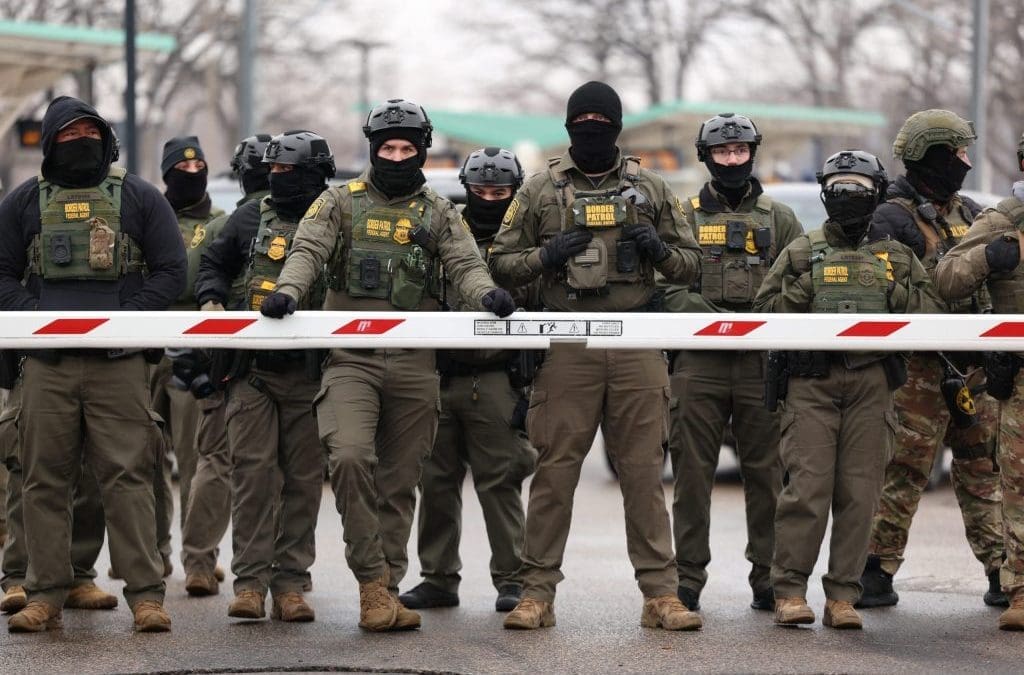
Congress members of the Hispanic Caucus speak out on their concerns on ICE and Border Patrol, with their first question being: why is an additional $70 billion needed after the record breaking $140 billion allocated last year from the Big Beautiful Bill? The budget for ICE has already increased by 400% within the past year, so speculation as to how these new funds would be used now leans towards intimidation and interference at the upcoming midterm elections. Inequality Watch reporters Taya Graham and Stephen Janis break down their most recent interviews from these representatives at the nation’s Capitol in Washington, DC.
Credits:
Written by: Stephen Janis
Produced by: Taya Graham, Stephen Janis
Studio / Post-Production: Cameron Granadino
Trancript
The following is a rushed transcript and may contain errors. A proofread version will be made available as soon as possible.
Taya Graham:
Could new funding slated for ICE be used for a midterm election surprise? We’ll break down what might happen on this episode of our Capitol Hill Inequality Watch video React. Hello, my name is Taya Graham and welcome back to our Capitol Hill React show where we watch comment and analyze developments at the nation’s capital and beyond. It’s a show filtered through the prism of inequality and informed by the intellectual context of analyzing the imperative of raw power and exposing how it corrupts a political power that is supposed to serve we, the people. Now, to start the show, I want to introduce my reporting partner, Stephen Janis. Hello, Stephen. How are you?
Stephen Janis:
Hey, Taya, how are you doing? Good to be back here with you talking about power and politics.
Taya Graham:
Excellent. Well, we appreciate
by Mansa Musa and Ruwaida Amer | Apr 20, 2026 | Israel, Palestine, Political Prisoners, Politics and Movements: International, Prisons and Policing, Rattling the Bars, video
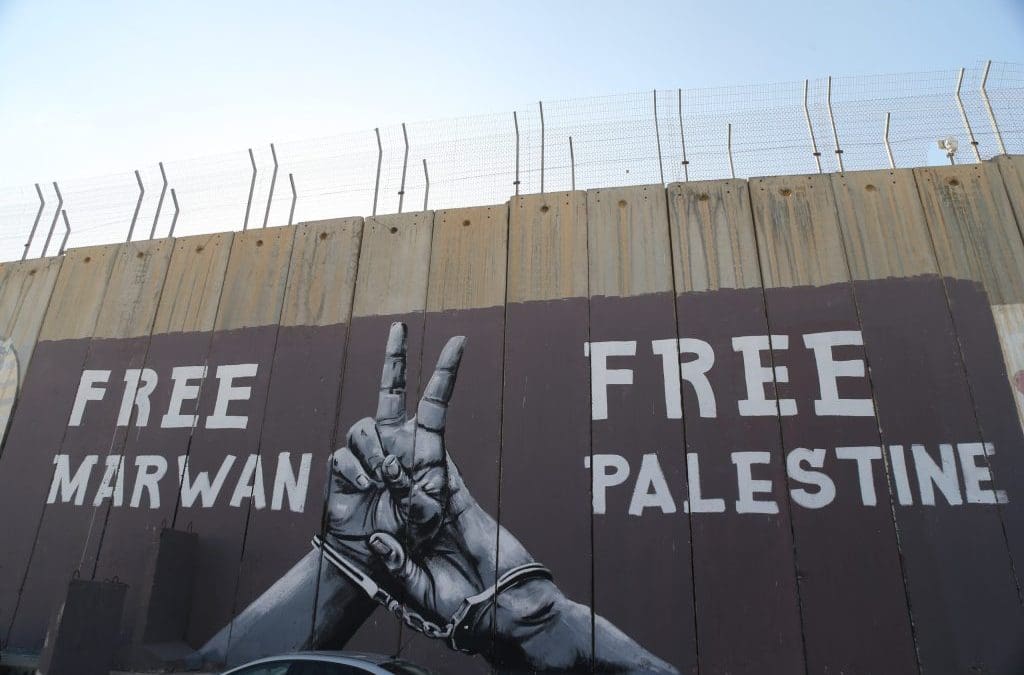
Former political prisoner Mahmoud al-Arda was first arrested by Israeli occupation forces in 1992 due to his involvement in the First Intifada and his membership in Islamic Jihad. Since then, for the past three decades, al-Arda has been incarcerated in different Israeli prisons, and he made international headlines in 2021 after leading a daring, successful, but short-lived escape from the maximum-security Gilboa Prison. In this blockbuster episode of Rattling the Bars, host Mansa Musa—a former Black Panther and political prisoner in the US—speaks with al-Arda after he and 2,000 other Palestinian prisoners were finally released from incarceration in Israel in 2025.
Additional links/info:
B’Tselem, Statistics on Palestinians in Israeli Custody
B’Tselem, “Welcome to Hell”: The Israeli Prison System as a Network of Torture Camps (Report)
Mansa Musa, TRNN, “Inside Israel’s Prison Regime”
Ruwaida Amer, Electronic Intifada, “Freedom is the eternal dream”
Aseel Mousa, Middle East Eye, “Jailbreak, freedom, exile: Life of Mahmoud al-Arda, architect of daring Israeli prison escape”
Credits:
Videography: Ruwaida Amer, Cameron Granadino
Producer / Editor: Cameron Granadino
Voiceover: Danny Bou-Maroun
Transcript
The following is a rushed transcript and may contain errors. A proofread version will be made available as soon as possible.Mansa Musa:
For the past two years, the four major US Sunday news shows have almost entirely excluded Palestinian voices from their coverage of Gaza. Airing just one brief interview in that time, according to journalist Adam Johnson. Corporate media’s propaganda war isn’t only about the stories it chooses to show, but even more about the voices and perspective it leaves out. In contrast, the real news is committed to amplifying those voices. In this spirit, we connected with Mahmoud al-Arda , a 50-year-old Palestinian who spent 32 years
by Julia Conley | Apr 14, 2026 | Article, Politics and Movements: International, Politics and Movements: US, Prisons and Policing, Reprint
This story originally appeared in Common Dreams on April 14, 2026. It is shared here under a Creative Commons (CC BY-NC-ND 3.0) license.
The former president of a top international human rights watchdog views the United States’ monthslong campaign of bombing boats in the Caribbean Sea and eastern Pacific Ocean as a clear-cut case of “murder,” he told The Intercept Monday, but he warned that pressure from the Trump administration may stop the body from investigating the Pentagon’s actions.
Juan Méndez, a former president of the Inter-American Commission on Human Rights, noted that a month after the IACHR held a hearing on the boat bombing campaign, officials “may well feel that this is a very delicate situation, and if they take the initiative, they’re going to incur the wrath of the United States.”
The hearing last month was the first of its kind and included testimonies from the ACLU, the Center for Constitutional Rights, International Crisis Group, and Ben Saul, the United Nations special rapporteur on counterterrorism and human rights. The groups presented evidence that the US has been violating both domestic and international law by bombing vessels that it has claimed—without making any evidence publicly available—are involved in drug trafficking. Nearly 170 people have been killed in dozens of strikes, and legal experts worldwide have asserted the US is violating international law and has committed extrajudicial killings—potentially making those involved in the strikes liable for murder.
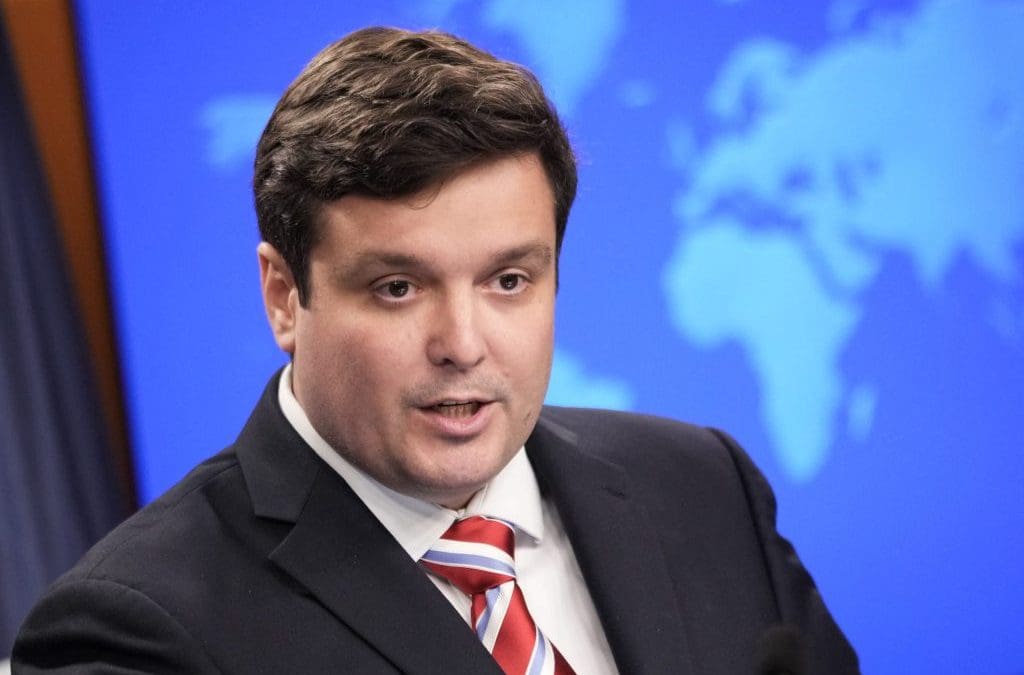
The hearing was followed by a statement from Tommy Pigott, a State Department spokesperson, who said the IACHR had “strayed far outside its mandate” by looking into the boat attacks—as the family of one man killed in a bombing requested it to—and accused the ACLU of trying to manipulate the body.
“The United States calls on the
by Mansa Musa | Apr 13, 2026 | Gaza, Israel, Palestine, Politics and Movements: International, Prison Industrial Complex, Prisons and Policing, Rattling the Bars, video
While international attention has decreased in recent months, the horrors Israel continues to systematically unleash on Palestinians in Gaza and the Occupied West Bank have not. In this episode of Rattling the Bars, host Mansa Musa—a former Black Panther and political prisoner—speaks with renowned scholar-activist Dr. Rabab Abdulhadi about Israel’s apartheid system of incarceration and the urgent fight to free Palestinian political prisoners detained by Israel.
Additional Links:
Stop the Torture of Palestinian and Lebanese Prisoners – Open the Prisons to the Red Cross petition
Credits:
Producer / Videographer / Editor: Cameron Granadino
Transcript
The following is a rushed transcript and may contain errors. A proofread version will be made available as soon as possible.Mansa Musa:
Welcome to this edition of Rattling the Bars. I’m your host, Mansa Musa. The number of Palestinian detainees in Israel custody has been on the rise. A population now marked by a revolving door where ceasefire releases are being eclipsed by new arrest campaign. Despite the release of nearly 2000 prisoners during the October 2025 ceasefire, or I must say so- called ceasefire, a massive wave of new detentions and occupied territories of Palestine has effectively reset the scales of incarceration. Join us today is Dr. Rabab Abdulhadi, the founding director and senior scholar of the Arab and Muslim Ethnicities and Diaspora Studies Program at SFSU, a Yale educated sociologist. She is the principal investigator of Teaching Palestine. Welcome, doc. How you doing today?
Dr. Rabab Abdulhadi:
I’m okay. I’m okay. I’m as best as could be expected under the terrible conditions that we’re living under.
Mansa Musa:
Before we go into a more detailed thing what’s going on with our occupation, give update as
by Maximillian Alvarez | Apr 10, 2026 | ICE, immigration, Politics and Movements: US, Prisons and Policing, video
In the small town of Williamsport, Maryland, about an hour and a half from Baltimore, the Department of Homeland Security purchased a massive shipping warehouse for $102 million with plans to turn it into an ICE detention center. But local efforts to expose, delay, and shut down the Trump administration’s heinous plans for this makeshift concentration camp are growing. A broad coalition of local officials, faith leaders, and civil rights organizations have filed an amicus curiae brief in the State of Maryland v. Noem lawsuit, urging the US District Court for the District of Maryland to halt DHS’s rushed plan to convert the massive Williamsport warehouse into a large-scale immigration detention center. TRNN Editor-in-Chief Maximillian Alvarez speaks with Sonia Kumar, a senior staff attorney at ACLU of Maryland, who is part of the team of legal representatives who filed the brief.
Additional links/info:
ACLU of Maryland website, Facebook page, X page, and Instagram
ACLU of Maryland, “Community leaders, elected officials, and civil rights organizations challenge DHS’s secret, rushed plan to convert Hagerstown warehouse into mass immigration detention center”
Maximillian Alvarez, TRNN, “‘A black site concentration camp’: Residents fight ICE detention warehouse in rural Maryland”
Maximillian Alvarez, TRNN, “The chilling truth behind ICE’s detention warehouses”
Maximillian Alvarez, TRNN, “Meet the data analysts exposing ICE’s plans“
Credits:
Studio Production / Post-Production: Cameron Granadino
Transcript
The following is a rushed transcript and may contain errors. A proofread version will be made available as soon as possible.
Maximillian Alvarez:
Welcome back to The Real News Network. I’m Maximillian Alvarez. In the small town of Williamsport on the western border of Maryland, which is about an hour and a half from where I’m sitting right now in