by Renée Feltz, Truthout | Jul 30, 2026 | Article, Political Prisoners, Politics and Movements: International, Politics and Movements: US, Prisons and Policing, Reprint
This article was originally published by Truthout on July 28, 2026. It is shared here under a Creative Commons (CC BY-NC-ND 4.0) license.
World-renowned political prisoner Mumia Abu-Jamal is 72 years old, suffering multiple health problems, and may die in prison, say legal advocates in a new request they filed today that asks the United Nations to support his release. Abu-Jamal’s legal team decided to appeal to the UN after having exhausted nearly every legal avenue for relief available in the United States.
Abu-Jamal was a Black Panther and journalist when he was convicted of the 1981 murder of Philadelphia police officer Daniel Faulkner, and he has always maintained his innocence. His death sentence was overturned in 2001, and in 2011, Pennsylvania resentenced him to life without parole. Since then, “each attempt to secure Mr. Abu-Jamal a new and fair trial has been rejected,” argues a submission his lawyer Bret Grote and others made on his behalf to the UN’s Working Group on Arbitrary Detention.
Grote told Truthout the filing, which UN rules limit to 20 pages, attempts to summarize nearly a half-century of the “failures of the criminal legal system” in Abu-Jamal’s case, including an “unfair trial, a biased appellate process, decades of surveillance and censorship, and a death by incarceration sentence that has been recognized by the United Nations as violating international human rights standards.”
The UN determination of whether someone faces “arbitrary detention” is interpreted “more broadly” than simply being “against the law.” It also considers “elements of inappropriateness, injustice, lack of predictability and due process of law.”
Abu-Jamal’s lawyers say he was in “continuous solitary confinement” from 1983 to 2011 on Pennsylvania’s death row, before being transferred to the
by Mansa Musa | Jun 9, 2026 | history, Political Prisoners, Politics and Movements: International, Prison Industrial Complex, Rattling the Bars, video
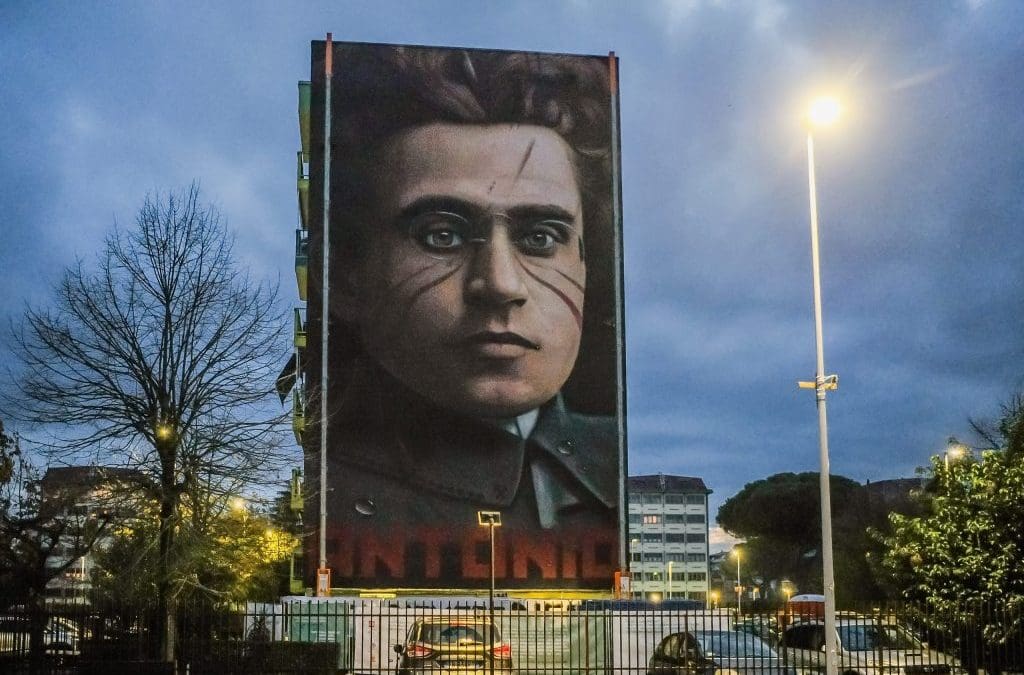
Imprisoned by fascist dictator Benito Mussolini in 1926, the prison writings of Italian Marxist theorist Antonio Gramsci remain essential 100 years later for understanding how fascism, policing, and incarceration function to suppress political dissent and preserve unequal systems of power. In this episode of Rattling the Bars, former Black Panther and political prisoner Mansa Musa speaks with renowned scholar Alberto Toscano about the importance and terrifying relevance of Gramsci today.
Guests:
Alberto Toscano is a renowned Italian cultural critic, social theorist, philosopher, translator, and adjunct professor at the Simon Fraser University School of Communication. Toscano is a columnist at In These Times and the (co-)author of numerous books, including: Late Fascism: Race, Capitalism and the Politics of Crisis; and Fanaticism: On the Uses of an Idea.
Credits:
Producer / Videographer / Editor: Cameron Granadino
Transcript
The following rushed transcript may contain errors. It will be updated as soon as possible.
Mansa Musa:
Welcome to this edition of Rattling the Bars. I’m your host, Mansa Musa. Today, this is just a political conversation that we’ll be having about fascism, but more importantly, talking about the works of Antonio Gramsci. Joining me today is Alberto Toscano. Welcome to Rattling the Bars Alberto.
Alberto Toscano:
Thanks for having me.
Mansa Musa:
First, explain to our audience who Antonio Gramsci was.
Alberto Toscano:
So Gramsci is best known as former secretary of the Italian Communist Party and one of the most significant Marxist and communist theorists of the 20th century. And most of his theorizing, such as we know today, was done in prison in a series of no books, his prison notebooks that were published after his death and after the end of World War II. It’s
by Mansa Musa and Ruwaida Amer | Apr 20, 2026 | Israel, Palestine, Political Prisoners, Politics and Movements: International, Prisons and Policing, Rattling the Bars, video
Former political prisoner Mahmoud al-Arda was first arrested by Israeli occupation forces in 1992 due to his involvement in the First Intifada and his membership in Islamic Jihad. Since then, for the past three decades, al-Arda has been incarcerated in different Israeli prisons, and he made international headlines in 2021 after leading a daring, successful, but short-lived escape from the maximum-security Gilboa Prison. In this blockbuster episode of Rattling the Bars, host Mansa Musa—a former Black Panther and political prisoner in the US—speaks with al-Arda after he and 2,000 other Palestinian prisoners were finally released from incarceration in Israel in 2025.
Additional links/info:
B’Tselem, Statistics on Palestinians in Israeli Custody
B’Tselem, “Welcome to Hell”: The Israeli Prison System as a Network of Torture Camps (Report)
Mansa Musa, TRNN, “Inside Israel’s Prison Regime”
Ruwaida Amer, Electronic Intifada, “Freedom is the eternal dream”
Aseel Mousa, Middle East Eye, “Jailbreak, freedom, exile: Life of Mahmoud al-Arda, architect of daring Israeli prison escape”
Credits:
Videography: Ruwaida Amer, Cameron Granadino
Producer / Editor: Cameron Granadino
Voiceover: Danny Bou-Maroun
Transcript
The following is a rushed transcript and may contain errors. A proofread version will be made available as soon as possible.Mansa Musa:
For the past two years, the four major US Sunday news shows have almost entirely excluded Palestinian voices from their coverage of Gaza. Airing just one brief interview in that time, according to journalist Adam Johnson. Corporate media’s propaganda war isn’t only about the stories it chooses to show, but even more about the voices and perspective it leaves out. In contrast, the real news is committed to amplifying those voices. In this spirit, we connected with Mahmoud al-Arda , a 50-year-old Palestinian who spent 32 years
by Amy Goodman | Dec 9, 2025 | health care, Interview, medical care, Mumia Abu-Jamal, Political Prisoners
Supporters of Mumia Abu-Jamal are on a 103-mile, 12-day march ending Tuesday in Frackville, Pennsylvania, where he is imprisoned at the Mahanoy state prison. The march ends on the same day Abu-Jamal was arrested in 1981 for the murder of Philadelphia police officer Daniel Faulkner, for which he has always maintained his innocence. One of the best-known political prisoners in the world…
Source
by Zane McNeill | Oct 18, 2025 | Abolition, Anarchism, Incarceration, Interview, Mass Incarceration, Mutual Aid, Political Prisoners, Prison Abolition, Prisons, Solitary Confinement
Eric King has seen what hell looks like during his time in federal custody. While incarcerated, he was increasingly targeted for his anarchist political beliefs, often denied family visits, and restricted from receiving mail. In 2018, at FCI Florence, a lieutenant took him to a mop closet, where he was pushed and punched. King defended himself, after which he was slammed to the floor, stomped…
Source