by Stephen Prager | Jul 7, 2026 | Article, Economy and Inequality, Oil, Politics and Movements: International, Politics and Movements: US, Reprint, Trump, Venezuela
This story originally appeared in Common Dreams on July 06, 2026. It is shared here under a Creative Commons (CC BY-NC-ND 3.0) license.
The Trump administration has seized at least $8 billion worth of Venezuela’s oil wealth since it overthrew President Nicolás Maduro in January, according to the New York Times.
Now, as Venezuela struggles to cope with a catastrophic pair of earthquakes late last month that killed at least 3,300 people and left tens of thousands more injured and homeless, and 41,000-50,000 people are reported missing, the US is providing just $300 million in humanitarian aid, a small fraction of the money it purloined.
The Associated Press reported on Monday that international rescue teams have begun to pull out as hopes of finding missing loved ones alive dwindle each day after the disaster.
🇻🇪 Update: The death toll has risen to 3,342, with 16,740 people injured, the country’s Communication and Information Ministry said Sunday. https://t.co/HQfKAMomRZ— Drop Site (@DropSiteNews) July 6, 2026
Shortly after deposing Maduro, US President Donald Trump declared that the US “took over Venezuela… and the oil is flowing.”
Economist Francisco Rodriguez has found that during the first quarter of 2026, after Trump overthrew Maduro and the US began expropriating Venezuelan oil, the country experienced the lowest rate of economic growth since 2021, even as oil exports rose.
As Roxanna Vigil, a former senior sanctions policy adviser at the US Treasury Department’s Office of Foreign Assets Control, explained in an article for the Council on Foreign Relations last month, “almost 100 million barrels of oil worth an estimated $8 billion have flowed through a process marked by no transparency and minimal oversight.”
“While the Trump administration has repeatedly framed this control as benefiting both countries, it has not publicly disclosed how much Venezuelan oil it
by Taya Graham and Stephen Janis | Jul 7, 2026 | Democratic Party, Democrats, elections, Inequality Watch, midterms, Politics and Movements: US, Socialism, video
Establishment Democrats have racked up disastrous electoral losses over the past decade—so why are they furious when their own party actually wins? Taya Graham and Stephen Janis break down the meltdown of Democratic “centrist” operatives and pundits after recent socialist victories in New York and Colorado, from James Carville calling for a party “schism” to Rep. Josh Gottheimer’s panicking about the future of the party on CNN. Plus: we revisit our interviews with actual Mamdani voters—the people the mainstream media refuses to talk to.
Credits:
Production / Post-Production: Cameron Granadino, Stephen Janis
Transcript
The following is a rushed transcript and may contain errors. It will be updated as soon as possible.
Taya Graham:
Establishment Democrats have racked up a lot of losses over the past decade. So why are they so angry when members of their own party win and how do they need to change if they ever want to win again? Well, Steven Janice and I will break down the profound need for change for Democrats in this episode of the Capitol Hill Inequality Report. Hello, my name is Taya Graham and welcome to the Are You Serious Edition of our Inequality Watch Capitol Hill Report? As in, are you serious Democrats that you don’t want to listen to your own voters? And are you seriously going to brush off the results when Democratic socialists win as some sort of existential threat to your party? Well, we’re going to unpack what’s at the root of this state of denial and provide some analysis of why Democrats might not be able to overcome the fact that they are more afraid of socialism than losing.
Of course,
by Maximillian Alvarez | Jul 6, 2026 | east palestine, Economy, Economy and Inequality, Podcast, Politics and Movements: International, Politics and Movements: US, railroad, sacrifice zones, Working People
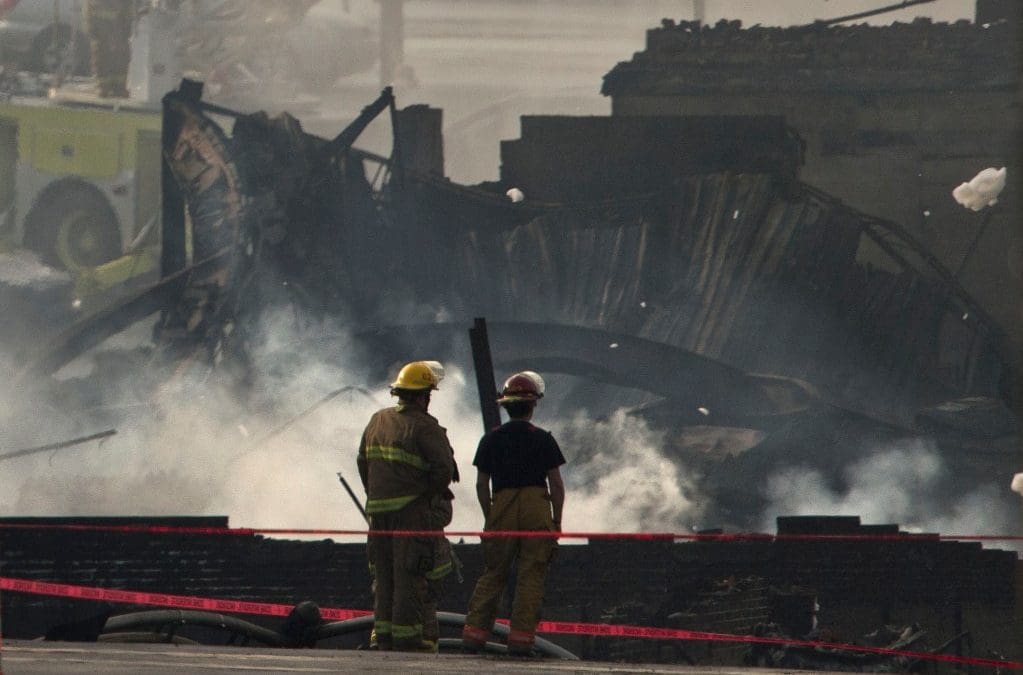
10 years before the catastrophic train derailment and chemical disaster in East Palestine, Ohio, one of the deadliest rail disasters in North American history took place in the Canadian town of Lac-Mégantic, Quebec.
On July 6, 2013, an unattended freight train that had been parked on the tracks overnight began to roll downhill and gather alarming speed as it careened towards the city center of Lac-Mégantic. The train, which was operated by Montreal, Maine, and Atlantic Railway and carrying over 2 million gallons of crude oil, derailed around 1:15 AM. The resulting explosions and fire killed 47 people and destroyed over 40 buildings, obliterating a large portion of the downtown area and prompting mass evacuations.
In this special episode of Working People, we speak with a panel of survivors of the Lac-Mégantic rail disaster in Canada and the East Palestine rail disaster in the USA.
Panelists include: Robert Bellefleur, a resident of Lac-Mégantic and spokesperson for the Lac-Mégantic Citizens’ Coalition for Railroad Safety; Gilbert Carette, a resident of Lac-Mégantic and a member of the Lac-Mégantic Citizens’ Coalition for Railroad Safety; Gilles Fluet, a resident of Lac-Mégantic who narrowly escaped the 2013 train crash and witnessed the derailment firsthand; Anne-Marie Saint-Cerny, award-winning writer, videographer, social and environmental justice activist, and author of Mégantic: A Deadly Mix of Oil, Rail, and Avarice; Jami Wallace, a displaced resident of East Palestine, Ohio, and founder of the Chemically Impacted Communities Coalition; Christina Siceloff, a Creek Ranger and resident of Beaver County, Pennsylvania, affected by the 2023 Norfolk Southern train derailment and chemical disaster.
If you or members of your community are interested in attending or participating in TRNN’s
by Mansa Musa | Jul 6, 2026 | Black Panthers, Politics and Movements: US, Rattling the Bars, Socialism, video
On this episode of Rattling the Bars, to commemorate the 60th anniversary of the founding of the Black Panther Party in 1966, host and former political prisoner Mansa Musa speaks with Dr. Joy James and Dr. K. Kim Holder about the history of the Panthers and their unique approach to, and practice of, communal socialism.
This is Part 2 of a two-part conversation. Watch Part 1 here.
Guests:
Dr. Joy James is Ebenezer Fitch Professor of Humanities at Williams College. She is the author of numerous books, including: In Pursuit of Revolutionary Love; Resisting State Violence; and Shadowboxing: Representations of Black Feminist Politics. Creator of the digital Harriet Tubman Literary Circle at UT Austin, James is also editor of The New Abolitionists: (Neo)Slave Narratives and Contemporary Prison Writings; Imprisoned Intellectuals; Warfare in the American Homeland; The Angela Y. Davis Reader; and co-editor of the Black Feminist Reader.
Dr. K. Kim Holder is an assistant professor of educational foundations and Africana studies at Rowan University. Dr. Holder earned his doctorate from the University of Massachusetts Amherst in Multicultural Education and African American Studies, his masters in Early Childhood Education from Bank Street College of Education, and B.A. in History from Hampshire College.
Credits:
Producer / Videographer / Editor: Cameron Granadino
Transcript
The following is a rushed transcript and may contain errors. It will be updated as soon as possible.
Mansa Musa:
Let me ask y’all this. We know that at this juncture right now where we stand at right now, the contradiction that exists between the leadership or the lack of leadership in this country, because when we come into space saying like we saying socialism, we defining and we making
by Maximillian Alvarez | Jul 4, 2026 | Article, Democracy, Opinion, Politics and Movements: US, Trump
by Maximillian Alvarez | Jul 2, 2026 | east palestine, Economy, Economy and Inequality, labor, Politics and Movements: US, sacrifice zones, video, Working People
From the explosion of AI data centers to the increasing number of toxic spills, explosions, and industrial disasters happening across the country, corporations and the government are turning the USA into one giant “sacrifice zone.”
Things are going to get worse before they get any better, and nothing is going to change unless residents of different sacrifice zones and poisoned communities, workers and unions on the frontlines of the industries poisoning us, environmental justice groups, community and faith organizations, scientists, journalists, and all others who have a stake in this fight start coming together, working together, and fighting back together. In this special panel discussion, recorded at the 2026 Railroad Workers United convention in Chicago, Illinois, we speak with a panel of guests who are part of a new coalition that is doing just that.
Panelists include: Jeff Kurtz, a retired locomotive engineer, union officer, and Railroad Workers United member who also served as a state representative in the Iowa House of Representatives; Jami Wallace, a resident of East Palestine, Ohio, and founder of the Chemically Impacted Communities Coalition (CICC); Dr. Nicole Fabricant, a professor of anthropology at Towson University and scholar-activist who has been working with chemically impacted communities in South Baltimore, Maryland, for 15 years; Scott Smith, independent testing expert and founder of the Blue Shirt Justice League; and Lesley Pacey, Senior Environmental Officer at the Government Accountability Project.
Additional links/info:
Railroad Workers United website, Facebook page, and X page
Chemically Impacted Communities Coalition (CICC) Facebook page
Blue Shirt Justice League website and Facebook page
Government Accountability Project website, Facebook page, X page, Bluesky page, and Instagram
Coal-Free Curtis Bay Facebook page and Instagram
South Baltimore Community