by Theia Chatelle | Nov 2, 2026 | Article, elections, Israel, Palestine, Politics and Movements: International, Reprint
This article was originally published by Truthout on Oct. 28, 2026. It is shared here under a Creative Commons (CC BY-NC-ND 4.0) license.
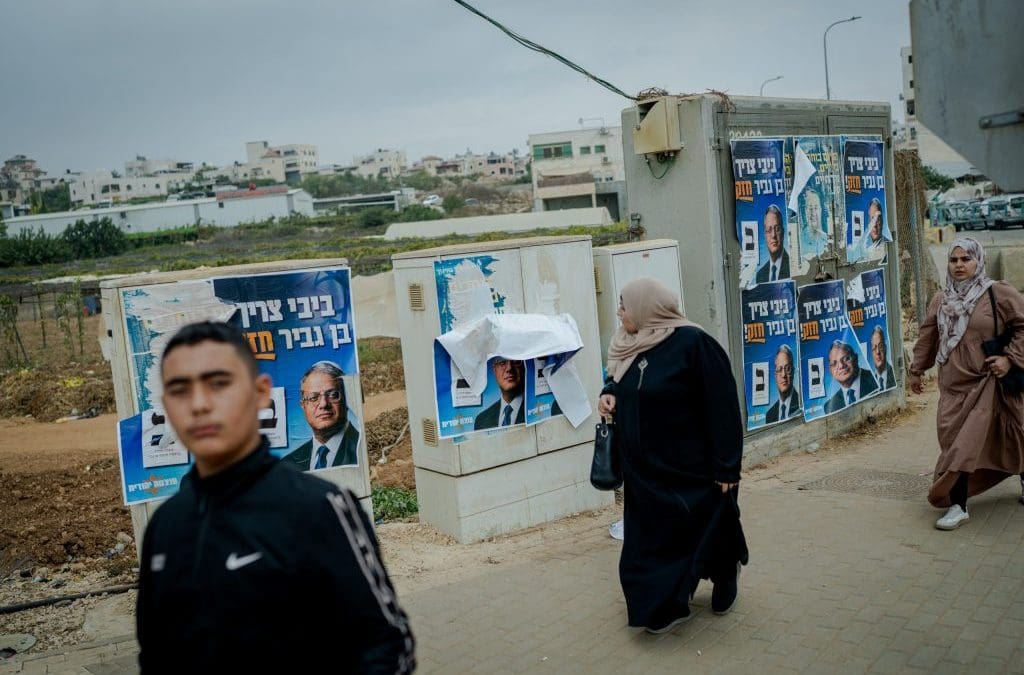
Jaffa, Israel — Outside of Ahva Elementary School in Ajami, a historic Palestinian neighborhood just south of central Tel Aviv, the mood was defiant on October 27, the day of Israel’s national elections. “We fear that if we do not get this government out of power, we will lose everything,” one Palestinian voter told me after casting her ballot.
It came as no surprise that she, like most of the Palestinian citizens of Israel I interviewed on Election Day, asked not to be named. Since October 7, 2023, more than 400 Palestinian citizens of Israel have been investigated by police for “incitement,” often over social media posts, according to the legal rights group Adalah.
During the 1948 war, which Palestinians call the Nakba, most of Jaffa’s nearly 100,000 Palestinian residents fled or were expelled. The fewer than 4,000 who remained were concentrated in Ajami, fenced in with barbed wire, where they lived under Israeli military rule until 1949.
Just weeks ago, it was not clear that the parties most Palestinian citizens of Israel vote for would even appear on the ballot. In September, Israel’s Central Elections Committee, a body of party representatives, voted to disqualify both Arab parties — which are led by and draw most of their votes from Palestinian citizens of Israel — from running in the election. The Joint List is an alliance of three parties running together to clear the 3.25 percent threshold needed to enter the Knesset.
Hadash, a left-wing party with roots in Israel’s Communist Party,
by Jake Johnson | Nov 2, 2026 | Article, Economy and Inequality, Gaza, labor, Politics and Movements: International, Reprint, Unions
This story originally appeared in Common Dreams on Oct. 30, 2026. It is shared here under a Creative Commons (CC BY-NC-ND 3.0) license.
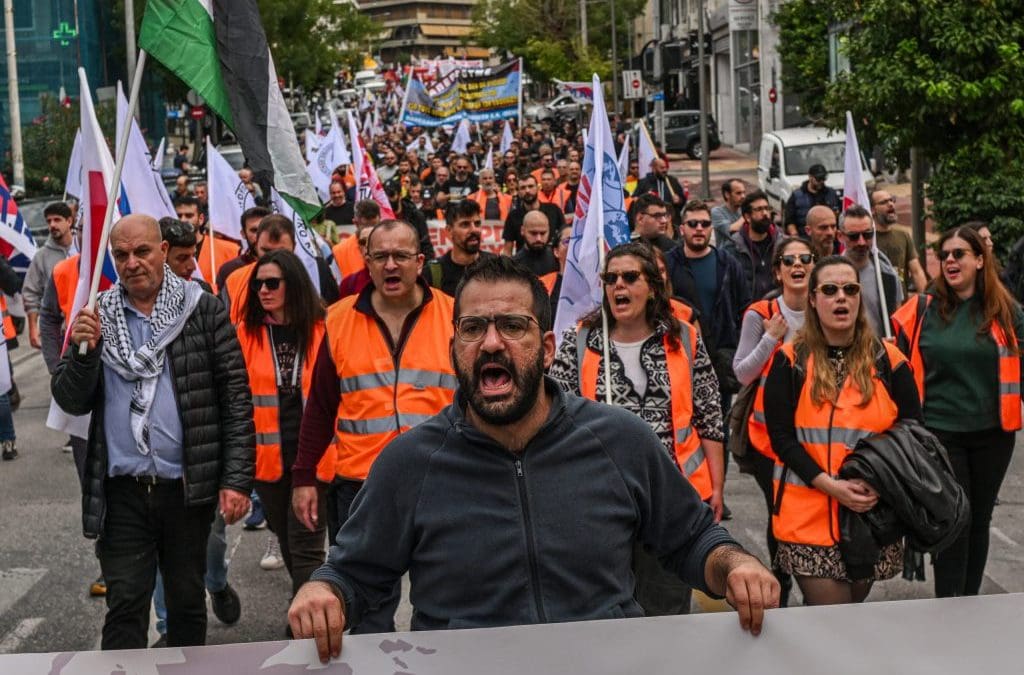
Dockworkers in more than 20 countries—from France to India to Greece—are withholding their labor on Friday to demand an end to Israel’s genocidal assault on Gaza and highlight the role that commercial ports play in fueling deadly militarism worldwide.
Organizers said the work stoppages, led by dockworkers’ unions at 113 ports across 22 countries, would be the “largest coordinated port action ever,” easily surpassing the international day of action held in February. No Harbour for Genocide, a collective of trade unions and others supporting the day of action, said $2.8 billion worth of cargo will be halted at Mediterranean ports, where workers are planning to strike for 24 hours.
“A cargo refused in one port sails on to the next,” said No Harbour for Genocide. “Refused in every port, it stops, and the workers have enforced the embargo that governments announced and did not.”
In a joint statement last month announcing the day of action, dockworkers’ unions from Türkiye, Morocco, Italy, France, Greece, Italy, and Basque Country laid out their demands:
An immediate end to the genocide of the Palestinian people and the opening of safe corridor for humanitarian aid.. An end of colonization, occupation and apartheid imposed to Palestinian People and the recognition of an independent Palestinian state recognized by the international community on the 1967 borders, with East Jerusalem as its capital.
An end to the war in the Middle East. No support, no facilitation, no participation in the US-Israeli war against Iran, Lebanon or any other imperialist intervention. Military fleets and bases
by Maximillian Alvarez | Nov 2, 2026 | Capitalism, Economy, Economy and Inequality, labor, Opinion, Politics and Movements: International, Politics and Movements: US, Socialism, video
With a global capitalist system that is wreaking havoc on the planet, pushing most of humanity into poverty, and enabling a small number of billionaire and trillionaire oligarchs to accumulate more money and power than nation-states, more people around the US and beyond are asking: “Could socialism be the solution?” But can socialism actually work in the real world? Can it actually help create a better world than the one capitalism has created?
In this live-event discussion, hosted at Red Emma’s Cooperative Bookstore and Coffeehouse in Baltimore, Maryland, TRNN Editor-in-Chief Maximillian Alvarez speaks with Ben Burgis and Mike Beggs about their new book, co-authored with Bhaskar Sankara, The Blueprint: How Socialism Can Work in the Real World.
Credits:
Production/Post-production: Cameron Granadino
Transcript
The following is a rushed transcript and may contain errors. It will be updated.
Maximillian Alvarez:
So we’re here at Red Emma’s Cooperative Bookstore and Coffee House in Baltimore, and I am really excited to be sitting with two of the three co-authors of the vital new book, The Blueprint: How Socialism Can Work in the Real World. Ben Burgis and Mike Beggs. Give it up, everyone. Hell yeah. Welcome to Baltimore, guys. So let’s talk about the S word, right? I mean, we’re here. The world’s on fire. Life continues to get harder and scarier year after year for working people everywhere. The masked jackbooted thugs that we were warned about are in our streets, hunting and disappearing our neighbors. Endless war and genocide and profiteering are ripping our world and our people apart. And everything is being run or taken over by these psychopathic, self-serving, greedy, society destroying, profit seeking, oligarchs, end times,
by Maximillian Alvarez | Nov 2, 2026 | Economy, Economy and Inequality, France, labor, Podcast, Politics and Movements: International, Unions, Working People
https://www.spreaker.com/show/2952221/episodes/feed
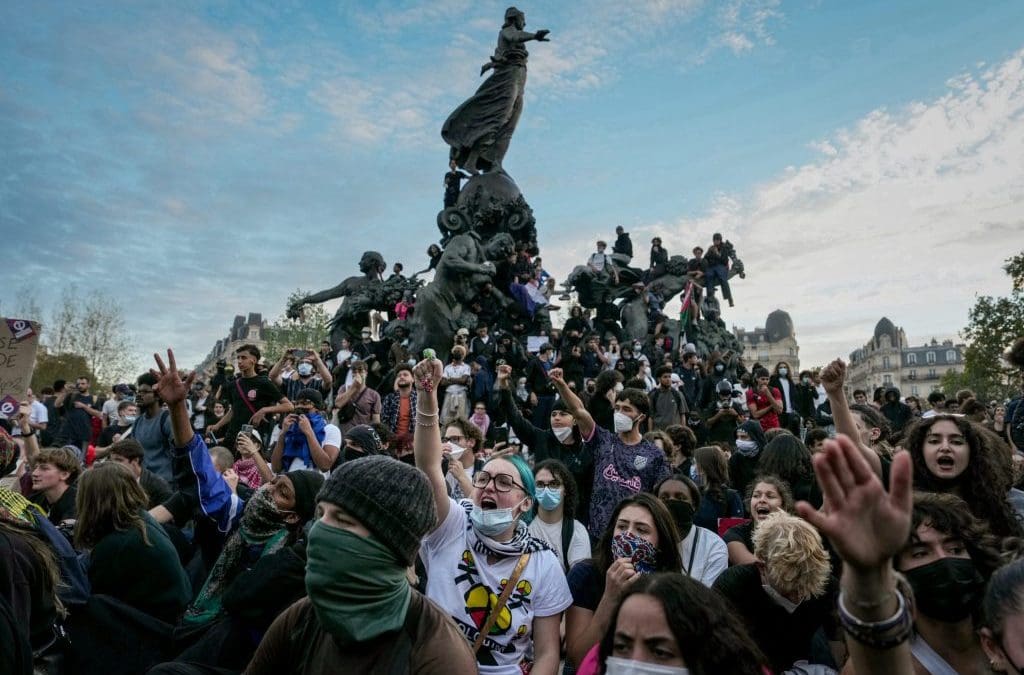
For the past month—led by students and joined by parents, teachers, labor unions, and more—France has been gripped by one of the largest protest waves in modern history. Protestors have faced violent police repression, a recalcitrant government, and rampant misinformation or skewed coverage from rightwing and corporate media. In this special international edition of Working People, we speak directly with a broad range of students and union members across France who are on the front lines of the current protest movement, and we put them in conversation with union workers and leaders in the US.
Editor’s Note: This episode contains an edited-down version of a Zoom webinar panel discussion recorded on Sunday, October 25, organized in partnership with The Real News Network, the Chicago Teachers Union, Haymarket Books, and the French labor union Force Ouvrière. Unless expressed by elected organization leaders, all views shared in this conversation and on the original webinar are those of the speakers alone.
Additional links/info:
Chicago Teachers Union website, Facebook page, Bluesky page, and Instagram
Force Ouvrière website, Facebook page, and Instagram
Haymarket Books website, YouTube channel, Bluesky page, and Instagram
Angelique Chrisafis, The Guardian, “Hundreds of thousands march across France in protests over schools and policing”
Featured Music:
Jules Taylor, Working People Theme Song
Credits:
Audio Post-Production: Jules Taylor
Transcript
The following is a rushed transcript and may contain errors. It will be updated.
Maximillian Alvarez:
Alright. Welcome, everyone, to Working People, a podcast about the lives, jobs, dreams, and struggles of the working class today. My name is Maximillian Alvarez, and today we are taking you to the streets of France, where mass, student-led protests have swept the country for the past month. We’ve gotten so many
by Julia Conley | Oct 6, 2026 | Article, California, Iran, Politics and Movements: International, Politics and Movements: US, Reprint, Trump
This story originally appeared in Common Dreams on Oct. 06, 2026. It is shared here under a Creative Commons (CC BY-NC-ND 3.0) license.
“Keep our city out of your reckless war talk,” said San Diego’s mayor, Todd Gloria, Monday night after President Donald Trump’s rambling speech at a rally in Nebraska included a particularly violent mention of the California city.
Gloria was among several Democratic political leaders who were incensed after Trump—moments after predicted the Republican Party would see a “tremendous victory” in the November 3 midterm elections—suggested that he would not object to an Iranian military or nuclear attack on San Diego and Los Angeles.
The president said that soaring prices for gas, groceries, and other essentials are a “small price to pay for keeping the world safe—keeping our country safe.”
Trump on Iran: Let ’em take out Los Angeles and San Diego, it’s a small price to pay pic.twitter.com/Fc4BcjVDKj— Headquarters (@HQNewsNow) October 6, 2026
He warned that Iran could “take out a city,” before adding that he would “let them” attack the two deep-blue cities—home to a collective 5.2 million people, with more than 20 million residents in the surrounding areas
“Let them take out Los Angeles. Let them take out San Diego,” Trump said at the rally in Grand Island. “This is a very small price to pay… It’s gonna be over very soon.”
The crowd responded to Trump’s comments with laughter and cheers. The president has frequently made Democratic strongholds like Los Angeles, Chicago, and his own hometown of New York City the targets of rhetorical attacks. He has also targeted those cities with the deployment of armed federal agents as part of his mass
by Yuri Ferreira | Oct 5, 2026 | Article, bolsonaro, brazil, elections, Politics and Movements: International, Reprint
This story originally appeared in Panamerican Dispatch on Oct. 05, 2026, and is shared here with permission.
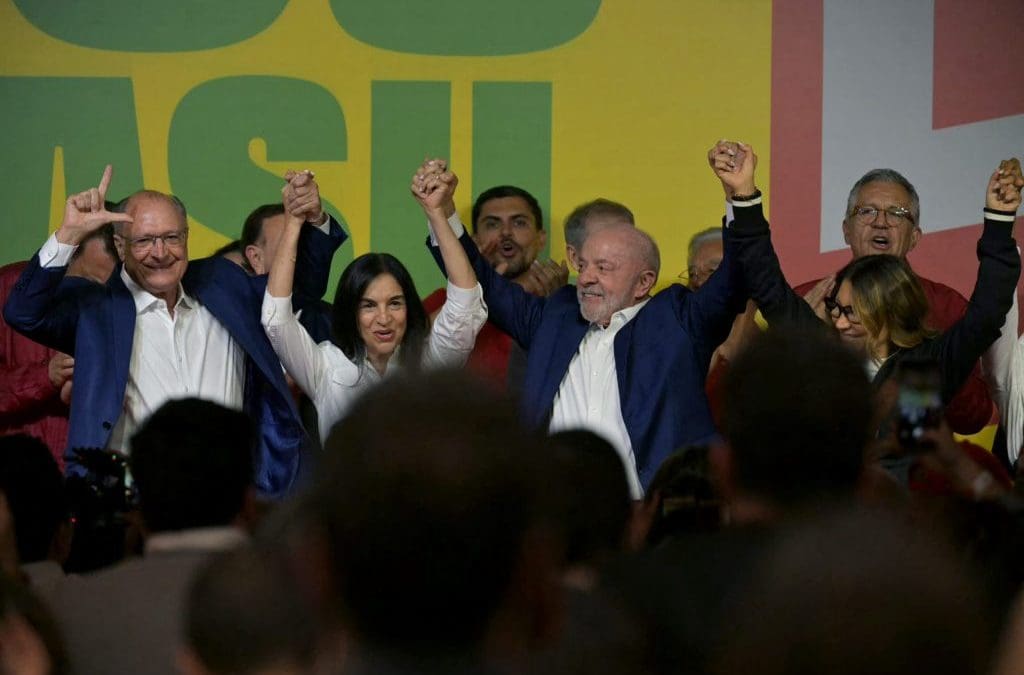
President Luiz Inácio Lula da Silva spoke on Sunday, after the release of the results of the first round of the 2026 elections. He said his campaign for a second round of the presidential race begins this Monday, October 5.
Lula will face Senator Flávio Bolsonaro in the runoff, scheduled for October 25.
In his speech, Lula stated that he intends to present to voters the differences between the two candidates’ platforms.
“Starting tomorrow, we begin a new campaign,” he said. “We will be able to show the difference between the proposals that exist for Brazil. The Brazilian people will have no doubt about choosing who will win the election.”
Lula also launched direct attacks on Flávio Bolsonaro’s political track record and cited the candidate’s past.
“He has a dark history,” Lula said. “With dark connections, with extremely serious suspicions, with ties to militia members and organized crime. All of this will become clear.”
The president mentioned Banco Master. He claimed that Flávio had a hand in the institution’s creation.
“Banco Master resulted in the greatest corruption scandal in this country and the biggest free-for-all involving politicians,” he said.
The accusations raised by Lula are part of his runoff campaign rhetoric and are expected to be a key point of contention between the two candidates in the coming weeks.
The president also argued that the race should be framed as a choice over the country’s future. He stated that his candidacy represents an opportunity to drive change in the Brazilian economy.
“We will show what has been done and what society expects to be