by Maximillian Alvarez | Dec 3, 2025 | Gaza, Israel, labor, Palestine, Politics and Movements: International, Politics and Movements: US, video, Working People
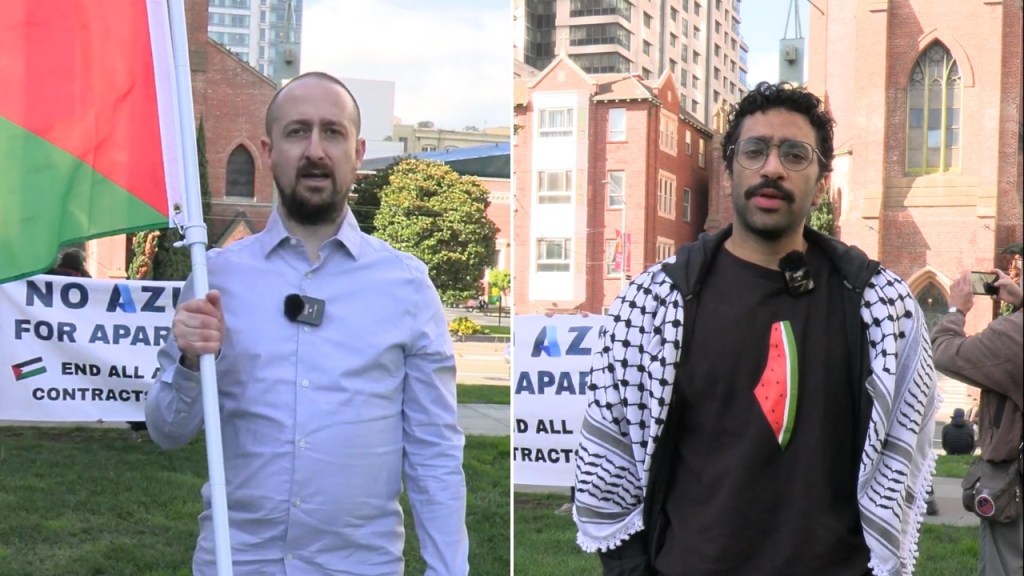
Around 20,000 people attended tech giant Microsoft’s Ignite conference in San Francisco last month. Current and former tech workers and Microsoft employees with the No Azure for Apartheid movement were also there to disrupt business as usual, and to continue their ongoing protests of Microsoft’s contracts with Israel’s government and its complicity in the war crimes Israel has committed against Palestinians. TRNN Editor-in-Chief Maximillian Alvarez speaks with Patrick Fort, a Microsoft senior engineer who resigned in protest at the Ignite conference, and Hossam Nasr, a No Azure for Apartheid organizer who was fired by Microsoft.
Additional links/info:
No Azure for Apartheid Instagram and Linktree
Maximillian Alvarez, The Real News Network, “Microsoft cancels Israeli spy unit access after tech worker revolt”
Credits:
Post-Production: David Hebden
Transcript
The following is a rushed transcript and may contain errors. A proofread version will be made available as soon as possible.
Maximillian Alvarez:
Around 20,000 people attended Tech Giant Microsoft’s Ignite Conference in San Francisco last month. But current and former tech workers and Microsoft employees with the no Azure for Apartheid movement were also there to disrupt business as usual and to continue their ongoing protests of Microsoft’s contracts with Israel’s government and its complicity in the war crimes that Israel has committed against Palestinians. Here’s a video that was posted from the No Azure for Apartheid Instagram account, which shows the moment that one brave tech worker called out Microsoft’s CEO of commercial business, Judson Altoff, in front of the entire conference. Take a look.
Patrick Fort:
Hey, Judson, the point of the children of God is on our hands. Judson, I worked at Microsoft for seven years and I resigned today Microsoft Disappointing Israel genocide, free
by Marc Steiner | Nov 25, 2025 | Gaza, Israel, Palestine, Podcast, Politics and Movements: International, The Marc Steiner Show
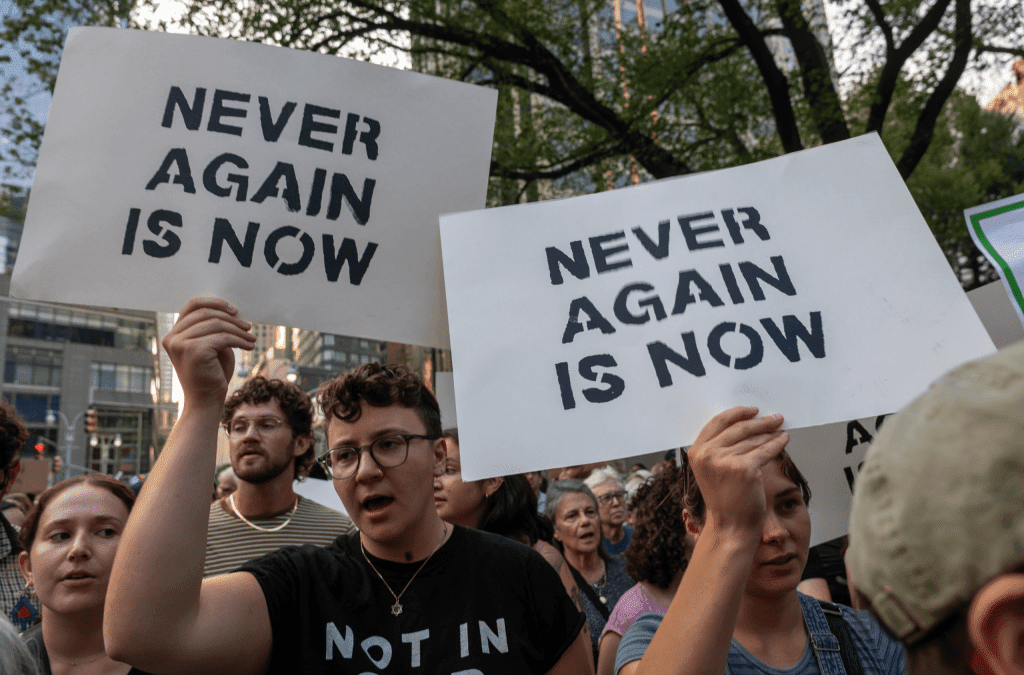
Having witnessed relentless horrors over two years of genocidal war in Gaza, former Israeli and Palestinian combatants are coming together in nonviolent co-resistance and shared struggle. In this episode of the Marc Steiner Show, Palestinian educator and healer Nimala Karoufeh and former Israeli soldier Noa Harrell of Combatants for Peace explain how their binational movement has held together since Oct. 7, 2023, and what real peace-building from the ground up would require.
Guests:
Noa Harrell joined Combatants for Peace in 2016 and directly witnessed the power of nonviolent resistance to Israel’s occupation in the West Bank. This life-changing experience led her to participate in binational activities across Israel and Palestine, including dialogues, educational programs, demonstrations, protective presence, joint grief ceremonies, and rehabilitation of demolished West Bank communities. In October 2023, shortly after the Hamas attacks on Israel, Harrell was elected Israeli General Coordinator of Combatants for Peace, coordinating actions between Israeli and Palestinian members, supervising programs, and serving as Israeli chair.
Nimala Karoufeh is a Palestinian Christian from Beit Jala, now living in Jerusalem. She holds a master’s degree in European Studies from the University of Düsseldorf and a bachelor’s in Social Work and Psychology from Bethlehem University. For more than 15 years, she has led transformative programs with local and international NGOs focused on women’s and youth empowerment, leadership, community development, and peacebuilding. Karoufeh joined Combatants for Peace in 2022 as educational expert and director of the Palestinian Freedom School Program, where she empowers young Palestinians through nonviolent education and activism.
Credits:
Producer: Rosette Sewali
Studio Production: Cameron Granadino
Audio Post-Production: Stephen Frank
Transcript
The following is a rushed transcript and may contain errors. An updated version will be made available as soon
by Michael Fox | Nov 20, 2025 | brazil, Podcast, Politics and Movements: International, Stories of Resistance, Working People
Nov. 20 is Black Consciousness Day in Brazil. A day celebrating the struggle of Black organizations, people, and movements in Brazil. Celebrating the ongoing fight against racism. And, above all, celebrating the history of Brazil’s most historic Black leader: Zumbi dos Palmares.
He was leader of the great Palmares Quilombo, present-day Alagoas, an autonomous state built by escaped slaves in the 1600s.
Palmares would last for roughly a century. It would grow to a population of tens of thousands of people spread out over 11 towns in the forested mountains and hillsides of northeastern Brazil. And they would defend it time and time again against attacks by the Portuguese colonial army.
BIG NEWS! This podcast has won Gold in this year’s Signal Awards for best history podcast! It’s a huge honor. Thank you so much to everyone who voted and supported.
And please consider signing up for the Stories of Resistance podcast feed on Spotify, Apple Podcasts, Spreaker, or wherever you listen. And please take a moment to rate and review the podcast. A little help goes a long way.
The Real News’s legendary host Marc Steiner has also been in the running for best episode host. And he also won a Gold Signal Award. We are so excited. You can listen and subscribe to the Marc Steiner Show here on Spotify or Apple Podcasts.
Please consider supporting this podcast and Michael Fox’s reporting on his Patreon account: patreon.com/mfox. There you can also see exclusive pictures, video, and interviews.
Written and produced by Michael Fox.
Resources:
Culture, Land and Resistance: Brazilians Celebrate Black Consciousness Day
‘Existing and resisting’: Black quilombo communities fight for land, rights in Brazil
Black Consciousness Day in
by Jaclynn Ashly | Nov 19, 2025 | Article, Iraq, Politics and Movements: International
Content warning: The video included in this story contains graphic footage of victims of the Haditha massacre.
Khaled Salman Raseef remembers being jolted awake by a loud explosion near his home on the morning of November 19, 2005—exactly two decades ago today.
In Haditha, a once-peaceful Iraqi city along the Euphrates River, such sounds had become routine. The close-knit neighborhoods had been transformed into a war zone after the U.S. invasion and the fall of Saddam Hussein more than two years earlier. Insurgent groups, including Al Qaeda, had taken root here to fight American forces.
A view of Haditha, Iraq, situated along the banks of the Euphrates River. The city’s strategic position near the Haditha Dam made it a key site during the U.S. occupation and ensuing insurgency—conditions that set the stage for the 2005 massacre. Photo by Jaclynn Ashly.
The Euphrates River runs alongside Haditha, long considered the city’s lifeblood. Its proximity to the massive Haditha Dam has made the area strategically vital—drawing a heavy U.S. military presence after the U.S. invasion in 2003. Photo by Jaclynn Ashly.
By then, Raseef and his neighbors had a routine for when an improvised explosive device (IED) exploded and U.S. raids followed. They hid the elderly, women, and children in a back room, while the men opened the doors and tried to speak calmly. Whatever happened—whether troops burst in with assault rifles raised or smashed furniture—the rule was always the same: stay polite, Raseef says, speaking in his home in Haditha.
“Usually, about an hour after an explosion, everything goes back to normal,” the 51-year-old lawyer explains. “But that day was unlike any other.”
Khaled Salman Raseef at his
by Maximillian Alvarez | Nov 19, 2025 | brazil, climate action, Climate Change, Climate Crisis, Economy and Inequality, Politics and Movements: International, Politics and Movements: US, video
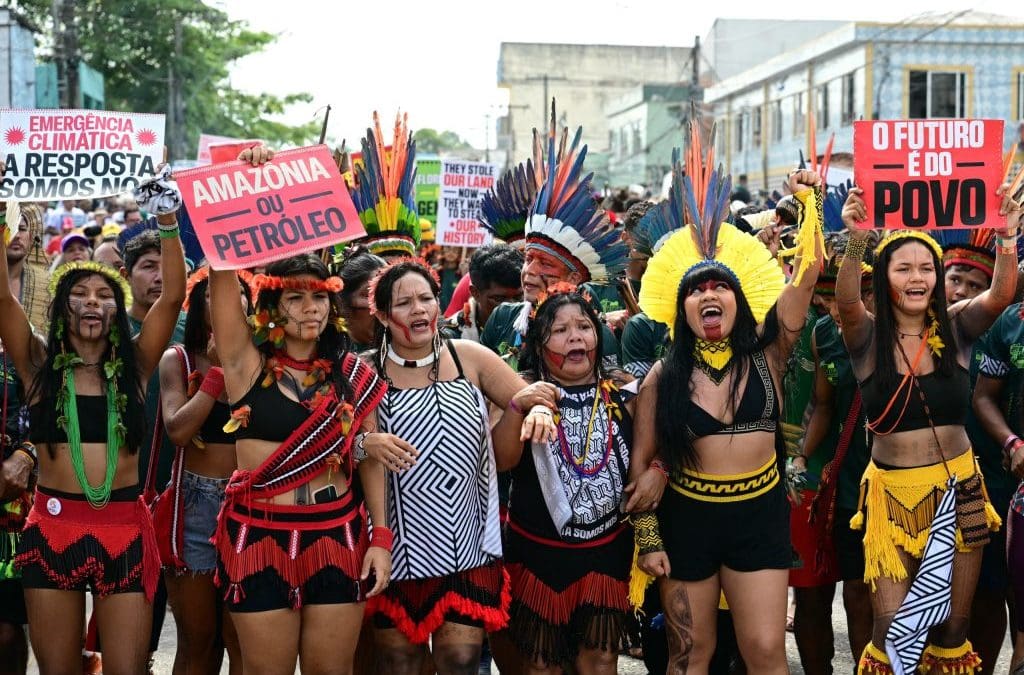
The 2025 United Nations Climate Change Conference, more commonly known as COP30, began on Nov. 10 in Belém, Brazil, on the edge of the Amazon rainforest. This year’s COP conference has more fossil fuel lobbyists in attendance than any previous conference, but it has also drawn the biggest delegation of Indigenous peoples from around the world—each group representing competing visions for addressing the climate crisis. TRNN Editor-in-Chief Maximillian Alvarez speaks with Dharna Noor, fossil fuels and climate reporter at Guardian US, about what actions are and are not being taken at COP30, and what the results of this year’s climate summit will mean for humanity’s future on a rapidly heating Earth.
Additional links/info:
Dharna Noor, Guardian US, “‘Without our expertise, mistakes get made’: The Cop30 campaign to give workers a voice”
Dharna Noor & Jonathan Watts, Guardian US, “Thousands hit streets of Belém to call for action during crucial Cop30 summit”
Credits:
Studio Production / Post-Production: David Hebden
Transcript
The following is a rushed transcript and may contain errors. A proofread version will be made available as soon as possible.
Maximillian Alvarez:
As the Philippines reel from historic typhoons. As Caribbean countries like Jamaica, Haiti, and Cuba rush to recover from a historic hurricane as Iran scrambles amid a historic drought that as people’s water taps running dry, the weary eyes of a battered world turned to Belém, Brazil, where the 30th UN Climate Summit is currently taking place. The 2025 United Nations Climate Change Conference, more commonly known as COP30, began on November 10th and will conclude on November 21st. Our guest today just returned to Baltimore from COP30 in Brazil and is here to give us a breakdown of
by Jake Johnson | Nov 19, 2025 | Article, Politics and Movements: International, Politics and Movements: US, Reprint
This story originally appeared in Common Dreams on Nov. 19, 2025. It is shared here under a Creative Commons (CC BY-NC-ND 3.0) license.
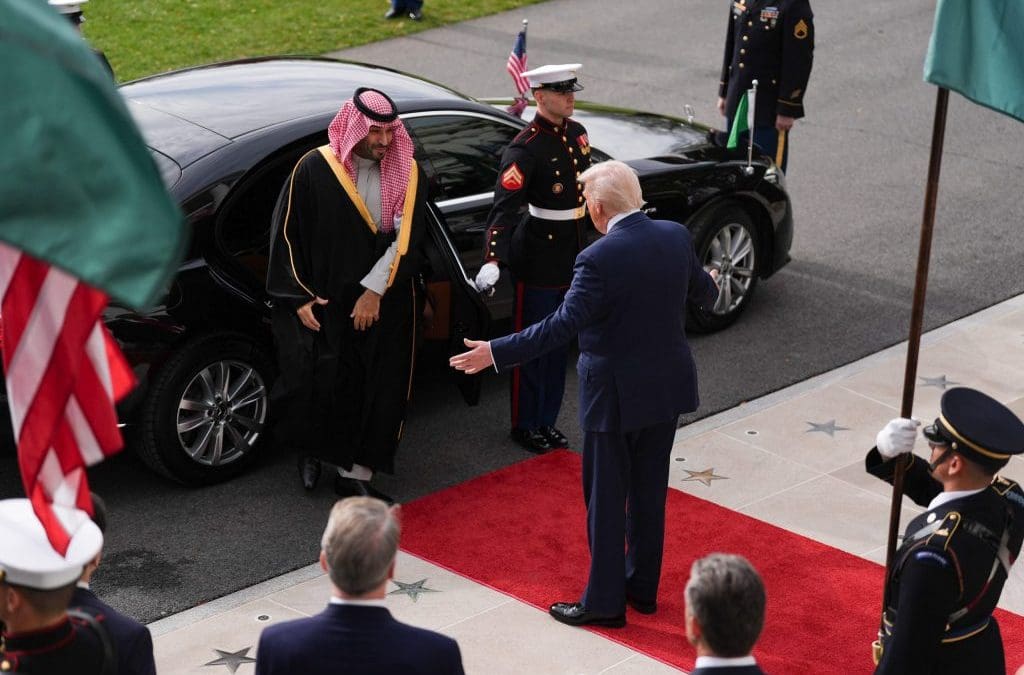
The deputy chair of the Congressional Progressive Caucus said Tuesday that lawmakers should pull out all the stops to prevent US President Donald Trump from selling F-35s to Saudi Arabia following Saudi Crown Prince Mohammed bin Salman’s White House visit.
Rep. Ilhan Omar (D-Minn.) called the White House reception for bin Salman, who is commonly known as MBS, a “disgusting display” and a “new low in longstanding US support for the repressive monarchy,” pointing to Trump’s whitewashing of the crown prince’s role in the horrific murder of journalist Jamal Khashoggi in 2018.
Omar also condemned Trump’s attack on ABC News reporter Mary Bruce, who asked about Khashoggi’s murder during the crown prince’s White House visit.
“It is truly disturbing that the president of the United States dismissed Khashoggi’s entrapment, murder, and dismemberment at the hands of MBS’ assassins simply as, ‘things happen,’” said the Minnesota Democrat.
Omar called on fellow lawmakers to join her in working to block Trump’s “reckless and corrupt deals” with the Saudis, including his proposed sale of F-35 fighter jets.
“With announced sales of F-35 warplanes and billions in financial investments, Trump is prioritizing weapons-contractor profits and his own family’s business interests, including Jared Kushner’s private equity firm that took $2 billion from MBS,” said Omar, who noted that the Saudis have used US arms to devastating effect in Yemen.
The details of Trump’s proposed F-35 sale are not yet fully clear, but the US president indicated on Tuesday that the agreement would not include any conditions. The Saudi regime is one of the world’s worst human rights abusers, wielding the death penalty and other repressive tactics to violently crush dissent.
“We’re going to