by Sharon Zhang | Dec 10, 2025 | Article, Gaza, Israel, Palestine, Politics and Movements: International, Politics and Movements: US, Reprint
This story was originally published on Truthout on Dec. 09, 2025. It is shared here under a Creative Commons (CC BY-NC-ND 4.0) license.
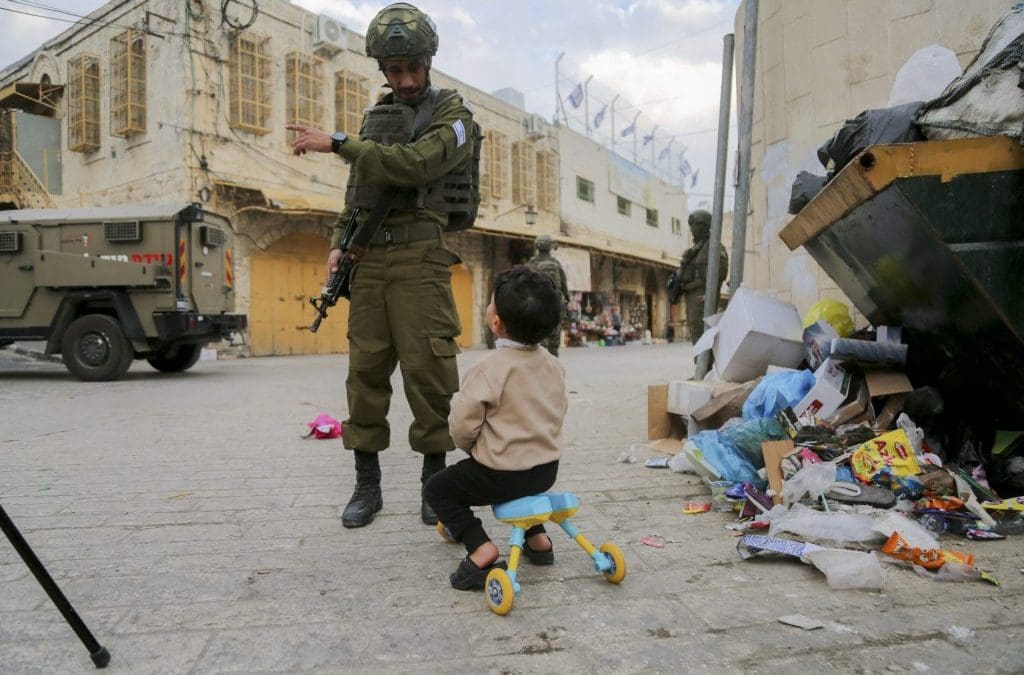
The 2026 military funding bill released this week would require the U.S. to assess Israel’s weapons arsenal and suggest ways to undo any “gaps” that may be caused by arms embargoes imposed by other countries protesting Israel’s violence.
A provision in the “must-pass” National Defense Authorization Act (NDAA) bill for 2026, released by lawmakers on Monday, requires the Secretary of Defense to “conduct a continual assessment of” the “impact on Israel’s defense capabilities” from arms embargoes and other restrictions placed on arms exports to Israel.
The department must then report on “resulting gaps or vulnerabilities in Israel’s security posture” against “adversaries” like Iran, Hamas, and Hezbollah, the bill text says.
Then, officials must conduct an assessment to identify any of Israel’s military “needs” and actions that the U.S. could take to “mitigate such gaps in defensive capabilities.” Such actions could include “addressing barriers” to arms deliveries, expanding cooperation with Israel to develop military technology, and sending weapons directly.
The Defense Secretary, along with the Secretary of State and Director of National Intelligence, must ensure that the report on the subject is updated at least once every 180 days, the bill says.
The remarkable measure comes as a response to at least two dozen countries that have restricted or ended weapons transfers to Israel since its genocide began on October 7, 2023. It also comes after countless experts, including watchdogs within the State Department, have said that continuing to send weapons is illegal under domestic and international law.
Many of these arms embargoes have had little difference on Israel’s ability
by Jessica Corbett | Dec 10, 2025 | Amazon, Article, Climate Crisis, Economy and Inequality, Ecuador, Politics and Movements: International, Politics and Movements: US, Reprint
This story originally appeared in Common Dreams on Dec. 09, 2025. It is shared here under a Creative Commons (CC BY-NC-ND 3.0) license.
A US advocacy group, American human rights lawyer Steven Donziger, and the group in Ecuador behind a historic legal battle against Chevron over its dumping of toxic waste in the Amazon rainforest are condemning the Ecuadorian government’s plans to pay the oil giant hundreds of millions of dollars due to an arbitration ruling.
In response to the legal fight in Ecuador that led to a $9.5 billion judgment against Chevron—which bought Texaco—the fossil fuel company turned to the investor-state dispute settlement (ISDS) system, suing the South American country in the Hague-based Permanent Court of Arbitration. As part of the latter case, Ecuadorian Attorney General Diana Salazar Méndez’s office announced Monday that the government would pay the US company only around $220 million, rather than the over $3 billion Chevron sought.
While Chevron said in a statement that it was “pleased with the resolution of this matter” and claimed the decision “strengthened the rule of law globally,” and Salazar Méndez’s office celebrated the dramatically lower figure, and the Union of Peoples Affected by Chevron-Texaco (UDAPT)—the group that began the case against oil company in 1993—pushed back against the government’s framing of the reduction “as if it was a success and an economic achievement.”
“The reality is it is a defeat for justice,” UDAPT argued in a Tuesday statement. “For 32 years, UDAPT has documented pollution, environmental crime, and lives broken by Chevron, proving what should be obvious: Communities have not recovered, health has not been restored, clean water has not returned, and the territories that sustain life remain contaminated. A debt is not owed to Chevron. A debt is owed to the Amazonian families still waiting for
by Ross Domoney, Nadia Péridot, Yussif Mohammed Sharqawi, Siham Shamalakh and Bassel Akkawi | Dec 9, 2025 | Politics and Movements: International, Syria, video
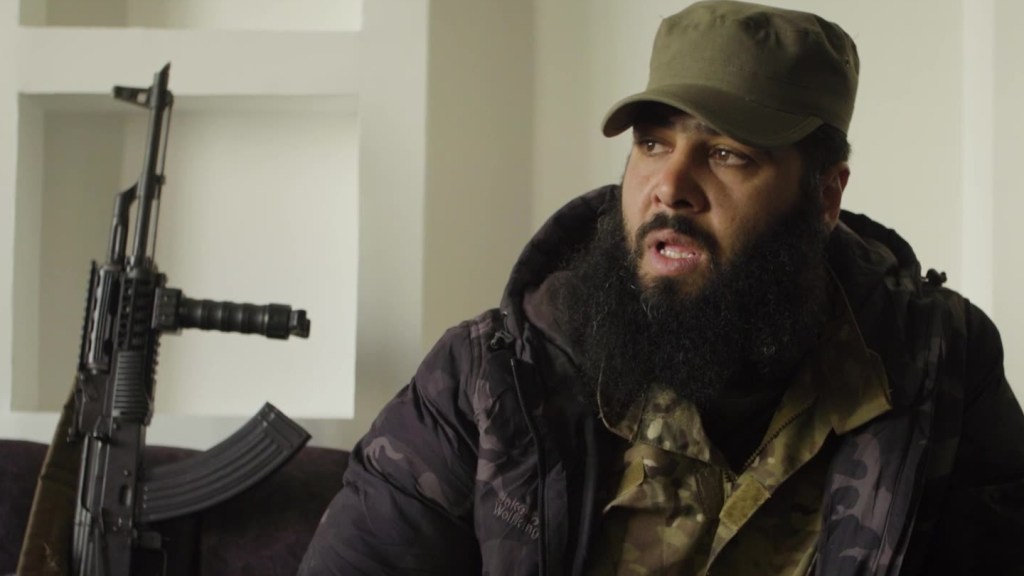
Yarmouk, Syria, was originally a temporary refugee camp for thousands of Palestinians displaced by the 1948 Nakba; however, the camp eventually grew to a lively metropolis with a vibrant community of artists, intellectuals, and families. Home to an estimated one million residents, Palestinians and Syrians lived together in Yarmouk under the authoritarian regime of the notorious Assad family. During the protracted civil war in Syria, Yarmouk became the site of repeated bombardment by heavy artillery and intense sieges. Fleeing war, illness, and starvation, hundreds of thousands left Yarmouk; yet, a handful of residents remained, determined to fight against tyranny.
In December 2024, the Assad regime finally fell. Now, residents of war-torn Yarmouk are returning to rebuild their homes and their lives once again. For this on-the-ground documentary report, TRNN was granted access to the camp and spoke to residents about what life was like in Yarmouk during the many violent years before the fall of Assad’s regime—and about what life in Yarmouk can be now.
Credits:
Produced, directed, filmed and edited by Ross Domoney
Script and Voice-over by Nadia Péridot
Translations by Siham Shamalakh
Local Producers: Yussif Mohammed Sharqawi, Bassel Akkawi
Transcript
VO:
This is not Gaza.
This is Yarmouk, a refugee camp in Damascus in Syria.
First established in 1957 to house those forced out of Palestine during the Nakba, when Zionist militia violently expelled and murdered Palestinians and occupied their homes.
Yarmouk began as a temporary refugee camp and evolved into a vibrant community of exiled families.
It became the capital of the Palestinian diaspora.
Khaldoun Abdel Rahman Al Malah:
In Yarmouk, every street, school, clinic, and bakery in the camp carries the name “Palestine”.
VO:
When the Syrian civil war erupted in 2011, residents
by Marc Steiner | Dec 9, 2025 | Gaza, Israel, Palestine, Podcast, Politics and Movements: International, Politics and Movements: US, The Marc Steiner Show
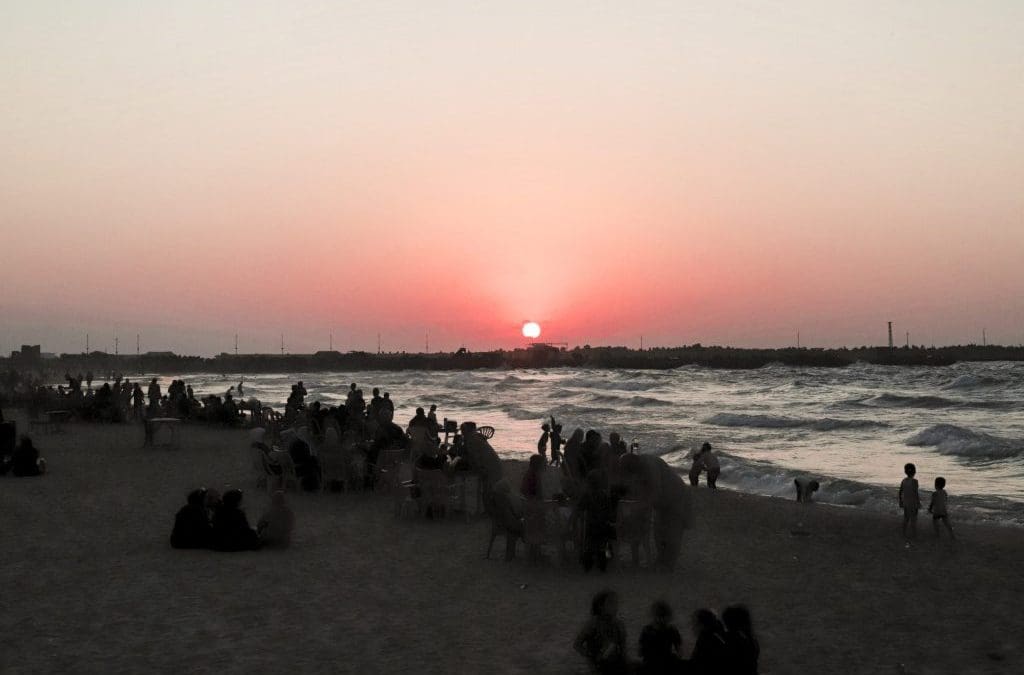
Out of the rubble of Israel’s genocidal war on Gaza, a grassroots movement of Jewish and Palestinian citizens inside Israel has emerged to forcefully reject a future of endless war and occupation. In this episode of The Marc Steiner Show, Alon-Lee Green, national co-director of Standing Together, explains how their movement is confronting state repression, settler violence, and rising fascism while working to build a new Jewish-Palestinian majority in Israel.
Guest:
Alon-Lee Green is the national co-director of Standing Together, a progressive Jewish-Arab grassroots movement that aims “to build a new majority within Israeli society that supports peace, equality, and social and environmental justice.” Green has organized numerous campaigns against the recent wars between Israel and Palestine, and for a just peace and equality and social justice in Israel.
Additional links/info:
Standing Together website, Facebook page, and Instagram
Christiane Amanpour, CNN, “‘The pain is a mutual pain,’ say Israeli Jewish and Arab activists”
Credits:
Producer: Rosette Sewali
Studio Production: David Hebden
Audio Post-Production: Stephen Frank
Transcript
The following is a rushed transcript and may contain errors. A proofread version will be made available as soon as possible.
Marc Steiner:
Welcome to the Marc Steiner Show here on The Real News. I’m Marc Steiner. It’s great to have you all with us as we begin this conversation with one of the founders and leaders of Stand Together, an organization of Israelis and Palestinians in Israel calling for an end to the war in Gaza, an end to the occupation and to the end of oppression Palestinians. On this very moment, over 70,000 Palestinians, mostly women and children have been killed in Gaza. 90% of Gaan have been displaced. It’s a war of annihilation. Standing together was founded by Alan the
by Michael Fox | Dec 8, 2025 | Podcast, Politics and Movements: International, Politics and Movements: US, Stories of Resistance, Venezuela
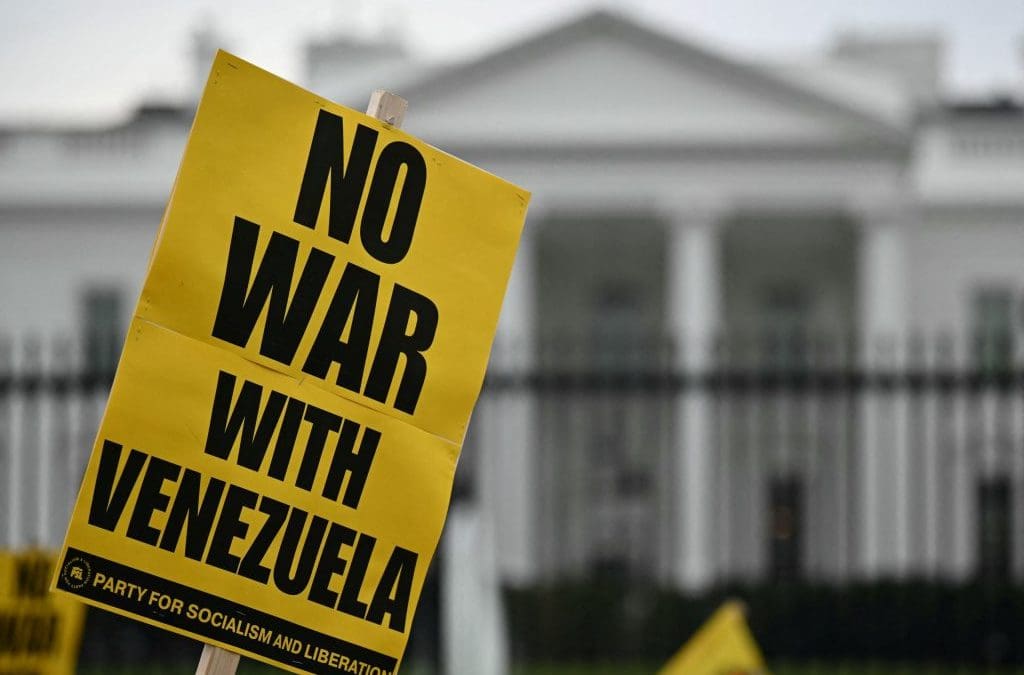
On Dec. 6, people across the United States marched. They protested. They carried banners: No war on Venezuela. No blood for oil. US hands off Venezuela. They chanted and waved Venezuelan flags.
Trump says he’s coming to remove Venezuelan President Nicolas Maduro. He’s promised it’s only a matter of time. The United States has amassed the largest military buildup in the Caribbean since the 1962 Cuban Missile Crisis.
But according to a recent CBS poll, 70% of Americans are opposed to US military action in Venezuela. And over the weekend, those voices were loud. Marches against US military intervention. Against the ongoing US boat strikes in the Caribbean and Pacific. Against Trump rhetoric that claims to applaud peace, while carrying out and threatening violence at home and abroad—violence against Venezuela.
BIG NEWS! This podcast has won Gold in this year’s Signal Awards for best history podcast! It’s a huge honor. Thank you so much to everyone who voted and supported.
And please consider signing up for the Stories of Resistance podcast feed on Spotify, Apple Podcasts, Spreaker, or wherever you listen. And please take a moment to rate and review the podcast. A little help goes a long way.
The Real News’s legendary host Marc Steiner has also been in the running for best episode host. And he also won a Gold Signal Award. We are so excited. You can listen and subscribe to the Marc Steiner Show here on Spotify or Apple Podcasts.
Please consider supporting this podcast and Michael Fox’s reporting on his Patreon account: patreon.com/mfox. There you can also see exclusive pictures, video, and interviews.
Written and produced by Michael Fox.
Resources:
Links to some of my
by Michael Fox | Dec 5, 2025 | Podcast, Politics and Movements: International, Politics and Movements: US, Stories of Resistance
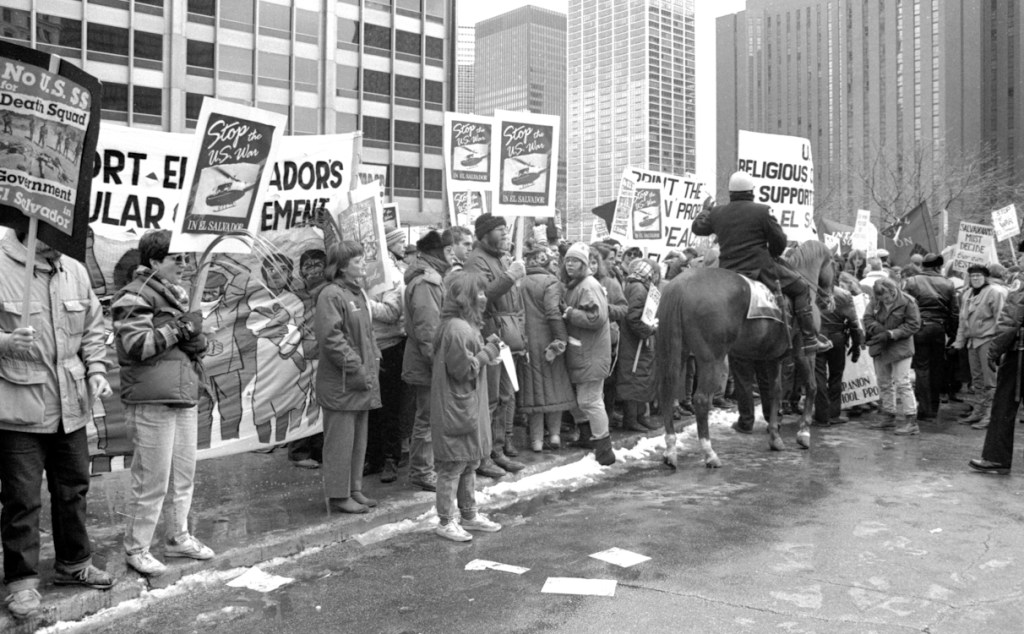
In the 1980s, the United States wreaked havoc in Central America. Backing authoritarian dictatorships. Fueling massacres and violence. Funding, training, and organizing the Contras, a paramilitary organization created to overthrow the leftist Sandinista government in Nicaragua. The US government was spending billions on its interventionist policies across Central America in the name of fighting so-called communism.
But people pushed back across Central America. And they also responded in the United States. Hundreds of thousands of people marched in the streets against US intervention in the region. It was the Central American solidarity movement.
BIG NEWS! This podcast has won Gold in this year’s Signal Awards for best history podcast! It’s a huge honor. Thank you so much to everyone who voted and supported.
And please consider signing up for the Stories of Resistance podcast feed on Spotify, Apple Podcasts, Spreaker, or wherever you listen. And please take a moment to rate and review the podcast. A little help goes a long way.
The Real News’s legendary host Marc Steiner has also been in the running for best episode host. And he also won a Gold Signal Award. We are so excited. You can listen and subscribe to the Marc Steiner Show here on Spotify or Apple Podcasts.
Please consider supporting this podcast and Michael Fox’s reporting on his Patreon account: patreon.com/mfox. There you can also see exclusive pictures, video, and interviews.
Written and produced by Michael Fox.
Resources:
Under the Shadow podcast
Nicaragua, 1980s. Revolution | Under the Shadow, Episode 10, Part 1
Some clips of this episode of Stories of Resistance were taken from Episode 10, Part 2: Nicaragua, 1980s. Contra War | Under the Shadow, Episode